
 Registration
REGISTER FOR THE CONFERENCE
Registration
REGISTER FOR THE CONFERENCE
 Apply to Exhibit
APPLICATION FOR EXHIBITION
Apply to Exhibit
APPLICATION FOR EXHIBITION
 Sponsorship
SPONSORSHIP APPLICATION
Sponsorship
SPONSORSHIP APPLICATION

Armenia and Rosatom Coordinate the Second Life Extension of Metsamor NPP Unit 2: Reviewing Phase Results and Locking In Key Tasks for 2027–2030
On October 7, 2026, the fifth working meeting of the Joint Coordination Committee of the Republic of Armenia and Rosatom was held in Yerevan, comprehensively reviewing the phased implementation results of the major project for the second life extension (LTO-2) of Unit 2 of the Armenian NPP (ANPP, located in Metsamor), and formally countersigned the execution agreement for advancing engineering tasks from 2027 to 2030. Kirill Komarov, First Deputy Director General and Director for International Business Development of Rosatom, led the Russian delegation, while Narek Apitonyan, Deputy Minister of Territorial Administration and Infrastructure of Armenia, led the Armenian delegation.
2026-10-08

OCTAVE Live OnTour Global Flagship Event Debuts in China, Industrial-Grade AI and Full Lifecycle Digital Solutions Let Engineering Intelligence Cross Boundaries
2026-10-08

Rosatom Completes Installation of Two Moisture Separator Reheaters for the Conventional Island of the BREST-OD-300 Lead-Cooled Fast Reactor
2026-10-08

Princeton Plasma Physics Laboratory Opens a New Path to Controlled Fusion Ignition: Implementing a "Heat First, Fuel Later" Strategy to Substantially Lower the Energy Threshold
2026-10-08

Princeton Plasma Physics Laboratory Hosts International Workshop: Deepening Cross-Disciplinary Applications of Plasma in Semiconductor Manufacturing and Controlled Nuclear Fusion
2026-10-08
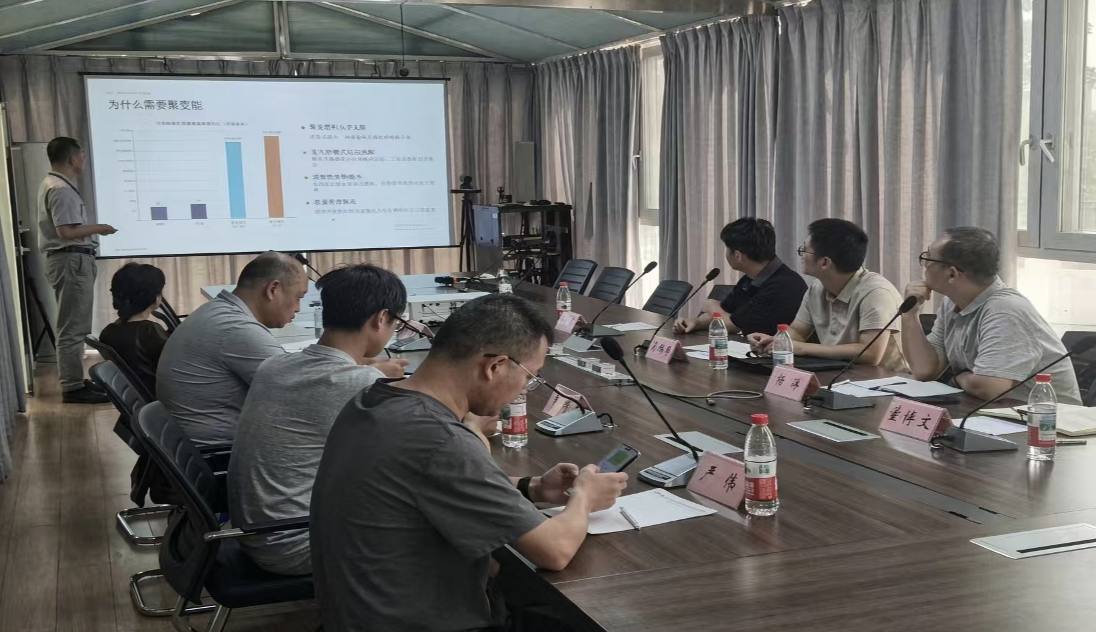
South China Regulatory Station Strengthens Fusion Device Regulation to Empower New Technology Development
2026-10-08

US PPPL Reconstructs 70-Year-Old Lawson Criterion, Proposes New Fusion Ignition Pathway of "Heat First, Fuel Later"
2026-10-07

Blue Energy becomes the first small nuclear power developer to apply for grid connection in Texas, aiming to provide baseload power for AI data centers
2026-10-07
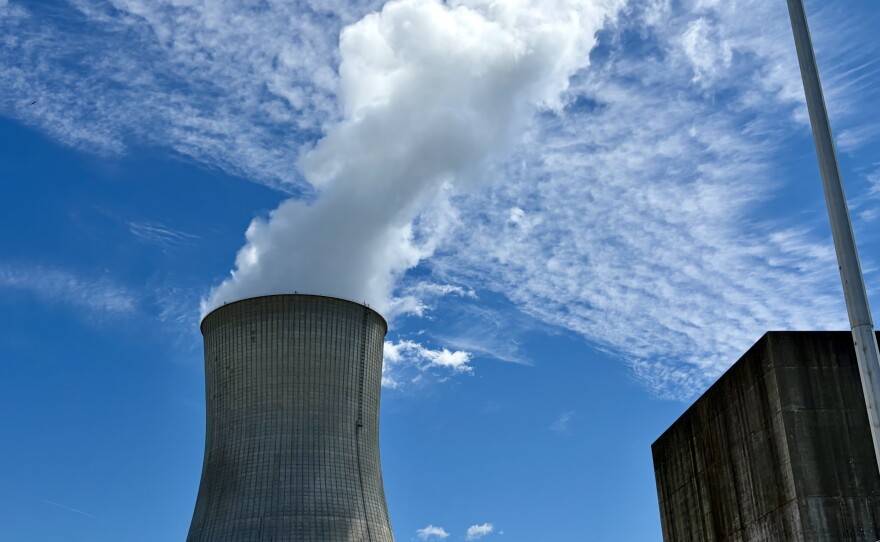
Missouri Releases New Energy Plan, Pushing Nuclear Power as Priority
2026-10-07

A research team from the Joint Institute for High Temperatures of the Russian Academy of Sciences (JIHT RAS / ОИВТ РАН) has achieved an important physics advance in the study of extreme high-temperature and high-pressure states: researchers have discovered a previously undescribed phase transition in cesium (Cesium) under dense plasma conditions, accompanied by a dramatic jump-like change in electrical conductivity. The study focuses on the microscopic physical behavior of matter at temperatures from 500 to 20,000 Kelvin (K) and pressures ranging from about 1 hectopascal (hPa) to several terapascals (TPa). Under such severe extreme conditions, interatomic distances are greatly compressed, matter undergoes multiple deep ionizations, and the traditional criteria for distinguishing solid, liquid, and gas states can no longer...
2026-10-08
The 2026 Nobel Prize in Physics was awarded for a major scientific discovery in the field of astrophysical high-energy neutrino detection. The key engineering foundation that made this historic breakthrough possible is a giant scientific facility located near the South Pole——the IceCube Neutrino Observatory. The facility uses nearly 1 cubic kilometer of highly transparent deep Antarctic ice as a natural detection medium, and densely arrays thousands of digital optical modules deep within the ice. Genrikh Scheibler, senior researcher and Candidate of Physical and Mathematical Sciences at the Institute of Semiconductor Physics of the Siberian Branch of the Russian Academy of Sciences (ISP SB RAS), has...
2026-10-08
From 5 to 9 October 2026, the International Symposium on Standards, Applications and Quality Assurance (IDOS 2026), hosted by the International Atomic Energy Agency (IAEA), was held at IAEA Headquarters in Vienna, Austria. More than 500 medical physicists, radiation metrology experts and researchers from 120 countries around the world gathered to discuss precision measurement of radiation doses in radiotherapy, medical imaging and nuclear medicine. With the rapid evolution of radiotherapy technologies, radionuclide therapy and interventional radiology, ionizing radiation in the diagnosis and treatment of malignant tumors and major diseases...
2026-10-08
On the occasion of its 75th anniversary, the Princeton Plasma Physics Laboratory (PPPL), under the U.S. Department of Energy (DOE), hosted the second Adopting Sustainable Partnerships for Innovative Research Ecosystem (ASPIRE) international workshop in the fall of 2026. The workshop was organized by the laboratory's Applied Materials and Sustainability Sciences Directorate and brought together scholars from the University of Osaka in Japan and the Ulsan National Institute of Science and Technology (UNIST) in South Korea, as well as researchers from PPPL, to focus on...
2026-10-08
In October 2026, the North China Nuclear and Radiation Safety Supervision Station of the Ministry of Ecology and Environment (hereinafter referred to as the North China Supervision Station) officially organized the 2026 North China Regional Radiation Safety Regulatory Experience Exchange Activity in Shijiazhuang City, Hebei Province, aiming to further deepen the cross-regional collaborative regulatory mechanism for nuclear and radiation safety. Relevant officials from the Nuclear Facility Safety Regulation Department and the Radiation Source Safety Regulation Department of the Ministry of Ecology and Environment made special trips to the site to provide guidance, conducted in-depth exchanges with frontline regulatory representatives from North China and surrounding key provinces, and put forward clear guidance on current and future regulatory directions. During the exchange activity, representatives from Beijing Municipality, Tianjin Municipality, Hebei Province, Shanxi Province, Inner Mongolia Autonomous Region, Shandong...
2026-10-08
The U.S. Department of Energy (DOE) Thomas Jefferson National Accelerator Facility (Jefferson Lab) announced that it has formally signed a Cooperative Research and Development Agreement (CRADA) with startup company Canary Instruments to jointly advance the commercialization of its independently developed Subsurface Continuous Radioisotope Environmental Monitor (SCREM). This technology is specifically designed for nuclear power plants, nuclear fuel facilities, and future...
2026-10-07
Nearly 40 years after the 1986 Chernobyl Nuclear Power Plant accident, a research team from Leibniz University Hannover and Helmholtz-Zentrum Dresden-Rossendorf (HZDR) in Germany has completed the world's first synchrotron radiation X-ray-based precision crystal phase analysis of 6 micron-sized highly radioactive fragments (commonly known in the industry as Hot Particles) ejected from the destroyed reactor. The related breakthrough research findings have been officially published in the top-tier journal in environmental and radioecology, the Journal of Hazardous Materials.
2026-10-07


