

China Institute of Atomic Energy Holds Advanced Scientific and Technological Achievements Transformation Conference: Releases Small Reactor 9-Type Product Matrix, Signs Agreements on Curie-Level Terbium-161 Preparation and SMR Overall Scheme Design
On September 29, the China Institute of Atomic Energy (abbreviated as CIAE) held in Beijing an Advanced Scientific and Technological Achievements Transformation Conference themed "Innovation · Nuclear Fusion of New Quality." The conference showcased CIAE's practical breakthroughs in deepening scientific and technological system reform, advancing the pilot program for empowering scientific and technological achievements from job-related inventions, and integrated institute-enterprise operations, and officially released multiple major scientific research achievements covering advanced reactors, nuclear medical equipment, and isotope preparation, vigorously promoting the acceleration of nuclear technology from the laboratory to the production line. In the report on reform experience and benchmark incubation platforms, the conference systematically summarized three landmark reform achievements: SASAC Pilot Reform for Empowering Scientific and Technological Achievements from Job-Related Inventions: CIAE used...
2026-09-30
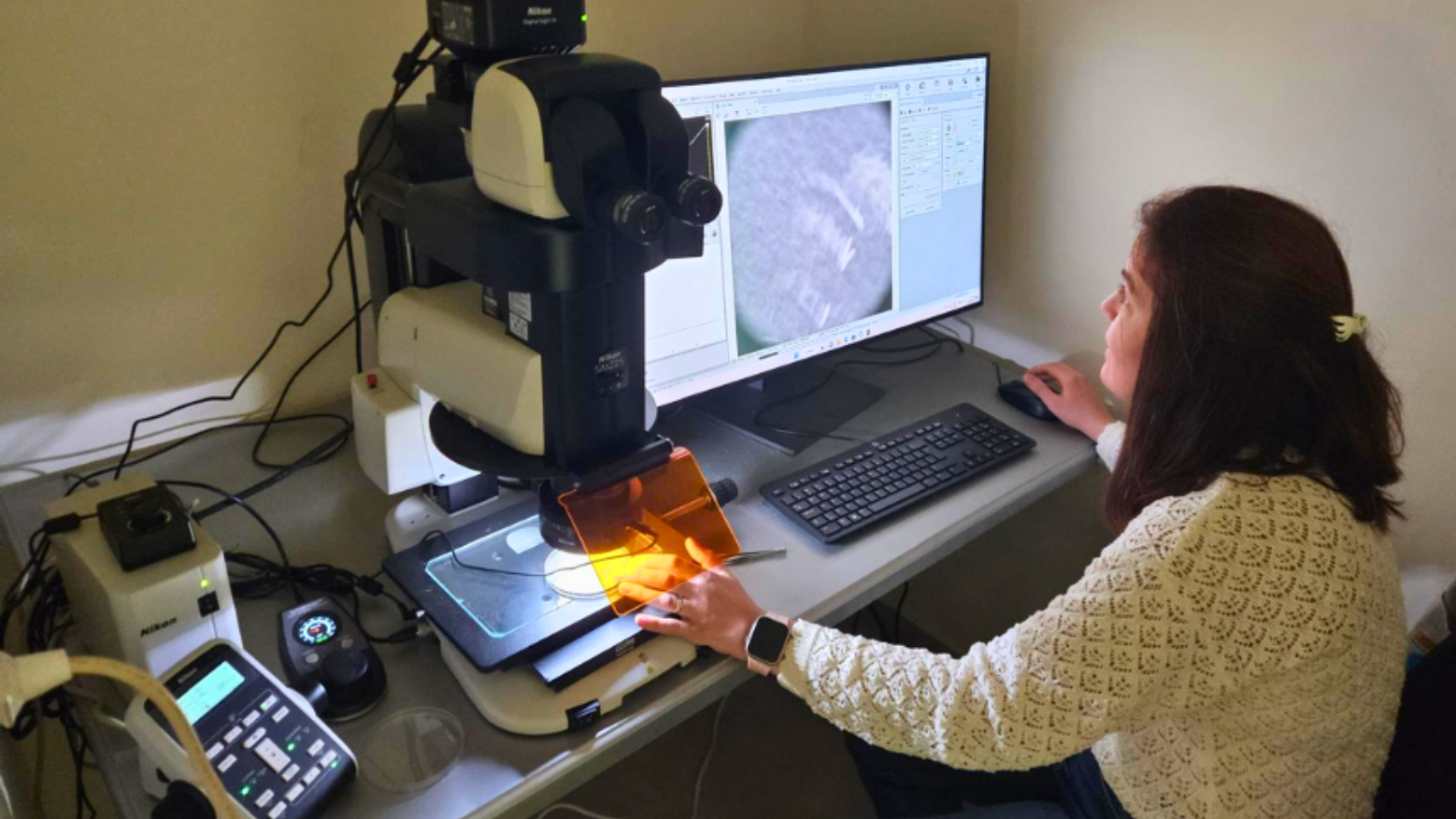
Türkiye Leverages Nuclear Science and Technology to Safeguard Citrus Productivity: Insect Sterile Technique and Radiation Mutation Breeding Build a Green Barrier for Agriculture
Türkiye produces approximately 5 million tonnes of various citrus fruits annually, covering major categories such as sweet oranges, lemons, and grapefruits, making it an important fruit exporter globally. However, the frequent occurrence of abnormal climate events such as extreme heat and cold waves with frost, combined with repeated infestations by persistent pests like fruit flies, has not only severely constrained crop yields and fruit quality but also posed severe challenges to the livelihoods of local farmers. To break through cultivation bottlenecks and meet the stringent requirements of international markets for fruit products with low pesticide residues, Türkiye, with technical support from the International Atomic Energy Agency (IAEA) and the Food and Agriculture Organization of the United Nations (FAO), has comprehensively introduced nuclear science and technology to build a green and sustainable integrated pest management...
2026-09-27

IAEA and IDB Sign Cooperation Agreement to Advance Nuclear Energy and Nuclear Technology for Sustainable Development in Latin America and the Caribbean
On September 24, 2026, on the margins of the United Nations General Assembly in New York, the International Atomic Energy Agency (IAEA) and the Inter-American Development Bank (IDB) formally signed a Memorandum of Understanding (MoU) on cooperation. The two sides aim to establish a long-term partnership to jointly advance in-depth cooperation in Latin America and the Caribbean in the safe, secure and sustainable use of nuclear energy and nuclear technology. This also represents an important step by the IAEA to expand its network of cooperation with multilateral development finance institutions in support of the global low-carbon clean transition. The memorandum was signed by...
2026-09-27

Vylor and Belgium-based Rainbow Crops Enter Strategic Partnership to Combine AI and Multiplex Gene Editing for Maize Complex Stress Tolerance Traits
Agricultural technology innovation company Vylor and Belgian agricultural biotechnology startup Rainbow Crops announced the establishment of a deep R&D collaboration. The two parties will deeply integrate Artificial intelligence (AI) algorithm-assisted design with high-throughput Multiplex gene editing technology, leveraging Rainbow Crops' proprietary Trait Foundry trait discovery and validation platform, focusing on abiotic environmental stresses such as heat damage, extreme drought, and waterlogging, to screen and validate highly climate-adaptive maize hybrid germplasm materials. The core process pipeline of this cross-border collaboration will combine AI-assisted trait prediction, multiplex multi-locus...
2026-09-24
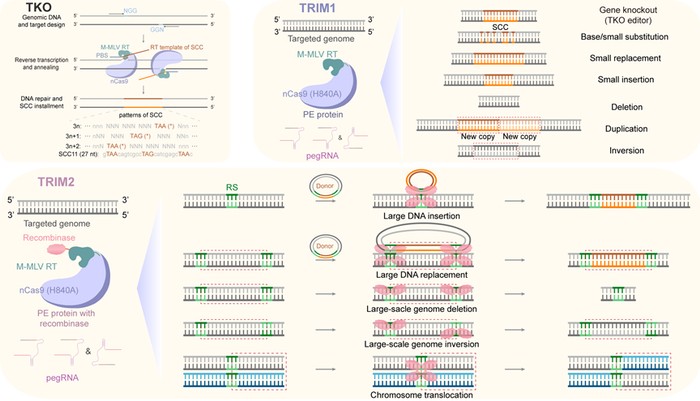
Institute of Genetics and Developmental Biology, CAS Develops TKO and "All-in-One" TRIM Genome Editing System, Achieving "One-Stop" Precise Pyramiding of Complex Crop Traits
In the process of modern agricultural crop breeding, although a large number of elite alleles have been successively sequenced and identified, how to rapidly and precisely pyramid them into a single variety has always faced the technical bottleneck of multi-generational crossbreeding and repeated experimental optimization. The research team at the Institute of Genetics and Developmental Biology, Chinese Academy of Sciences (CAS) has successfully tackled this challenge by developing a precise gene knockout tool TKO and an all-in-one composite genome editing system TRIM (Targeted Replacement, Insertion and Mutagenesis), opening up a new pathway for one-stop targeted improvement of complex agronomic traits. Targeting...
2026-09-24

Rwanda Plans to Introduce Nuclear Technology to Boost Agricultural Production and Address Climate Change
Armand Zingiro, Minister of State in Rwanda's Ministry of Infrastructure, stated at the 70th General Conference of the International Atomic Energy Agency (IAEA) held in Vienna that the government is exploring the use of nuclear and isotope technologies to improve agricultural productivity, ensure food security, and enhance capacity to address climate change. The conference was held from September 14 to 18, and Zingiro led the Rwandan delegation to attend the meeting. Zingiro pointed out that Rwanda fully recognizes the enormous potential of nuclear and isotope technologies in the fields of agriculture and food security. The application of nuclear technology in agriculture is mainly reflected in improving crop yields, controlling...
2026-09-17

Oman Reaffirms Cooperation Commitment at IAEA General Conference, Promotes Peaceful Uses of Nuclear Technology
The Sultanate of Oman delivered a statement at the 70th Regular Session of the International Atomic Energy Agency (IAEA) General Conference held in Vienna, Austria, expressing appreciation for the work of the IAEA Secretariat and reaffirming its continued close cooperation with the Agency and its Member States to achieve strategic objectives and further enhance the key role of nuclear technology in peace and modern development. The statement was delivered on behalf of the Sultanate of Oman by Faiza Saif Al Siyabi, Chargé d'Affaires of Oman's Permanent Mission to the IAEA. In its statement, Oman welcomed the Democratic Republic of Timor-Leste as a new member of the IAEA. Oman emphasized in its statement its active participation...
2026-09-17
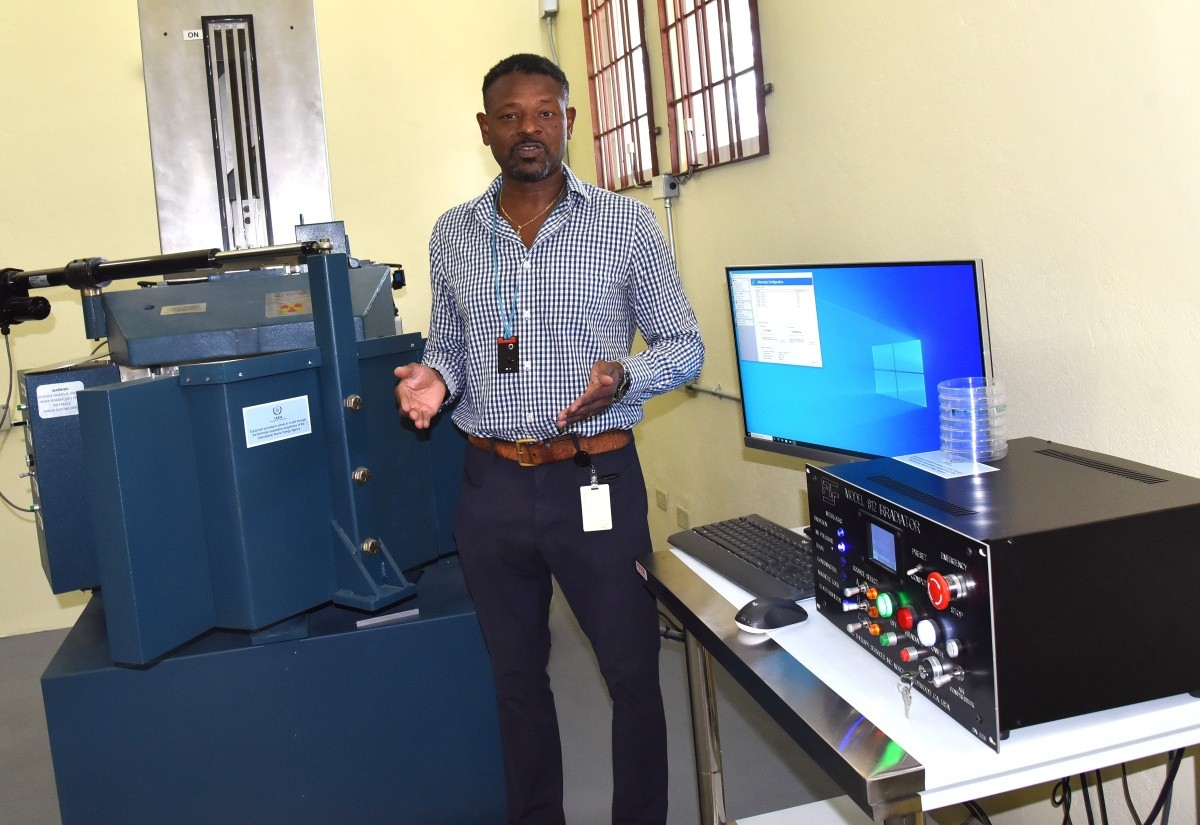
Jamaica Commissions Cobalt-60 Gamma Irradiator to Support Sterile Insect Technique and Agricultural Research
A new gamma irradiator at the International Centre for Environmental and Nuclear Sciences at the University of the West Indies in Jamaica has been commissioned, providing new technical capabilities for the country's research in vector-borne disease control, agricultural improvement, and nuclear technology applications. The equipment began operation in October 2024 and was officially inaugurated in August 2025, currently focusing primarily on sterile insect technique research, with the main objective of controlling Aedes aegypti mosquitoes. John Antoine, head of the Nuclear Analysis Laboratory and senior research scientist at the International Centre for Environmental and Nuclear Sciences, explained that the irradiator can deliver controlled, measurable doses of radiation to samples or products without making the samples or products themselves radioactive. He compared the...
2026-09-08

Malaysia Expands Nuclear Radiation Mutation Breeding Applications to Bolster Food Security and Industrial Inspection
Malaysia's nuclear technology applications are extending from traditional fields such as medicine and industry further into agricultural production and food security. Dr. Sukri, Senior Director of Project Management at the Malaysian Nuclear Agency, stated that through research and development using nuclear radiation mutation breeding technology, the agency has shortened the maturation period of cassava from the original 10 to 12 months down to 6 months. Sukri noted that this technological application helps reduce farmers' production costs, improve land use efficiency, and cultivate larger cassava varieties. In addition to cassava, the Malaysian Nuclear Agency, in collaboration with the Ministry of Agriculture and Food Security and the Department of Agriculture, has successfully developed two new rice varieties, NMR 151 and NMR 152. These new varieties feature higher yields and demonstrate strong resistance to diseases, extreme weather conditions such as prolonged drought, and flooding.
2026-09-07

Nuclear technology breeding helps Laos improve rice varieties and increase yields
Rice is a vital staple food and source of income for rural households in the Lao People's Democratic Republic, and serves as the foundation of the country's food security. Over 80% of local farmers grow rice, with paddy fields accounting for approximately 60% of the nation's cultivated land. To enhance food supply capacity, Laos has set a target of increasing rice production to 5.5 million tonnes. The Saphart 1 rice variety was launched at the 2023 National Seed Fair for Food Security and Nutrition. (Photo: S. Phommalath/ RCCRC) Facing challenges such as environmental change, flooding, plant diseases, and increasing pressure on agricultural systems, agricultural researchers in Laos are turning to nuclear technology to improve rice varieties. The National Agriculture and Forestry Research Institute of Laos...
2026-09-01

DARPA Ships Insect Sterility Technique Irradiator to the United States with Panamanian Cooperation
An insect irradiator used for the sterile insect technique program was recently transshipped to the United States via Panama, where it will support U.S. efforts to address the New World screwworm threat. The equipment was acquired by the U.S. Defense Advanced Research Projects Agency (DARPA) on July 8, 2026, and arrived in Panama, where it was subsequently transferred from the port to the airport with the assistance of Panamanian partners. The New World screwworm is a parasitic pest whose flies lay eggs in warm-blooded animals, with larvae burrowing into tissue and feeding, posing a threat to livestock production. Jon O’Rullian, president of the equipment manufacturer Foss Therapy Services, Incorporated, stated that threats of this kind are significant to all types of livestock producers.
2026-08-26
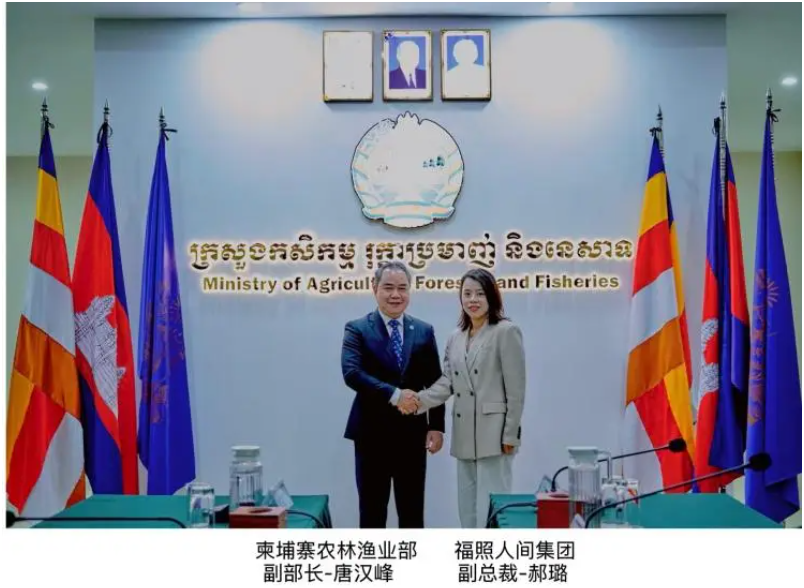
China and Cambodia Sign MOU on Agricultural Supply Chain Cooperation, with Irradiation Processing Technology Listed as a Key Focus
On August 10, Haikou Silk Road Social Science Research Institute and the Ministry of Agriculture, Forestry and Fisheries of the Kingdom of Cambodia signed the Memorandum of Understanding on Research Cooperation for the Stability and Development of the China-Cambodia Agricultural Supply Chain in Phnom Penh. According to the MOU, the industrial application of irradiation processing technology in the agricultural sector has been listed as one of the core cooperation directions for both sides. In this cooperation, the Joint Laboratory for R&D and Validation of Agricultural Product Irradiation Technology played a key supporting role. The joint laboratory was co-founded by Fuzhao Renjian Group and the Institute of Agro-Products Processing Science and Technology of the Chinese Academy of Agricultural Sciences, focusing on breeding, post-harvest loss reduction, agricultural product processing, and food safety, conducting irradiation technology R&D and validation, and promoting the application of relevant outcomes...
2026-08-24

Brive in France Tests Sterile Insect Technique Using X-Ray Irradiation to Control Tiger Mosquitoes, Preliminary Results Show Nearly 60% Sterility Rate in Mosquito Eggs
The city of Brive-la-Gaillarde in the Nouvelle-Aquitaine region of France is using the Sterile Insect Technique (SIT) to control tiger mosquitoes. Since May 2025, the city has been working with the Montpellier-based company Terratis, releasing male mosquitoes that have been treated with X-ray irradiation and rendered incapable of reproduction, in order to reduce the tiger mosquito population. The core of this method is to allow sterile males to mate with wild females, causing the females to lay eggs that cannot hatch. Although it may appear that mosquitoes are still being released in active mosquito areas, the released individuals are males, which do not bite humans. As of October 31, 2025, Brive has deployed nearly 11 million sterile male mosquitoes across 58 release points covering more than 100 hectares, with a weekly release volume of approximately 400,000...
2026-08-23

Texas A&M University Develops Rio Red Grapefruit Through Radiation Mutagenesis, Now Accounting for About 75% of Texas Production
In 1984, researchers at Texas A&M University used radiation mutagenesis to develop the Rio Red grapefruit. Forty-two years later, this variety has become the dominant cultivar in Texas's grapefruit industry, accounting for approximately 75% of the state's total grapefruit production. The Rio Red grapefruit is distinguished by its vibrant pink flesh, as well as its greater cold tolerance and higher yields compared to other grapefruit varieties. These traits have facilitated its widespread adoption across Texas growing regions, gradually establishing it as a representative grapefruit variety in the local market. Grapefruit itself was not originally a product of artificial breeding. The earliest known grapefruit seedlings appeared in Barbados in the 18th century, resulting from a cross between the Jamaican sweet...
2026-08-22

IAEA Launches Research Project on Edible Insects and Novel Foods Safety
As global demand for alternative protein sources rises, the International Atomic Energy Agency has recently launched a five-year coordinated research project focusing on assessing safety risks associated with edible insects and other novel foods during production, processing, and consumption. The project will be implemented through the Joint FAO/IAEA Centre of Nuclear Techniques in Food and Agriculture, utilizing nuclear techniques, isotope techniques, and related detection methods to analyze chemical, biological, and physical hazards in food. Currently, more than 2,000 species of edible insects are known globally, and approximately 2 billion people regularly consume insects. In Africa, Asia, the Pacific region, and Latin America, insects have long been part of the diet in some communities...
2026-08-20

Russian Scientists Develop Bioluminescent Bacterial Bioassay for Screening Safe Low-Dose Radiation Levels in Animals
Russian researchers have developed a rapid bioassay method based on bioluminescent bacteria that can be used to assess safe dose ranges of ionizing radiation for animals, providing an early screening tool for low-dose radiation applications in livestock farming. The study involved researchers from the Institute of Biophysics of the Siberian Branch of the Russian Academy of Sciences, Siberian Federal University, and Krasnoyarsk State Agrarian University. The research team noted that low-dose ionizing radiation ranging from tens to hundreds of milligrays (mGy) may activate a series of physiological processes in animals, including metabolism, growth, and biomass accumulation; however, if the dose exceeds the safe range, it may cause physiological...
2026-08-14

Russian Researchers Find Low-Energy Electron Beam and X-Ray Treatment of Wheat Seeds Can Increase Yields
Researchers from the D.V. Skobeltsyn Institute of Nuclear Physics at Lomonosov Moscow State University, in collaboration with the Faculty of Physics and the Faculty of Chemistry of Lomonosov Moscow State University, as well as the Siberian Federal Scientific Centre of Agro-BioTechnologies of the Russian Academy of Sciences, have found that pre-sowing treatment of wheat seeds with low-energy electron beams and X-rays can help increase crop yields and enhance plant resistance to diseases. The study focused on the wheat variety Novosibirskaya 29 and included laboratory experiments, two consecutive years of field trials, and computer modeling. The results showed that a dose range of 5 to 15 Gy is suitable as a pre-sowing irradiation treatment parameter for wheat seeds. According to Moscow State University...
2026-08-14

Nuclear Technology Aids Pest Control: Sterile Insect Technique Achieves Results in Multiple Countries
The application of nuclear technology is not limited to power generation and heating. In areas such as agricultural pest control, animal health, and disease vector management, the Sterile Insect Technique (SIT) based on cobalt-60 gamma rays is playing an important role. The core approach of SIT involves mass-rearing target pests in specialized facilities, separating males, and then irradiating them with a cobalt-60 gamma ray source. The radiation causes DNA breaks in the reproductive cells of male insects, leaving them able to fly and mate with wild females but unable to produce viable offspring. As large numbers of sterile males are continuously released, the proportion of ineffective matings in the wild population increases, pest numbers decline generation after generation, and under certain conditions...
2026-08-13

Bhabha Atomic Research Centre (BARC) in India develops 72 improved crop varieties through radiation mutation technology
The integration of nuclear technology with agricultural production is demonstrating increasingly tangible value in Indian farmlands. Through radiation-induced mutation and hybrid breeding techniques, the Bhabha Atomic Research Centre in India has successively developed 72 improved crop varieties, covering peanuts, rice, mung beans, mustard, and other crops. India's Minister of State Jitendra Singh disclosed this progress in a written reply to Parliament, showing that the peaceful application of nuclear science has extended from laboratories to the frontlines of agricultural production. In terms of variety composition, peanut new varieties are the most numerous, reaching 17; rice has 10, mung beans and mustard 9 each, black gram 8, pigeon pea 5, sorghum 3, and cowpea, wheat, and soybean 2 each. Additionally...
2026-08-13

Russian Scholars Discuss Prospects and Limitations of Low-Dose Ionizing Radiation in Agriculture
Russian researchers have recently proposed a rapid bacterial detection method for determining optimal doses of ionizing radiation for animals. Related studies suggest that low-dose radiation in the range of tens to hundreds of milligrays (mGy) may activate physiological processes such as metabolism, growth, and biomass accumulation, offering new technical approaches for livestock farming, veterinary medicine, and related fields. The ionizing radiation food processing center at the L.Ya. Karpov Institute of Physical Chemistry in Obninsk. Photo: Kaluga Region State Television and Radio Broadcasting Company. In response to this direction, the National Research Nuclear University MEPhI (Moscow Engineering Physics Institute)...
2026-08-13
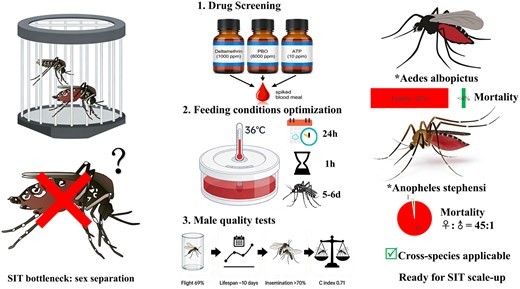
Chinese Team Proposes "Toxic Blood Meal" Pre-Treatment Approach to Boost Sterile Insect Technique for Mosquitoes
Chinese researchers have recently proposed a novel sex-sorting approach for the Sterile Insect Technique (SIT) in mosquitoes: adding a specific agent to the blood meal ingested by female mosquitoes, leveraging the biological difference that female mosquitoes feed on blood while males do not, to substantially reduce the number of females before release. The study was published in the June issue of the Journal of Medical Entomology. The Sterile Insect Technique is a pest population control method centered on radiation-induced sterility. Its basic process involves mass-rearing male target insects in the laboratory, sterilizing them through radiation exposure to render them reproductively incapable, and then releasing them into the field, where they mate with wild females to produce non-viable eggs, thereby suppressing target population growth. This technique has been incorporated into integrated pest management systems and is regarded as a relatively environmentally friendly pest control approach.
2026-08-12
Reading Ranking
- 1 Türkiye Leverages Nuclear Science and Technology to Safeguard Citrus Productivity: Insect Sterile Technique and Radiation Mutation Breeding Build a Green Barrier for Agriculture
- 2 China Institute of Atomic Energy Holds Advanced Scientific and Technological Achievements Transformation Conference: Releases Small Reactor 9-Type Product Matrix, Signs Agreements on Curie-Level Terbium-161 Preparation and SMR Overall Scheme Design
- 3 Nuclear Technology Aids Pest Control: Sterile Insect Technique Achieves Results in Multiple Countries
- 4 Institute of Genetics and Developmental Biology, CAS Develops TKO and "All-in-One" TRIM Genome Editing System, Achieving "One-Stop" Precise Pyramiding of Complex Crop Traits
- 5 Malaysia Expands Nuclear Radiation Mutation Breeding Applications to Bolster Food Security and Industrial Inspection
- 6 Oman Reaffirms Cooperation Commitment at IAEA General Conference, Promotes Peaceful Uses of Nuclear Technology
- 7 IAEA Supports Nicaragua in Enhancing Agricultural Health and Food Security through Nuclear Technology
- 8 Kazakhstan advances the use of radiation technology for agricultural preservation and advanced wastewater treatment.
- 9 A series of national standards for agricultural product irradiation processes compiled by China General Nuclear Technology were officially released
- 10 Russian Researchers Find Low-Energy Electron Beam and X-Ray Treatment of Wheat Seeds Can Increase Yields
- 11 Montpellier, France, tests control of tiger mosquitoes by releasing 200,000 X-ray-sterilized males weekly
- 12 Nuclear technology breeding helps Laos improve rice varieties and increase yields
- 13 USDA Plans $25 Million Investment in Sterile Fly Release Facility in Arizona
- 14 Bhabha Atomic Research Centre (BARC) in India develops 72 improved crop varieties through radiation mutation technology
- 15 French city of Illkirch plans to test sterile insect technique to combat tiger mosquitoes