
US-based Valar Atomics Plans to Deploy 456 Gas-Cooled Nuclear Reactors in Utah: Building a Dedicated 9.6 GW Power Supply System for a Supercomputing Data Center
 Scan to share
US energy startup Valar Atomics has officially submitted a proposal for the construction of an ultra-large-scale industrial park named “Project Beehive”. The project is planned to be sited on federal and state land near Price, Utah, covering an area of approximately 9,000 acres. The entire project plans to deploy 456 small gas-cooled nuclear reactors in a clustered configuration, with an expected total installed generating capacity reaching an astonishing 9.6 gigawatts (GW). This scale is more than twice Utah's current average grid-wide generation load of 4 GW and approaches its summer peak demand of nearly 10 GW.
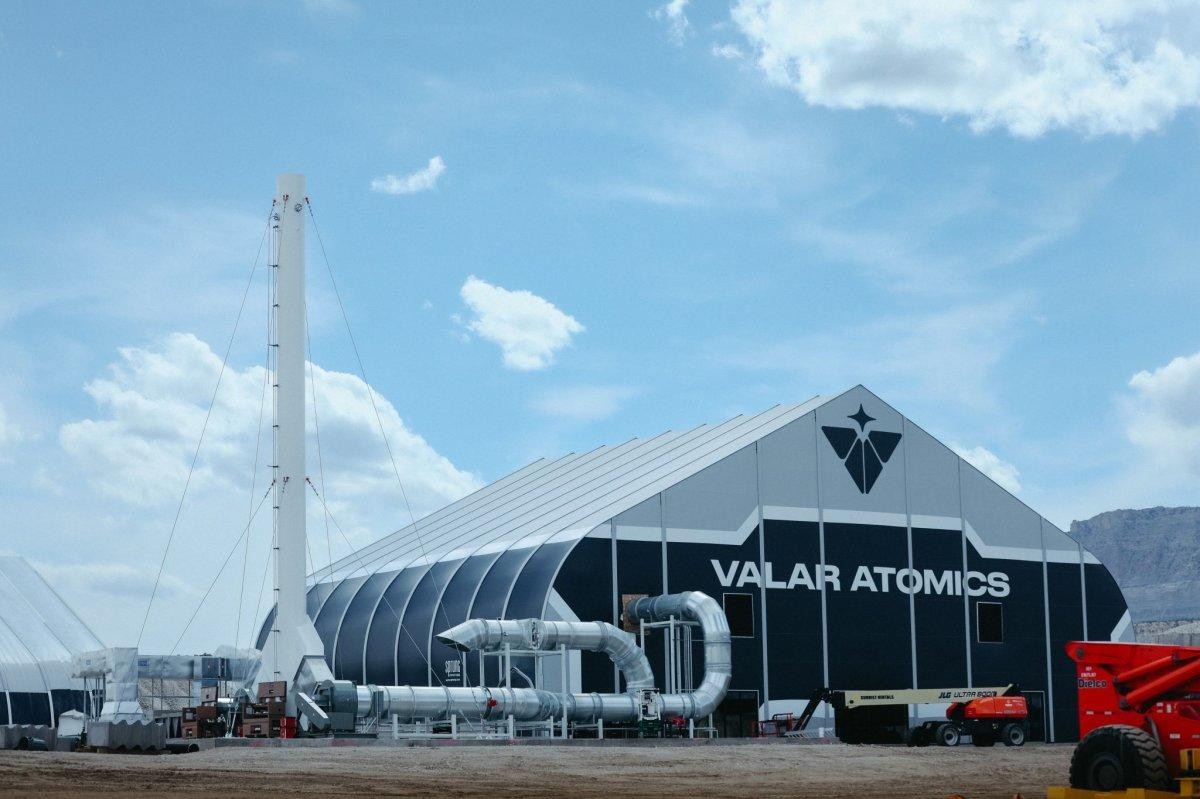
This ultra-dense nuclear energy complex is designed to fundamentally resolve the severe power supply bottleneck facing artificial intelligence (AI) computing centers. With the explosive growth of training and inference tasks for cutting-edge AI large models, the electricity demand of computing infrastructure has approached the transmission and distribution limits of traditional regional power grids. Existing public grids cannot sustainably provide stable, zero-carbon, dedicated baseload power free from external fluctuations. To this end, Project Beehive will adopt a “nuclear direct power supply” model to build a closed-loop energy system for the supercomputing center that is insulated from grid vulnerability.
At the land-use approval level, the Utah School and Institutional Trust Lands Administration (SITLA) unanimously passed a resolution on September 17, formally approving the lease of an initial 640 acres of trust land for the project. Currently, the remaining federal land-use rights are under compliance review by the US Department of the Interior's Bureau of Land Management (BLM).
In terms of reactor engineering architecture and core design, Project Beehive has abandoned the traditional light-water reactor approach and shifted entirely to a circulation system using high-purity helium as the primary coolant. This design significantly avoids massive cooling water consumption, which is particularly critical for the arid and water-scarce highlands of the western United States. In addition, the park is planned to achieve a high degree of self-sufficiency across the nuclear industry chain, with plans to complete on-site assembly of special fuel elements and long-term safe interim storage of spent nuclear fuel within the enclosed plant site.
This reactor type uses tri-structural isotropic particle fuel (TRISO), which possesses excellent inherent safety characteristics. The fuel kernel is surrounded by multiple layers of high-temperature-resistant pyrolytic carbon and silicon carbide ceramic protective shells. Even under extreme conditions such as a station blackout and extreme high temperatures, the fuel structure will not melt down and can spontaneously prevent the release of radioactive fission products through the physical properties of the materials. Previously, Valar Atomics conducted functional verification of its microreactor core prototype——the Ward 250 microreactor——in the Utah desert, and successfully used the electricity it generated to drive Nvidia computing equipment in stable operation.
Disclaimer: Information republished from partner media, institutions or other websites is provided for reference and communication purposes only. It does not imply endorsement of its views or verification of its accuracy. Please contact us if any content infringes rights or requires correction.