
Rosatom Starts Preparations for Long-Lead Equipment Contracts at Primorskaya NPP
The engineering division of Rosatom recently announced that preparations for signing long-lead equipment manufacturing contracts for the Primorskaya Nuclear Power Plant have commenced, covering the reactor building, turbine hall, core catcher, and other major system components. According to the announcement, the scope of contract preparation includes key equipment such as main reactor building equipment, turbine hall equipment, the Automated Process Control System (APCS) for the units, and the core catcher. Long-lead equipment typically has extended manufacturing cycles and represents a critical element that must be secured early in the pre-construction phase of a nuclear power project. Currently, the project is also advancing multiple public tender preparation efforts, including site vertical layout planning,...
2026-08-13

Rosatom Technical Academy Launches Development of Training Programs for Uzbekistan NPP Personnel
Rosatom Technical Academy has launched the development of training programs for personnel of the planned nuclear power plant in Uzbekistan. The foundation ceremony for this project was held in June this year, and training preparations will be aligned with the NPP construction schedule and subsequent operational requirements. Currently, Academy experts are developing teaching materials, refining training methodologies, and formulating course plans coordinated with the NPP construction phases for this new project. The training content will also be adapted to the characteristics of the small modular reactor technology adopted for the project to meet new technical requirements. At the Novovoronezh branch alone, about 50 experts are already involved in developing training programs for Uzbek personnel...
2026-08-12

New Progress in Containment Construction of Unit 1 at Egypt's El Dabaa Nuclear Power Plant
The Egyptian Nuclear Power Plants Authority announced that the fourth-layer concrete pouring of the containment inside the reactor building of Unit 1 at the El Dabaa Nuclear Power Plant has been completed. This construction milestone raised the reactor building height from 24.4 meters to 34.0 meters above ground level, marking continued progress of Egypt's first nuclear power plant toward the key equipment installation phase. The pouring operation lasted 30 consecutive hours, utilizing 5 concrete pump trucks with placing booms and pouring approximately 1,608 cubic meters of concrete. During construction, about 80 professionals participated in each of the day and night shifts, with an additional 20 personnel ensuring round-the-clock stable operation of construction equipment and machinery, demonstrating the high-intensity advancement of the project in organizational scheduling and on-site coordination...
2026-08-12

Russia's Atommash Commissions Ultrasonic Weld Inspection Robot to Boost NPP Equipment Testing Efficiency
Atommash, a plant under the mechanical engineering division of Russia's State Atomic Energy Corporation (Rosatom), has recently commissioned a new ultrasonic inspection robot for welded joints, used for weld quality checks on large nuclear power equipment such as nuclear reactors and steam generators. The plant is located in Rostov Oblast, Russia. The new equipment employs two scanning modes and can identify weld defect types and locate defect coordinates. Compared with traditional inspection methods involving manual probe movement, the robot can automatically perform scanning on components with complex geometries, increasing inspection speed by approximately 30% while reducing the need for manual work in hard-to-reach areas. At present, Atommash already operates...
2026-08-11

Rostov NPP's Self-Developed Device Cuts Instrument Calibration Cycle from 60 Days to 5 Days
The metrology team at Russia's Rostov Nuclear Power Plant has recently developed and put into operation a device for calibrating high-precision measuring instruments, reducing the relevant instrument calibration cycle from approximately 60 working days to 5 working days—a twelvefold reduction in time. The project was completed by the plant's metrology personnel within the framework of the Rosatom Production System. Previously, some high-precision instruments at the plant requiring regular maintenance and calibration had to be sent to specialized laboratories, with the entire process involving document preparation, equipment transportation, cargo escort, and coordination with external personnel, typically taking about two months. With the new device in operation, calibration work can now be...
2026-08-11

Belarusian NPP safe operation period may be extended to 100 years, with first spent fuel to be shipped to Russia for reprocessing in 2034
Stanislav Levitsky, head of the Rosatom representative office in Belarus, stated on the "Economic Environment" program of Belarusian TV Channel One that Belarusian nuclear energy development is backed by comprehensive safety assurances. He emphasized that while nuclear facilities can indeed have serious consequences if mismanaged, under the existing risk control system and modern technological support at the Belarusian NPP, nuclear power can become a low-cost, stable, and safe energy source. Levitsky believes that amid intense competition in the energy sector, some irresponsible players may use information tactics to create anxiety and attempt to provoke panic among the public...
2026-08-10
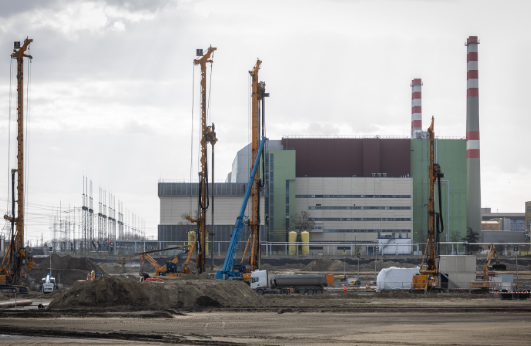
Hungary's New Government Questions Paks II Nuclear Project, Audit Dissatisfaction May Lead to Contractor Replacement
Hungary's new government (Prime Minister Péter Magyar) has continued to send unclear signals regarding the Paks II nuclear power plant expansion project contracted to Russia's Rosatom, bringing this major energy project involving the Russian state nuclear corporation back into the spotlight. The government is dissatisfied with the interim results of the contract audit and has hinted that Budapest does not rule out the possibility of replacing the contractor. The Paks II project was originally regarded as a key component of Hungary's long-term energy security strategy. Nuclear power holds fundamental significance for Hungary's electricity supply, and the expansion of the Paks nuclear plant was also seen as a measure to reduce energy import pressure and stabilize electricity prices.
2026-08-10

Installation of Passive Heat Removal System Completed for Unit 1 of Turkey's Akkuyu Nuclear Power Plant
Rosatom recently announced that the installation of the Passive Heat Removal System (PHRS) for Unit 1 of Turkey's Akkuyu Nuclear Power Plant has been completed. This means the unit is now equipped with a critical safety system and is ready for the commissioning phase. According to reports, the installed equipment includes approximately 90 components such as heat exchangers, guide vanes, air ducts, and electromagnetic devices, which were installed in stages in the reactor building dome area. The Passive Heat Removal System is one of the key safety systems of a nuclear power unit, designed to remove residual heat from the reactor core under specific operating conditions. The system consists of four independent channels, each corresponding to one steam generator...
2026-08-10

Rosatom Resumes Sending Specialists to Bushehr Nuclear Power Plant
Alexey Likhachev, Director General of Rosatom, stated on August 9 that the company has resumed sending specialists to the construction site of Iran's Bushehr Nuclear Power Plant, with the first batch of five engineering and technical personnel having arrived at the site and begun work. Likhachev said that with this batch in place, the total number of Russian specialists at the Bushehr project site has now increased to 25. The company plans to dispatch the next batch, numbering several dozen people, within the next two weeks, provided that the conflict between the United States and Iran does not escalate further. He indicated that under current arrangements, Rosatom plans to increase the number of personnel at the project site to 100 this autumn...
2026-08-10

Rosatom Says Russian Nuclear Plants Operate Stably During Summer Heat
In response to recent operational pressures faced by foreign nuclear power plants due to high temperatures and low water levels, Alexey Likhachev, CEO of Rosatom, stated that Russian nuclear power plants are operating normally during the summer peak electricity demand period, with stable power generation. Likhachev said that hot weather does require nuclear plant operators to pay more attention to the condition of cooling systems, but for Russian nuclear plants, this is a normal seasonal factor. Russian nuclear power plants have incorporated significant climate fluctuations, including extreme weather scenarios, into their design and operational phases. He stated that Rosatom has experience in...
2026-08-09

Vacuum test of the turbine condenser at Unit 1 of Akkuyu NPP successfully completed
The vacuum test of the turbine condenser at Unit 1 of Turkey's Akkuyu NPP, built by Rosatom, has been completed. The operation confirmed that the main systems of the turbine unit are ready for the next stage of commissioning. During the test, technicians established the required negative pressure in the condenser, checked the tightness of the vacuum system and the thermomechanical condition of the turbine, while monitoring parameters such as condenser vacuum, steam pressure, bearing temperatures, and thermal expansion of the casing and rotor. During the turning gear rotation of the turbine, the proper operation of the flow path (blades) was confirmed. Systems involved in the operation included: start-up boiler house boilers, vacuum system, bearing lubrication system, hydraulic jacking oil system, main turning gear, steam supply and extraction systems, as well as the equipment thermomechanical condition monitoring system.
2026-08-08
Russian nuclear power plants generate 129.6 billion kWh of electricity this year
Alexey Likhachev, CEO of Rosatom, recently stated that since the beginning of this year, Russian nuclear power plants have generated a cumulative total of 129.6 billion kWh of electricity, exceeding the target set by the Federal Antimonopoly Service of the Russian Federation by 7.8%. Likhachev noted that Russia is currently in its summer peak electricity consumption period, and nuclear power plants across the country are operating normally overall, with stable power generation and all safety requirements being met. He stated that hot weather does require operating entities to pay greater attention to cooling and heat reduction measures, but this is a seasonal factor that must be addressed in nuclear power plant operations. He pointed out that Russian nuclear power plants have fully considered different climatic conditions during their design and operation phases...
2026-08-08

Rosatom Delegation Visits SevRAO Radioactive Waste Management Facilities
A delegation from Rosatom recently inspected the production facilities of the Northwestern Center - SevRAO, a branch of the Federal State Unitary Enterprise RADON (FSUE RADON). The delegation included Vasily Tinin, responsible for state policy on radioactive waste, spent nuclear fuel, and nuclear and radiation safety, as well as Sergey Martynenko, head of the Integrated Nuclear Submarine Decommissioning Program Office. The host side was represented by Igor Pron, Acting General Director of FSUE RADON, Dmitry Drozhilkin, Acting Director of SevRAO, and Yuri Shokhin,...
2026-08-07
Rosatom Completes First Batch of Certification for Energy Critical Information Infrastructure Products
Rosatom has recently completed the first batch of product certification for critical information infrastructure in the fuel and energy sector under the KII-Sert voluntary certification system. The certification system has been operating in Russia's nuclear energy and aerospace industries since 2024, primarily used to assess the reliability, technological independence, and sustainability of solutions related to critical information infrastructure. The certification was carried out by Atomenergoproekt JSC, part of Rosatom's engineering division. As an authorized certification body for trusted products and processes within the KII-Sert system, the company, in cooperation with the industrial testing laboratory Avtomatika-Servis LLC, certified a software and hardware system used in the oil and gas industry.
2026-08-07

Chinese Nuclear Safety and Nuclear Industry Delegation Visits Russian Floating Nuclear Thermal Power Plant
From July 28 to 30, representatives from China's National Nuclear Safety Administration, China National Nuclear Corporation (CNNC), and the Chinese Embassy in Russia, together with officials from the Federal Service for Environmental, Technological and Nuclear Supervision of the Russian Federation (Rostechnadzor), jointly visited the floating nuclear thermal power plant located in Pevek, Chukotka Autonomous Okrug. The plant is operated by Rosenergoatom, the power generation division of Rosatom. During the visit, the delegation inspected the floating power unit and onshore facilities, and learned about the operation of key equipment. Chinese experts focused on spent fuel storage, refueling procedures, and related equipment configurations...
2026-08-07

Türkiye plans to commission subsequent Akkuyu nuclear power plant units at one-year intervals
Turkish Energy Minister Alparslan Bayraktar said on August 6 that Türkiye plans to commission subsequent units of the Akkuyu Nuclear Power Plant (NPP) at one-year intervals after the first unit goes into operation. Bayraktar stated that Unit 1 of the Akkuyu NPP is scheduled to begin generating electricity by the end of the year, with work on the first reactor's commissioning currently progressing at full speed. According to Türkiye's plan, after Unit 1 enters service, the remaining units will successively enter the commissioning phase. The Akkuyu NPP is Türkiye's first nuclear power plant, constructed by Russia's State Atomic Energy Corporation (Rosatom). The project plans four units, all using Russia-designed Generation III+...
2026-08-07

Rosatom selects SNIIP as chief design organization for radiation control systems, overseeing standardization of radiological instrumentation and import substitution assurance at nuclear facilities
Rosatom has selected the Research Institute of Scientific Instruments (SNIIP) as the chief design organization for radiation control systems. The institute, which is part of Rosatom's automation control and electrical equipment division, has been granted this status for a range of similar products in radiation control equipment and systems, including automated radiation control systems and radiation environment monitoring. SNIIP's status as chief design organization means it will be responsible for ensuring Russia's technological autonomy in this field and for developing radiation control instruments and systems. SNIIP General Director Alexey Nikitin stated that this recognition is a testament to the years of work, experience, and professional expertise of the institute's employees...
2026-08-06

Russia Says Bushehr Nuclear Plant Expected to Operate by Next August
Sergey Kiriyenko, head of Russia's state nuclear corporation Rosatom, said the Iranian Bushehr nuclear power plant, being built by Russia, is expected to become operational by August next year, with construction progressing smoothly. Kiriyenko stated that the Bushehr plant would not threaten the nuclear non-proliferation regime in any way, and that sanctions related to Iran's nuclear program are also unrelated to the Bushehr plant. Construction of the Bushehr reactor began 15 years ago, and once completed, it will become Iran's first nuclear power plant. U.S. Secretary of State Hillary Clinton expressed surprise at the news and criticized Russia's plans to push forward with the plant's launch.
2026-08-06

Russia Says Balkhash NPP Construction Will Boost Kazakhstan's Nuclear Energy Industry
Russian Deputy Foreign Minister Mikhail Galuzin recently stated that the construction of Kazakhstan's first nuclear power plant, the Balkhash NPP, will help the country establish a modern nuclear energy industry. Rosatom, Russia's state atomic energy corporation, is participating in the project as the lead party. Speaking at the plenary session of the Third Russia-Kazakhstan Media Forum, Galuzin said that Russia and Kazakhstan cooperate in multiple areas, with the Balkhash NPP being one of the recent collaborative projects. He noted that the plant will be built to a Russian design and, once completed, will provide a foundation for the development of Kazakhstan's nuclear energy industry. According to current plans, the Balkhash NPP project is scheduled to begin construction in 2027...
2026-08-04

Rosatom Expects Revenue of $43.2 Billion in 2026
Rosatom expects its revenue to reach $43.2 billion in 2026, driven primarily by new products, international operations, and expansion in nuclear energy, technology, and logistics. The company plans to continue scaling up in the coming years, targeting consolidated revenue of approximately $50.8 billion by 2028, with businesses related to new technologies expected to grow by about 50%. To support this growth target, Rosatom will maintain an investment program exceeding $11.4 billion, focusing on projects that yield the best financial returns. Rosatom is actively implementing cost control and efficiency improvement measures, aiming to increase productivity by 12% annually and achieve a 10% wage increase...
2026-08-03

Zaporizhzhia Nuclear Power Plant currently relies on only one external power line for electricity supply
Alexey Likhachev, President of Rosatom, stated that the Zaporizhzhia Nuclear Power Plant currently obtains electricity through only one 330 kV external transmission line—Ferrosplavnaya-1—and that the instability of external power supply remains one of the main safety hazards facing the facility. According to the company's press office, Likhachev noted that the lack of a second operational external transmission line at the Zaporizhzhia NPP increases the risk to the safe operation of the plant's units. Although the plant is in a shutdown state, its safety-critical systems still require a stable power supply to ensure the continued operation of equipment related to nuclear safety...
2026-08-03
Reading Ranking
- 1 Hungary's New Government Questions Paks II Nuclear Project, Audit Dissatisfaction May Lead to Contractor Replacement
- 2 Tianwan Unit 7 and Xudapu Unit 3 are expected to enter the commissioning phase within a few weeks.
- 3 Site survey work for Kazakhstan's first nuclear power plant is nearing completion.
- 4 Rosatom says 13 small reactor pressure vessels at various production stages
- 5 Indonesia Holds Meeting with Russia on Regulatory Framework for Floating Nuclear Power Plants
- 6 Rosatom to Conduct Site Surveys for Myanmar Small Nuclear Power Plant in 2027
- 7 Russia says its nuclear power plant designs can adapt to construction requirements in seismically active regions
- 8 Russia's Smolensk NPP begins loading improved nuclear fuel
- 9 Russia Plans to Build Small Nuclear Power Plant in Kyrgyzstan, Land-Based Icebreaker Reactor in Focus
- 10 Rosatom Proposes New VVER-1000 Nuclear Power Unit to Armenia
- 11 Kazakhstan and Russia will jointly formulate a personnel training plan for the Balkhash Nuclear Power Plant.
- 12 Vacuum test of the turbine condenser at Unit 1 of Akkuyu NPP successfully completed
- 13 Russia Plans to Update Regulatory Framework for Advanced Nuclear Technologies
- 14 Rosatom's Atommash and Rostov Region Government Discuss Volgodonsk Development Plan
- 15 Egyptian Minister of Electricity Inspects Small Modular Reactor Technology in Russia