
Search Results
Keyword:Al

South Korea Plans to Open Up "Direct Purchase" of Nuclear Power: A Low-Cost Pathway for Industrial Decarbonization, or a New Challenge for the Electricity Market?
2026-09-17
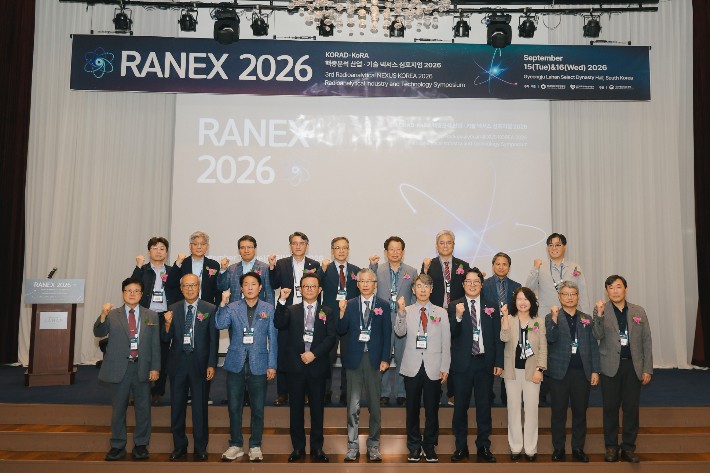
Korea Radioactive Waste Agency Hosts Nuclear Nuclide Analysis Industry and Technology Nexus Symposium (RANEX 2026)
The agency and the Korea Radioactive Analysis Association jointly hosted the Nuclide Analysis Industry and Technology Nexus Symposium (RANEX 2026) from September 15 to 16 at the Lahan Select Hotel in Gyeongju, attracting more than 200 experts, scholars, and industry representatives from home and abroad. The core purpose of this symposium was to share the importance of nuclide analysis—a key area in the national radioactive waste management undertaking—and to jointly explore strategies for technological innovation and the cultivation of an industrial ecosystem through in-depth cooperation between the public sector and private enterprises. During the symposium, experts discussed the development strategy for the radioactive waste nuclide analysis industrial ecosystem, the latest analytical technologies and instrumentation...
2026-09-17

ZAP-X Gyroscopic Stereotactic Radiosurgery Platform Makes Its Australian Debut, Expanding Precision Non-Invasive Brain Radiotherapy
ZAP Surgical, the global leader in non-invasive robotic brain surgery, recently announced that GenesisCare will become the first cancer care provider in Australia to introduce the ZAP-X Gyroscopic Radiosurgery platform. Installation of the device is scheduled to begin this month at the GenesisCare center located at St Vincent's Hospital Sydney in New South Wales, with the first patients expected to receive treatment before the end of this year. The introduction of the ZAP-X platform will significantly enhance GenesisCare's neuro-oncology diagnostic and treatment capabilities in Sydney, providing it with dedicated stereotactic radiosurgery (SRS) services. Prior to this, patients receiving S...
2026-09-17

Canadian uranium exploration company Triton Uranium advances Atlas project, identifies 46.56 million pounds of potential uranium resources
Canadian uranium exploration company Triton Uranium recently announced that it has completed four technical reports compliant with NI 43-101 and S-K 1300 standards for its Atlas project located in Saskatchewan. The reports indicate that satellite mineralized occurrences and exploration target areas within the project area exhibit low-grade open-pit potential resources of up to 46.56 million pounds of triuranium octoxide (U₃O₈). This major technical breakthrough comes as the United States and Canada accelerate the construction of a continent-wide critical minerals supply chain under the U.S.-Canada Critical Minerals Action Plan. Meanwhile, Canada is fully advancing its nuclear energy strategy, with new reactor construction, small modular reactor (SMR) development, and the refurbishment of existing units...
2026-09-17

Blue Energy Submits Construction Permit Application to U.S. Nuclear Regulatory Commission to Advance Texas Gas-to-Nuclear Project
Blue Energy announced that it has submitted Part One of its construction permit application to the U.S. Nuclear Regulatory Commission (NRC) for its first gas-to-nuclear project at Port Victoria, Texas. This milestone move makes Blue Energy one of only five nuclear energy companies to have submitted a construction permit application to the NRC in the current new wave of nuclear power development. Blue Energy employs the Blue Way of prefabricated and standardized construction, transport, and assembly of nuclear power plants. Compared with traditional nuclear power projects, this model can shorten project commissioning time by more than a decade and significantly reduce costs and construction risks. With the final investment decision expected to be made in 2027, the project plans to deploy GE Vernova 7HA.02 gas turbines and GE Vernova Hitachi BWRX-300 small modular reactors (SMRs) to create a first-of-its-kind gas-to-nuclear hybrid power plant.
2026-09-17

Curium's Lutetium-177 Injection Approved by FDA for Treatment of Gastroenteropancreatic Neuroendocrine Tumors
Radiopharmaceutical company Curium recently announced that its developed lutetium-177 (Lu-177) dotatate injection (trade name: Bexlutry) has received formal approval from the U.S. Food and Drug Administration (FDA). The drug is indicated for the treatment of somatostatin receptor-positive adult gastroenteropancreatic neuroendocrine tumors (GEP-NETs). The specific indication scope includes various neuroendocrine tumors occurring in the adult foregut, midgut, and hindgut. Bexlutry is an advanced radioligand therapy whose mechanism of action lies in its ability to specifically bind to somatostatin receptors highly expressed on the surface of such tumors. Through this precise binding, the drug can deliver...
2026-09-16

Ontario Power Generation Nuclear Waste Management Facility Second Quarter Performance Report Released
Ontario Power Generation (OPG) recently released its second quarter performance report for its nuclear waste management facilities, providing a detailed assessment of the facilities' performance in terms of safety, operations, and environment. This report emphasizes OPG's commitment to continuously improving nuclear waste management practices and providing transparent information to the public. The report shows that the Total Reportable Incident Frequency (TRIF) for the second quarter was 0.0, far below the target value, indicating significant achievements in ensuring employee safety. In terms of transportation, vehicles used for waste transport safely traveled over 82,000 kilometers, with cumulative mileage exceeding 7 million kilometers, demonstrating the professionalism and responsible attitude of the transportation team. In terms of environment, no reportable environmental spill events occurred in the second quarter...
2026-09-16

Kazakhstan Delivers National Statement at the 70th IAEA General Conference, Outlining Nuclear Energy Development Strategy
On September 15, 2026, during the 70th General Conference of the International Atomic Energy Agency (IAEA) held in Vienna, Gumar Sergazin, Head of the Kazakh Delegation and Vice Chairman of the Atomic Energy Agency of the Republic of Kazakhstan, delivered an official national statement on behalf of the country. In his remarks, Gumar Sergazin highlighted Kazakhstan's core priorities in the nuclear industry, including advancing nuclear energy and nuclear industry development, promoting nuclear science and nuclear medicine research, and deepening international cooperation, among other key topics. The statement particularly emphasized the important historical significance of the 35th anniversary of the closure of the Semipalatinsk Nuclear Test Site. Kazakhstan reaffirmed its commitment to disarmament and nuclear non-proliferation...
2026-09-16

Scientists Reveal the Chemical Secrets of the Nanoscale Iridescent Effect in 9th-Century Islamic Ceramics
A scientific team led by the Universitat Politècnica de Catalunya (UPC) in Barcelona and the European Synchrotron Radiation Facility (ESRF) has successfully revealed the nanoparticle chemical reactions that created the distinctive shimmering iridescent effect in 9th-century Islamic ceramic painting. The related research findings have been published in the academic journal Science Advances. Centuries before the rise of modern nanotechnology, 9th-century Abbasid potters were already able to produce ceramics with vivid colors such as gold, red, brown, or yellow and a metallic luster. This technique for creating the iridescent effect originated in the Near East during the Abbasid period and subsequently spread throughout the entire Islamic world.
2026-09-16

Terrestrial Energy Submits Graphite Topical Report to U.S. Nuclear Regulatory Commission, Advancing Integrated Molten Salt Reactor Licensing Process
Terrestrial Energy, a leading company in fourth-generation molten salt reactor technology, announced on September 10 that it has submitted the Graphite Topical Report to the U.S. Nuclear Regulatory Commission (NRC). The submission of this report is intended to establish a solid regulatory certification basis for the application of nuclear-grade graphite—a core component of the IMSR core unit—in commercial power plants, marking an important step in the company's commercialization process. The IMSR reactor is a graphite-moderated molten salt reactor. Although graphite has a relatively long history of application in the nuclear power field, regulators require independent performance verification for each specific reactor design to ensure safety and reliability. This submission...
2026-09-16

South Korea and Kazakhstan Sign Nuclear Energy Agreement, Deepening Cooperation on Critical Minerals and Strategic Industries
South Korea and Kazakhstan signed a memorandum of understanding (MOU) on the peaceful use of nuclear energy on Tuesday (September 15). The leaders of the two countries agreed to expand cooperation in critical minerals, artificial intelligence (AI), and other strategic industries. During the state visit of Kazakh President Kassym-Jomart Tokayev to South Korea, South Korean President Lee Jae-myung and Tokayev held talks at the Blue House in Seoul. According to The Korea Times, South Korea and Kazakhstan signed a total of 13 agreements and memorandums of understanding. Lee Jae-myung and Tokayev also agreed to elevate bilateral relations to a future-oriented comprehensive strategic...
2026-09-16
Sweden's Blykalla Partners with Microsoft to Use AI to Advance Licensing Review of Lead-Cooled Advanced Nuclear Reactor
Swedish advanced nuclear technology developer Blykalla recently announced a partnership with Microsoft to apply artificial intelligence (AI) technology to one of the most challenging bottlenecks in the nuclear power industry——project licensing and regulatory review. Blykalla has begun deploying Microsoft's GenAI for Energy Permitting Solution Accelerator and Agentic AI tools in its regulatory business processes, aiming to significantly shorten the licensing approval cycle for its Swedish Advanced Lead-cooled Reactor (SEALER) in Sweden and the United States. Microsoft's solution demonstrates how generative AI and AI agent...
2026-09-16
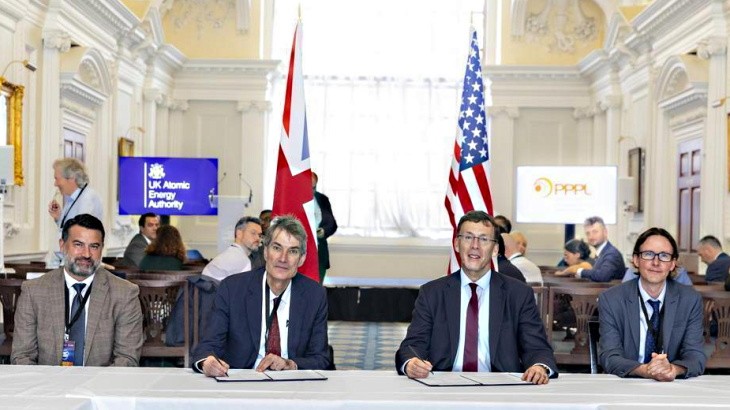
US and UK Join Forces to Accelerate Commercialization of Fusion Energy
At the Global Fusion Policy Summit held in London on Monday, the UK Atomic Energy Authority (UKAEA) and the Princeton Plasma Physics Laboratory (PPPL), which operates under the US Department of Energy, signed a joint statement of intent. The two sides plan to establish a partnership called the SUNRISE–STELLAR-AI Federation, integrating the UK's first supercomputer dedicated to fusion research, SUNRISE (funded by the UK government with £45 million), with PPPL's STELLAR-AI supercomputing platform (costing $13 million), to leverage artificial intelligence (AI) to accelerate fusion energy R&D. The collaboration builds on a memorandum of understanding signed by both parties in June this year and will utilize the UKAEA...
2026-09-16
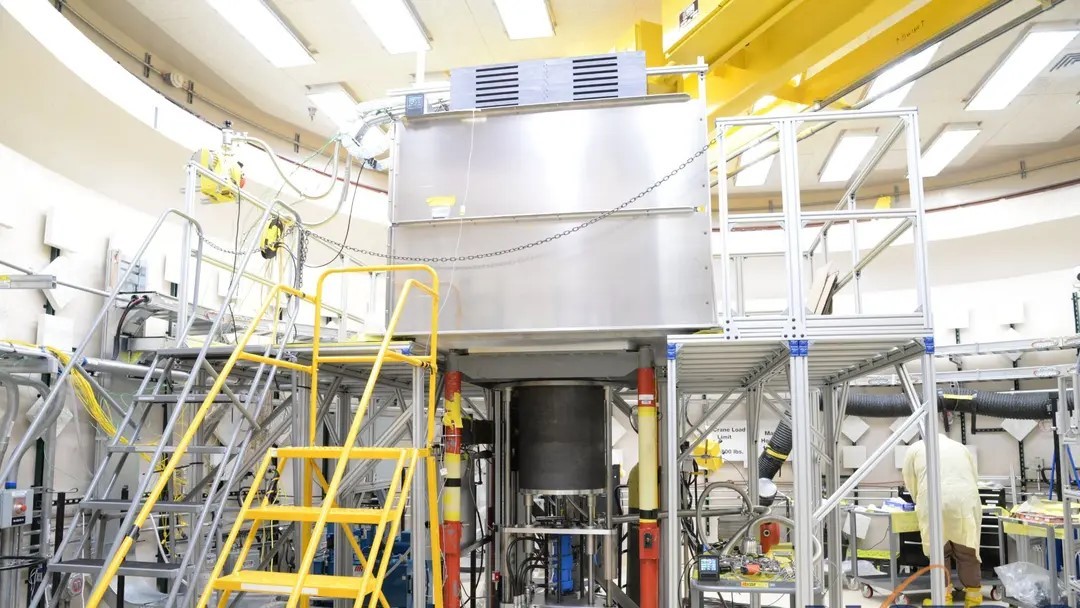
Westinghouse eVinci Microreactor Achieves Significant Breakthrough in Zero-Power High-Temperature Criticality Test
Westinghouse Electric Company recently announced that its eVinci microreactor achieved a significant breakthrough in a zero-power high-temperature criticality test, successfully achieving criticality at a temperature of 663 degrees Celsius, marking an important milestone in the project's development. This test is an important practice of the build-test-learn development model, providing key data for accelerating subsequent prototype design. The test was conducted at the U.S. Department of Energy National Nuclear Security Administration (NNSA)'s National Criticality Experiments Research Center (NCERC) in Nevada, with active cooperation and support from Los Alamos National Laboratory and the Nevada National Security Site (NNSS). The selection of the test site has sign...
2026-09-16

China Launches Global Network for Small Modular Reactor Innovation
On Tuesday, September 15, during the 70th General Conference of the International Atomic Energy Agency (IAEA) held in Vienna, the China Atomic Energy Authority officially launched the Global Network for SMR Innovation (GNSI). The network aims to promote technological progress, standard-setting, and deployment of small modular reactors (SMRs), helping to improve the safety, economics, and accessibility of nuclear energy in support of climate action and sustainable development. At the launch and promotion event held in Vienna, participants stated that small modular reactors are expected to play a key role in the global expansion of nuclear energy, with applications far beyond conventional power generation, including offshore power supply, high-temperature hydrogen production, district heating, and seawater desalination.
2026-09-16