
Search Results
Keyword:B

U.S. to Conduct Underwater Neutrino Detection Tests in Lake Superior and Vermilion Lake
From October 2026 to approximately April 2027, a team of researchers from U.S. universities and government agencies will conduct underwater neutrino tests in Lake Superior and Vermilion Lake. The project, named the Experimental Neutrino Detector (END), aims to validate a baseline detection system in natural water bodies to identify the NuMI neutrino beam produced by Fermi National Accelerator Laboratory and distinguish it from cosmic-ray backgrounds and other noise in shallow-water environments. END will place underwater neutrino detectors on the lakebed of Lake Superior where the Fermilab neutrino beamline passes through—near Two Harbors, Minnesota. The beamline will continue toward...
2026-09-02

Sejong City Requests National Support for Proton Cancer Therapy Center Budget
On September 2, 2026, the Democratic Party of Korea and Sejong City held their first budget policy consultation meeting at the Sejong City Government to discuss key agenda items and budget support for the city. At the meeting, Sejong City Mayor Cho Sang-ho requested the Democratic Party's attention to several issues, including securing national funding for the construction of a cancer proton therapy center, improving the general grant system for Sejong City, and promoting the passage of the Special Act on the Administrative Capital within the year. After the closed-door consultation, a relevant spokesperson stated in a briefing that the meeting proposed allocating 300 million KRW each in the next year's national budget for a feasibility study on the construction of the cancer proton therapy center and for the formulation of the basic plan for the National Central Bioresource Center.
2026-09-02
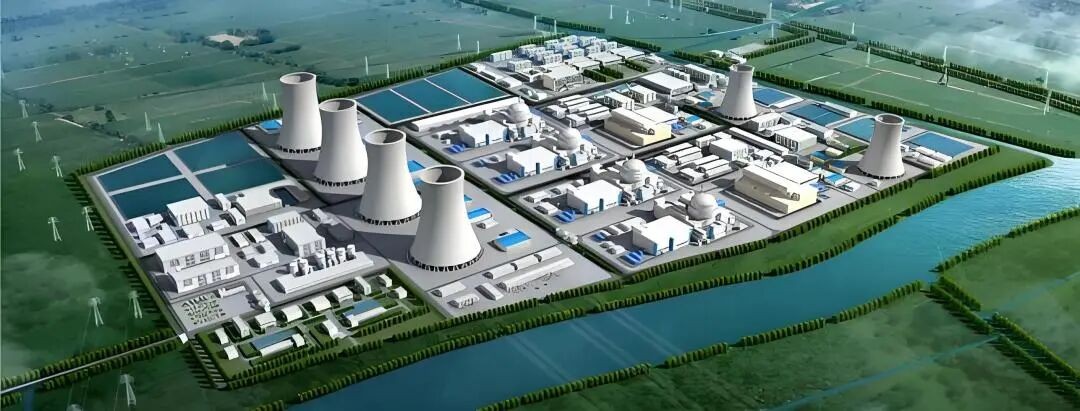
Hiconics Signs Contract for Main Helium Circulator Variable Frequency Drive Project at Xuwei Nuclear Heating and Power Generation Plant
Recently, Hiconics signed a contract for the main helium circulator variable frequency drive (VFD) project for the high-temperature gas-cooled reactor (HTGR) at the Jiangsu Xuwei Nuclear Heating and Power Plant, and will supply multiple sets of HC2000W four-quadrant water-cooled high-voltage VFDs for the project. This marks the second application of Hiconics' VFD technology in drive scenarios for key equipment related to Generation IV nuclear power, following the HTGR demonstration project at Huaneng Shandong Shidao Bay Nuclear Power Plant. The Jiangsu Xuwei Nuclear Heating and Power Generation Project is a comprehensive nuclear energy utilization project that adopts a coordinated operation model of "nuclear reactor – turbine generator unit – heating system," focusing primarily on industrial heating while also supplying electricity. Phase I of the project plans to construct two Hualong One pressurized water reactors and one HTR-PM600S high-temperature gas-cooled reactor...
2026-09-02

Concrete Placement Completed for Raft Foundation of Circulating Water Pit on North Side of 5BMX Turbine Generator Building at Fangchenggang Nuclear Power Plant
On August 30, the concrete placement for the raft foundation of the circulating water pit on the north side of the 5BMX turbine generator building at the Fangchenggang Nuclear Power Plant in Guangxi, undertaken by China Energy Engineering Group Anhui Electric Power Construction No.2 Engineering Co., Ltd., was completed. The total concrete volume placed was 796 cubic meters, with two truck-mounted concrete pumps operating simultaneously, and the work was completed in approximately 22 hours. The circulating water pit raft foundation is a key underground structure of the turbine hall. This mass concrete placement was carried out using the horizontal layered pouring method. The project department made advanced overall arrangements, refined the construction plan, and organized safety and technical briefings for construction. During the placement, project personnel performed their respective duties with coordinated collaboration, efficiently advancing concrete transport, placement, vibration, surface finishing, curing, and other tasks. Dedicated personnel were assigned for on-site supervision to strictly control key parameters such as pouring speed, vibration depth, and slump, and to rigorously implement safety and quality control measures, ensuring the entire construction process was safe, controllable, and quality-compliant. Ultimately, this critical civil construction milestone was successfully completed, laying a solid foundation for the subsequent circulating water system construction and the overall structural construction of the turbine hall.
2026-09-02

Russian Academy of Sciences Reveals Mechanism of Microbial Bioremediation Reducing Actinide Content in Groundwater
September 1, 2026 news: Researchers from the Vernadsky Institute of Geochemistry and Analytical Chemistry of the Russian Academy of Sciences, in collaboration with the Frumkin Institute of Physical Chemistry and Electrochemistry of the Russian Academy of Sciences and other institutions, studied the biogeochemical mechanisms affecting the distribution of actinides such as uranium, plutonium, and neptunium during bioremediation of nitrate-contaminated groundwater. Radionuclide-contaminated groundwater is a significant environmental issue in areas associated with nuclear fuel cycle facilities. Long-lived actinides such as uranium, plutonium, and neptunium, once released into the environment, can migrate over considerable distances with groundwater. Bioremediation, which alters geochemical conditions by stimulating natural microbial processes in the subsurface environment, is considered a potential approach for remediating contaminated zones...
2026-09-02

Institute of Nuclear Technology at Samarkand State University Introduces Radiation Monitoring Training Equipment
On August 24–25, 2026, experts from Doza Scientific Production Enterprise (NPP Doza) visited the Institute of Nuclear Technology at Samarkand State University named after Sharof Rashidov (SamSU) and completed the installation and commissioning of a demonstration model of the Fregat radiation monitoring system. The equipment has been integrated into the institute's teaching and research infrastructure and will be used for laboratory courses, student practical training, and related research work. Through this demonstration model, students and young professionals can gain exposure to modern technological solutions in the field of radiation monitoring, enhancing their understanding of the operation and application scenarios of relevant equipment. This installation...
2026-09-02

Russia launches remediation of legacy uranium sites at Taboshar facility in Tajikistan
Rosatom has recently launched remediation work at the legacy uranium production site of Workshop No. 3 at the Taboshar facility in Tajikistan, through its fuel division subsidiary, the Central Design and Technology Institute (JSC CPTI). The site is located in the village of Istiklol, Sughd Region, Republic of Tajikistan. The remediation is carried out under the intergovernmental agreement between the Russian Federation and the Republic of Tajikistan on cooperation in remediating areas affected by uranium mining and ore production, with the goal of improving the local environmental conditions and creating conditions for the future safe use of the area. Prior to the commencement of the work, JSC CPTI had completed remediation design and estimate documentation for two facilities in the Sughd Region,...
2026-09-02

Russia's Smolensk NPP begins loading improved nuclear fuel
On September 1, 2026, local time, Unit 1 of Russia's Smolensk Nuclear Power Plant began gradually loading improved nuclear fuel. The fuel assemblies feature adjusted uranium-235 enrichment and erbium oxide content, as part of the RBMK-1000 reactor modernization program aimed at enhancing unit operational safety and efficiency. The Smolensk NPP is part of the electric power division of Rosatom and is operated by Rosenergoatom. The fuel assemblies loaded into the core this time use lower uranium-235 enrichment and lower erbium oxide content. According to relevant calculations, the new fuel can compensate for changes in core neutronics parameters following graphite stack repair...
2026-09-02

Russia's SKIF and China's HEPS Explore Building Joint Synchrotron Radiation Experimental Station
The Siberian Circular Photon Source (SKIF) synchrotron radiation facility in Russia is considering closer cooperation with China's High Energy Photon Source (HEPS), including exploring the construction of a joint experimental station. Yevgeny Levichev, Director of the SKIF Collective Use Center, stated that the Russian side plans to sign cooperation agreements with three synchrotron radiation facilities in China by the end of this year, including the Shanghai Synchrotron Radiation Facility, the Beijing High Energy Photon Source (HEPS), and a synchrotron radiation facility in Hefei. Among these, Russia is particularly interested in advancing joint projects with HEPS, potentially even establishing a joint experimental station. Levichev noted that the Russian and Chinese synchrotron radiation facilities are complementary in terms of energy range, which will facilitate joint experiments by researchers and improve the utilization efficiency of large-scale scientific facilities.
2026-09-02

U.S. Plans to Build Second Uranium Conversion Plant
Raven-Flint Nuclear Corporation announced on August 31 that it has been selected for the Nuclear Energy Startup Platform project advanced by the U.S. Department of Energy (DOE) National Reactor Innovation Center (NRIC) at Idaho National Laboratory (INL), and plans to build a pilot uranium conversion facility named "Torch" at INL. The company stated that the Torch facility aims to become the second uranium conversion plant in the United States, with a designed annual processing capacity of 500 metric tons of uranium, capable of converting uranium into uranium hexafluoride (UF6). According to the company, this scale can meet the fuel demand of two large nuclear reactors. Upon project completion, it is intended to serve the U.S. Department of Energy and its affiliated agencies, and may provide domestically produced uranium hexafluoride for specific needs.
2026-09-02

New Hampshire Advances Nuclear Power and Small Modular Reactor Roadmap
The U.S. state of New Hampshire is making the expansion of nuclear power a priority in its next phase of electricity policy. The state government is developing an advanced nuclear energy roadmap, expected to cover the utilization of existing nuclear resources, construction of advanced nuclear plants, and potential deployment scenarios for small modular reactors (SMRs), with a preliminary plan slated for release in September. Governor Kelly Ayotte has directed the state's energy department to advance the roadmap's development. The state is currently soliciting input from utilities, consumer representatives, and energy industry stakeholders to assess nuclear power's role in addressing rising electricity demand and high electricity prices. New England...
2026-09-02

Changwon National University and Doosan Enerbility Conduct On-Site Training on Nuclear Power Main Equipment Design
The AI-based Next-Generation Nuclear Power Equipment and Components Manufacturing Innovation Research Center (AI-NMIC) at Changwon National University, together with the Regional Innovation Alliance Center for Medium-Sized Enterprises, recently completed on-site training on nuclear power main equipment design. The training was held for students participating in related projects at Doosan Enerbility's site. According to Changwon National University on August 31, the training lasted five days, totaling 30 hours, and was designed to help students acquire professional knowledge related to the design and manufacturing of key nuclear power equipment, as well as to understand the design, manufacturing processes, and practical application scenarios of nuclear power equipment through on-site corporate instruction. The tra...
2026-09-02

CERN Finds Statistical Hints of Higgs Boson Pair Production
Physics teams at CERN have recently found statistical hints of Higgs boson pair production in data analysis from the Large Hadron Collider. Researchers analyzed millions of collision results over eight years at the collider, with the findings presented at the ICHEP conference and published as two preprints. The figure shows schematic diagrams of events involving the production of two Higgs bosons as observed by ATLAS (left) and CMS (right) CERN The Higgs boson was discovered in 2012, and since then physicists have continuously measured its interactions with other elementary particles to test the Standard Model's explanation of the origin of mass. However, the self-interaction of the Higgs boson has not yet been directly observed.
2026-09-02
Declaration of the Council of Heads of State of the Shanghai Cooperation Organization Member States on Strengthening Multilateral Partnership for Nuclear Safety and Nuclear Security
The Member States of the Shanghai Cooperation Organization (hereinafter referred to as the SCO), bound by historical ties, centuries-old traditions of good-neighborliness and mutual respect, declare their commitment to the SCO Charter, the Charter of the United Nations and universally recognized principles and norms of international law, including respect for sovereignty, territorial integrity and non-interference in internal affairs, guided by the Shanghai Spirit of mutual trust, mutual benefit, equality, consultation, respect for diverse civilizations and pursuit of common development, affirming that responsibility for nuclear security rests entirely with the State, noting that responsibility for nuclear safety rests with the operating organizations of nuclear facilities and the States in which nuclear facilities are located, attaching great importance to nuclear safety and nuclear security issues, which are important elements of international security directly affecting the lives of the peoples of the SCO Member States, and expressing deep concern over illicit trafficking of nuclear materials and...
2026-09-02
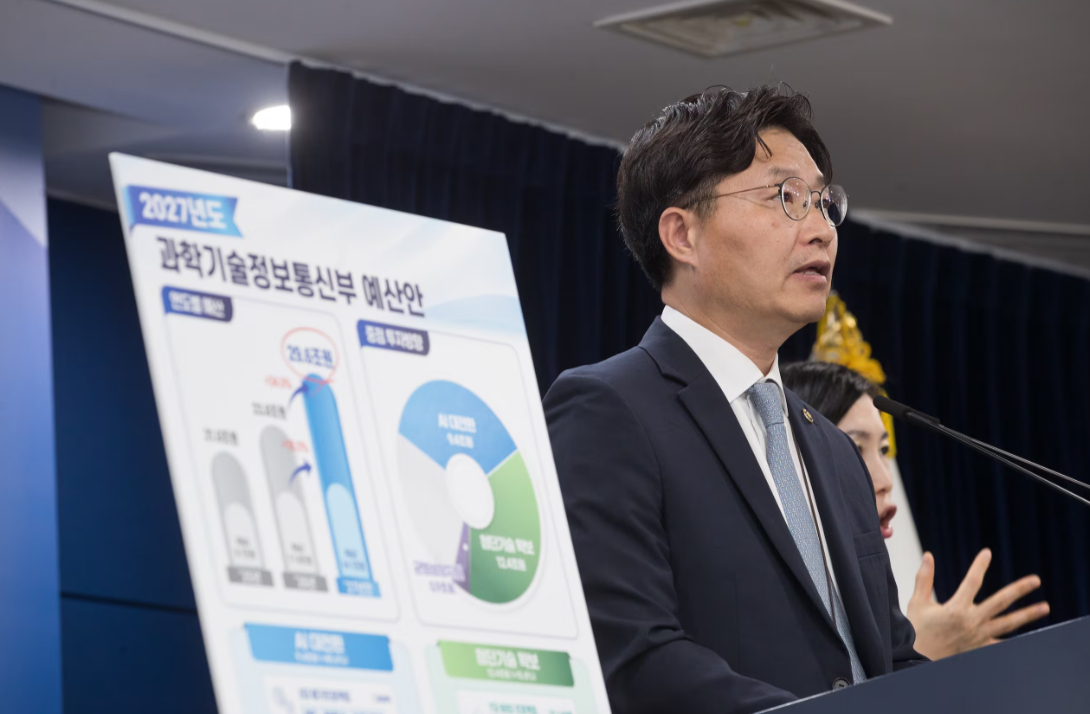
South Korea Plans to Increase R&D Investment in Nuclear Fusion and Small Modular Reactors
South Korea's Ministry of Science and ICT (MSIT) stated on September 1 that in the 2027 government budget proposal approved at a Cabinet meeting, the ministry's budget amounts to 29.6476 trillion Korean won, an increase of 24.5% compared to this year's supplementary budget. Of this, the R&D budget is planned to increase from 11.9 trillion won this year to 14.1 trillion won, accounting for 36% of the South Korean government's total R&D budget. In the science and technology sector, MSIT plans to invest 12.377 trillion won in R&D related to next-generation artificial intelligence and advanced technologies. In explaining the budget proposal, the ministry's First Vice Minister stated that in response to the growing electricity demand driven by AI development, South Korea will accelerate the development of future clean energy sources such as small modular reactors (SMRs) and nuclear fusion...
2026-09-02