
Search Results
Keyword:CA

Cancer Hospital of the First Hospital of Jilin University Established, Granted Configuration Permit for Heavy Ion Radiotherapy System
Recently, the 7th Bethune Conference on New Advances in Cancer Treatment was held in Changchun, Jilin Province. The conference coincided with the 80th anniversary of Jilin University and the 20th anniversary of the Cancer Center of the First Hospital of Jilin University, aiming to establish a high-level academic exchange platform and promote the continuous improvement of cancer diagnosis and treatment capabilities in the three northeastern provinces. During the conference, the inauguration ceremony of the Cancer Hospital of the First Hospital of Jilin University was also held. According to reports, the newly established Cancer Hospital will, based on the coordinated development of the original Cancer Center, integrate three advantageous disciplines—oncology, hematology, and radiation oncology—further improve the multidisciplinary collaborative diagnosis and treatment model, promote smoother connections in cancer diagnosis and treatment processes, and enhance comprehensive treatment capabilities for difficult cancers. The conference also...
2026-09-08
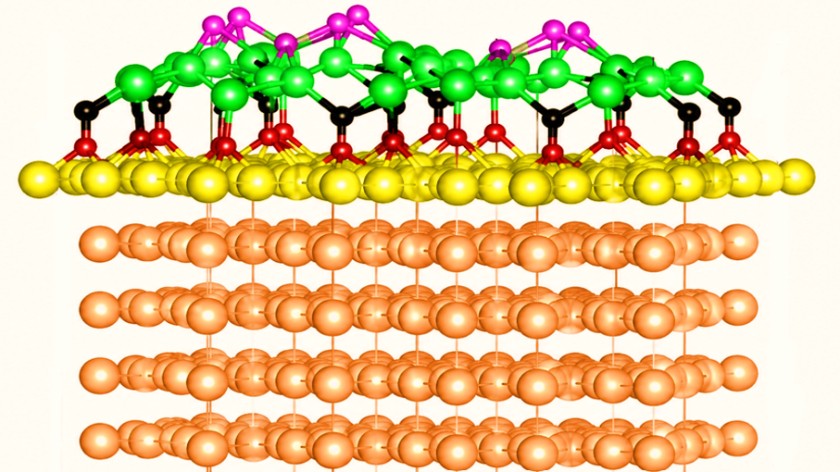
BESSY II reveals early-stage copper oxidation: providing evidence for catalyst development and corrosion research on nuclear waste final disposal containers
Germany's BESSY II synchrotron facility has recently provided new experimental insights into the early-stage oxidation process of copper surfaces. The study shows that before the formation of pure copper oxides, copper and oxygen atoms first form complex surface superstructures, such as "29"CuₓO. The chemical state of such structures has long been debated, and the findings are of reference value for catalyst research as well as for corrosion protection studies of copper containers used for radioactive waste final disposal. Before the formation of pure copper oxide, complex superstructures composed of copper and oxygen atoms emerge—such as "29"CuxO. HZB In everyday environments, copper surfaces gradually lose their red metallic luster and form a greenish oxide layer. This layer structure can slow further corrosion over an extended period. Regarding the initial stages of this process, the core question researchers focus on is: to what extent are copper atoms actually oxidized once oxygen enters the copper surface. Since conventional spectroscopic methods struggle to clearly distinguish between pure copper and partially oxidized surfaces, such oxidation states have previously been difficult to determine directly.
2026-09-07

ORNL Neutron Imaging Technology Reveals Healed Rib Fracture in Tyrannosaurus Rex Fossil
Neutron imaging technology at the U.S. Department of Energy's Oak Ridge National Laboratory (ORNL) has helped researchers from the University of Regina in Canada and other institutions observe rare healing signs inside the fossilized bones of a Tyrannosaurus rex, providing new insights into ancient life from approximately 66 million years ago. The subject of this study is a fractured rib from "Scotty," the largest Tyrannosaurus rex skeleton ever discovered. Researchers found that this rib preserved a wound-healing process rarely seen in the fossil record: after the fracture occurred, iron-rich blood entered the injured area and formed a network of blood vessels to promote healing; however, before the rib had fully healed, Scotty died and was preserved in a salt marsh environment, which slowed the decomposition of the remains...
2026-09-07

"Wukong" Detects "Super-Iron" Elements in Cosmic Rays, Achieving First High-Precision Cosmic Ray Nickel Energy Spectrum in the TeV Range
Recently, the DAMPE scientific team led by Academician Chang Jin of the University of Science and Technology of China made significant progress in direct observations of high-energy cosmic rays. Based on DAMPE on-orbit observation data, the scientific team obtained the differential flux spectrum of nickel nuclei from 10 GeV/n to 2 TeV/n. The results were published in the international academic journal *Physical Review Letters* under the title "Measurement of the Cosmic Ray Nickel Energy Spectrum from 10 GeV/n to 2 TeV/n with the DAMPE Space Mission." The origin of super-iron elements in cosmic rays has long been a challenge for the scientific community. It is generally believed that cosmic ray elements are primarily produced in nuclear fusion processes within stars, but since iron nuclei have the highest binding energy per nucleon, stellar fusion reactions typically struggle to proceed beyond elements near iron. Heavier elements than iron are generally attributed to different nucleosynthesis processes such as neutron capture. Because the abundance of super-iron elements is typically at least an order of magnitude lower than that of iron, measurements of super-iron elements in cosmic rays remain extremely scarce. Most experiments have only provided relative abundances of different elements; a few experiments have measured the differential flux spectrum of cosmic ray nickel, but with energy upper limits of only a few hundred GeV/n.
2026-09-07

South Korean research team reveals that water storage capacity of cold subducting slabs has been underestimated using synchrotron radiation sources
A research team led by Professor Yongjae Lee of the Department of Earth System Sciences at Yonsei University in South Korea has recently found that in cold, rapidly descending tectonic subduction zones, crustal rocks may transport up to 1 trillion kilograms of water to the mantle each year—approximately twice the previous estimate. The findings have been published in Nature Communications. Subduction zones are regions where Earth's tectonic plates converge and one plate descends beneath another, often accompanied by volcanic and seismic activity. For a long time, the academic community has generally believed that serpentinite, a water-bearing rock, gradually dehydrates as it descends with the plate due to increasing pressure and temperature, and the released water further promotes melting of the overlying plate and is associated with the formation of volcanic arc chains.
2026-09-07

XENONnT Observes First Low-Energy Solar Neutrino-Electron Scattering Signals
Scientists of the XENON collaboration recently announced the first observation of low-energy solar neutrino scattering off electrons in the XENONnT particle detector. The results were presented at a workshop held on August 31, 2026, at the Gran Sasso National Laboratory of the Italian National Institute for Nuclear Physics. The team of Prof. Teresa Marrodán Undagoitia and Dr. Hardy Simgen from the Max Planck Institute for Nuclear Physics played a key role in the experiment. Nuclear fusion in the Sun continuously produces vast numbers of neutrinos, with hundreds of billions passing through every square centimeter of Earth each second. Because neutrinos interact with matter extremely weakly, detecting these particles...
2026-09-07

Malaysia Expands Nuclear Radiation Mutation Breeding Applications to Bolster Food Security and Industrial Inspection
Malaysia's nuclear technology applications are extending from traditional fields such as medicine and industry further into agricultural production and food security. Dr. Sukri, Senior Director of Project Management at the Malaysian Nuclear Agency, stated that through research and development using nuclear radiation mutation breeding technology, the agency has shortened the maturation period of cassava from the original 10 to 12 months down to 6 months. Sukri noted that this technological application helps reduce farmers' production costs, improve land use efficiency, and cultivate larger cassava varieties. In addition to cassava, the Malaysian Nuclear Agency, in collaboration with the Ministry of Agriculture and Food Security and the Department of Agriculture, has successfully developed two new rice varieties, NMR 151 and NMR 152. These new varieties feature higher yields and demonstrate strong resistance to diseases, extreme weather conditions such as prolonged drought, and flooding.
2026-09-07
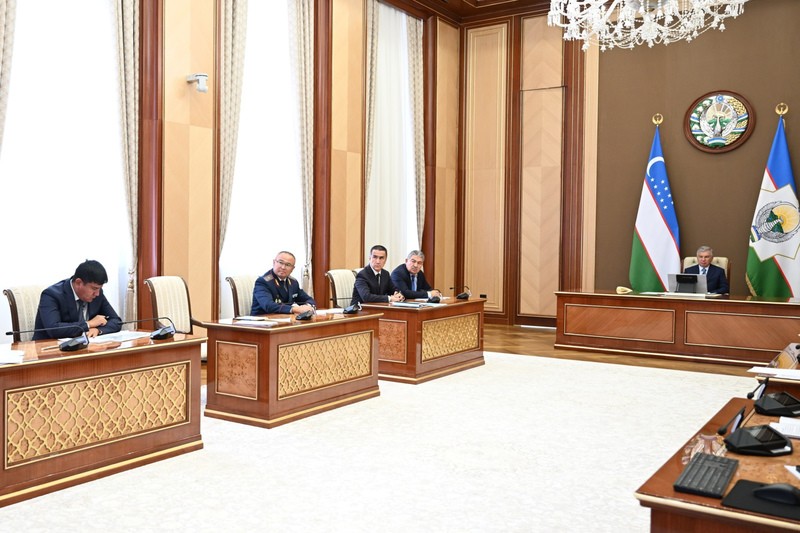
Uzbekistan's Jizzakh Nuclear Power Project Investment Estimate Reaches $9.5 Billion
The nuclear power project in the Jizzakh region, developed by Uzbekistan in cooperation with Russia's State Atomic Energy Corporation (Rosatom), has a total capital expenditure estimate of $9.5 billion. The investment scope includes site preparation, reactor construction, regulatory compliance, and high-voltage grid connection. Under the project arrangement, the nuclear power plant will adopt Russian-designed advanced reactor technology to meet regional baseload power supply demands and adapt to Uzbekistan's geographical and climatic conditions. The project site in the Jizzakh region is intended to enhance power supply reliability for the central industrial corridor of Uzbekistan and promote a reduction in the country's energy structure's dependence on natural gas. Uzbek President Shavkat...
2026-09-07

Sweden receives sixth state aid application for new nuclear power
The Swedish government has recently received its sixth state aid application for the construction of new nuclear reactors. Swedish Minister for Financial Markets Niklas Wykman stated that Nordic energy company Fortum's establishment of a project company in Sweden to advance new nuclear reactor plans demonstrates that Sweden's current state aid model has been carefully designed to accommodate project development needs. The application was submitted by NuCore Energi, a newly established project company under Fortum, with the project site located at Ävrö near the Oskarshamn nuclear power plant. Wykman has previously expressed repeated support for expanding nuclear energy in Sweden, believing that new nuclear power is of significant importance for long-term economic stability, industrial competitiveness, and climate goals.
2026-09-07

South Korea's KNR System Develops Heavy-Duty Bipedal Robot for Nuclear Facility Decommissioning Applications
South Korean robotics company KNR System recently announced the completion of the lower-body development and basic locomotion verification for its large-scale industrial "super-humanoid" robot. The robot's leg structure can support loads of up to 3 tons and move at a speed of 3 to 4 kilometers per hour. The company plans to release the full model by the end of 2026 and has already initiated whole-body system integration work. KNR System is developing a super-humanoid robot design. Image source: KNR System According to reports, the newly developed robot legs stand approximately 2.9 meters tall, with a maximum load capacity of 3 tons and a dual-arm payload of 600 kilograms. Each side is equipped with 12 joints, utilizing 10,000 Nm-class high-output hydraulic rotary actuators...
2026-09-07

Atom High-Tech Signs Memorandum of Cooperation with Cambodia's Calmette Hospital and Others to Advance Nuclear Medicine Capacity Building
On September 4, Atom High-Tech, Cambodia's Calmette Hospital, and FFS Company held a trilateral memorandum of cooperation signing ceremony in Beijing. Huo Yingying, Deputy Secretary of the Party Committee of China Isotope & Radiation Corporation (CIRC), attended and delivered a speech, while Zhang Yiming, Secretary of the Party Committee and Chairman of Atom High-Tech, signed on behalf of the company. Established in 1950, Calmette Hospital is one of Cambodia's largest and most technologically advanced public hospitals and serves as a national referral center. It undertakes three core missions: delivering high-quality medical services, training health professionals, and conducting medical research. Currently, the hospital is actively advancing its nuclear medicine capacity by establishing the country's first nuclear medicine department, further improving its oncology diagnosis and treatment and molecular imaging service systems...
2026-09-07

Baiyunshan Xike Visits Jiujiang, Jiangxi to Explore Nuclear Medicine Industry Chain Cooperation
Recently, a delegation from Guangzhou Baiyunshan Xike Health Pharmaceutical Co., Ltd., a subsidiary of Guangzhou Pharmaceutical Holdings Limited (GP Corp.), visited Jiujiang City, Jiangxi Province, conducting field inspections and discussion exchanges in Ruichang City, Jiujiang Economic Development Zone, and Pengze County, focusing on cooperation across the full nuclear medicine industry chain. Liu Hong, Director of the Scientific Research Project Management Department of GP Corp. and Chairman and General Manager of Baiyunshan Xike, led the core team in exchanges with Chen Shuilian, Member of the Party Leadership Group and Vice Mayor of Jiujiang Municipal People's Government, as well as responsible officials from Ruichang City, Pengze County, and Jiujiang Economic Development Zone, reaching multiple consensuses on subsequent cooperation. The inspection covered key facilities including the Ruichang Institute of Nuclear Physics Applications, the Biomedical (Nuclear) Industrial Park in Jiujiang Economic Development Zone, and the Jiangxi Tianhong Nuclear Technology project site in Pengze County. The delegation conducted in-depth visits to research laboratories, industrial parks, and projects under construction to understand local capabilities in nuclear technology research, isotope R&D infrastructure, project construction progress, as well as land and industrial supporting conditions.
2026-09-07

Canada's AtomVie Opens Large-Scale Radiopharmaceutical R&D and Manufacturing Facility in Hamilton
On September 4, AtomVie Global Radiopharma, a radiopharmaceutical contract development and manufacturing organization, announced the official opening of its new state-of-the-art production facility at 10 Aeropark Boulevard, Hamilton, Ontario, Canada. The facility is designed to support the full-spectrum translation of radiopharmaceuticals from early-stage research and development, through clinical development, to commercial manufacturing. According to reports, the new facility represents an investment of over $160 million and spans 72,300 square feet, making it one of the largest single-site radiopharmaceutical R&D CDMO facilities in North America. The facility offers production capabilities ranging from low-throughput to high-throughput, increasing AtomVie's overall production capacity by more than tenfold, with dedicated spaces configurable to meet clients' subsequent R&D and commercialization needs.
2026-09-05
Hitachiomiya City Assembly in Japan Hears Briefing on Literature Survey for High-Level Radioactive Waste Disposal Site
On September 4, the Hitachiomiya City Assembly in Ibaraki Prefecture, Japan, held a closed-door briefing session regarding the central government's request for the city to initiate a literature survey for the final disposal site selection of high-level radioactive waste. Representatives from the Ministry of Economy, Trade and Industry (METI) and the Nuclear Waste Management Organization of Japan (NUMO) attended the meeting to explain the national energy policy, an overview of the geological disposal project, and the background behind the survey request. All 16 members of the Hitachiomiya City Assembly participated in the briefing, with Mayor Suzuki Sadayuki attending as an observer. The meeting was originally scheduled for approximately two hours but actually lasted about three and a half hours due to the large number of questions from assembly members. After the meeting, Yokote Hiroki, Director of the Radioactive Waste Policy Division at METI's Agency for Natural Resources and Energy, stated that assembly members raised questions covering multiple aspects, including technical details of geological disposal and the site selection procedure for disposal facilities, and that the government side would continue its outreach efforts. Should the City Assembly make a request, METI would provide further explanations.
2026-09-06

First Application and Verification of Intelligent Monitoring and Adjustment System for Nuclear Power Plant Personnel Status at "Hualong One" Nuclear Power Plant
On September 4, CGN Engineering, in collaboration with Cangnan Nuclear Power, successfully completed the testing, verification, and on-site data collection of the Intelligent Monitoring and Adjustment System for Nuclear Power Plant Personnel Status at the San'ao Nuclear Power Base. The CGN Engineering departments participating in this testing and verification included CGN Design Institute, the National Key Laboratory of Nuclear Power Safety Technology and Equipment (hereinafter referred to as the National Key Laboratory), CGN Engineering Cangnan Project Department, and Huasheng Technology. This joint test marks an important milestone in the project's transition from technology research and development to engineering application, providing key technical support for the quantitative analysis transformation of human factors safety management in China's nuclear power industry. The system, built upon the personnel fatigue status monitoring principle prototype developed under the Intelligent Nuclear Power strategic special project, has been iteratively improved with continuous support from the Yangjiang Chuangbao High-tech Research Project and the National Key Laboratory research projects, and has now evolved into a mature product suitable for engineering and large-scale application. Previously, relevant functional modules of the system had been deployed and data collected in applications such as human factors verification in the main control room of Yangjiang Nuclear Power Base and simulator training at Taishan Nuclear Power Base. The on-site testing and data collection at the San'ao Nuclear Power Base further verified the system's environmental adaptability and reliability across multiple nuclear power base scenarios, laying a solid foundation for subsequent industry-wide promotion and application.
2026-09-05