
Search Results
Keyword:Energy

Syria Confirms IAEA Delegation to Visit Damascus for Talks on Nuclear Material Handling and Peaceful Use Cooperation
The Syrian Atomic Energy Commission issued a written statement confirming that a delegation from the International Atomic Energy Agency (IAEA) will arrive in Damascus in the coming days to discuss progress in Syria's nuclear energy sector and international nuclear cooperation. The visit was announced following reports that the IAEA is preparing to remove nuclear materials from secret facilities in Syria. The statement said Syria is cooperating with the United States and friendly countries on addressing the nuclear legacy left by the former regime, and is committed to promoting the peaceful use of nuclear energy in fields such as health, food, and scientific research. The statement noted that Syria is working to activate its full membership status in the IAEA, and emphasized that Syria, after liberation, has...
2026-08-12

Malaysia's Non-Destructive Testing Capabilities Gain International Recognition, Exporting Training and Technical Services to Asia-Pacific Region
August 7, 2026 - After more than four decades of collaboration with the International Atomic Energy Agency, Malaysia has progressively established a comprehensive non-destructive testing system, evolving from an early reliance on foreign testing services to becoming an influential provider of NDT services and training in the Asia-Pacific region. Trainees participate in a trainer training course in Malaysia to obtain certification in non-destructive testing radiography. (Photo: Nuklear Malaysia) Non-destructive testing is primarily used to assess the integrity of materials and components in industrial facilities and infrastructure, enabling the detection and characterization of defects without damaging the inspected object. This technology is widely applied in industrial quality control, playing a significant role in enhancing facility safety...
2026-08-12
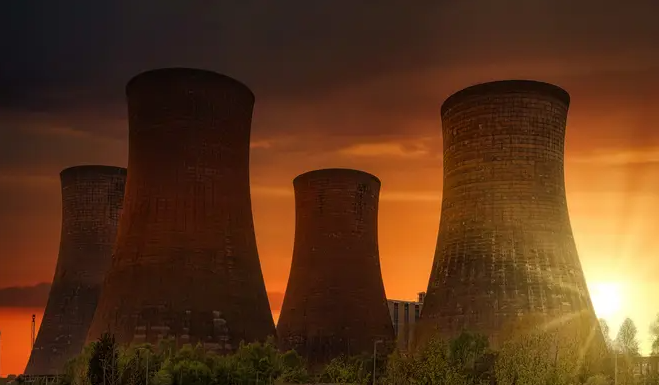
U.S. Moves to Relax Oversight of Small Maritime Nuclear Reactors, Promoting Civilian Floating Nuclear Energy Applications
The U.S. government is pushing to remove or simplify regulatory barriers to deploying civilian nuclear reactors on floating platforms and vessels, aiming to pave the way for small modular reactors to enter maritime shipping and offshore energy applications. The relevant topics will be highlighted during the International Atomic Energy Agency's ATLAS initiative event from August 26 to 27, with the U.S. also planning to showcase reactor technologies suitable for waterborne operations. The day prior, the U.S. will host an industry day, inviting nuclear and maritime sector companies to present their solutions. This move reflects the strategic importance the U.S. energy sector places on small modular reactors. Compared to traditional large-scale nuclear power plants, small modular reactors emphasize high energy density,...
2026-08-12

Ukraine and IAEA to Strengthen Nuclear Safety Coordination
Ukrainian Energy Minister Denys Shmyhal and IAEA Director General Rafael Grossi held an online meeting, focusing on further strengthening nuclear and radiation safety cooperation amid the war. Ukraine hopes to achieve independent assessments of risks and operational status of critical energy infrastructure and develop more protective measures through closer international coordination. The talks come against the backdrop of sustained security pressures on Ukraine's energy facilities. The Ukrainian side emphasized that a stably operating power system is not only vital to public electricity supply but also directly affects the safety assurance of nuclear power plants and related facilities. The IAEA has previously conducted expert work at multiple energy facilities in Ukraine...
2026-08-12

Latin American Energy Experts Learn About Russia's Nuclear Industry Development and Peaceful Use Prospects in Russia
Energy experts from several Latin American countries recently visited the ATOM Museum at VDNKh in Moscow to gain a systematic understanding of the history of Russia's nuclear industry, key technological solutions, and future directions for the peaceful use of nuclear energy. The visit spanned from early scientific research to modern nuclear technology applications, with a focus on the operating principles of nuclear power plants, the structure of water-water power reactors, and the fundamentals of how nuclear energy is converted into electricity. The exchange not only focused on traditional nuclear power but also showcased future-oriented technologies such as small nuclear power plants. A power transmission network planning expert from Peru noted that he had previously been unfamiliar with the development path of Russia's nuclear industry, and this...
2026-08-12

Rosatom emphasizes computational infrastructure to support nuclear research facilities
On August 11, Alexey Likhachev, CEO of Rosatom, stated at a meeting of the Science and Education Council in Novosibirsk that Russia needs to develop a dedicated program to advance high-performance computing, artificial intelligence technologies, and supercomputer infrastructure to support the operation of large scientific facilities and related research tasks. Likhachev noted that Rosatom has developed a mathematical modeling system since the 1990s and built its own supercomputer network. He believes that a unified digital platform integrating artificial intelligence, computing based on new physical principles, and quantum technologies should be systematically developed as a key component of the nation's scientific and technological advancement...
2026-08-12
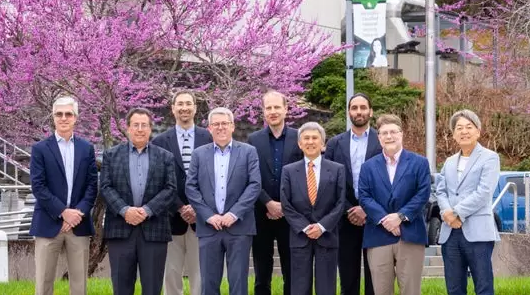
Kyoto Fusioneering and Oak Ridge to Build World's First Fusion Blanket Verification Facility UNITY-3
Kyoto Fusioneering (KF), a Japanese fusion energy engineering company, announced that it will jointly build a facility named UNITY-3 with the U.S. Oak Ridge National Laboratory (ORNL) to verify the breeding blanket technology required for commercial fusion power plants. The project is described as the world's first facility dedicated to breeding blanket demonstration, and KF will also relocate its U.S. business base to Oak Ridge, Tennessee. The project has received support from the U.S. Department of Energy's relevant roadmap, Tennessee's nuclear energy supply chain investment fund, and the DOE, indicating that the fusion industry is shifting from purely plasma physics breakthroughs toward engineering, system integration, and supply chain development. The breeding blanket is a critical component for deuterium-tritium fusion power...
2026-08-12
Solaris Invests in Deployable Energy, Pushing "Unity" Transportable Microreactor Toward Commercial SMR
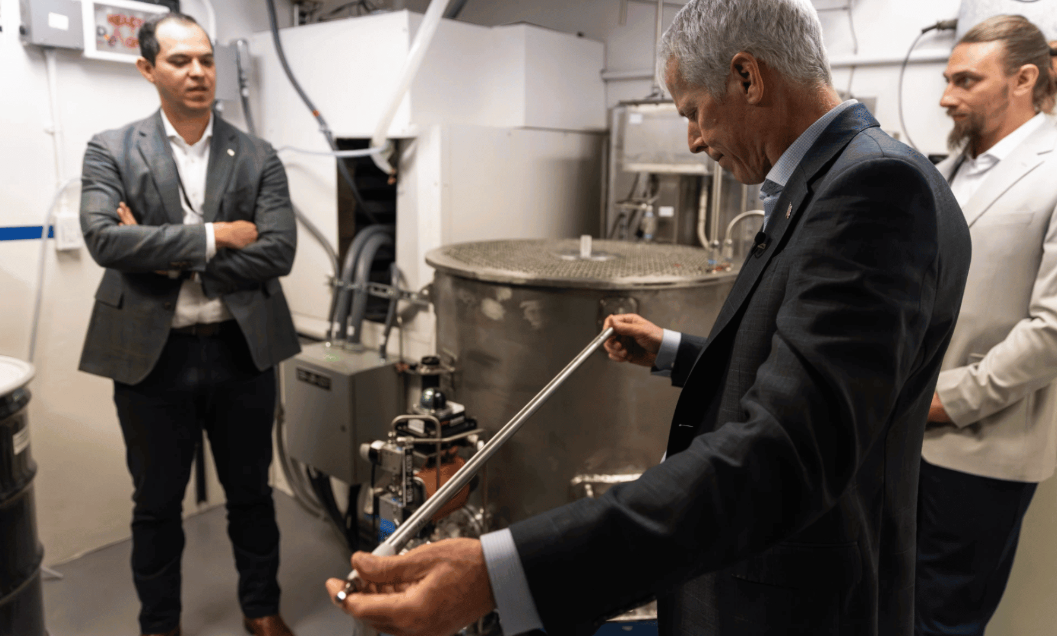
Houston-based advanced nuclear startup Deployable Energy (CEO Bobby Gallagher, former Australian Army/offshore drilling background) has reached a strategic partnership with NYSE-listed U.S. energy infrastructure company Solaris Energy Infrastructure, Inc. (NYSE: SEI): Solaris will take an equity stake in Deployable and leverage its own experience in grid construction and operations under harsh conditions (defense bases, heavy industry, data centers) to help the latter bring the Unity Nuclear Battery—a roughly 1 MWe-class, container-sized, portable microreactor that fits in a pickup truck bed for highway transport—to commercial deployment. The Unity reactor has already achieved...
2026-08-12

Deep Fission Details 'One-Mile-Deep PWR' Roadmap at Canaccord Conference, Targeting First Commercial Operation by End of 2027
On August 11, Deep Fission (FISN) unveiled a differentiated nuclear commercialization pathway at Canaccord Genuity's 46th Annual Growth Conference: rather than reinventing nuclear fission technology, the company aims to deploy mature pressurized water reactors in underground boreholes approximately one mile deep. CEO Liz Muller emphasized that the core approach is to change where reactors are deployed, not to adopt an entirely new reactor physics model. Given that PWR technology has been used in commercial nuclear power for decades, the company hopes to shorten the validation cycle by leveraging mature technology and avoid the new fuel, new material, and new design licensing hurdles faced by some advanced nuclear projects. According to the company's plan...
2026-08-12

Sophelio Launches Fusion Equilibrium Challenge, Opening DIII-D and MAST Experimental Datasets
On August 11, Sophelio launched the Fusion Equilibrium Challenge. The competition has been accepted into the 2026 Conference on Neural Information Processing Systems (NeurIPS) competition track, making it the first fusion energy-related challenge to enter this track. The challenge is co-organized by Sophelio together with the DIII-D National Fusion Facility, the UK Atomic Energy Authority (UKAEA) FAIR-MAST project, and the Institute for Fusion Studies (IFS) at the University of Texas at Austin, with data hosted on the Hugging Face platform. Open to the global machine learning community, the competition re...
2026-08-12
Nuclea Signs MOU with Utah Office of Energy Development to Advance Microreactor Testing at USREL
Nuclea Energy USA Inc., a wholly owned subsidiary of advanced nuclear technology developer Nuclea Energy Inc., recently announced that it has signed a Memorandum of Understanding with the Utah Office of Energy Development to explore the possibility of deploying a nuclear test reactor at Utah's San Rafael Energy Laboratory to advance the development and commercialization of Nuclea's Morpheus microreactor. This collaboration is seen as an important step for Nuclea's micro modular reactor moving from technology validation toward actual deployment. According to the MOU, Nuclea and the Utah Office of Energy Development will evaluate test reactor siting, coordination with the U.S. Department of Energy and the Nuclear Regulatory Commission, and...
2026-08-12

GAO: DOE Nuclear Cleanup "End-State Contract Model" Exceeds Budget by $500 Million in Six Years and Misses Goals
A report released by the U.S. Government Accountability Office (GAO) on July 29 shows that the Office of Environmental Management (EM) at the U.S. Department of Energy has accumulated over $500 million in cost growth on nuclear waste cleanup contracts since 2020, yet the agency cannot fully explain the reasons for these increases. EM is responsible for cleaning up 15 sites in the United States contaminated by nuclear weapons production and energy research. To address long-standing contract management problems, EM adopted the End-State Contract Model (ESCM) starting in fiscal year 2020, breaking cleanup work into smaller task orders under larger master contracts, with the goal of improving cost predictability, accelerating cleanup progress, and enhancing performance outcomes...
2026-08-12
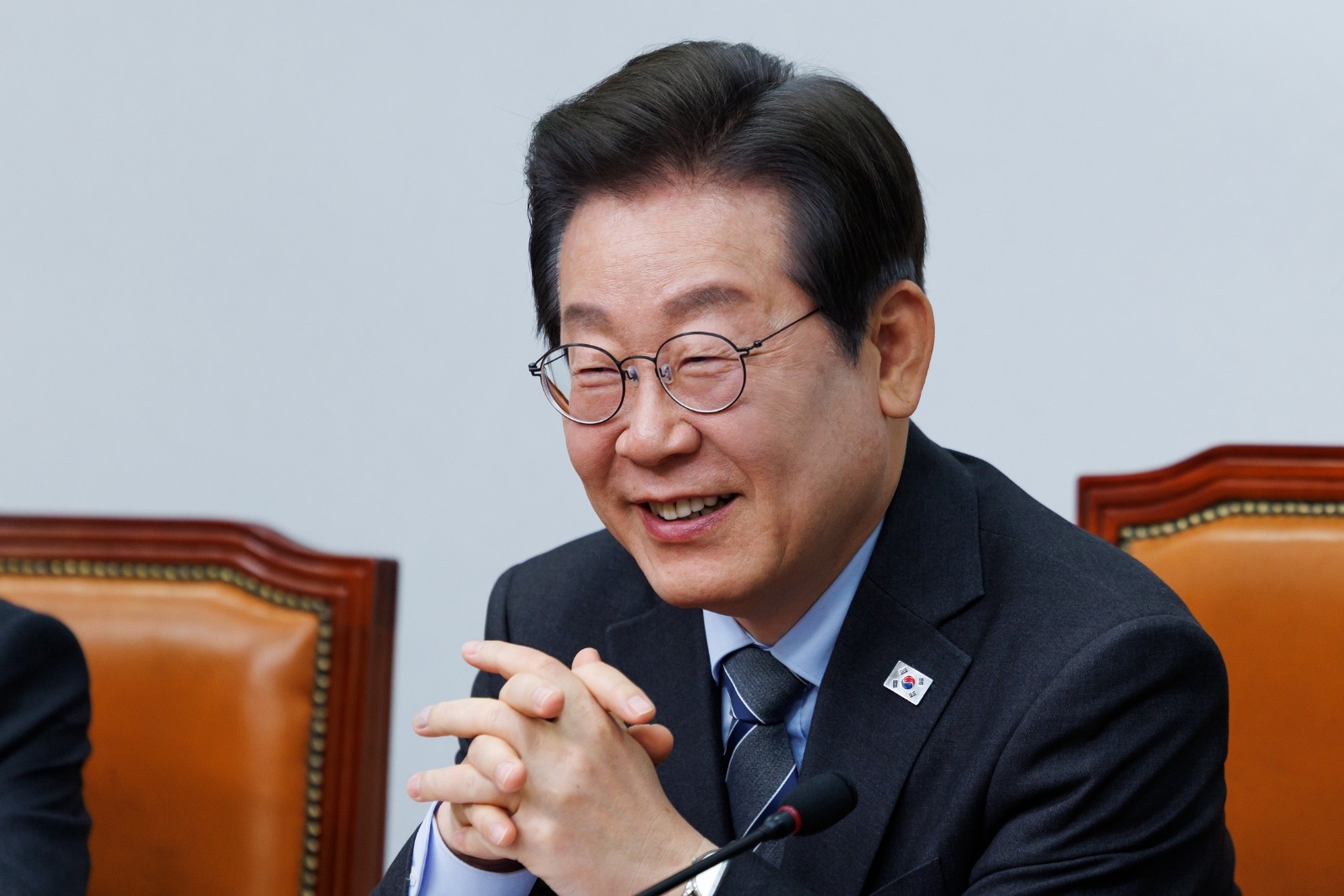
South Korea Designates Small Modular Reactors and Nuclear Fusion as Key Future Growth Technologies
South Korean President Lee Jae-myung will chair a briefing session on the "Seven Seeds for Future Growth Engines" at the presidential office Cheong Wa Dae on the afternoon of August 12, focusing on the development pathways for advanced technologies including Small Modular Reactors (SMRs) and nuclear fusion, as well as related industrial ecosystems and supply chain security measures. According to Cheong Wa Dae, the meeting aims to jointly study advanced technology deployment with the science and industry communities, support artificial intelligence (AI) transformation, and strengthen South Korea's future industrial foundation capabilities. The seven areas designated as priorities include Small Modular Reactors, nuclear fusion, renewable energy, quantum technology, aerospace, advanced biotechnology, and advanced materials and component supply chains....
2026-08-12

South Korea's Nuclear Energy Paper Output Ranks High but Quality Impact Remains Low
According to the report "Academic Competitiveness Analysis in Five Core and Emerging Technology Fields of the United States" released by the National Research Foundation of Korea on the 12th, from 2016 to 2025, South Korea's paper output in fields such as semiconductors, artificial intelligence, nuclear energy, biotechnology, and quantum information has maintained a certain level of competitiveness overall. Among these, the number of papers in the semiconductor field ranked 4th globally, artificial intelligence and nuclear energy both ranked 7th, biotechnology ranked 8th, and quantum information ranked 14th. The quantitative and qualitative status of South Korea in the five major fields. Excerpted from the National Research Foundation of Korea report. The report is based on analysis of data from SciVal, the research performance analysis platform of Elsevier. In terms of the share of South Korean papers in the global total...
2026-08-12

The Third Symposium on Economic Operation Analysis of Key Nuclear Power Enterprises in 2026 Convened
On the afternoon of August 11, the Shanghai Nuclear Power Office organized and convened the Third Symposium on Economic Operation Analysis of Key Nuclear Power Enterprises in 2026. Lu Haibin, Director of the Shanghai Nuclear Power Office, attended the meeting, and Zhou Ling, Deputy Director of the Shanghai Nuclear Power Office, presided over the meeting. Heads from 10 entities, including China Nuclear Engineering, Huaneng Nuclear Energy Research Institute, Shanghai Nuclear Engineering Research and Design Institute, State Nuclear Power Operation and Maintenance, State Nuclear Power Automation System Engineering, CGN Digital Technology, East China Electric Power Design Institute, Shanghai Electric Nuclear Power Group, Shanghai Electric Power Station Group, and Jianing New Materials, participated in the discussion. Lu Haibin noted that with the joint efforts of all units within the system, the overall development of the city's nuclear power industry in the first half of the year maintained a sound momentum, with economic operation characterized by "expanded scale and optimized structure." Each unit...
2026-08-12