
Search Results
Keyword:Germany

German BESSY II Research Reveals: Cesium Chloride Seed Layer Can Improve Quality of Perovskite-Silicon Tandem Solar Cells
A team from the Helmholtz-Zentrum Berlin (HZB) in Germany used the BESSY II synchrotron radiation facility to conduct nanoscale analysis of perovskite-silicon tandem solar cells fabricated by evaporation methods, and proposed a new approach to improve the quality of perovskite thin films. The study shows that introducing a thin cesium chloride (CsCl) seed layer between the two sub-cells promotes uniform growth of the perovskite layer while reducing undesirable lead iodide deposition at the interface. The research demonstrates that the cesium chloride seed layer improves the growth of the evaporated perovskite layer and reduces the formation of lead iodide. Scanning electron microscopy images show that the perovskite layer grown without a seed layer (left image) consists of extremely fine crystallites...
2026-08-27

Akiram Therapeutics and ITM Sign Lutetium-177 Supply Agreement to Support Radiopharmaceutical Development for Solid Tumors
Akiram Therapeutics, a Swedish clinical-stage biotechnology company, and ITM Isotope Technologies Munich SE, a German radiopharmaceutical biotechnology company, recently announced the signing of a supply agreement. Under the agreement, ITM will supply no-carrier-added lutetium-177 (nca Lu-177) to Akiram to support the clinical development of its targeted antibody-radionuclide conjugate, 177Lu-AKIR001 (AKIR001). AKIR001 is Akiram's lead radiopharmaceutical candidate, currently being investigated in clinical studies for the treatment of CD44v6-expressing solid tumors. The candidate combines the therapeutic radioisotope nca Lu-177 with a proprietary antibody targeting CD44v6. CD...
2026-08-20

Second Radiotherapy Linear Accelerator Commissioned at Buchholz Hospital in Germany
The second medical linear accelerator for cancer radiotherapy at Buchholz Hospital in the North Heath region of Germany has been commissioned. The device was activated by the hospital's radiotherapy department under the direction of Chief Physician Dr. Günter Bohlen, marking a further enhancement of local oncological radiotherapy capabilities. The management of Buchholz Hospital and Winsen Hospital, Dr. Franziska von Brunnig (third from right) and Dr. Martin Meyer (first from right), together with Chief Physician Dr. Günter Bohlen (second from right) and the radiotherapy team, posed for a photo at the official commissioning ceremony of the second linear accelerator at Buchholz Hospital. Photo: Buchholz-Winsen Hospital. According to available information, Buchholz Hospital...
2026-08-20
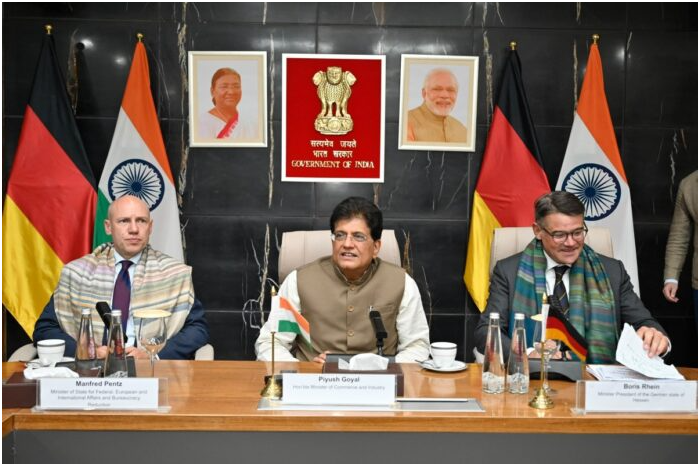
India and Germany's Hesse Explore Clean Energy Cooperation, with Discussions Covering Laser-Based Nuclear Fusion Research
On August 19, India's Minister of Commerce and Industry Piyush Goyal held talks with Boris Rhein, Minister-President of the German state of Hesse, to discuss strengthening economic and technological cooperation between India and Hesse. Manfred Pentz, Minister for Federal and European Affairs, International Affairs and Deregulation, along with a German business delegation, attended the meeting. The talks covered several emerging and high-growth sectors, with energy-related discussions focusing on clean energy and future technologies. The two sides discussed Hesse's initiatives in next-generation energy technologies, including laser-based...
2026-08-20

CERN measures niobium-94 neutron capture for the first time, shedding new light on the mystery of molybdenum abundance in ancient stardust
The n_TOF collaboration at CERN recently reported that researchers have for the first time measured the probability of neutron capture by niobium-94. The results, published in Physical Review Letters, provide new experimental evidence for explaining the anomalous abundance of molybdenum-94 in presolar grains. The EAR2 facility in the n_TOF experiment at CERN produces intense neutron beams, opening new possibilities for nuclear research. Credit: CERN Niobium-94 is a niobium isotope containing 41 protons and 53 neutrons, occupying a critical juncture in the nuclear reaction chain that produces heavy elements in dying stars. Researchers are interested in it because niobium-94 is very close to molybdenum-94, differing by just one fewer proton and one more neutron. Under the high-temperature, high-pressure conditions inside stars, niobium-94 may either transform into molybdenum-94 through beta decay or form niobium-95 through neutron capture. The competition between these two reaction pathways directly affects scientists' understanding of the origin of molybdenum-94.
2026-08-20

Germany pledges assistance in repairing the damaged reactor containment at the Chernobyl Nuclear Power Plant
German Environment Minister Carsten Schneider stated during his visit to Kyiv on August 18 that Germany will assist in repairing the containment structure above the damaged reactor at the Chernobyl Nuclear Power Plant. Schneider said the containment above the damaged reactor must be repaired. He also noted that this work involves high technical difficulty and complex organizational processes, requiring joint participation and coordinated efforts from the international community. According to the itinerary, Schneider plans to visit the Chernobyl Exclusion Zone during his trip to assess the current status of the relevant facilities and subsequent repair needs. The containment repair work at the Chernobyl Nuclear Power Plant involves multiple aspects including nuclear safety, radiation protection, and engineering construction, with further specific implementation arrangements still requiring additional consultation among all parties.
2026-08-19
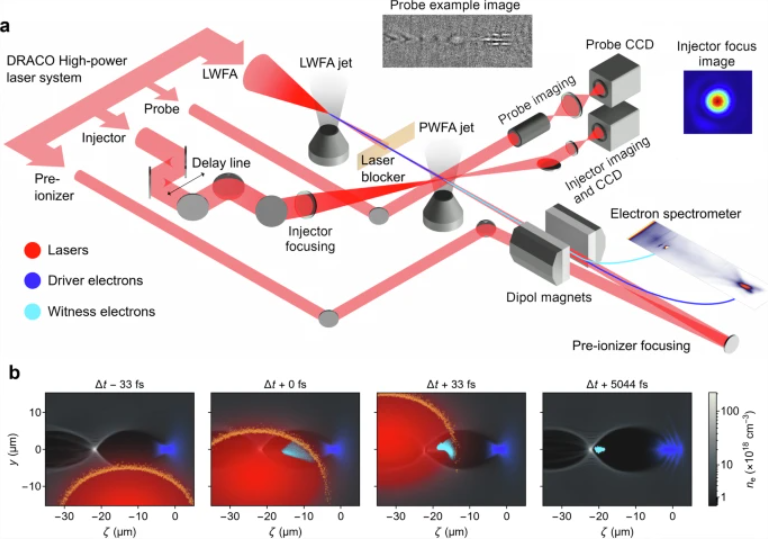
German research team achieves ultra-compact plasma photocathode injection
A research team from institutions including the Helmholtz-Zentrum Dresden-Rossendorf in Germany has demonstrated an ultra-compact plasma photocathode injection scheme integrated into a hybrid plasma wakefield accelerator on the DRACO laser facility. The study utilized a 150 TW-class laser system to drive a laser wakefield accelerator (LWFA), generating high-peak-current electron beams, which in turn drove a subsequent particle beam wakefield accelerator (PWFA), completing the generation and acceleration of witness electron beams within millimeter-scale plasma structures. Plasma wakefield accelerators can produce accelerating fields far exceeding those of conventional radiofrequency linear accelerators, but how to obtain high-quality, high-brightness electron beams in compact devices...
2026-08-18

ITM Receives Complete Response Letter from FDA for ¹⁷⁷Lu-edotreotide New Drug Application
Radiopharmaceutical biotechnology company ITM Isotope Technologies Munich SE (ITM) announced on August 10 that it had received a Complete Response Letter (CRL) from the U.S. Food and Drug Administration (FDA) on August 7, 2026, regarding the New Drug Application (NDA) for its investigational drug ¹⁷⁷Lu-edotreotide (ITM-11). The drug is intended for the treatment of gastroenteropancreatic neuroendocrine tumors (GEP-NETs).
2026-08-11
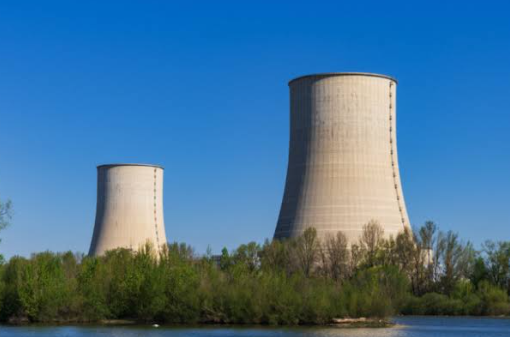
Germany's renewable energy summer generation approaches French nuclear power, may overtake it before 2030
French nuclear power has long been regarded as a key pillar of Europe's low-carbon electricity system, but the latest data shows that Germany's renewable energy generation is rapidly closing in on French nuclear power. According to the data, in January this year, Germany's combined renewable energy generation from solar, wind, and other sources totaled 22,854 GWh, while French nuclear power generated 36,838 GWh, about 61% higher. By July, however, the gap had narrowed significantly: French nuclear power generated 29,689 GWh, while Germany's renewable energy generated 26,501 GWh, with French nuclear power leading by only about 12%. This change is closely linked to summer heat. Nuclear power plants require large amounts of cooling water and are therefore typically built near coastlines or rivers. When river water levels are insufficient, or when discharged water temperatures exceed environmental limits, nuclear plants must reduce output or even shut down. The data mentions that French nuclear plants such as Golfech, Bugey, and Nogent-sur-Seine have already been affected. As heatwaves become more frequent, the cooling constraints on nuclear power in summer may become more pronounced, challenging the stability advantage of French nuclear output.
2026-08-10

PETRA III Synchrotron Radiation Study Reveals New Clues to Aging Mechanisms of the Uterine Broad Ligament
Austrian and German research teams recently used the PETRA III facility at the German Electron Synchrotron (DESY) to conduct X-ray analysis of the broad ligament, an important ligament supporting the uterus, providing new biomechanical clues for understanding the mechanisms of pelvic organ prolapse. The findings were published in *Acta Biomaterialia*. Pelvic organ prolapse is a common but poorly understood issue in women's health, affecting approximately 40% of women, and predominantly occurring in the latter half of life. Medical researchers have previously speculated that age-related loosening of the ligaments surrounding the uterus may be a significant contributing factor to prolapse. The broad ligament connects the uterus to the pelvic wall, and its strength and elasticity primarily derive from collagen...
2026-08-09
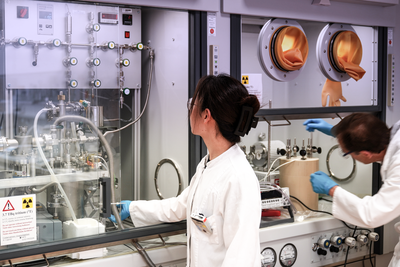
German team achieves first separation of tritium-containing hydrogen isotope mixtures using silver-exchanged zeolites
A team at the Helmholtz-Zentrum Dresden-Rossendorf (HZDR) and partners recently demonstrated a new method for separating hydrogen isotopes using silver-containing zeolites, successfully separating hydrogen isotope mixtures containing radioactive tritium through a porous solid material for the first time. The research findings were published in Nature Communications. Future fusion power plants will require not only high-temperature plasma and strong magnetic fields during operation, but also a stable fuel cycle system for recovering, separating, and reusing deuterium and tritium. Inside a fusion reactor, deuterium and tritium participate in reactions and release energy, but the fuel is not completely consumed, and the residual gas may also contain ordinary hydrogen (protium), forming a mixture of protium, deuterium, and tritium...
2026-08-07

Germany Establishes Three Fusion Centers, HZDR Contributes to Advancing Key Technologies for Fusion Power Plants
The German Federal Ministry for Research, Technology and Space (BMFTR) recently established three fusion centers under the German High-Tech Agenda (HTAD), aiming to pool the efforts of research institutions and industry to advance technology development for future fusion power plants. The German federal government will provide €125 million in initial funding for the related work, with a focus on laser fusion, magnetic confinement fusion, and cross-cutting areas such as fuel cycle and materials development. The Helmholtz-Zentrum Dresden-Rossendorf (HZDR) will participate in the construction of the relevant centers leveraging its research infrastructure, contributing capabilities in high-power lasers, materials research, simulation and data analysis. The SAXFUSION capability network, jointly coordinated by HZDR and the Fraunhofer Institute for Material and Beam Technology (Fraunhofer IWS), will also take on tasks of exchange, cooperation and knowledge transfer.
2026-08-06

Germany Achieves First Capture of Argon Nuclei at 30% Speed of Light with Electron Cooling
On August 3, researchers at the GSI Helmholtz Centre for Heavy Ion Research in Germany successfully decelerated and captured fully ionized argon ions (^36Ar^18+) for the first time using the HITRAP highly charged ion trap facility. These ions, having lost all their electron shells, can be regarded as bare nuclei, with an initial velocity of approximately 30% of the speed of light. The research findings have been published in the journal Physical Review X. The interior of the radiofrequency resonator that slows down the ions is where highly charged ions are typically produced via particle accelerators and formed under strong electric fields and high-energy conditions. Since these ions are generated at extremely high velocities, they must first be stopped, captured, and cooled before precision physics measurements can be conducted. The research team stated that this experiment achieved, for the first time, the entire process from producing highly charged ions to storing them in a special trap for at least 11 seconds.
2026-08-04

German Science and Humanities Council Supports German Participation in the LEGEND-1000 Neutrinoless Double Beta Decay Experiment
On July 27, 2026, the German Science and Humanities Council expressed its support for German participation in the LEGEND-1000 experiment. The project had previously passed scientific evaluation and was deemed significant for a broad research community in the fields of particle physics and nuclear physics. LEGEND-1000 is the next phase of the large-scale enriched germanium neutrinoless double β decay experiment, planned to be constructed by an international collaborative team at the underground laboratory of the Gran Sasso National Laboratory in Italy. German participating institutions include the Max Planck Institute for Nuclear Physics in Heidelberg and the Technical University of Munich, with project leaders being Professor Susanne Mertens and Professor Stefan Schönert, respectively. According to the project...
2026-08-03

Germany's eROSITA Second Data Release Unveils Nearly Two Million X-ray Sources
On July 31, the German eROSITA consortium, led by the Max Planck Institute for Extraterrestrial Physics with participation from the University of Bonn, released its second major public dataset, eROSITA Data Release 2 (DR2). Built from the first three all-sky survey observations conducted by the eROSITA telescope aboard the Spectrum-Roentgen-Gamma (SRG) mission, this dataset is considered one of the most sensitive and comprehensive X-ray catalogs currently available to the public. The DR2 main catalog covers the 0.2–2.3 kiloelectron-volt (keV) band in the western hemisphere, containing nearly two million X-ray sources. Among these, over 1.9 million are point-like sources, primarily consisting of stars and actively accreting supermassive black holes; approximately 64,000 are extended sources,...
2026-08-01