
Search Results
Keyword:NIA

Ukrainian Foreign Minister and IAEA Director General Discuss Zaporizhzhia Nuclear Power Plant Safety in Phone Call
Ukrainian Foreign Minister Andrii Sybiha said on August 22 that he had a phone call with International Atomic Energy Agency (IAEA) Director General Rafael Grossi, during which the two sides focused on the current nuclear safety situation in Ukraine, particularly the safety status of the Zaporizhzhia Nuclear Power Plant. Sybiha stated that the Zaporizhzhia Nuclear Power Plant is currently under Russian control, and the related military presence remains a major source of nuclear safety risk. The two sides exchanged views on issues related to the plant and emphasized the need for close coordination based on respect for Ukraine's sovereignty and international law. Sybiha also noted that he values Grossi's personal engagement in relevant matters, as well as...
2026-08-24

Portal Inspection and Screening System Tested at Chernyshevskoye Border Crossing on Russia-Lithuania Border
On August 20, the customs authorities of the Kaliningrad region of Russia, together with the equipment manufacturer, conducted functional tests of the portal inspection and screening system at the Chernyshevskoye border crossing on the Russia-Lithuania border, focusing on verifying equipment operational status and vehicle inspection capabilities. According to reports, among all Russian border crossings in the Kaliningrad region, only the Chernyshevskoye international road crossing is currently equipped with portal inspection and screening devices. A total of two systems have been installed at this crossing, used respectively for inspecting vehicles entering Russia and those departing, with both units installed and put into operation in December 2025. The inspection and demonstration were carried out with the participation of government regulatory authorities and supplier representatives. The relevant equipment is planned to be...
2026-08-22

Research reactors provide critical support for global medical, scientific, and industrial innovation
The International Atomic Energy Agency recently reported that research reactors continue to play a vital role in medical, scientific, industrial innovation, and nuclear workforce development, serving as key infrastructure for many countries to build their nuclear science and technology capabilities. Currently, 228 research reactors are in operation across 54 countries worldwide, with another 23 under construction or in the planning stage. Unlike nuclear power reactors used for electricity generation, research reactors primarily produce neutrons for applications in medicine, industry, agriculture, geological sciences, forensics, and other fields. With capabilities such as neutron irradiation, neutron imaging, elemental analysis, and radioisotope production, research reactors have become important platforms for advancing peaceful nuclear technology applications. In the medical field, research...
2026-08-23

Armenia to Select Technology Solution for New Nuclear Power Plant by End of 2027
The Armenian government has set the end of 2027 as the deadline for selecting the technology solution for a new nuclear power plant. The project will eventually replace the existing Metsamor Nuclear Power Plant and has been incorporated into Armenia's government program for 2026 to 2031. According to the program, Armenia will advance the construction project for the new nuclear power plant and complete the reactor technology selection by at least the end of 2027. At present, the government has not yet disclosed the installed capacity, reactor type, or potential contractor for the new plant. Armenia has been evaluating nuclear power options from multiple countries in recent years, including both traditional large- or medium-sized nuclear units and small modular reactors (SMRs). Armenian officials have previously stated that units of relatively smaller scale, which are easier to connect to the national grid, are one of the key areas of focus for the government.
2026-08-23

Six nuclear power units in operation in Ukraine, three under planned maintenance
Ukraine's First Deputy Prime Minister and Minister of Energy Denys Shmyhal stated on August 21 during the government question time at the Verkhovna Rada that Ukraine's power system is currently operating stably, with no planned power cuts implemented for the time being. However, he also pointed out that the future power supply situation will still depend on the intensity of attacks on energy facilities and the progress of repairs. Shmyhal noted that Ukraine's current available power supply capacity is approximately 15 GW, including combined heat and power units and imported electricity. Among this, nuclear power contributes over 40%, thermal power accounts for about 25%, and hydropower about 15%. Of the 9 nuclear power units under Ukrainian control, 6 are currently generating electricity, and 3 are under planned...
2026-08-23

Slovenia's Krško Nuclear Power Plant Returns to Full Power Operation
On the evening of August 18, 2026, as meteorological conditions further improved, temperatures dropped, and river water temperatures declined, the Krško Nuclear Power Plant (NEK) increased reactor power to 100%, resuming full-load operation. During full-power operation, the plant will keep the entire cooling tower system in service to ensure compliance with relevant environmental limits and reduce the need for water withdrawal from the Sava River for cooling the plant's tertiary circuit. Previously, due to environmental restrictions related to the Sava River, the Krško Nuclear Power Plant reduced unit power to 80% on August 6, 2026. On August 14, following preliminary improvements in meteorological conditions, plant power was increased to 90%. Under the special operating conditions of this summer, when...
2026-08-20

Cernavoda Nuclear Power Plant Fully Shut Down Due to Falling Danube River Water Levels
Due to the continuous decline of the Danube River water level, the two units of Romania's only nuclear power plant, the Cernavoda Nuclear Power Plant, have been successively shut down. To alleviate the pressure on electricity supply, Unit 4 of the Rovinari coal-fired cogeneration plant has been put into operation, adding approximately 330 megawatts of generating capacity to Romania's power system. Romania's nuclear power company (Nuclearelectrica) previously reported that due to the sharp decline in the Danube River water level, which affected the assurance of cooling water for the reactor, Unit 2 of the Cernavoda Nuclear Power Plant was shut down in a controlled manner on the morning of August 13. The company stated that the shutdown process was carried out in accordance with procedures. At the end of July this year, Unit 1 of the Cernavoda Nuclear Power Plant had already been shut down for the same reason...
2026-08-19

Rosatom Plans to Send Additional Experts to Iran's Bushehr Nuclear Power Plant in September
Alexey Likhachev, CEO of Rosatom, said on August 18 that the company plans to send dozens of additional experts to Iran's Bushehr Nuclear Power Plant in September. At that time, the total number of Rosatom staff on site at the nuclear power plant will exceed 100. Likhachev stated that the company plans to dispatch several dozen more personnel in September, bringing its on-site workforce at the Bushehr plant to nearly 100. He also noted that this does not mean the project has fully resumed construction, but it will create conditions for the continued construction of the project and avoid work stoppages. According to reports, the Russian experts currently working at the Bushehr Nuclear Power Plant...
2026-08-19

World's first laser plasma accelerator-driven high-resolution muon imaging experiment to launch in Romania
Ideon Technologies, a global subsurface detection muon tomography company, is participating in an international research consortium to conduct the world's first high-resolution muon imaging experiment driven entirely by a laser plasma accelerator. The experiment aims to use a compact accelerator to produce muon beams on demand for non-destructive high-resolution imaging, with applications targeting mineral production, critical infrastructure, cargo inspection, medical imaging, semiconductors, nuclear security, and space radiation testing. Consortium members include the University of Texas at Austin, the Extreme Light Infrastructure - Nuclear Physics (ELI-NP) facility team, Heinrich Heine University Düsseldorf, Helmholtz-Zentrum Dresden-Rossendorf, ELI-Beamlines, and Tau Systems.
2026-08-18
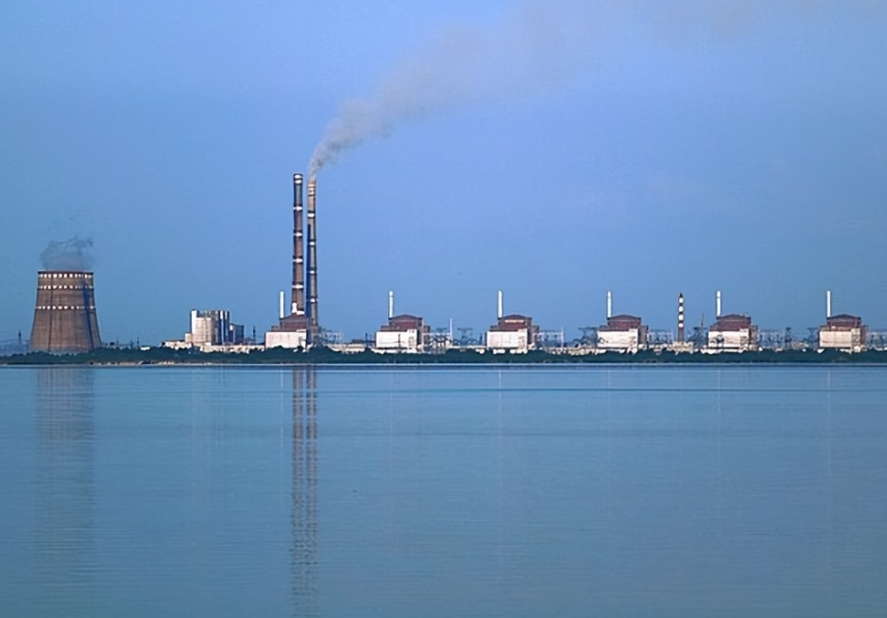
Repeated Power Outages at Zaporizhzhia Nuclear Power Plant Raise Concerns over Equipment Aging and Safety Risks
August 13 news, the issue of repeated interruptions to the external power supply at the Zaporizhzhia Nuclear Power Plant continues to draw attention. Relevant data shows that since February 2022, the plant has experienced 26 power outages, 14 of which occurred in the first 8 months of 2026. The Zaporizhzhia Nuclear Power Plant is the largest nuclear power plant in Europe. Once the external power supply is interrupted, the plant must switch to backup power to maintain the operation of essential safety systems. Frequent switching of power supply modes not only increases operational pressure but also poses additional risks to nuclear safety and radiation safety. Relevant parties have stated that signs of equipment aging at the Zaporizhzhia Nuclear Power Plant are intensifying, with the condition of diesel generator sets being particularly concerning. The backup diesel generator sets are generally...
2026-08-15

Energoatom and the E.O. Paton Electric Welding Institute of the National Academy of Sciences of Ukraine Sign Scientific and Technical Cooperation Agreement
On August 13, Pavlo Kovtoniuk, head of Ukraine's national nuclear energy company Energoatom, and Ihor Kryvtsun, director of the E.O. Paton Electric Welding Institute of the National Academy of Sciences of Ukraine, signed a scientific and technical cooperation agreement. Under the agreement, the two parties will integrate scientific research and engineering technical resources to provide technical support for the safe operation of nuclear power units and other nuclear energy facilities, and will cooperate in areas such as extending the service life of reactor installations and the feasibility study and implementation of new nuclear power unit projects...
2026-08-15
Armenia Responds to Claims of Metsamor NPP Closure: Operating License Valid Until 2036
In response to Azerbaijani President Ilham Aliyev's claims that the Metsamor Nuclear Power Plant is outdated and could pose a potential threat to the region, Arman Yeghoyan, a lawmaker from Armenia's ruling Civil Contract party, stated that the operating lifetime of a nuclear power plant is not unilaterally determined by the governments of neighboring countries. Yeghoyan noted that every nuclear power plant has an established operating period, and the Metsamor NPP is currently authorized to operate for a maximum term extending to 2036, information that has long been public. He also stated that the Armenian side has announced it is studying options for building a new nuclear power plant...
2026-08-14
Unit 2 of Romania's Cernavodă Nuclear Power Plant shut down for at least 10 days due to falling Danube River water levels
Romeo Urjan, head of Romania's Cernavodă Nuclear Power Plant, said that due to the continuous decline of Danube River water levels, Unit 2 of the plant has been shut down since August 13 for at least 10 days. Romania's Ministry of Energy stated on August 12 that Unit 2 of the Cernavodă Nuclear Power Plant required a temporary shutdown. As planned, the shutdown operation began on the morning of August 13 and was completed before noon that day. Urjan stated that Danube River water levels are expected to continue declining over the next 10 days, so the plant currently has no plans to restart Unit 2. He emphasized that this shutdown is unrelated to nuclear safety issues or emergencies, with the main reason being...
2026-08-14
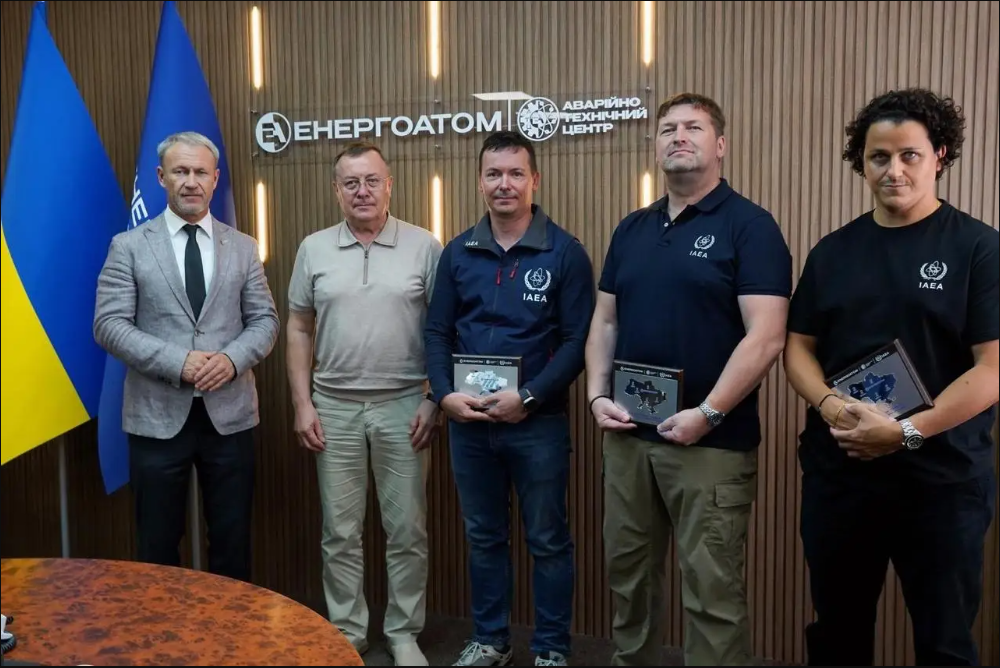
Energoatom and IAEA Strengthen Cooperation on Nuclear Power Emergency Preparedness
Acting CEO of Energoatom, Pavlo Kovtoniuk, recently held a working meeting with representatives of the International Atomic Energy Agency (IAEA) coordination and technical team at the company's subsidiary, the Emergency Technical Center. During the meeting, Kovtoniuk briefed the IAEA representatives on the operational status of Energoatom under the current circumstances and the main challenges facing Ukraine's nuclear power operator. He stated that the safe operation of nuclear power plants and emergency response preparedness remain among the company's top priorities, and enhancing the capabilities of the Emergency Technical Center is a key component of these efforts. Uk...
2026-08-13

Nuclear Technology Aids Pest Control: Sterile Insect Technique Achieves Results in Multiple Countries
The application of nuclear technology is not limited to power generation and heating. In areas such as agricultural pest control, animal health, and disease vector management, the Sterile Insect Technique (SIT) based on cobalt-60 gamma rays is playing an important role. The core approach of SIT involves mass-rearing target pests in specialized facilities, separating males, and then irradiating them with a cobalt-60 gamma ray source. The radiation causes DNA breaks in the reproductive cells of male insects, leaving them able to fly and mate with wild females but unable to produce viable offspring. As large numbers of sterile males are continuously released, the proportion of ineffective matings in the wild population increases, pest numbers decline generation after generation, and under certain conditions...
2026-08-13