
Search Results
Keyword:TPU

Uzbekistan Sets Uranium Output Doubling Target: Ore Underground, Why the Wait for Delivery?
On November 5, 2026, the Presidential Administration of Uzbekistan published the latest mining development strategy designation. The state-owned uranium giant Navoiyuran proposed, according to the latest reporting basis, a plan to raise annual natural uranium production from an estimated 7,500 tonnes in 2026 to 15,000 tonnes by 2030. Notably, at the mining conference in March of the same year, the Presidential Administration had set an interim target of 8,000 tonnes for 2026——this slight adjustment in the reporting basis reflects the dynamic revision of planned targets under complex geological and engineering scheduling. As one of the core supplier countries in the global natural uranium supply chain, Uzbekistan's ambitious blueprint of doubling output has drawn attention from global nuclear power buyers...
2026-11-11

EDF Plans to Accelerate Climate Adaptation Plan as Summer Extreme Heat Forces Faster Nuclear Unit Retrofits
Xavier Ursat, an executive at Electricité de France (EDF), told local media on October 13 that, given the record negative disruption caused by this summer's extreme heat to the operation of France's nuclear units, the company has decided to comprehensively accelerate the nuclear power plant climate adaptation plan (ADAPT). As the backbone of France's baseload power, more than half of the country's electricity supply depends on nuclear power plants, and these plants generally draw water from inland rivers or estuaries as the secondary loop cooling water source. Affected by heatwave weather, many units, after the cooling cycle, return water to rivers at slightly elevated temperatures, making it very easy to touch...
2026-10-14

Canada's Cameco Signs Exclusive Offtake Agreement to Lock Up All Future Output from U.S. Paducah Laser Enrichment Plant
Canadian nuclear fuel giant Cameco has signed a new exclusive offtake agreement with Global Laser Enrichment (GLE), under which Cameco will purchase all nuclear fuel products from the future production of the Paducah Laser Enrichment Facility (PLEF) that GLE plans to build in Kentucky, United States. This major agreement was formally announced by Australia's Silex Systems. GLE was founded in 2007 to develop and commercialize laser-based uranium enrichment technology in the United States. The company is currently 51% owned by Silex Systems, the developer of SILEX laser enrichment technology, and 49% by Cameco. Silex Chief Executive Officer and Managing Director Mike...
2026-09-17
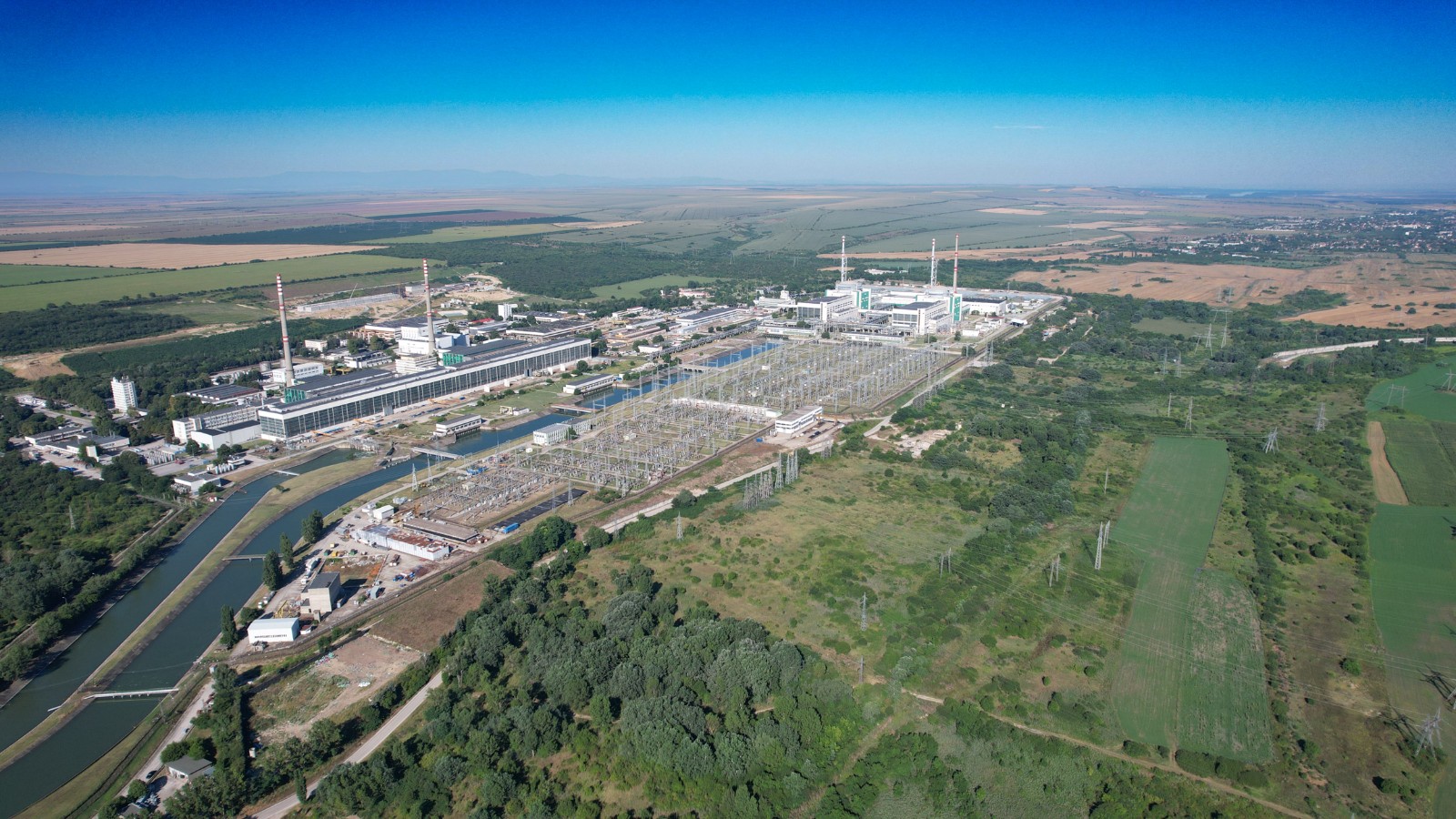
Unit 5 of Bulgaria's Kozloduy NPP Raises Power Output to 950 MW
At 10:00 on August 31, 2026, Unit 5 of Bulgaria's Kozloduy NPP (Kozloduy Nuclear Power Plant) began a phased increase in power output as scheduled. By 17:00 that day, the unit's power output had risen to 950 MW. In the preceding days, the Danube River water level in Bulgaria had recovered, and the plant proceeded accordingly to resume normal unit operation. Kozloduy NPP stated that the operating team continues to carry out relevant work to ensure the safe and reliable operation of the nuclear unit. In response to changes in river water levels, the plant continuously monitors the Danube River water level and maintains communication with the Danube Research and Maintenance Executive Agency to promptly track water level trends. At the same time, the plant strictly implements long-term low-water emergency procedures, conducts continuous monitoring of hydraulic structures in the technical water supply area, and takes necessary measures to ensure the effective operation of relevant facilities.
2026-09-01

Bulgaria's Kozloduy NPP Reduces Power Output Due to Falling Danube River Levels
Bulgaria's Ministry of Energy stated that due to the sustained decline in the Danube River water level, Unit 5 of the Kozloduy NPP will reduce its power output by 120 megawatts starting August 21 to mitigate potential operational risks. The Ministry said in a statement that reducing reactor power is one of the measures to ensure the safe operation of the Kozloduy NPP, citing a sustained, abnormal, and rapid decline in the Danube River water level. The Danube River water level within Bulgaria is currently still on a downward trend. It is noted that this is the first time in the 52 years since the Kozloduy NPP was commissioned that its generating capacity has been reduced for such reasons. The plant uses Danube River water to cool the steam in the condensers of the conventional island, with water intake completed by dedicated pump stations located on the riverbank.
2026-08-21

Finland's Olkiluoto 3 unit reduces power output due to main coolant pump fault
Finnish utility Teollisuuden Voima (TVO) said on August 17 that Unit 3 of the Olkiluoto nuclear power plant (OL3) will continue to operate at a stable power output of approximately 1,300 MW, about 84% of full capacity, for the coming weeks due to technical faults in two main coolant pumps in the nuclear island. The unit's rated generating capacity is approximately 1,600 MW. TVO stated that the faults were discovered during this summer. Since then, the unit has reduced its output power and investigations have been conducted into the causes of the faults and corrective measures. Under the latest arrangement, OL3 will continue operating at a reduced power level to monitor the effectiveness of corrective actions until the unit begins its scheduled annual outage on September 10, 2026. TVO...
2026-08-18

Danube Water Levels Continue to Drop, Hungary's Paks Nuclear Power Plant May Reduce Output Again
Hungary's Paks Nuclear Power Plant may reduce its power generation output again early next week due to the continued decline in Danube water levels. Péter Magyar stated on social platform X that Tuesday and Wednesday will be critical periods, with the Danube water level expected to drop by another 14 to 15 centimeters, while the current level is only 9 centimeters away from the threshold that would force the shutdown of the second-to-last turbine at the Paks plant. Magyar noted that this critical phase is expected to end on August 20, when the water level in the Hungarian section of the Danube is expected to recover, influenced by inflows from the Austrian catchment area. Previously, on August 12, Magyar stated that the Hungarian government had decided to build temporary water-retention structures near the Paks Nuclear Power Plant and sink two barges to raise local water levels and ensure the plant's water intake conditions.
2026-08-17

Finland's Olkiluoto 3 nuclear reactor reduces output by 450 MW due to fault
Finland's largest nuclear reactor, Olkiluoto 3 (OL3), is currently operating at a reduced power level of approximately 300 MW. The unit's normal net power output is around 1,600 MW, and its generation accounts for about 14% of Finland's total electricity demand. According to Teollisuuden Voima (TVO), as reported by Tekniikka & Talous, the power reduction is due to a fault in one of the reactor-side circulation pumps. The damaged circulation pump has been repaired and is under monitoring, and the power level of Unit 3 is expected to return to normal on August 18. The circulation pump's function is to circulate cooling water through the reactor core. Meanwhile, Olkiluoto 2 has also been operating at a reduced power level of approximately 155 MW since mid-July...
2026-08-14

French heatwave to cut nuclear output by about 15% on Friday
Data from Electricite de France (EDF) shows that due to the fifth heatwave of the European summer, French nuclear power output is expected to fall by about 15% this Friday. At that time, nine reactors are expected to be affected, with total nuclear output reductions reaching 9.4 gigawatts during peak hours, of which six reactors will be completely shut down. This summer, many parts of Europe have experienced sustained high temperatures, with some regions seeing temperatures rise to abnormal levels, triggering issues such as water shortages and wildfires. French meteorological authorities predict that this heatwave will peak on Thursday, with temperatures across most of the country ranging between 35 and 40 degrees Celsius. From Friday, cold air from the west will first affect the Atlantic coast and the English Channel region...
2026-08-14
Heatwave and jellyfish influx into pump stations push French nuclear unit unavailability to 20.4%
The heatwave sweeping across multiple regions of France is impacting the country's electricity production. Several nuclear reactors operated by Électricité de France (EDF) have been shut down or derated due to environmental restrictions or external environmental factors, with the unavailability rate of affected units rising to 20.4% before 10:00 AM on August 12, marking a recent high. Of France's 57 nuclear reactors, 13 are currently affected. Among them, 8 units are fully shut down: Bugey Unit 3, Cattenom Unit 1, Chooz Units 1 and 2, Golfech Unit 2, and Gravelines Units 2, 3, and 4; another 5 units are operating below rated power, including Saint-Alban Unit 2, Tricastin Units 1 and 4...
2026-08-13

French nuclear fleet output drops to 59% of full capacity
On Wednesday, August 12, French nuclear reactors operated at 59% of full capacity, according to RTÉ grid data and Bloomberg calculations, down 1 percentage point from 60% on Tuesday, August 11. EDF, the world's largest nuclear power operator, currently has 34 reactors in operation with a total available capacity of 33,250 MW; France's 57 nuclear reactors normally supply more than two-thirds of the country's electricity. EDF recently halted power generation at the Gravelines 2 and Bugey 3 reactors, while extending the outage of the Gravelines 3 and 4 units and the Cattenom 4 reactor...
2026-08-13

French heatwave cuts nuclear output, day-ahead power prices surge 22%
A new heatwave in France is hitting its nuclear power supply, with effects quickly transmitting to the electricity market. On Tuesday morning local time, LSEG data showed French day-ahead power prices rose as much as 21.8% to €142.5 per megawatt-hour, equivalent to approximately $164.39. The direct cause of the price surge is that operators expect nuclear output to be constrained during the midday peak demand period on Wednesday. Data from French utility EDF shows that due to this week's heatwave, France's nuclear generation capacity on Wednesday is expected to be reduced by 7.3 gigawatts, equivalent to 12% of total installed capacity. This marks at least the fifth time France has experienced extreme heat since June. For a country where about 70% of electricity comes from nuclear power, nuclear...
2026-08-12

South Korea's Nuclear Energy Paper Output Ranks High but Quality Impact Remains Low
According to the report "Academic Competitiveness Analysis in Five Core and Emerging Technology Fields of the United States" released by the National Research Foundation of Korea on the 12th, from 2016 to 2025, South Korea's paper output in fields such as semiconductors, artificial intelligence, nuclear energy, biotechnology, and quantum information has maintained a certain level of competitiveness overall. Among these, the number of papers in the semiconductor field ranked 4th globally, artificial intelligence and nuclear energy both ranked 7th, biotechnology ranked 8th, and quantum information ranked 14th. The quantitative and qualitative status of South Korea in the five major fields. Excerpted from the National Research Foundation of Korea report. The report is based on analysis of data from SciVal, the research performance analysis platform of Elsevier. In terms of the share of South Korean papers in the global total...
2026-08-12

Microchip Launches Radiation-Tolerant Six-Output Programmable Clock Generator DSA504RT
Microchip Technology Inc. of the United States has launched the DSA504RT radiation-tolerant six-output programmable clock generator, targeting spacecraft and other aerospace and defense high-reliability electronic systems, designed to simplify timing architectures in complex systems. Spacecraft electronics typically require highly stable time references for missions such as navigation, communications, and scientific payloads, especially in environments where global navigation satellite system (GNSS) signals may be unavailable or subject to interference. Traditional solutions often rely on multiple oscillators, buffers, and timing devices to provide clock signals to different subsystems, resulting in increased component count, higher system mass, and greater circuit complexity...
2026-08-09

Krško Nuclear Power Plant to Reduce Power Output Due to Sava River Water Temperature Pressure
The Krško Nuclear Power Plant (Krško NPP) announced that, due to persistent abnormal hydrological and meteorological conditions in the Sava River, it will begin gradually reducing reactor power from the evening of August 6 to prevent river water temperatures from exceeding environmental standards. In the first phase, the unit's power output will be reduced to 80% of its maximum generating capacity. The plant stated that this power reduction is a planned, controlled, and temporary measure aimed at ensuring the Sava River water temperature remains within permissible limits. Relevant environmental standards stipulate that the daily average water temperature must not exceed 28 degrees Celsius, and the temperature increase of the river water caused by the plant's operation must not exceed 3 degrees Celsius. The management of the Krško Nuclear Power Plant also stated...
2026-08-06