

UK's First TerraPower Natrium Reactor Could Generate Power by 2034
TerraPower, the US nuclear power company backed by Bill Gates, expects its Natrium sodium-cooled reactor could generate electricity in the UK as early as 2034. If the project progresses smoothly, the UK will become the company's first market for deploying this technology outside the United States. TerraPower CEO Chris Levesque said that given the company's first Natrium reactor project is scheduled for completion in 2031, the Natrium technology is highly likely to become a reality in the UK by 2034. The technology has already met relevant US regulatory requirements, and the first unit is under construction in Wyoming. In recent years, the UK has accelerated the development of small modular re...
2026-09-08

Korea and U.S. reportedly in talks to jointly build 8 large-scale nuclear power plants in the U.S.
According to the South Korean government and political figures on September 7, South Korea and the United States are in the final stages of discussions on a plan to jointly build up to 8 large-scale nuclear power plants in the U.S. The plan is seen as one of the follow-up projects under the Korea-U.S. investment arrangement in the U.S. Sources say the U.S. side had proposed allocating $120 billion of the $200 billion investment commitment to the construction of 8 nuclear power plants within the framework of investment in the U.S. An additional $150 billion in shipbuilding-related investment falls outside that commitment. However, the South Korean government reportedly did not accept the proposal to directly specify the exact investment amount, instead preferring to use general wording such as "jointly building 8 nuclear power plants" in relevant documents to preserve room for further coordination...
2026-09-08

Kairos Power Completes Phase 1 of ETU 3 Hardware Demonstration in the U.S.
On September 4, Kairos Power announced the completion of Phase 1 of the Engineering Test Unit 3 (ETU 3) hardware demonstration at its Oak Ridge, Tennessee site. The unit, a non-nuclear engineering test platform, is primarily designed to reduce technical risks in reactor construction, operation, and maintenance, and to provide validation data for the Hermes 2 demonstration plant and subsequent commercial reactor deployments. Kairos Power stated that Phase 1 of ETU 3 focused on design validation of precast concrete shielding structures and testing of remote operation and maintenance capabilities. Construction of the Hermes 2 demonstration plant began earlier this year in Oak Ridge, and ETU...
2026-09-06

U.S. NANO Nuclear and Enveniam to Advance Microreactor and Nuclear Fuel Cycle Cooperation
U.S. advanced nuclear energy company NANO Nuclear Energy Inc. announced on September 4 that it has signed a non-binding memorandum of understanding with Enveniam, LLC, a project integration and engineering technology services provider, to explore cooperation in areas such as nuclear fuel cycle infrastructure, microreactor commercialization, advanced manufacturing, and end-user energy solutions. Under the MOU, the parties will evaluate how to leverage Enveniam's experience in nuclear engineering, project integration, safety analysis, licensing support, project controls, operational readiness, and complex energy infrastructure development to support NANO Nuclear...
2026-09-05

U.S. Completes Mechanical Property Measurements of Irradiated HALEU TRISO Fuel Particles
Researchers at the U.S. Department of Energy's Oak Ridge National Laboratory (ORNL) have completed mechanical property measurements of irradiated high-assay low-enriched uranium (HALEU) TRISO fuel particles, providing new experimental data for the development and qualification of next-generation nuclear fuels. This is an optical cross-sectional image of an irradiated AGR-2 TRISO fuel particle in the Irradiated Fuels Examination Laboratory at Oak Ridge National Laboratory. Image credit: Oak Ridge National Laboratory, U.S. Department of Energy. TRISO fuel, or tri-structural isotropic fuel, features particles coated with multiple protective layers, typically including pyrolytic carbon layers and a silicon carbide layer. This structure provides strong fission product retention capability and is considered one of the key fuel options for advanced reactors, particularly high-temperature gas-cooled reactors. Understanding the property changes of these coatings after irradiation is a critical step in predicting fuel performance under reactor operating conditions.
2026-09-04

UK and US Ports and Shipping Organizations Study Nuclear-Powered Container Ship Deployment Across the Atlantic
UK classification society and professional consultancy Lloyd's Register, Danish shipping company Maersk, the Port of Charleston in the United States, and the Port of Felixstowe in the United Kingdom are collaborating on the "Pink Corridor" project to study the safety and security requirements involved in deploying nuclear-powered container ships on transatlantic routes. (Image credit: Lloyd's Register) The project uses a conceptual nuclear-powered container ship as its research subject, focusing on analyzing the port access conditions and regulatory requirements it may face when operating on a commercial route between the Port of Charleston in South Carolina and the Port of Felixstowe in Suffolk, UK.
2026-09-04

US NANO Nuclear KRONOS MMR Main Helium Circulator Enters Detailed Design Phase
NANO Nuclear Energy Inc. announced on September 3 that new progress has been made in the development of the main helium circulator for its KRONOS MMR energy system. The engineering collaboration with Howden, a Baker Hughes company, has advanced from preliminary engineering design to the detailed design phase. The main helium circulator is a critical mechanical subsystem of the KRONOS MMR energy system, primarily responsible for driving the helium coolant circulation within the reactor to efficiently transfer heat generated in the core to downstream systems. The performance of this equipment directly affects the reactor's thermal-hydraulic performance, overall efficiency, and long-term operational reliability. According to NANO Nuclear...
2026-09-04

U.S. Develops Refractory Metal Powder Atomization System to Support Fusion Energy Materials Research
U.S. researchers are developing a new refractory metal powder atomization system to produce high-temperature alloy powders for extreme-environment applications. The system will support new materials research in areas such as gas turbines, aerospace equipment, and fusion energy systems. Jordan Tiarks, a scientist at Ames National Laboratory, stated that the laboratory has long been engaged in specialty powder production research, and the new system will expand its materials processing capabilities to higher temperature ranges and more challenging material systems. The research team noted that metal powders are a critical foundation for advanced manufacturing technologies such as powder metallurgy and additive manufacturing...
2026-09-03

U.S. PACMAN AI Framework Achieves Millisecond-Level Control of Fusion Plasma
The PACMAN AI framework, developed by researchers at the U.S. Department of Energy's Princeton Plasma Physics Laboratory (PPPL) and Princeton University, has completed five experimental validations in real fusion experimental systems. The framework can complete data processing, state prediction, and control command output in approximately 20 milliseconds, addressing rapidly developing instabilities in fusion plasma. This is an artist's rendition of the PACMAN AI framework for fusion systems. (Illustration credit: Kyle Palmer / PPPL Communications Department) PACMAN stands for Prediction and Control via Machine Learning. Related design and preliminary experimental results have been published in...
2026-09-03
US Realta Fusion and MGE Plan to Jointly Develop 200 MW Fusion Power Plant
Realta Fusion, a company developing magnetic mirror fusion energy technology, announced on September 2 that it has established a strategic partnership with Madison Gas and Electric (MGE) and its parent company MGE Energy, Inc. The two parties will jointly evaluate the feasibility of co-developing a 200 MW electric-class fusion energy power plant in Wisconsin, USA. Under the collaboration arrangement, the first phase includes a direct equity investment by MGE Energy in Realta Fusion. MGE has also agreed to provide equipment, engineering, and technical support to Realta Fusion, as well as assistance in project siting, permitting, grid interconnection, and financing to advance preliminary work for the proposed 200 MW fusion power project.
2026-09-03

Verdera Energy to Sell 100% Interest in Treeline Uranium Project in New Mexico, USA
Verdera Energy Corp. recently announced that it has entered into a mineral property purchase and sale agreement with Americas Uranium Corp. to sell 100% of its interest in the Treeline uranium project located in New Mexico, USA, with the transaction remaining subject to related royalty arrangements. Under the agreement, Americas Uranium will acquire all interests in the Treeline mineral properties and related titles. The consideration includes US$100,000 in cash payable at closing, and Americas Uranium common shares totaling C$2 million payable in installments over 36 months following closing, with 90% of the share consideration to be paid in stages within that period. In addition, Verdera will retain a 1.5% net proceeds royalty on uranium from the project and a 1.5% net smelter returns royalty on other minerals produced from the project. The royalty can be reduced to 1.0% upon payment of C$400,000 to Verdera.
2026-09-03
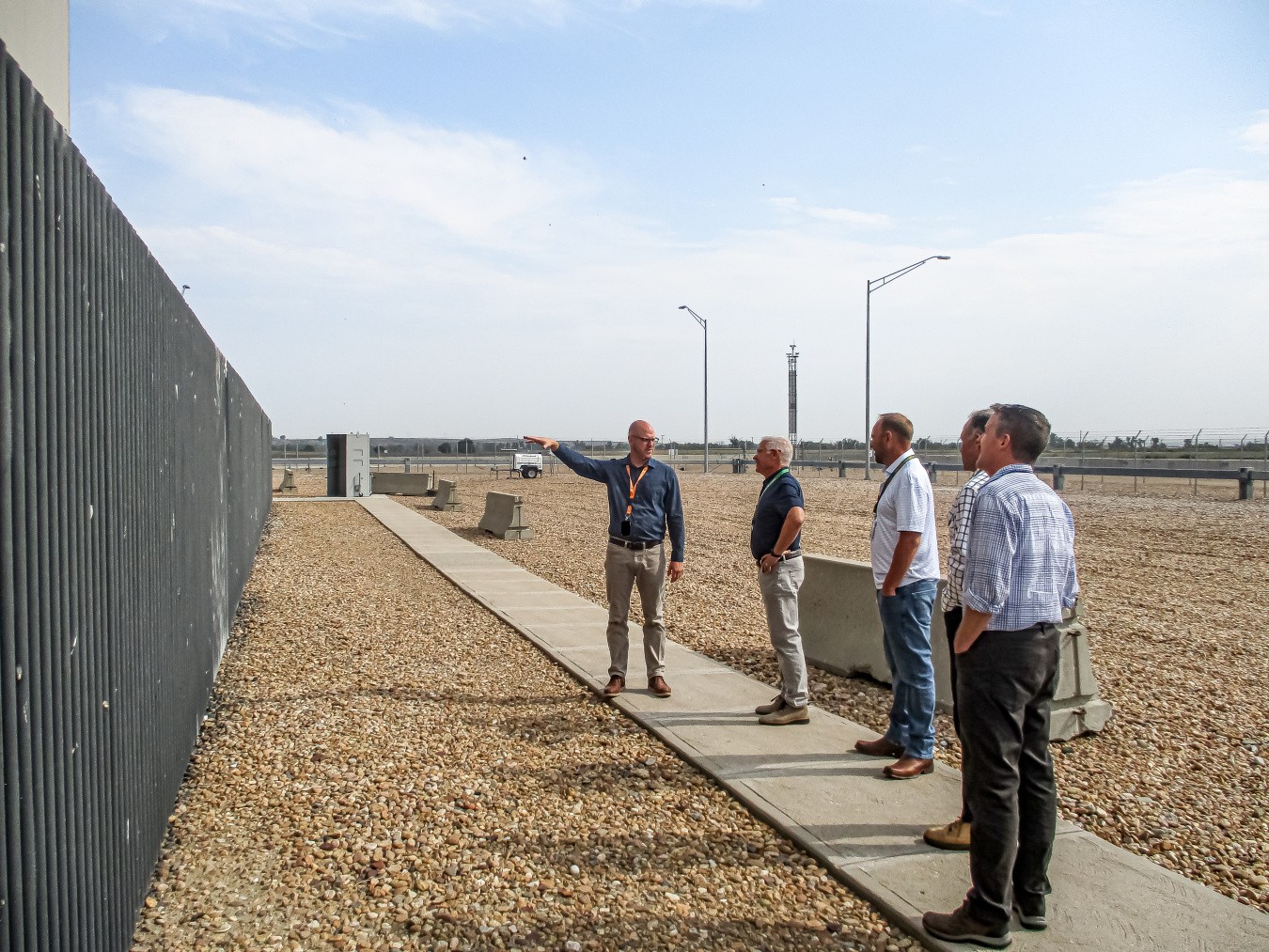
DOE Officials Visit Fort St. Vrain Spent Fuel Storage Facility in Colorado
Tim Walsh, Assistant Secretary of the U.S. Department of Energy's Office of Environmental Management (EM), recently visited the Fort St. Vrain spent nuclear fuel storage facility near Platteville in northern Colorado. The facility is managed by the DOE's Idaho Cleanup Project (ICP) and its contractor, Idaho Environmental Coalition (IEC). During the visit, Walsh inspected the storage facility and multiple supporting buildings to learn about the operational mission and historical background of the Fort St. Vrain facility. The facility currently stores spent nuclear fuel from the former Fort St. Vrain power station, which operated using gas-cooled reactor technology and was shut down in 1979...
2026-09-02

U.S. Plans to Build Second Uranium Conversion Plant
Raven-Flint Nuclear Corporation announced on August 31 that it has been selected for the Nuclear Energy Startup Platform project advanced by the U.S. Department of Energy (DOE) National Reactor Innovation Center (NRIC) at Idaho National Laboratory (INL), and plans to build a pilot uranium conversion facility named "Torch" at INL. The company stated that the Torch facility aims to become the second uranium conversion plant in the United States, with a designed annual processing capacity of 500 metric tons of uranium, capable of converting uranium into uranium hexafluoride (UF6). According to the company, this scale can meet the fuel demand of two large nuclear reactors. Upon project completion, it is intended to serve the U.S. Department of Energy and its affiliated agencies, and may provide domestically produced uranium hexafluoride for specific needs.
2026-09-02

New Hampshire Advances Nuclear Power and Small Modular Reactor Roadmap
The U.S. state of New Hampshire is making the expansion of nuclear power a priority in its next phase of electricity policy. The state government is developing an advanced nuclear energy roadmap, expected to cover the utilization of existing nuclear resources, construction of advanced nuclear plants, and potential deployment scenarios for small modular reactors (SMRs), with a preliminary plan slated for release in September. Governor Kelly Ayotte has directed the state's energy department to advance the roadmap's development. The state is currently soliciting input from utilities, consumer representatives, and energy industry stakeholders to assess nuclear power's role in addressing rising electricity demand and high electricity prices. New England...
2026-09-02

Blykalla Establishes Advanced Nuclear Reactor Technology Center in Austin
Advanced nuclear technology company Blykalla announced it will establish a new technology center in Austin, Texas, to expand its engineering and reactor R&D operations in the United States. Located at 801 Barton Springs Road in Austin, the center will house engineering and reactor development teams to strengthen the company's local operations and advance collaboration with its U.S. partners, regulators, and stakeholders in the clean energy industry. Blykalla stated that the Austin technology center will serve as its U.S. hub for engineering and advanced nuclear reactor R&D. The company currently operates two complementary business centers in the U.S.—Austin and New York: Austin focuses on technology R&D and engineering...
2026-09-02

US Antares to Apply Racing Power Electronics to Microreactors
Antares, a US nuclear fission energy company, recently announced a partnership with UK technology supplier Motion Applied to deploy the latter's race-proven power electronics in its microreactor power conversion system. According to Antares, Motion Applied has long served motorsport and other demanding applications, accumulating expertise in high-performance electronics and electrification technologies. This collaboration will enable Antares to use more mature, production-grade hardware in its microreactor program, reducing the time and cost associated with developing dedicated power conversion equipment from scratch. Antares Chief Nuclear Officer Ri...
2026-09-02

US OSC Global and InfraShield Launch Advanced Reactor Cybersecurity Program
OSC Global and InfraShield recently announced the joint launch of the Janus Cyber program to provide cybersecurity support for developers planning to deploy advanced reactors at US military installations. The program will deliver integrated services covering nuclear regulation, US Department of War (DoW) authorization, and operational technology/industrial control system (OT/ICS) cybersecurity requirements. The two companies stated that advanced reactors operating in US military environments must simultaneously meet multiple requirements, including nuclear-sector cybersecurity regulation, military authorization, and industrial control system protection. Janus Cyber will coordinate...
2026-09-02

NuScale Completes First Manufacturing of Boron Carbide Pellets for SMR Safety Component in the U.S.
NuScale Power and MillenniTEK recently announced that they have successfully manufactured the first batch of boron carbide pellets for NuScale's passive emergency core cooling system (ECCS). This component will be used in NuScale's small modular reactor (SMR) technology and is one of the dedicated components in its reactor safety system. According to reports, in nuclear power plants employing NuScale technology, when the emergency core cooling system is activated, the boron carbide pellets dissolve into the reactor coolant, helping to control and maintain core reactivity at safe levels without operator intervention. This manufacturing effort is considered a key advancement in NuScale's preparation for commercial deployment, involving the validation of dedicated safety components and associated manufacturing processes.
2026-09-02

Lightbridge Multi-Zone Fuel Element Granted Japanese Patent, Covering Fuel Assemblies and 3D Printing Manufacturing Methods
Advanced nuclear fuel technology company Lightbridge Corporation recently announced that its Japanese patent application for a multi-zone fuel element has been granted by the Japan Patent Office. The patent covers the fuel element design, fuel assemblies incorporating the design, and methods of producing the element via additive manufacturing, i.e., 3D printing. According to the disclosure, the patent involves a fuel rod composed of three layers of different materials. The thickness of the three layers can vary along the length of the fuel rod, thereby regulating fuel performance at different positions in the reactor to enhance reactor operating performance and safety margins. In addition to the fuel rod itself, the patent also covers fuel assemblies for mounting these fuel rods.
2026-09-02

NewHydrogen Files Third Patent Application for ThermoLoop Hydrogen Production Technology
NewHydrogen, Inc. recently announced that it has filed a third provisional patent application jointly with the University of California, Santa Barbara (UCSB) to protect developments related to its clean hydrogen production technology, ThermoLoop. The patent application is titled "Isothermal Chemical Looping Hydrogen Production." According to NewHydrogen, the application builds on two previous patents and covers the latest improvements to the ThermoLoop thermochemical water-splitting process, as well as novel material compositions discovered by the UCSB technical team. The process produces hydrogen by splitting water using thermal energy, combined with advanced solid-state materials and machine learning-driven materials discovery methods to improve efficiency and cost-effectiveness...
2026-09-02

U.S. Laboratory and Company Collaborate to Advance TRISO Thorium Fuel Development
Lawrence Livermore National Laboratory (LLNL) in the United States is collaborating with micro nuclear reactor startup AMPERA to advance next-generation reactor fuel development using novel metal particle manufacturing technology. The collaboration focuses on tristructural isotropic (TRISO) coated particle fuel, aiming to provide more durable fuel solutions for advanced reactors operating at higher temperatures and with longer service lifetimes. Small modular nuclear fission reactors are viewed as a distributed energy option deployable in remote areas, military installations, and industrial sites. Compared with traditional light-water reactors, some advanced reactors...
2026-09-01
Reading Ranking
- 1 US-based Geenex Power Unveils SMR Nuclear Plan for Amherst County, Virginia: Up to 650 MW Capacity, Construction Targeted for 2030
- 2 Blue Energy becomes the first small nuclear power developer to apply for grid connection in Texas, aiming to provide baseload power for AI data centers
- 3 US PPPL Reconstructs 70-Year-Old Lawson Criterion, Proposes New Fusion Ignition Pathway of "Heat First, Fuel Later"
- 4 Indiana Launches "Nuclear Ready Communities Program" Applications: Promoting Clean Nuclear Energy Investment to Empower High-Tech Industry Development
- 5 TVA Sequoyah Nuclear Plant Begins Refueling and Maintenance
- 6 U.S. Department of Energy Commits $4.2 Billion Loan to Support Vistra Nuclear Plant Expansion and Upgrade
- 7 Missouri Releases New Energy Plan, Pushing Nuclear Power as Priority
- 8 Laser Fusion Startup Xcimer Receives Up to $30.5 Million in Milestone-Based Funding from U.S. Department of Energy
- 9 General Matter Submits HALEU License Application to U.S. NRC
- 10 Nuclear energy startup Hylenr completes Phase 1 testing of lattice confinement fusion reactor validation study
- 11 California Signs Two Bills to Reshape Advanced Nuclear Fission and Fusion Energy Strategy
- 12 US and South Korea Advance $120 Billion Nuclear Power Investment Plan: First Batch of 8 Large Units' Sites Locked in Ohio and Three Other States
- 13 U.S. Department of Energy Plans to Provide Vistra with $4.2 Billion Conditional Loan to Support Power Uprates and Life Extensions at Operating Nuclear Plants: Safeguarding Nearly 4 GW of Baseload Power to Meet Surging Electricity Demand from AI Data Centers
- 14 Google Plans to Sign Over $1 Billion Long-Term Power Purchase Agreement with Constellation Energy: Locking in Existing Nuclear Baseload to Support AI Computing Expansion
- 15 Solaris Invests in Deployable Energy, Pushing "Unity" Transportable Microreactor Toward Commercial SMR