
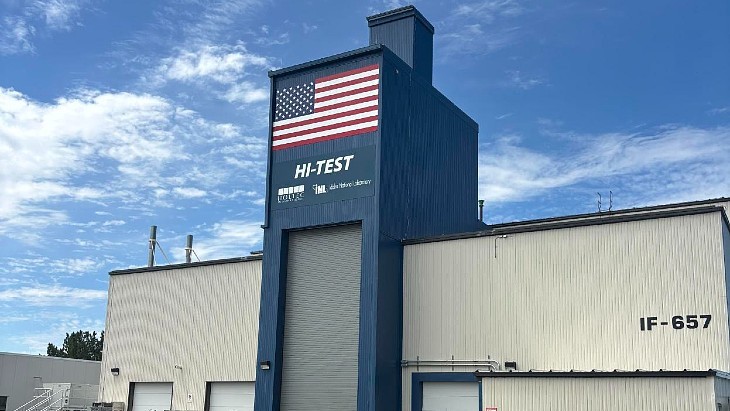
Construction Advances for Holtec's SMR-300 Test Facility at Idaho National Laboratory
Holtec International recently announced that construction of its HI-TEST test facility, supporting the SMR-300 small modular reactor, is advancing at Idaho National Laboratory (INL), with manufacturing of key test components and preparation for facility installation already underway. The facility simulates the SMR-300 plant at approximately one-third scale and is designed to quantify reactor design and operational performance margins, providing a test basis for potential future power uprates. Supported by the U.S. Department of Energy (USDOE), the HI-TEST facility's primary mission is to validate SMR-300 design margins under steady-state and transient conditions, offering physical test data for the plant's power generation capacity, resilience, and operability...
2026-08-28

Antares and Standard Nuclear Sign Multi-Year TRISO Fuel Supply Agreement
Antares Nuclear, Inc. of the United States recently announced that it has signed a binding multi-year fuel supply agreement with Standard Nuclear to secure advanced nuclear fuel supply for its compact microreactor program. Under the agreement, Standard Nuclear will supply up to 8 metric tons of uranium (MTU) of tristructural isotropic particle fuel, or TRISO fuel, to Antares Nuclear by 2035. This fuel will be used in the microreactor currently being developed by Antares. Designed for demanding operating environments such as ground-based and space applications, this class of reactors aims to provide reliable power for national defense, aerospace, and off-grid critical infrastructure...
2026-08-28

U.S. Marathon Fusion Demonstrates Hydrogen and Lithium Isotope Enrichment Technology
U.S.-based Marathon Fusion announced on August 27 that it has successfully demonstrated hydrogen and lithium isotope enrichment technology using its proprietary plasma centrifuge. The company stated that this advancement addresses the fuel cycle needs of fusion energy and related isotope supply requirements. In the deuterium-tritium fusion pathway, hydrogen isotope processing is critical to the continuous operation of fusion devices, while lithium isotope enrichment is closely tied to tritium production. The U.S. Department of Energy (DOE) released its "Fusion Science and Technology Roadmap" in June of this year, which identifies tritium processing as one of the core challenges, noting that related progress is essential for achieving sustained deuterium-tritium fusion operation and validating fusion as a large-scale energy form...
2026-08-28
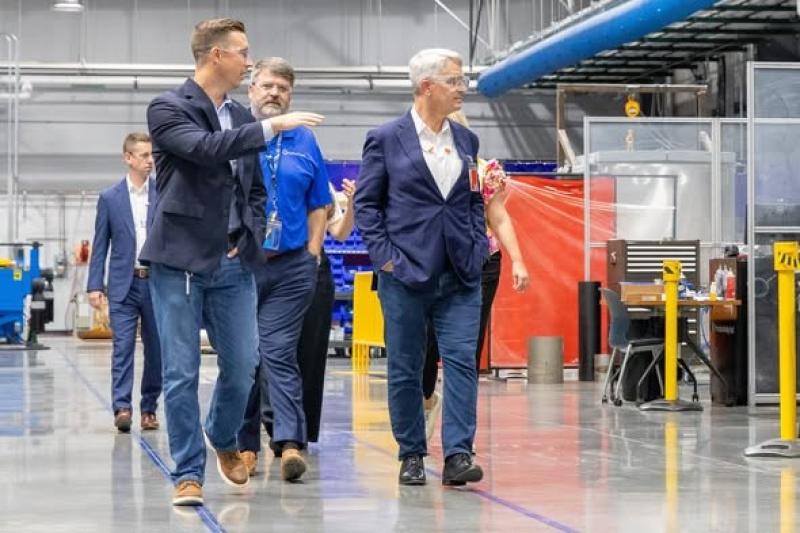
NNSA Administrator Brandon Williams Visits Kairos Power to Review SMR Technology
Kairos Power, a U.S. small modular reactor developer, recently announced that Brandon Williams, Administrator of the National Nuclear Security Administration (NNSA), has visited the company's Manufacturing Development Campus in Albuquerque, New Mexico, to review its readiness for advanced reactor deployment. According to Kairos Power, Williams and his delegation toured the campus's advanced manufacturing, fuel development, molten salt production, modular systems, and large-scale hardware verification facilities. The campus serves as a key base for the company's advancement of fluoride salt-cooled high-temperature reactor technology and also supports the engineering validation and manufacturing capability development required for future reactor deployment.
2026-08-27

IAEA Launches ATLAS Initiative to Advance Nuclear Energy Maritime Applications
The International Atomic Energy Agency (IAEA) launched the Atomic Technology for Maritime Applications Licensing Scheme (ATLAS) on August 26 in Washington, D.C., United States, aiming to support the safe, reliable, and peaceful use of nuclear energy in civilian vessels and floating nuclear power plants. The two-day ATLAS ministerial launch event, hosted by the United States, attracted approximately 600 delegates from over 50 countries, including international organizations, nuclear and maritime industry enterprises, port authorities, and relevant regulatory and policy departments. The IAEA stated that as nuclear-powered ships and floating nuclear power plants gain increasing attention, closer coordination mechanisms between the nuclear and maritime communities are needed. Maritime shipping carries approximately 80% of global trade volume, and maritime trade demand continues to grow at around 2% annually...
2026-08-27

AMPERA and Lawrence Livermore National Laboratory Collaborate to Develop Advanced Nuclear Fuel
AMPERA announced on August 26 that it has established a strategic partnership with Lawrence Livermore National Laboratory (LLNL), which operates under the U.S. Department of Energy (DOE) National Nuclear Security Administration (NNSA) system. The two parties will collaborate on next-generation advanced nuclear fuels, with a focus on applications such as compact nuclear energy systems and subcritical reactor platforms. Under the collaboration arrangement, the two parties will jointly advance the development of manufacturing processes related to tristructural isotropic (TRISO) fuel. Project objectives include improving the reliability, licensability, and scalability of fuel manufacturing,...
2026-08-27
U.S. SuperCritical Materials Corp. Completes Independent Engineering Assessment of Seawater Uranium Extraction Platform
SuperCritical Materials Corp. announced on August 26 that Kellogg Brown & Root (KBR) has completed an independent engineering assessment of its seawater uranium extraction platform. The assessment covered the uranium extraction platform, deployment architecture, offshore operation plans, uranium recovery process, commercialization pathway, and key engineering conditions required for future large-scale deployment. The assessment reviewed SuperCritical Materials' conceptual production plan. Under this plan, the system would use approximately 10,000 metric tons of adsorbent and operate on a continuous 21-day deployment cycle, capable of supporting a uranium processing facility with an annual output of 1.85 million pounds of triuranium octoxide (U3O8)...
2026-08-27

U.S. Army Plans to Deploy Over 20 Micro Nuclear Reactors at Military Bases
The U.S. Army has signed contracts with five companies to develop, build, and operate micro nuclear power plants at military bases, with a total contract value of up to $2.2 billion. According to relevant information, the U.S. Department of Defense requires the companies to construct, own, and operate more than 20 micro nuclear reactors at military installations by 2028. The plan is intended to enhance energy security for critical defense facilities and reduce dependence on the external power grid. The deployment is incorporated into the framework of the Janus Project, which the U.S. Army launched in 2025. The project aims to establish a power supply network composed of compact micro nuclear reactors at military bases, providing continuous and stable electricity to vital defense facilities....
2026-08-27

US Advances Preparations for High-Burnup Spent Fuel Shipment to Idaho for Research
The U.S. Department of Energy (DOE) recently stated that the Idaho Cleanup Project (ICP) is participating in preparations for transporting a high-burnup spent nuclear fuel research cask. The cask is planned to be shipped from Dominion Energy's North Anna Nuclear Power Station in Virginia to the Idaho National Laboratory (INL) for subsequent spent fuel-related research. INL was selected as the receiving site primarily because it possesses the specialized facilities, equipment, and personnel expertise required for handling spent nuclear fuel. The DOE noted that these capabilities are typically not part of routine commercial nuclear power plant configurations. High-burnup fuel refers to nuclear fuel that remains in the reactor for a longer period to increase energy output...
2026-08-26

U.S. Research Reveals Diamond Melting Mechanism at High Pressure, Potentially Enhancing Inertial Confinement Fusion Performance
A research team at Lawrence Livermore National Laboratory (LLNL) in the U.S. recently published a study in Nature Physics reporting that the latest dynamic compression experiments have, for the first time, directly recorded atomic structural changes during diamond melting under extreme high pressure. The experiments showed that under high-pressure conditions, solid diamond can float in liquid metallic carbon, similar to ice floating on water. Diamond is not only a high-hardness carbon material but is also used as the fuel target capsule shell in inertial confinement fusion experiments. When intense lasers drive the capsule implosion, the compression and melting behavior of the diamond shell can affect whether the fusion fuel reaches the required high-temperature, high-pressure state. Meanwhile, the planetary science community has long focused on the high-pressure behavior of carbon in the deep interiors of ice giant planets...
2026-08-26
U.S. NRIC Selects 13 Nuclear Energy Launch Pad Projects
The U.S. Department of Energy (DOE)'s National Reactor Innovation Center (NRIC) announced on August 24 that 13 new projects have been selected for the Nuclear Energy Launch Pad program. NRIC is based at Idaho National Laboratory (INL). NRIC Director Brad Tomer stated that this round of selections reflects developers' growing commitment to advancing related technologies. The program will provide companies with a priority pathway to DOE authorization, as well as access to expert resources, facility conditions, and targeted regulatory support to adv...
2026-08-26

U.S. Submits Civil Nuclear Agreement with Saudi Arabia to Congress for Review
U.S. government officials said on August 25 that President Donald Trump has submitted a proposed civil nuclear energy agreement with Saudi Arabia to Congress for review. The agreement, reached in July this year, includes provisions allowing U.S. companies to export civil nuclear technology to Saudi Arabia. Under the relevant procedures, Congress will have 90 session days to review the agreement. Two congressional sources said the agreement has been submitted to congressional leadership and is expected to be referred to relevant committees for consideration. If Congress raises no objections within the specified period, the agreement will enter into effect; if Congress rejects the agreement, Trump may still exercise his veto power, and Congress would need a two-thirds majority to override the presidential veto...
2026-08-26

U.S. Fusion Roadmap Targets Early Power Plant Deployment by Mid-2030s
The U.S. Department of Energy (DOE) recently released the "Fusion Science and Technology Roadmap," proposing to accelerate the deployment of early fusion power plants by the mid-2030s. The roadmap represents a key federal-level arrangement to advance fusion technology from experimental research toward engineering and commercialization, coordinated by the Office of Fusion established in November 2025. Unlike existing nuclear power plants that release energy through fission reactions, fusion devices attempt to fuse light atomic nuclei together, with an energy source principle identical to that of the Sun. Fusion power is regarded as a potential low-carbon energy direction, but the industry remains in the experimental and demonstration stage, with private developers yet to achieve commercial-scale net energy gain, i.e...
2026-08-26

US Pacific Fusion Breaks Ground on $1 Billion Fusion Facility in New Mexico
On August 25, local time, Pacific Fusion launched construction of a research and manufacturing campus in Albuquerque, New Mexico, USA. The project involves an investment of approximately $1 billion and will be used to build the company's fusion demonstration system, with goals including achieving net facility gain and producing high-yield fusion energy pulses. The campus is located in the Mesa del Sol area of Albuquerque. According to Pacific Fusion's plan, the demonstration system aims to achieve net energy gain at the facility level by 2030, meaning the fusion device outputs more energy than the total energy initially stored in the equipment. The company stated that if this goal is achieved, it will mark a significant technological milestone in the commercialization of fusion energy...
2026-08-26

Westinghouse eVinci Microreactor Completes Zero-Power Criticality Testing
Westinghouse Electric Company announced on August 25 that its eVinci microreactor has completed zero-power criticality testing, validating relevant models and key assumptions in the core design. The test was completed at 10:39 a.m. Pacific Time on August 24, 2026, at the National Criticality Experiments Research Center (NCERC) at the Nevada National Security Site (NNSS). The center is operated under the U.S. National Nuclear Security Administration (NNSA). The test was conducted by Westinghouse Electric in collaboration with Los Alamos National Laboratory (LANL) and Idaho National Laboratory (INL). Zero-power criticality is typically used to verify that a reactor core can achieve a self-sustaining chain fission state at extremely low power levels, serving as a critical step in reactor physics testing and design validation...
2026-08-26
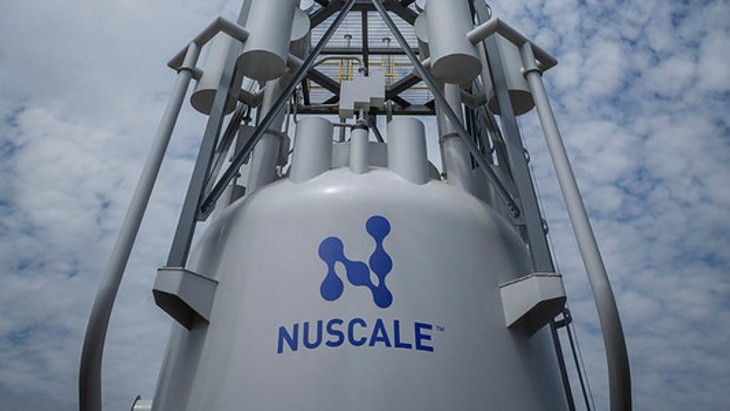
US NuScale Deploys Nuclear-Specific AI to Advance Small Modular Reactor Projects
NuScale Power Corporation announced on August 25 that it is deploying nuclear-specific artificial intelligence tools to support its engineering and knowledge management efforts, accelerating the development of its advanced small modular reactor projects. The initiative combines NuScale's technical expertise in advanced reactors, Nuclearn's AtomAssist nuclear AI platform, and NPX's experience in nuclear project delivery and AI implementation, aiming to establish specialized tools tailored for nuclear scenarios that help engineering teams retrieve, understand, and apply critical technical information more efficiently. As advanced...
2026-08-26

US Study Shows Inertial Fusion Implosions Can Tolerate Certain Asymmetries
Researchers at the Lawrence Livermore National Laboratory (LLNL) in the US have recently found that implosion designs for inertial fusion energy (IFE) can withstand considerable imperfections before performance degrades sharply. This result aids in the design of fuel targets for future fusion power plants, particularly in assessing the tolerance of target capsules to errors under high-frequency injection and laser-driven conditions. The study's simulation results show the density (top) and temperature (bottom) at the instant just before fusion reactions peak in an asymmetric implosion. The hottest spot coincides with the point of highest fuel density, indicating direct ignition of high-density fuel jets driven by asymmetry. The image was recently selected for the cover of Physics of Plasmas...
2026-08-25

U.S. Department of Energy Extends Princeton University Contract to Operate PPPL
The U.S. Department of Energy (DOE) and Princeton University have extended the contract under which Princeton University manages and operates the Princeton Plasma Physics Laboratory (PPPL). The laboratory is located on Princeton University's Forrestal Campus in Plainsboro, New Jersey. Under the new extension, the contract will be renewed for five years starting April 1, 2027. Princeton University expects to strengthen collaboration with faculty and research teams on campus during the contract period, explore next-generation fusion energy research facilities, and enhance laboratory infrastructure and safety to support ongoing operational needs. Princeton University's office for research affairs...
2026-08-25

South Korea denies rumors of joint investment with U.S. in Westinghouse Electric
In response to external claims that the United States proposed South Korea jointly invest in Westinghouse Electric Company, the South Korean government recently responded, stating that such claims are not true. According to a South Korean government source revealed on August 24, the Ministry of Trade, Industry and Energy (MOTIE) and Korea Electric Power Corporation (KEPCO) were reportedly evaluating a plan to jointly acquire a partial stake in Westinghouse Electric Company (WEC) with the U.S. government. The related claims stated that the investment scale and shareholding ratio had not yet been determined, and the plan might involve establishing a special purpose vehicle through joint South Korea-U.S. funding to acquire shares and participate in subsequent U.S. nuclear power plant construction projects.
2026-08-25

US TRISO-X TX-1 Advanced Nuclear Fuel Facility Enters Next Construction Phase
TRISO-X, LLC, a wholly owned subsidiary of X-energy, announced on August 24 that its TX-1 advanced nuclear fuel manufacturing facility in Oak Ridge, Tennessee, has entered the next construction phase. With the vertical structure of the facility nearing completion, the project will transition to auxiliary building construction, interior finishing, and equipment installation. The facility is positioned as the first commercial facility in the United States dedicated to producing tristructural isotropic fuel for advanced reactors, and will provide fuel support for X-energy's Xe-100 high-temperature gas-cooled reactor in the future. X-energy is collaborating with Dow to advance the first deployment of the Xe-100 reactor...
2026-08-25

U.S. NANO Nuclear Plans to Deploy Advanced Nuclear Energy for AI Industrial Parks
NANO Nuclear Energy Inc. recently announced that it has signed a non-binding strategic commercial framework agreement with Tillman Global Holdings and its global data center platform Tillman Digital Gateway, aiming to promote the future use of its KRONOS MMR energy system in artificial intelligence industrial parks that Tillman plans to build in the United States. Figure 1 - NANO Nuclear and Tillman Digital Gateway sign strategic commercial framework to advance nuclear power for gigawatt-scale AI industrial parks in the U.S. Under the agreement, NANO Nuclear will become...
2026-08-25
Reading Ranking
- 1 Israel's nT-TaO Signs Memorandum of Understanding with US-based Orion to Explore Deployment of Compact Fusion Systems for Data Center Power Supply
- 2 US Company DTE Advances 177 MW Power Uprate at Fermi 2 Nuclear Power Plant
- 3 Kairos Power Establishes Advanced Nuclear Manufacturing and Prefabrication Center in Tennessee
- 4 Argonne National Laboratory Achieves Latest Research Progress in Advanced Reactor Passive Safety, Revealing Flow Characteristics of Reactor Cavity Cooling System Using NSTF Facility
- 5 Solaris Invests in Deployable Energy, Pushing "Unity" Transportable Microreactor Toward Commercial SMR
- 6 Bangladesh and the United States Sign Memorandum of Understanding on Strategic Civil Nuclear Cooperation
- 7 U.S. Senate Holds Hearing to Review the NLIC Full Lifecycle Innovation Campus Plan
- 8 Nusano Selected for U.S. Nuclear Energy Launch Platform Program to Advance Advanced Nuclear Fuel Production Line
- 9 Main Building of X-energy's TRISO-X Nuclear Fuel Plant TX-1 Completed
- 10 Deployable Energy 1MW Microreactor UNB Achieves Initial Criticality: Scheduled to Enter INL DOME Test Bed in 2027 for Full-Power Testing
- 11 US Nuclear Regulatory Commission Poised to Approve TVA's First BWRX-300 Reactor
- 12 Idaho National Laboratory Moran Test Bed Completes Deployment Preparation for Spent Fuel Decladding Skid
- 13 TRISO-X Expands Oak Ridge Nuclear Fuel Campus with Approximately 70 Additional Acres
- 14 Kairos Power Launches NuCAMP Collaboration Initiative in Oak Ridge
- 15 US Island Roadhouse Discloses Design for Nuclear-Powered AI Data Center Campus in Missouri