

Egyptian Minister of Electricity Inspects Small Modular Reactor Technology in Russia
On August 27, 2026, Egyptian Minister of Electricity and Renewable Energy Mahmoud Esmat visited a small nuclear reactor manufacturing and assembly plant operated by Rosatom during an official visit to Russia. The inspection focused on the latest advancements in small modular reactor-related technologies, industrial application status, and potential cooperation opportunities between the two sides. The Egyptian side stated that such visits align with the country's direction of diversifying energy sources and enhancing the security and sustainability of electricity supply. During the visit, Esmat was briefed on the manufacturing and assembly processes of small reactor components, as well as related safety systems...
2026-08-28
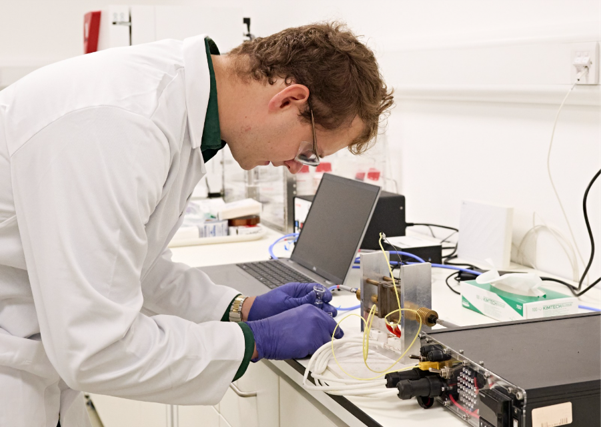
Cambridge AtomWorks Opens New Laboratory at Granta Park to Develop ODIN Microreactor
Cambridge AtomWorks announced on August 27 that its new light industrial facility and laboratory at Granta Park in Cambridge, UK, has officially entered service. The site, leased from TWI (The Welding Institute), will be used to advance research and development work related to the ODIN microreactor. According to the company, the new laboratory has already begun conducting experiments closely linked to ODIN microreactor development, including studies on coolant properties and behavior. The research team is using an STA-MS system to characterize material properties related to fuel performance, which enables simultaneous thermogravimetric analysis, heat flow analysis, and mass spectrometry. The new facility will also be used for reactor flow...
2026-08-28

South Korean research team evaluates pipe rupture risk in nuclear power plants using probabilistic analysis
Researchers from Seoul National University of Science and Technology in South Korea have recently proposed a sensitivity analysis method based on probabilistic fracture mechanics to evaluate the rupture frequency of main coolant piping systems in nuclear power plants. This method can analyze the impact of uncertainties and modeling assumptions on prediction results, helping engineers distinguish extremely low-probability events from relatively more likely failure scenarios. In nuclear power plants, the main coolant piping system plays a critical role in maintaining structural integrity under normal reactor operating conditions. A pipe rupture could trigger a loss-of-coolant accident, and therefore this system has long been included in the key scope of nuclear power plant safety design and assessment.
2026-08-28

NSF Funds $30 Million Turbulence Research Center Focused on Predictive Modeling for Fusion Energy
The U.S. National Science Foundation (NSF) has established a new Science and Technology Center with a total funding of $30 million, focusing on the understanding and prediction of turbulence. The project targets application scenarios such as fusion energy, astrophysics, and hypersonic flight, aiming to tackle the challenges of cross-scale turbulence modeling and prediction in complex physical systems. Researchers and students from San José State University (SJSU) will participate in the related research. This is a three-dimensional simulated turbulent velocity field at the core collapse point of a massive star before a supernova explosion. Image credit: S. Couch, based on research by Fields and Couch published in The Astrophysical Journal, Volume 921, Page 28.
2026-08-27

U.S. HFIR Research Reactor Boosts Validation of New Nuclear Fuels
The High Flux Isotope Reactor (HFIR) at the U.S. Department of Energy's (DOE) Oak Ridge National Laboratory (ORNL) is becoming a key facility in the U.S. research, development, and qualification system for new nuclear fuels. A research paper published on August 25 noted that amid growing demand for new commercial nuclear power and advanced reactor construction in the United States, research reactor resources available for new fuel testing are becoming strained, and HFIR is expected to help alleviate the shortage of related testing capabilities. Image credit: Gunes Ozcan/Oak Ridge National Laboratory, U.S. Department of Energy. HFIR is one of the world's highest-flux steady-state research reactors and has long been used for nuclear fuel and materials irradiation testing. The paper recognizes...
2026-08-26
U.S. Research Reveals Diamond Melting Mechanism at High Pressure, Potentially Enhancing Inertial Confinement Fusion Performance
A research team at Lawrence Livermore National Laboratory (LLNL) in the U.S. recently published a study in Nature Physics reporting that the latest dynamic compression experiments have, for the first time, directly recorded atomic structural changes during diamond melting under extreme high pressure. The experiments showed that under high-pressure conditions, solid diamond can float in liquid metallic carbon, similar to ice floating on water. Diamond is not only a high-hardness carbon material but is also used as the fuel target capsule shell in inertial confinement fusion experiments. When intense lasers drive the capsule implosion, the compression and melting behavior of the diamond shell can affect whether the fusion fuel reaches the required high-temperature, high-pressure state. Meanwhile, the planetary science community has long focused on the high-pressure behavior of carbon in the deep interiors of ice giant planets...
2026-08-26

Japan's Helical Fusion Publishes Research Results on High-Temperature Superconducting Magnets
Helical Fusion recently announced that its joint research on high-temperature superconducting magnets with the National Institute for Fusion Science (NIFS) has passed peer review and been published in the Journal of Physics: Conference Series. The results, previously disclosed in a preliminary report, primarily validate the performance of high-temperature superconducting conductors for fusion reactor applications under strong magnetic fields and high currents. This study tested the UROCOIC high-temperature superconducting conductor independently developed by Helical Fusion. The research team fabricated the conductor into a double-pancake coil sample and used existing test equipment to simulate, as closely as possible, the magnetic field and current environment expected in future fusion reactors.
2026-08-26

NuCube Energy and Canadian Nuclear Laboratories Launch Microreactor R&D Collaboration
NuCube Energy, Inc. announced on August 25 that it has initiated research and development activities under an agreement signed with Canadian Nuclear Laboratories (CNL). The two parties will conduct research on the NuCube reactor design, focusing on advancing data identification, modeling, and analysis efforts to support the validation of its microreactor technology. Under this R&D program, Canadian Nuclear Laboratories will validate existing experimental data and benchmark computational models used to predict heat pipe performance in high-temperature environments exceeding 900 degrees Celsius. The qualified experimental data provided by Canadian Nuclear Laboratories will be used to expand the NuCube computational mo...
2026-08-26

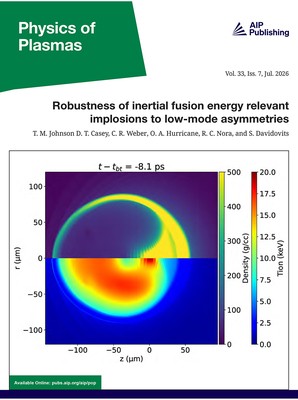
US Study Shows Inertial Fusion Implosions Can Tolerate Certain Asymmetries
Researchers at the Lawrence Livermore National Laboratory (LLNL) in the US have recently found that implosion designs for inertial fusion energy (IFE) can withstand considerable imperfections before performance degrades sharply. This result aids in the design of fuel targets for future fusion power plants, particularly in assessing the tolerance of target capsules to errors under high-frequency injection and laser-driven conditions. The study's simulation results show the density (top) and temperature (bottom) at the instant just before fusion reactions peak in an asymmetric implosion. The hottest spot coincides with the point of highest fuel density, indicating direct ignition of high-density fuel jets driven by asymmetry. The image was recently selected for the cover of Physics of Plasmas...
2026-08-25

Two U.S. National Laboratories Collaborate to Advance Arc-Based 3D Printing of Nuclear Pressure Vessels
Oak Ridge National Laboratory (ORNL) and Idaho National Laboratory (INL), both under the U.S. Department of Energy (DOE), announced a collaboration focused on advancing wire-arc 3D printing technology for industrial pressure vessels and qualification capabilities for critical nuclear components, aiming to expand the U.S. domestic supply chain. The two laboratories unveiled the collaboration during the Materials and Manufacturing Innovation Day event hosted at Oak Ridge National Laboratory on August 19. The event focused on topics such as advanced manufacturing, nuclear infrastructure, energy security, and domestic supply chains, and featured demonstrations and tours of the DOE Manufacturing Demonstration Facility (MDF). This facility is a large-scale research platform open to industry, primarily...
2026-08-22

Progress in Tritium Containment and Radiation Protection Materials Research at the Institute of Plasma Physics, Chinese Academy of Sciences
Recently, Associate Researcher Huo Zhipeng of the Fusion Reactor Blanket and Safety Research Center at the Institute of Plasma Physics, Chinese Academy of Sciences, together with his supervised master's students Zhang Jie and Chen Zuoyang, developed a class of flexible PbWO4-B4C reinforced silicone rubber composites with dual functions of tritium safety containment and nuclear radiation protection. The related research results were published in Journal of Materials Research and Technology. Future fusion facilities require comprehensive performance from radiation protection materials in tritium safety containment systems, including airtight sealing, flexibility for easy assembly and disassembly, and radiation shielding capability, for penetration hole sealing, post-maintenance, and high-flux neutron and γ-ray radiation protection. The research...
2026-08-21

German SIBAF Project Receives €9.7 Million to Support Fusion Materials Research
On August 20, 2026, with funding from the German Federal Ministry of Research, Technology and Space (BMFTR), the SIBAF project will launch the construction of an accelerator infrastructure for fusion materials research. The project, whose full name is Superconducting Ion Accelerator as a Foundational Technology for Fusion Research, will receive €9.7 million over three years, of which €8.1 million is allocated to the GSI Helmholtz Centre for Heavy Ion Research (GSI) and its Facility for Antiproton and Ion Research (FAIR), currently under construction. Goethe University Frankfurt will also participate in the project. SIBAF is part of the funding program "Fusion Foundational Technologies — Toward the Fusion Power Plant." Project objectives...
2026-08-21

Russia Plans to Build New Tokamak Device Using Reactor Technologies
Alexey Likhachev, Director General of Rosatom, recently stated at a nuclear energy development conference that Rosatom is collaborating with the Kurchatov National Research Centre to build a new tokamak device using reactor technologies. Likhachev said that fusion energy technology is one of the key directions for Russia's nuclear energy development. Currently, the European Union, the United States, the United Kingdom, and China are all advancing related projects, and technological competition in the field of controlled thermonuclear fusion continues to intensify. Russia hopes to use this project to maintain its technological leadership in this knowledge-intensive nuclear energy sector.
2026-08-21

U.S. University Develops Laser De-icing Technology for Nuclear Power Plant Safety System Maintenance
An engineering team at the University of South Florida has developed a customized laser de-icing technology to address the issue of ice basket adhesion in the maintenance of critical safety systems at nuclear power plants. After four years of research, design, and testing, the technology has completed field testing at two nuclear power plants operated by the Tennessee Valley Authority (TVA). Developed jointly by Ahmed Vaselbehagh, Professor of Mechanical and Aerospace Engineering at the University of South Florida, and postdoctoral researcher Ty Hagan, the technology is primarily aimed at ice condenser systems used in certain nuclear power plants in the United States, Japan, and Finland...
2026-08-21

US Inertia Fusion Fuel Preparation Time Significantly Reduced
US fusion startup Inertia Enterprises said it has made progress in inertial fusion energy fuel preparation in collaboration with Lawrence Livermore National Laboratory (LLNL), reducing the time required for the critical step of forming a cryogenic deuterium-tritium fuel layer from potentially several days in the past to tens of minutes. The company said this achievement completes a key task in the first phase of its commercial fusion power plant development goals. The fundamental approach of inertial fusion energy involves using high-energy lasers to compress and heat small targets containing deuterium-tritium fuel, bringing the fuel to ignition conditions and releasing energy. The National Ignition Facility (NIF) has already...
2026-08-21
Rosatom Says Seversk Fast Reactor Project Will Demonstrate Russia's Nuclear Technology Capabilities
Rosatom Director General Alexey Likhachev said that if the nuclear power project under construction in Seversk, Tomsk Oblast, is put into operation before 2030, it will demonstrate Russia's capabilities in new nuclear technologies
2026-08-21

Princeton Plasma Physics Laboratory to Validate Spherical Tokamak Fusion Path with NSTX-U
The Princeton Plasma Physics Laboratory (PPPL) is advancing research on the National Spherical Torus Experiment-Upgrade (NSTX-U), planning to use this largest spherical tokamak in the United States to assess the potential of compact tokamak configurations for future fusion power plants. The device is designed to become one of the most powerful spherical tokamaks in the world and will be used to study key issues such as high-temperature plasma confinement, heat transport, material performance, and real-time control. The image above shows the vacuum vessel and center column of the NSTX-U at the Princeton Plasma Physics Laboratory (PPPL). This device will help scientists determine the optimal shape for future fusion power plants...
2026-08-20

CGN's "Summit Plan" Hydrogen Purity Control Technology for Nuclear Power Promoted at Hongyanhe Nuclear Power Base
Recently, the promotion meeting for key scientific research achievements under CGN's Summit Plan was held at the Hongyanhe Nuclear Power Base. Experts from CGN and CNNC nuclear power bases, research institutes, and equipment manufacturers gathered at Hongyanhe to conduct technical exchanges and achievement validation and promotion. Wang Wenfeng, member of the Party Committee and Deputy General Manager of the company, attended the meeting. The key technology promoted this time is the innovative hydrogen purity control technology for nuclear power half-speed turbogenerators, which can significantly reduce generator windage and friction losses, lower hydrogen consumable consumption, and eliminate the risk of high-frequency purification operations on units. Based on operational data calculations, the annual comprehensive benefit per unit exceeds 2.6 million yuan, saving 2,100 man-hours, achieving comprehensive improvements in safety, cost, and operation and maintenance efficiency...
2026-08-20

SHINE to Advance Spent Fuel Recycling Separation Technology with Argonne National Laboratory and Others
On August 18, fusion energy company SHINE announced that it will collaborate with the U.S. Department of Energy's Argonne National Laboratory and Case Western Reserve University to apply high-throughput chemical separation technology to the nuclear fuel recycling process it is currently developing. The collaboration is carried out under the CURIE program of the U.S. Department of Energy's Advanced Research Projects Agency-Energy (ARPA-E), with additional funding led by Case Western Reserve University, and SHINE participates as a subcontractor. Spent fuel is often referred to as nuclear waste, but it retains approximately 90% of its energy potential while containing multiple reusable byproducts. In recent years, federal programs and private investment in the United States have driven renewed interest in spent fuel recycling. Argonne National Laboratory is developing a new chemical processing device called "Packed Centrifugal Equipment for Radiochemical Separation," abbreviated as PaCERS. The device generates centrifugal force exceeding normal gravity conditions through high-speed rotation to improve chemical separation efficiency, and reduces costs across multiple stages of nuclear fuel recycling through higher throughput and lower solvent usage.
2026-08-19

Huaneng Nuclear Energy Research Institute Conducts First Specialized Training on Hualong One System Principles
To enhance the Institute's technical support services and scientific research capabilities regarding Hualong One technology, and to strengthen employees' systematic understanding of Hualong One, Huaneng Nuclear Energy Research Institute organized training on Hualong One system principles, completing the first specialized session on August 12. A total of 101 company leaders and employees participated in the training through a combination of online and offline methods. The first training session reviewed China's path toward independent development of pressurized water reactor technology from an industry development perspective, systematically outlining the global evolution of nuclear power technology and the safety design criteria for Generation III nuclear power. By benchmarking against mainstream Generation III reactor designs such as the US AP1000 and European EPR, the session provided in-depth explanations of Hualong One's dual safety architecture combining active and passive safety systems...
2026-08-18

US experiment reveals diamond melting behavior under high pressure, potentially advancing inertial confinement fusion research
Researchers at Lawrence Livermore National Laboratory published a new study in Nature Physics documenting the melting process of diamond at pressures approximately three times greater than those at Earth's core. The experiments showed that under high-pressure conditions, diamond floats in liquid metallic carbon, similar to how ice floats in water. This finding helps improve inertial confinement fusion experimental models and provides new evidence for understanding the potential "diamond rain" phenomenon inside ice giant planets such as Neptune and Uranus. The latest melting experiments confirmed that under high pressure, diamond floats in liquid metallic carbon, just as ice floats in a glass of water. (Concept image: James Wickboldt/LLNL) The research team stated...
2026-08-17
Reading Ranking
- 1 Fudan University Approved for China's First "Fusion Science and Engineering" Interdisciplinary First-Level Doctoral Degree Program
- 2 Argonne National Laboratory Achieves Latest Research Progress in Advanced Reactor Passive Safety, Revealing Flow Characteristics of Reactor Cavity Cooling System Using NSTF Facility
- 3 The Energy Research Institute of Hefei Comprehensive National Science Center Achieves a Series of New Progress in Safety Assessment of Activated Corrosion Products under Magnetic Field Environments in Fusion Reactors
- 4 IAEA Launches New Project to Advance Research Network on Small and Medium-Sized Fusion Devices
- 5 Princeton University and PPPL Launch Collaborative Graduate Program in Plasma Science and Technology
- 6 U.S. ZC Institute Unveils "Kardashev One" Fusion Prototype Reactor Plan to Independently Test Neutron Recovery Concept
- 7 U.S. University Develops Laser De-icing Technology for Nuclear Power Plant Safety System Maintenance
- 8 Two U.S. National Laboratories Collaborate to Advance Arc-Based 3D Printing of Nuclear Pressure Vessels
- 9 Study Reveals Three-Dimensional Pore Networks Inside Uranium-Zirconium Metallic Nuclear Fuel
- 10 NEA Advances SFCOMPO Database Upgrade to Support Spent Nuclear Fuel Nuclide Inventory and Decay Heat Validation
- 11 Lightbridge Approved to Conduct Advanced Nuclear Fuel Irradiation Testing at Idaho National Laboratory
- 12 Digital twins are becoming an important R&D pathway in fusion research
- 13 Deployable Energy 1MW Microreactor UNB Achieves Initial Criticality: Scheduled to Enter INL DOME Test Bed in 2027 for Full-Power Testing
- 14 NuCube Energy and Canadian Nuclear Laboratories Launch Microreactor R&D Collaboration
- 15 Türkiye partners with Danish company to develop thorium-based nuclear technology