

SLAC team observes progressive melting of copper under extreme heat in real time
Researchers at the SLAC National Accelerator Laboratory, under the U.S. Department of Energy, and their collaborators used the Mega-electron-volt Ultrafast Electron Diffraction (MeV-UED) facility to observe in real time the melting process of copper atoms under extreme temperatures. The study was published in Nature Communications. Future fusion power plants will need to replicate fusion reactions that occur inside stars here on Earth. The core plasma can reach temperatures of hundreds of millions of degrees Celsius, while surrounding structural materials must withstand sudden, intense thermal shocks. Copper and its alloys, owing to their excellent thermal conductivity, are considered capable of serving as "heat sinks" in fusion systems...
2026-08-15

The Energy Research Institute of Hefei Comprehensive National Science Center Achieves a Series of New Progress in Safety Assessment of Activated Corrosion Products under Magnetic Field Environments in Fusion Reactors
Recently, the Radiation Protection and Safety Research Center of the Energy Research Institute of Hefei Comprehensive National Science Center has made a series of significant progress in the field of safety assessment of activated corrosion products under magnetic field environments in fusion reactors. The research team conducted systematic studies on the corrosion behavior of China's low-activation ferritic/martensitic steel CLF-1 in magnetic field environments, from three dimensions: water corrosion characteristics, migration patterns of corrosion products, and the influence of surface roughness. The relevant results have been published as three papers in the journal *Nuclear Materials and Energy*, which is ranked in Zone 1 of the emerging journal classification table. This series of research outcomes provides key scientific evidence for the radiological safety assessment of cooling water systems in fusion reactors...
2026-08-15

Study Reveals Three-Dimensional Pore Networks Inside Uranium-Zirconium Metallic Nuclear Fuel
Researchers at the Massachusetts Institute of Technology (MIT), in collaboration with Idaho National Laboratory (INL), conducted three-dimensional imaging studies on irradiated uranium-10 zirconium metallic fuel, revealing the internal pore networks within the fuel and their relationship with chemical changes and fuel-cladding interactions. The researchers believe these results will help improve metallic fuel performance models, providing references for extending the operating cycles of certain reactors and for the design of next-generation sodium-cooled fast reactor fuel systems. Uranium-10 zirconium (U-10Zr) is a uranium-zirconium alloy metallic fuel containing 10% zirconium, which has been extensively tested in sodium-cooled fast reactors such as Experimental Breeder Reactor II (EBR-II) and the Fast Flux Test Facility (FFTF). As advanced reactor research and development progresses, this type of metallic fuel has regained attention, but the details of pore formation, swelling, heat transfer, and interactions with cladding materials under reactor irradiation conditions still require further clarification.
2026-08-13

International Team Determines Critical Safety Parameter Ranges for Magnetic Liquid Cooling Systems
South Ural State University (SUSU) recently announced that researchers from its Polytechnic Institute, in collaboration with colleagues from Moscow and Baghdad, have determined the safe and unsafe ranges of the Hartmann number and Brinkman number in magnetic liquid cooling systems. Based on this, they developed a computer program to optimize the operation of high-power heat exchangers in devices such as supercomputers and nuclear reactors. According to the introduction, this research focuses on two key parameters in magnetohydrodynamics: the Hartmann number characterizes the resistance exerted by a magnetic field on fluid motion, while the Brinkman number reflects the internal heat generated by the fluid due to viscous effects and electrical resistance. The researchers noted that under specific conditions, a strong magnetic field does not necessarily...
2026-08-13

Fuse Energy Technologies Corp. Reports FAETON-X Single-Shot D-D Fusion Neutron Yield of 1.27×10¹²
Fuse Energy Technologies Corp., headquartered in California, USA, announced on August 11 that its megajoule-class dense plasma focus device FAETON-X measured a peak neutron yield of (1.27±0.27)×10¹² neutrons per shot in a single D-D fusion experiment. The company stated that this is one of the highest single-shot fusion neutron yields publicly recorded by a commercial fusion enterprise, and the first to reach the 10¹² order of magnitude. FAETON-X is a megajoule-class pulsed-power fusion system developed by Fuse, designed as a single-pulse flash neutron source, serving pulsed-power fusion R&D and...
2026-08-12

"High-Precision Analysis Technology and Engineering Application of Multi-Physics, Multi-Scale, Strongly Coupled High-Temperature Gas-Cooled Reactor" Passes Scientific and Technological Achievement Appraisal, Reaching Internationally Leading Level
On August 7, the China Nuclear Energy Association organized a scientific and technological achievement appraisal meeting in Beijing for the high-precision analysis technology and engineering application of multi-physics, multi-scale, strongly coupled high-temperature gas-cooled reactors. Ye Qizhen, academician of the Chinese Academy of Engineering, served as the leader of the project review panel. The expert group unanimously agreed to pass the achievement appraisal, recognizing it as reaching an internationally leading level. Xu Weiqiang, General Manager of the Nuclear Energy Research Institute, attended the meeting, and Liu Wei, Director of the Reactor Engineering Institute, delivered a special report. This achievement was completed through five years of joint research by Huaneng Nuclear Energy Technology Research Institute and Xi'an Jiaotong University, targeting world-class challenges such as strong multi-physics coupling in the core of pebble-bed high-temperature gas-cooled reactors, limited in-core temperature measurement points, and complex bypass flow paths. For the first time internationally, it established...
2026-08-12

Sophelio Launches Fusion Equilibrium Challenge, Opening DIII-D and MAST Experimental Datasets
On August 11, Sophelio launched the Fusion Equilibrium Challenge. The competition has been accepted into the 2026 Conference on Neural Information Processing Systems (NeurIPS) competition track, making it the first fusion energy-related challenge to enter this track. The challenge is co-organized by Sophelio together with the DIII-D National Fusion Facility, the UK Atomic Energy Authority (UKAEA) FAIR-MAST project, and the Institute for Fusion Studies (IFS) at the University of Texas at Austin, with data hosted on the Hugging Face platform. Open to the global machine learning community, the competition re...
2026-08-12

Russian Scientists Propose Fast Calculation Method to Simulate Plasma Ion Parameters in Seconds
Researchers from the HSE University and the Moscow Institute of Physics and Technology (MIPT) have developed an analytical method for calculating the behavior of heavy ions in helium under strong electric fields, which can accelerate the computation of ion mobility and ion–molecule reaction rates by thousands of times. The findings have been published in Physica Scripta. Plasma, composed of charged particles such as electrons, negative ions, and positive ions, is typically quasi-neutral and highly conductive. It exists not only in fluorescent lamps and welding arcs but is also used in controlled nuclear fusion devices such as tokamaks. Atmospheric plasma jets can also be applied to wound disinfection, work surface cleaning...
2026-08-11

TAF-ID database 22nd edition released, expanding advanced nuclear fuel thermodynamic evaluation data
The International Thermodynamic Database for Advanced Fuels (TAF-ID) project has been running for over a decade. The project employs the CALPHAD (Calculation of Phase Diagrams) method to develop a thermodynamic database that supports computational analysis of advanced nuclear fuel materials, enabling prediction of phase diagrams and thermodynamic properties of relevant systems. According to project documentation, Version 22 of the TAF-ID database has been released. This update adds and revises assessment data for material systems including Na-U, Na-O, Na-UO₂, U-Ru, U-Si, Al-Si-U, Fe-Pu-U, and O-N-U, and updates gas-phase data based on the latest publicly available information. The database assessment scope has been expanded to 44 elements, 272 binary systems, 151 ternary systems, and 3...
2026-08-11

Two IPP studies reveal edge turbulence mechanisms in fusion plasmas from first principles
On August 10, 2026, two research teams at the Max Planck Institute for Plasma Physics (IPP) independently published findings that, for the first time, explain key phenomena in the extremely thin edge layer of fusion plasmas starting from fundamental physics equations. Both papers were published in Physical Review Letters, with one highlighted as an editor's suggestion. For stable operation of a fusion power plant, two requirements must be met simultaneously: on the one hand, the plasma at temperatures of around 100 million degrees Celsius must be effectively confined to achieve fusion ignition conditions; on the other hand, the generated heat must be distributed over a sufficiently large area to prevent damage to the device walls from excessive local heat loads. Whether this conflict can be resolved depends largely on a region only a few centimeters thick at the plasma edge.
2026-08-10

LLNL Research in the U.S. Reveals New Mechanisms of Laser Polarization Effects in NIF Inertial Confinement Fusion Experiments
Researchers at Lawrence Livermore National Laboratory (LLNL) have recently discovered in studies related to the National Ignition Facility (NIF) that the polarization state of lasers may influence the cross-beam energy transfer (CBET) process in inertial confinement fusion experiments and could help reduce backscatter and the risk of damage to optical components. The related paper, titled "Effects of Laser Polarization on Cross-Beam Energy Transfer in Inertial Confinement Fusion," was recently published as a featured article in the journal Physics of Plasmas. NIF experiments demand extremely high precision in laser control. The facility's 192 laser beams must be focused to a width of a few millimeters and enter the target area through holes approximately 3 millimeters in diameter located at the top or bottom of a gold hohlraum. The hohlraum is about 2 centimeters in diameter. After the lasers enter the plasma, different beams cross each other and undergo energy transfer, a process known as cross-beam energy transfer. When designing NIF inertial confinement fusion experiments, scientists carefully tune the laser wavelengths to use CBET to balance energy distribution and improve implosion symmetry.
2026-08-10
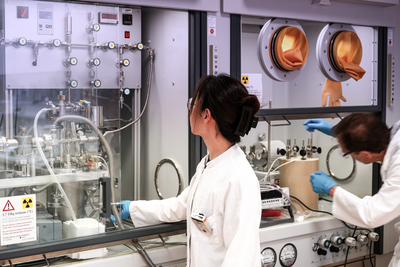
German team achieves first separation of tritium-containing hydrogen isotope mixtures using silver-exchanged zeolites
A team at the Helmholtz-Zentrum Dresden-Rossendorf (HZDR) and partners recently demonstrated a new method for separating hydrogen isotopes using silver-containing zeolites, successfully separating hydrogen isotope mixtures containing radioactive tritium through a porous solid material for the first time. The research findings were published in Nature Communications. Future fusion power plants will require not only high-temperature plasma and strong magnetic fields during operation, but also a stable fuel cycle system for recovering, separating, and reusing deuterium and tritium. Inside a fusion reactor, deuterium and tritium participate in reactions and release energy, but the fuel is not completely consumed, and the residual gas may also contain ordinary hydrogen (protium), forming a mixture of protium, deuterium, and tritium...
2026-08-07

Basic research cracks an application challenge that has persisted for nearly half a century: quantitative prediction of neutron irradiation swelling via ion irradiation
Whether advanced nuclear energy systems can operate safely over the long term depends on the ability of structural materials to resist neutron irradiation damage. Neutrons create numerous atomic-scale defects in materials, which gradually aggregate into nanoscale cavities, ultimately causing material swelling, dimensional instability, and performance degradation. However, obtaining high-dose neutron irradiation data often requires years or even more than a decade, with high costs and post-irradiation sample radioactivity; in contrast, ion irradiation can simulate years of accumulated damage within days and is therefore widely adopted (approximately 95% of irradiation experimental data in existing literature come from ion irradiation). But the dose rate of ion irradiation is typically 3—4 orders of magnitude higher than that of neutron irradiation, making direct conversion between the two results difficult. Recently, the research team of Wang Chenxu and Wang Yugang from the Institute of Heavy Ion Physics, School of Physics, and the State Key Laboratory of Nuclear Physics and Nuclear Technology at Peking University, in collaboration with researchers from the University of Tennessee and other institutions, established a quantitative relationship between material swelling and irradiation dose and dose rate at fixed temperatures based on cluster dynamics simulations, theoretical derivations, and ion irradiation experiments, achieving prediction of neutron irradiation swelling using rapid ion irradiation and providing a new tool for rapid screening and lifetime evaluation of nuclear materials.
2026-08-07

Real-Time Perception, Full-Scope Visibility! CNNC Environmental Protection's "SMARP2.0" Leads a New Paradigm in Nuclear Power Radiation Protection
In nuclear power radiation work scenarios, the ability to pre-determine radiation dose levels in various areas has long been an aspiration of countless nuclear industry workers. Now, the SMARP2.0 system developed by the China Institute for Radiation Protection (CIRP), a subsidiary of CNNC Environmental Protection, has turned this vision into reality. Recently, the China Institute for Radiation Protection, under CNNC Environmental Protection, completed the iterative upgrade of the SMARP2.0 digital radiation protection technical support system. This system can pre-calculate radiation dose levels in various areas of nuclear power operations, effectively resolving the long-standing industry challenge where frontline nuclear workers could not grasp on-site radiation conditions in advance, providing robust technical support for optimizing radiation work plans and ensuring worker radiation safety. SMARP2.0...
2026-08-07
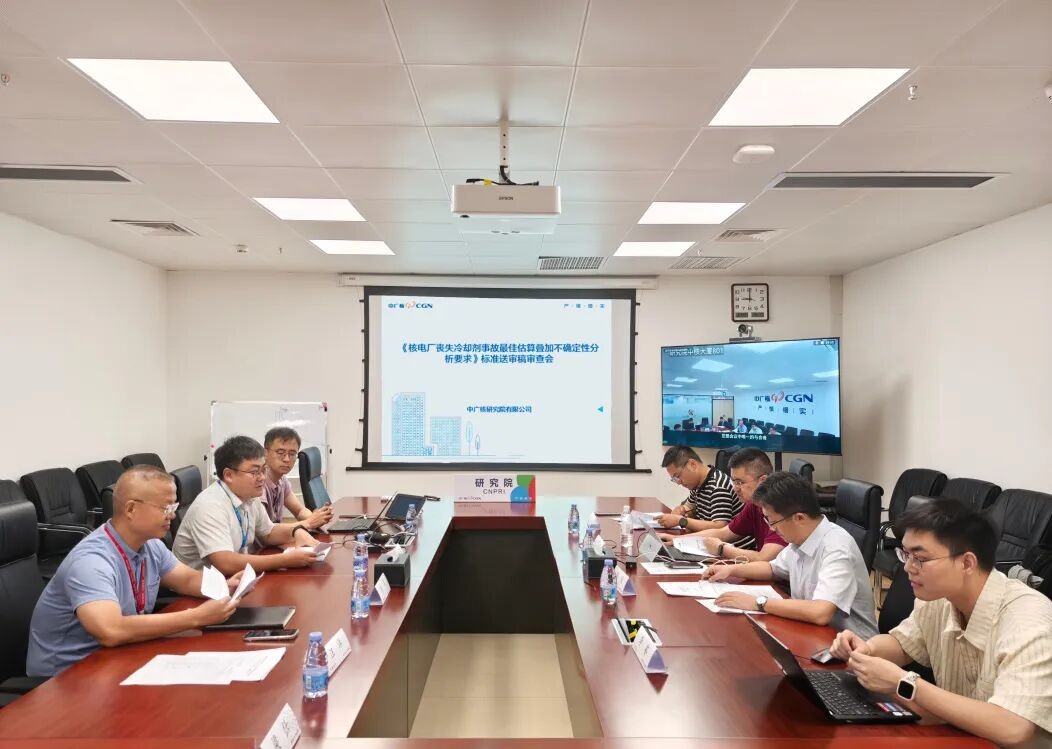
China's First Industry Standard for LOCA BEPU Analysis, Led by CGN Research Institute, Officially Released
Recently, approved by the National Energy Administration, the energy industry standard "Technical Requirements for Best Estimate Plus Uncertainty Analysis of Loss of Coolant Accident in Pressurized Water Reactor Nuclear Power Plants" (NB/T 20751-2026), led by CGN Research Institute, was officially released. The standard was developed under the leadership of the Research Institute, in collaboration with the Nuclear and Radiation Safety Center of the Ministry of Ecology and Environment, China Nuclear Power Research and Design Institute, Shanghai Nuclear Engineering Research and Design Institute, Hualong Nuclear Power Technology Co., Ltd., and China Nuclear Power Engineering Co., Ltd., among other organizations. It will come into effect on December 26, 2026. This standard is China's first BEPU analysis...
2026-08-06

Germany Establishes Three Fusion Centers, HZDR Contributes to Advancing Key Technologies for Fusion Power Plants
The German Federal Ministry for Research, Technology and Space (BMFTR) recently established three fusion centers under the German High-Tech Agenda (HTAD), aiming to pool the efforts of research institutions and industry to advance technology development for future fusion power plants. The German federal government will provide €125 million in initial funding for the related work, with a focus on laser fusion, magnetic confinement fusion, and cross-cutting areas such as fuel cycle and materials development. The Helmholtz-Zentrum Dresden-Rossendorf (HZDR) will participate in the construction of the relevant centers leveraging its research infrastructure, contributing capabilities in high-power lasers, materials research, simulation and data analysis. The SAXFUSION capability network, jointly coordinated by HZDR and the Fraunhofer Institute for Material and Beam Technology (Fraunhofer IWS), will also take on tasks of exchange, cooperation and knowledge transfer.
2026-08-06

South Korean Scholar Patents Fusion Reactor Optimization Design Method
Professor Bonggeun Hong (transliteration) of the Department of Quantum System Engineering at the College of Engineering, Jeonbuk National University, South Korea, has recently registered a patent for a fusion reactor optimization design method, aimed at supporting the engineering design and commercialization of next-generation fusion technology. [Image source: Jeonbuk National University] The design method proposed in the patent can evaluate the performance of fusion reactors in various application scenarios—including power generation, thermal energy utilization, and use as a neutron source for nuclear transmutation—while optimizing device dimensions and key component structures. Its core approach is to simultaneously consider fusion system performance and economic feasibility during the initial design phase, thereby deriving more optimal design solutions.
2026-08-06

Colorado State University produces first ultracold neutral plasma with electron temperature below 1 kelvin
Researchers at Colorado State University have, for the first time, produced an ultracold neutral plasma by combining laser cooling techniques with strong magnetic fields. Measurements show that the electron temperature in this plasma is less than 1 kelvin above absolute zero, making it one of the lowest electron temperatures ever measured in a plasma. The research was published in Physics of Plasmas. The new method proposed in the paper helps test plasma theories under more controllable experimental conditions and improve computational models of plasma behavior in extreme environments. The researchers believe this achievement could contribute to future fusion energy...
2026-08-05

Westinghouse and Amentum Expand Cooperation to Support Scaled Deployment of APX Technology Platform
Westinghouse Electric Company announced on August 4 that it has reached a series of agreements with Amentum to expand cooperation around Westinghouse's APX technology platform, enhance the scaled deployment capability of AP1000 reactors, and advance the development and licensing of the AP300 Small Modular Reactor (SMR). Under the agreements, the two companies will collaborate to advance AP300 SMR regulatory approval from the U.S. Nuclear Regulatory Commission (NRC). Westinghouse stated that obtaining regulatory approval is a critical step for AP300's market entry, and Amentum's engineering capabilities and nuclear project experience will support these efforts. Westinghouse Electric...
2026-08-05

Antineutrinos Detected for the First Time in Spent Fuel Elements
Even after a nuclear reactor has been shut down, the radioactive fuel continues to emit a faint stream of antineutrinos. The Double Chooz collaboration, led by scientists from the Max Planck Institute for Nuclear Physics (MPIK), has succeeded for the first time in measuring this elusive signal, opening up new prospects for reactor monitoring, nuclear safety, and control procedures. The Double Chooz detector. Image credit: Double Chooz collaboration. The research team conducted these measurements at the Chooz nuclear power plant in northern France. The Double Chooz detector is located approximately 400 meters underground, in close proximity to two reactor cores. Inside, the detector contains more than 30 cubic meters of liquid scintillator material...
2026-08-04

IIT Hyderabad launches nuclear technology training programme
The Indian Institute of Technology Hyderabad (IIT Hyderabad), in collaboration with Pune-based technology company Crimson Energy Experts Pvt. Ltd. (CEEPL), has launched a three-month full-time residential training programme to train engineers and industry professionals for India's expanding civil nuclear energy sector. The programme, named Anugyan-Nuclear Technology Orientation Programme (NTOP), is described as India's first industry-academia collaborative initiative dedicated specifically to engineering talent development in the nuclear energy sector, with a focus on bridging the gap between academic curricula and nuclear industry engineering practice.
2026-08-04
Reading Ranking
- 1 All Four ITER Test Blanket Module (TBM) Conceptual Designs Pass Preliminary Design Review
- 2 Deployable Energy 1MW Microreactor UNB Achieves Initial Criticality: Scheduled to Enter INL DOME Test Bed in 2027 for Full-Power Testing
- 3 The Fully Superconducting Tokamak EAST Marks 20 Years of Operation: From a 3-Second First Cry to Thousand-Second Steady State, China's "Artificial Sun" Opens a Leap Toward Fusion Engineering
- 4 Fudan University Approved for China's First "Fusion Science and Engineering" Interdisciplinary First-Level Doctoral Degree Program
- 5 The Energy Research Institute of Hefei Comprehensive National Science Center Achieves a Series of New Progress in Safety Assessment of Activated Corrosion Products under Magnetic Field Environments in Fusion Reactors
- 6 Lightbridge Approved to Conduct Advanced Nuclear Fuel Irradiation Testing at Idaho National Laboratory
- 7 U.S. Research Reveals Diamond Melting Mechanism at High Pressure, Potentially Enhancing Inertial Confinement Fusion Performance
- 8 Shanghai Electric Delivers the First Domestic Steam Generator Water Chamber Head Forging for the "Guohe One"
- 9 Cambridge AtomWorks Opens New Laboratory at Granta Park to Develop ODIN Microreactor
- 10 Israel's Quantum X Labs Claims Efficient Geometric Encoding for Complex Nuclear Environments
- 11 Antares Wins U.S. Air Force Space Nuclear Energy Technology Contract
- 12 US experiment reveals diamond melting behavior under high pressure, potentially advancing inertial confinement fusion research
- 13 NEA Advances SFCOMPO Database Upgrade to Support Spent Nuclear Fuel Nuclide Inventory and Decay Heat Validation
- 14 Radiation protection expert Peter Bryant to lead University of Liverpool's Chadwick Institute for Nuclear Innovation
- 15 World's First Compact Fusion Energy Experimental Device BEST TF Coil Cases Delivered in Batch