

Study Shows Sustained Deuterium Fusion in Palladium and Titanium Metal Foils at Ultra-Low Energies
U.S. researchers have observed a low-energy deuterium fusion phenomenon in thin palladium and titanium metal foils: when the incident deuteron energy drops to levels where fusion reactions are generally expected to weaken significantly or even nearly cease, the reactions continue to occur. Experiments show that as incident energy decreases, the fusion rate does not continue to decline exponentially but instead enters a plateau region below approximately 2 keV. At the lowest detectable energy, the measured low-energy fusion rate exceeds predictions from isolated-nucleus models by more than 10^18 times. Image courtesy of Marina Light/University of California, Davis. The related research was conducted by teams at the University of California, Davis and Lawrence Berkeley National Laboratory...
2026-08-04
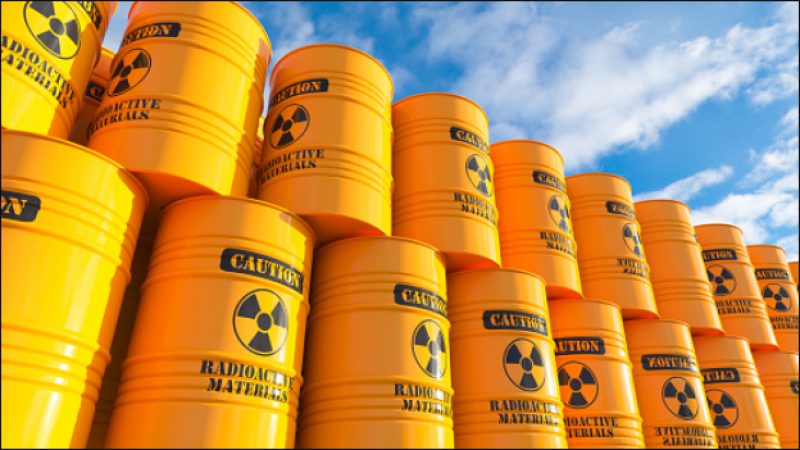
Russian Researchers Develop High-Wear-Resistant Steel Sample for Nuclear Waste Processing
Novosibirsk State Technical University (NSTU) recently announced that Russian researchers have developed a steel sample with reinforcing elements. Experimental results show that the durability of this material is approximately 4 times that of 5KhNM tool steel currently used in nuclear power plant waste processing equipment. The research focuses on improving precipitation hardening steel structures. Precipitation hardening steel is a special class of alloy material that, after quenching and holding at specific temperatures, precipitates fine, hard particles within the steel, thereby enhancing strength and wear resistance. The researchers aim to replace existing 5KhNM tool steel with new high-strength alloys...
2026-08-04

Japanese research team experimentally demonstrates that fusion plasma fluctuations can drive inward particle transport
August 3, 2026, a research team from The University of Tokyo and the National Institute for Fusion Science (NIFS) under the National Institutes of Natural Sciences announced that researchers have directly observed in experiments that low-frequency electric field fluctuations in high-temperature plasma confined by a dipole magnetic field can transport particles to the central region of the plasma. Plasma produced by the levitated dipole experiment device RT-1 (Ring Trap 1) Overall view of the RT-1 device (Kashiwa Campus, The University of Tokyo) The study was conducted using the levitated dipole experiment device Ring Trap 1 (RT-1) at The University of Tokyo. RT-...
2026-08-03

Radiation protection expert Peter Bryant to lead University of Liverpool's Chadwick Institute for Nuclear Innovation
The University of Liverpool has announced that Professor Peter Bryant has been appointed as the Director of the newly established Chadwick Institute for Nuclear Innovation, with his tenure officially commencing in September 2026. The Chadwick Institute for Nuclear Innovation is named after Nobel laureate Sir James Chadwick, who served as Head of the Physics Department at the University of Liverpool and is renowned for his discovery of the neutron. The Institute will leverage the University of Liverpool's research expertise, innovative facilities, and strategic partnerships in the nuclear energy sector to advance research and talent development in nuclear innovation. Bryant has long been engaged in work related to the civil nuclear fuel cycle, with his research and management portfolio encompassing radiation protection, environmental permitting, radioactive waste...
2026-08-03

NEA Advances SFCOMPO Database Upgrade to Support Spent Nuclear Fuel Nuclide Inventory and Decay Heat Validation
The Nuclear Energy Agency (NEA) held the ninth annual meeting of the Technical Review Group (TRG) for the International Spent Nuclear Fuel Analysis Data Database (SFCOMPO) on July 9 in Boulogne-Billancourt, France. Thirty-three experts from research institutions, regulatory bodies, waste management organizations, and industry across 12 countries attended the meeting. The experimental and evaluated data contained in SFCOMPO are primarily used to validate computational tools related to nuclear safety and the nuclear fuel cycle, with applications including reactor physics, criticality safety, radiation shielding, and radioactive waste management. Accurate characterization of spent nuclear fuel is an essential foundation for supporting decisions on storage, transportation, reprocessing, and disposal, and is also relevant to...
2026-08-01

QST completes first gyrotron 170 GHz microwave output test at ITER site
The National Institutes for Quantum Science and Technology (QST) of Japan announced on July 31 that it has completed the integration and operational testing of the first gyrotron system at the International Thermonuclear Experimental Reactor (ITER) site in southern France, successfully producing 170 GHz microwave output. This system is used for ITER plasma generation and heating, and is one of the key devices for ITER's plan to commence operations in 2034. The core equipment of this test is the gyrotron, a high-power microwave source. Gyrotron operation requires the coordinated work of peripheral equipment such as power supplies, superconducting coils, and cooling systems. QST previously completed performance testing of eight ITER gyrotron systems at the gyrotron test facility of the Naka Fusion Institute in Japan, and transported components including gyrotrons, superconducting coils, and quasi-optical matching units to the ITER site. Over the past three years, QST has advanced system installation, commissioning, and operational preparation at the site.
2026-07-31

Princeton University and PPPL Launch Collaborative Graduate Program in Plasma Science and Technology
The Princeton Plasma Physics Laboratory (PPPL), a U.S. Department of Energy (DOE) facility, and Princeton University recently launched the Collaborative Research Program in Plasma Science and Technology (CRPST). This two-year program, which began on July 1, 2026, aims to establish a more formal joint mentorship mechanism and expand opportunities for Princeton University graduate students in engineering, physics, and related disciplines to participate in research at PPPL. Under the program, selected students will be jointly mentored by a PPPL scientist and a Princeton University faculty member. Students will work at PPPL at least one day per week, participate in relevant research groups, and use laboratory facilities to advance their projects...
2026-07-30
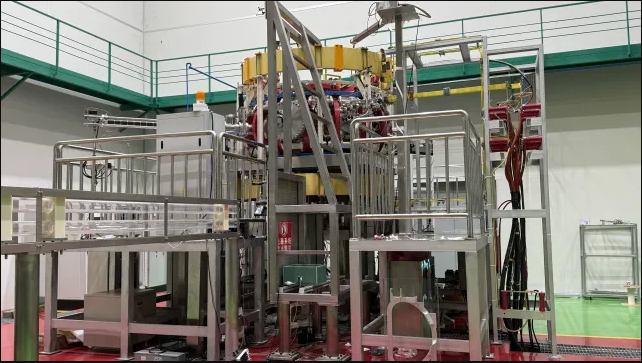
IAEA Launches New Project to Advance Research Network on Small and Medium-Sized Fusion Devices
The International Atomic Energy Agency recently launched a new Coordinated Research Project, aiming to further strengthen the global network of small and medium-sized fusion devices, supporting multinational coordinated experiments, diagnostic technology development, and personnel training, providing a platform for cultivating the next generation of fusion researchers. The Tokamak TT-1 device at the Thailand Institute of Nuclear Technology (TINT) has long participated in the IAEA Coordinated Research Project on the network of small and medium-sized fusion devices, contributing to international cooperation, research, and capacity building. (Photo: JP Cayol/IAEA) This project builds upon a previous five-year collaborative research program. The previous project was named Small and Medium-Sized Magnetic Confinement...
2026-07-30
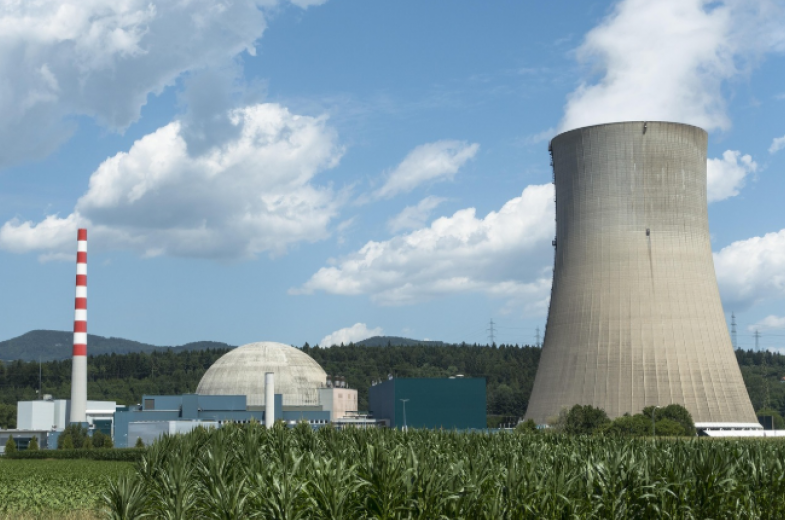
Saudi Arabia confirms signing nuclear energy cooperation agreement with the United States
The Saudi Arabian Ministry of Energy issued a statement in the early hours of July 23 (local time) announcing that Saudi Arabia has signed a cooperation agreement with the United States regarding the peaceful use of nuclear energy.The statement noted that
2026-07-23
Reading Ranking
- 1 Deployable Energy 1MW Microreactor UNB Achieves Initial Criticality: Scheduled to Enter INL DOME Test Bed in 2027 for Full-Power Testing
- 2 All Four ITER Test Blanket Module (TBM) Conceptual Designs Pass Preliminary Design Review
- 3 The Energy Research Institute of Hefei Comprehensive National Science Center Achieves a Series of New Progress in Safety Assessment of Activated Corrosion Products under Magnetic Field Environments in Fusion Reactors
- 4 IAEA Launches New Project to Advance Research Network on Small and Medium-Sized Fusion Devices
- 5 The Fully Superconducting Tokamak EAST Marks 20 Years of Operation: From a 3-Second First Cry to Thousand-Second Steady State, China's "Artificial Sun" Opens a Leap Toward Fusion Engineering
- 6 U.S. ZC Institute Unveils "Kardashev One" Fusion Prototype Reactor Plan to Independently Test Neutron Recovery Concept
- 7 Two U.S. National Laboratories Collaborate to Advance Arc-Based 3D Printing of Nuclear Pressure Vessels
- 8 Russia Plans to Build New Tokamak Device Using Reactor Technologies
- 9 Israel's Quantum X Labs Claims Efficient Geometric Encoding for Complex Nuclear Environments
- 10 NSF Funds $30 Million Turbulence Research Center Focused on Predictive Modeling for Fusion Energy
- 11 NEA Advances SFCOMPO Database Upgrade to Support Spent Nuclear Fuel Nuclide Inventory and Decay Heat Validation
- 12 Progress in Tritium Containment and Radiation Protection Materials Research at the Institute of Plasma Physics, Chinese Academy of Sciences
- 13 Study Shows Sustained Deuterium Fusion in Palladium and Titanium Metal Foils at Ultra-Low Energies
- 14 U.S. Research Reveals Diamond Melting Mechanism at High Pressure, Potentially Enhancing Inertial Confinement Fusion Performance
- 15 Basic research cracks an application challenge that has persisted for nearly half a century: quantitative prediction of neutron irradiation swelling via ion irradiation