

Japanese Team Discovers New Ordered State of "Electronic Chirality" in Uranium Compound
The Japan Atomic Energy Agency and Tohoku University announced on July 28 that their research team has discovered a new electronic ordered state in the uranium compound URhSn, confirming for the first time in an actual material that even when the crystal structure itself lacks chirality, the arrangement of electrons within the material can spontaneously form right-handed/left-handed characteristics. Chirality generally refers to the property where an object cannot perfectly coincide with its mirror image, such as left and right hands, screw thread directions, and the helical structure of DNA. In the past, material chirality was generally believed to originate from asymmetry in atomic arrangement. This study demonstrates, however, that chirality can also arise from the ordered arrangement of electron distributions. The research team used single-crystal samples of URhSn, composed of uranium, rhodium, and tin, and employed nuclear magnetic...
2026-08-03

Antihydrogen hyperfine splitting measurement sets new precision record
The ALPHA collaboration at CERN has recently completed a new measurement of the ground-state hyperfine splitting of antihydrogen. The results show that the hyperfine splitting of antihydrogen and ordinary hydrogen agrees within an uncertainty of four parts per million, improving the measurement precision by two orders of magnitude over previous experiments. Antihydrogen tamers: ALPHA team members from the University of Calgary in Canada. Back row, left to right: Pouya Heidari, Reece Stefanyshyn, Abbygale Swadling, Filobateer Ghaly, Sean Wilson, and Alberto Jesus Uribe Jimenez. Front row: Jay Suh (left) and Timothy Friesen. (Photo courtesy of Jay Suh) Antihydrogen consists of...
2026-08-03

Large Structure for CMS Future High-Granularity Calorimeter Passes Rigorous Cold Tests
A key engineering test for the future High-Granularity Calorimeter (HGCAL) of the CMS experiment at CERN has recently made progress. One of the largest HGCAL structures has completed a series of rigorous cold tests, during which no overheating, condensation, or leakage was recorded on the outer panels, laying the groundwork for its future service at the High-Luminosity Large Hadron Collider (HL-LHC). HGCAL will replace the existing endcap calorimeters of the CMS experiment to reconstruct particle showers with greater precision under HL-LHC operating conditions. The structure tested this time is the first of two large stainless steel absorber structures. By design, the active elements of HGCAL will be installed within the absorber structures and must maintain long-term stable performance in a cryogenic environment...
2026-08-03
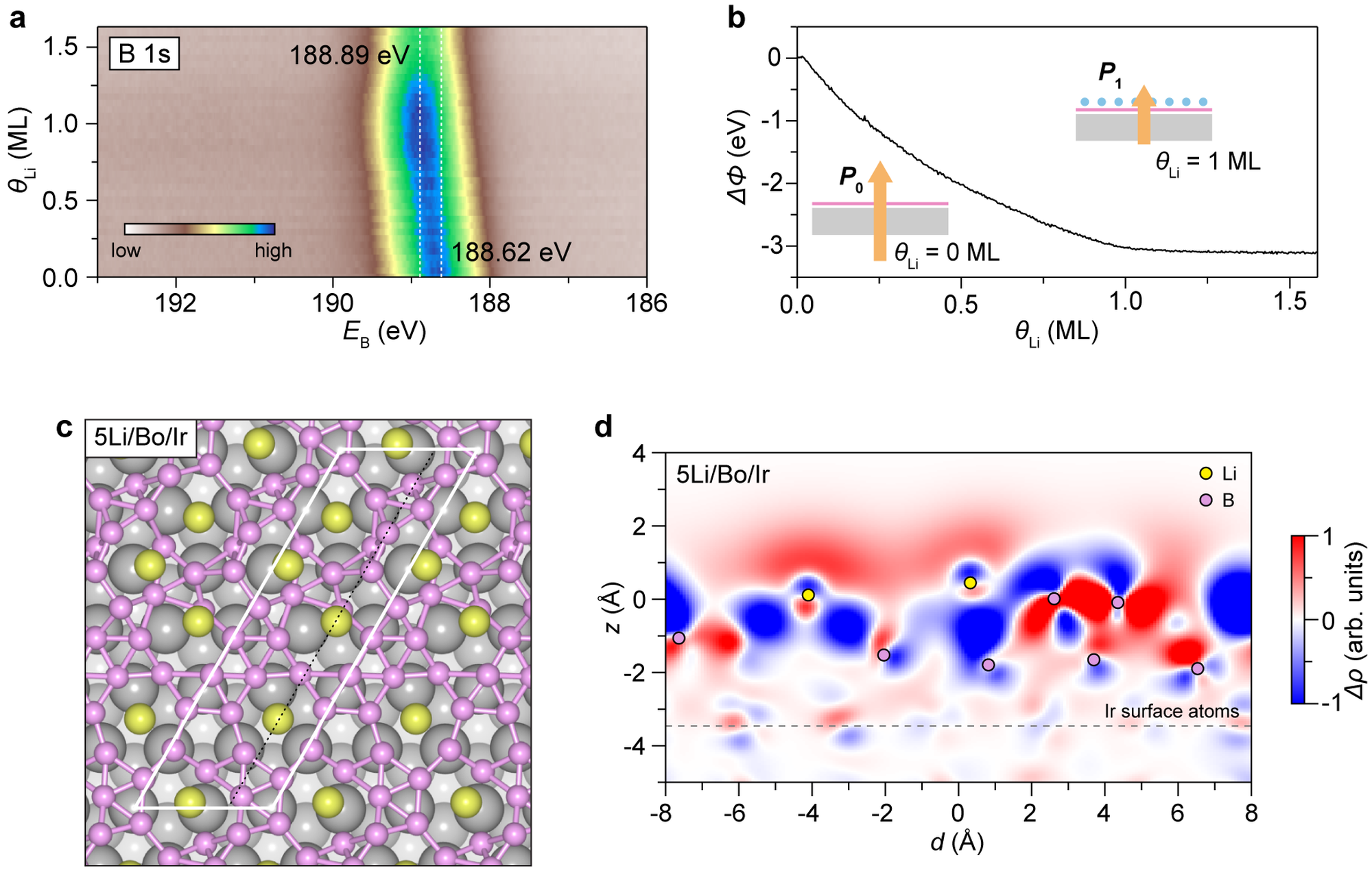
Multinational Team Reveals Mechanisms of Lithiation in Modulating the Structural and Electronic Properties of Borophene Using Synchrotron Techniques
A research team from the Institute of Physics in Zagreb, Croatia, Elettra Synchrotron in Trieste, Italy, Shimane University, and Tokyo University of Science recently conducted a study on the interaction between lithium atoms and borophene, revealing the mechanisms by which lithiation affects the atomic structure and electronic properties of borophene. The findings were published in *ACS Nano* and selected as the journal cover article. (a) Shift of the B 1s core level toward higher binding energy; (b) reduction of the sample work function due to charge transfer from Li atoms to B atoms; (c) lithium atoms (yellow) deposited on borophene (magenta) induce deformation of the borophene lattice, attributed to significant charge redistribution within the system...
2026-08-03

Czech research team develops minimally invasive radiocarbon dating sampling method to aid dating of prehistoric rock art
A research team at the Czech Radiocarbon Laboratory (CRL) of the Nuclear Physics Institute of the Czech Academy of Sciences has developed a minimally invasive sampling method for dating carbon-based rock art, enabling the acquisition of materials needed for radiocarbon dating with virtually no damage to the rock art's appearance. After sampling, the outline of the rock art remains intact, with only a slight lightening of color in the sampled area. This method provides a new technical pathway for dating cave paintings of historical value. In the past, sampling of cave paintings was often strictly restricted for heritage conservation reasons, which also hindered related chronological determination efforts. The new method, through a gentler sampling approach, enhances the feasibility of dating carbon-based rock art while maximizing the preservation of its scientific and cultural value...
2026-08-02

U.S. Team Traces Source of Anomalous Gamma Rays from Zinc-70, Nuclear Magnetic Transitions May Improve Models of Heavy Element Formation
An international research team led by scientists from the Facility for Rare Isotope Beams (FRIB) at Michigan State University has recently identified the source of the large number of low-energy gamma rays emitted by zinc-70 nuclei. The study suggests that magnetic transitions occurring within the nucleus are the key reason for this anomalous signal enhancement. The findings were published in the journal Nature under the title "Magnetic character of the low-energy enhancement in 70Zn." Gamma rays are electromagnetic radiation released when excited atomic nuclei transition to lower, more stable energy levels. For a long time, scientists have observed an anomalous increase in the number of low-energy gamma rays in some atomic nuclei, known as the low-energy enhancement (LEE), but its physical mechanism had remained unclear...
2026-08-02

Germany's eROSITA Second Data Release Unveils Nearly Two Million X-ray Sources
On July 31, the German eROSITA consortium, led by the Max Planck Institute for Extraterrestrial Physics with participation from the University of Bonn, released its second major public dataset, eROSITA Data Release 2 (DR2). Built from the first three all-sky survey observations conducted by the eROSITA telescope aboard the Spectrum-Roentgen-Gamma (SRG) mission, this dataset is considered one of the most sensitive and comprehensive X-ray catalogs currently available to the public. The DR2 main catalog covers the 0.2–2.3 kiloelectron-volt (keV) band in the western hemisphere, containing nearly two million X-ray sources. Among these, over 1.9 million are point-like sources, primarily consisting of stars and actively accreting supermassive black holes; approximately 64,000 are extended sources,...
2026-08-01
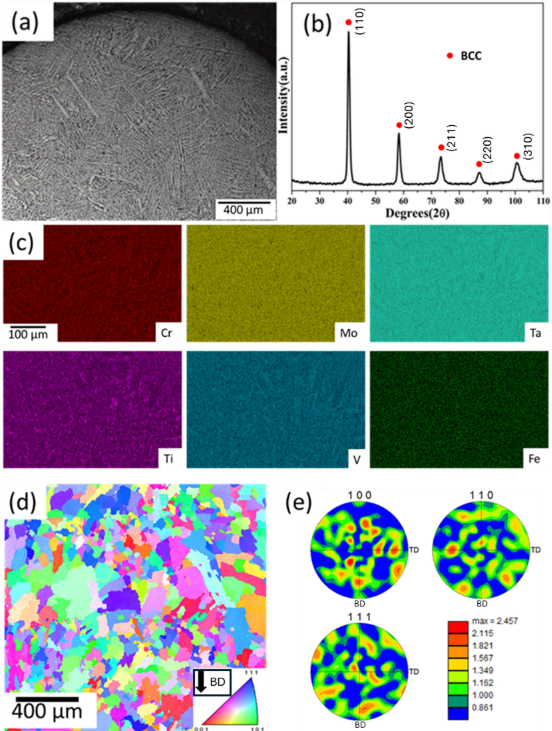
Additively Manufactured CrMoTaTiV Refractory Alloy Demonstrates Excellent Radiation Resistance
A materials study released on July 31 shows that a research team used laser powder directed energy deposition (LP-DED) technology to fabricate a novel Cr₁₀Mo₂₅Ta₂₅Ti₁₅V₂₅ refractory complex concentrated alloy and systematically evaluated its structural stability and mechanical properties under irradiation environments. The study targets the demand for high-temperature, high-irradiation structural materials in next-generation nuclear fission and fusion devices. In the study, samples were subjected to 3.5 MeV Fe²⁺ ion irradiation at the Ion Beam Materials Laboratory of Los Alamos National Laboratory in the United States, at irradiation temperatures of room temperature and 650°C, with local doses reaching approximately 1.8, 6, and 18 dpa. Microstructural analysis...
2026-08-01
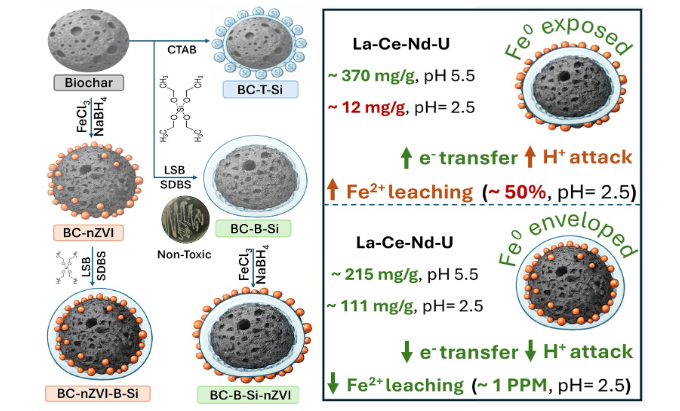
IIT Develops Novel Nanomaterial for Efficient Recovery of Rare Earth and Uranium Resources
Researchers at the Indian Institute of Technology Roorkee have developed an acid-resistant magnetic nanocomposite capable of recovering uranium and rare earth elements from acidic leach solutions. The material consists of core active nanoparticles encapsulated in a protective silica layer, enabling efficient absorption and extraction of these valuable resources in complex acidic aqueous media. By synthesizing the silica shell using biocompatible reagents, the researchers not only enhanced the material's corrosion resistance but also made it safer and more environmentally friendly. This novel nanocomposite demonstrated exceptional performance in laboratory tests, recovering up to 370 grams of uranium and rare earth elements per kilogram of material. It can operate effectively not only under conditions such as natural groundwater...
2026-08-01

U.S. Explores New Methods for Lunar Ice Detection Using Synchrotron X-ray Microtomography and Seismic Models
On July 31, researchers at Lawrence Berkeley National Laboratory, in collaboration with scientists from the University of Maryland and the University of Hawaii, proposed a new method for locating subsurface ice deposits on the Moon using seismic waves. The findings, published in the journal Science Advances, are expected to provide a reference for interpreting detection data and locating water resources in future lunar landing missions. The research focuses on how subsurface lunar materials respond to seismic waves. The team developed computational models to predict the behavior of lunar subsurface media of varying compositions under seismic wave excitation. Experimental results showed differences in seismic response between ice-bearing and dry rocks, indicating that seismological methods have the potential to identify ice layers buried beneath lunar regolith and rock.
2026-08-01
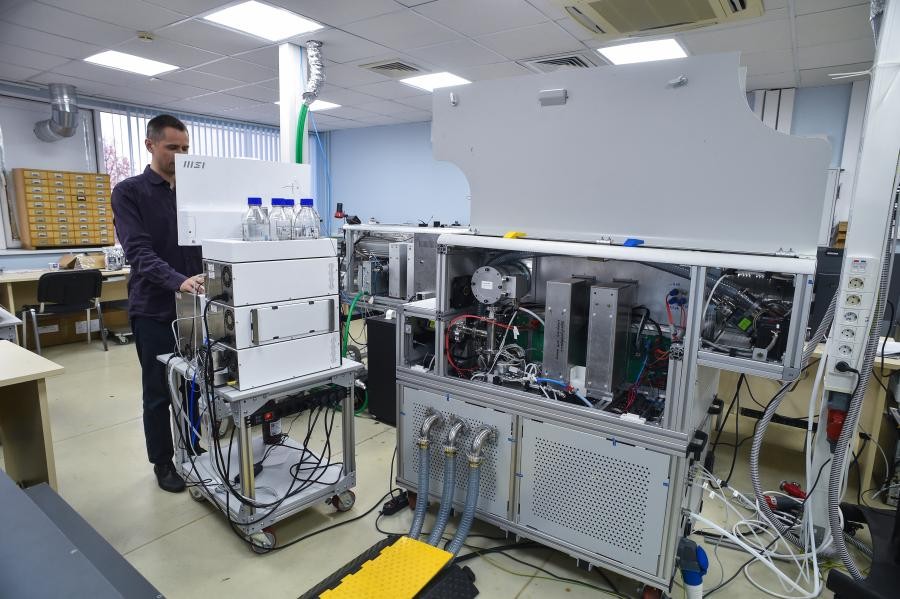
Russia's MEPhI Electrospray Ionization Triple Quadrupole Mass Spectrometer Listed in Russia's Key Scientific Instrumentation Projects
According to the 2025 activity report recently released by the Russian Ministry of Science and Higher Education, the triple quadrupole mass spectrometer with electrospray ionization developed by the National Research Nuclear University MEPhI (Moscow Engineering Physics Institute) has been listed as one of the 8 successful projects under the federal program "Development of Domestic Civil Instrumentation for Scientific Research." The mass spectrometer, developed under the guidance of MEPhI Professor Alexey Sysoev, is primarily used for quantitative analysis and identification of chemical substances, particularly suitable for identifying relevant components in complex mixtures. Previously, all such instruments on the Russian market were imported. This independently developed chromatography-mass spectrometry system can handle...
2026-08-01
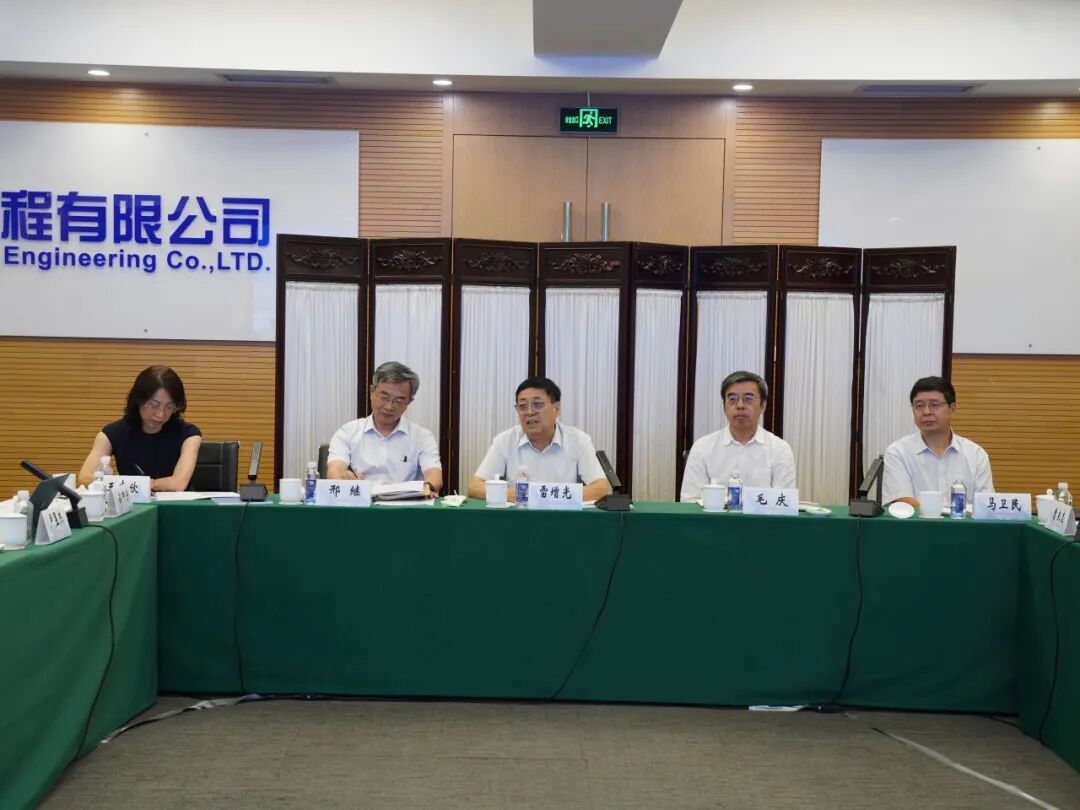
First Editorial Board Meeting of *Research & Design of Nuclear Engineering* Held in Beijing
On July 31, the first editorial board meeting of *Research & Design of Nuclear Engineering*, a high-standard English-language journal in the nuclear engineering field, was successfully held at the Beijing Nuclear Energy Building. Academician Lei Zengguang of CNNC, Editor-in-Chief, and Academician Tu Shandong of East China University of Science and Technology, Associate Editor-in-Chief, along with editorial board representatives from domestic and international universities and research institutes, including the Royal Institute of Technology (KTH) in Sweden and Tsinghua University, attended the meeting. Relevant leaders from China Nuclear Power Engineering Co., Ltd. and CGN Engineering Co., Ltd., the journal's sponsors, as well as representatives from Science Press, the publisher, participated on-site. The meeting was chaired by Liu Liping, Director of the Science and Technology Department of CNNC Engineering. At the meeting, CNNC...
2026-08-01

The Second Symposium on Frontier Issues of Ion-Matter Interactions Successfully Held at the School of Nuclear Science and Technology, University of South China
From July 3 to 6, the Second Symposium on Frontier Issues of Ion-Matter Interactions was held in Hengyang, Hunan Province. More than 40 experts and scholars from 15 institutions, including Beijing Normal University, Wuhan University, National University of Defense Technology, Beijing Institute of Technology, Dalian University of Technology, Lanzhou University, Xi'an Jiaotong University, North China Electric Power University, the Institute of Modern Physics of the Chinese Academy of Sciences, and the Beijing Institute of Applied Physics and Computational Mathematics, conducted in-depth exchanges and discussions on the latest experimental and theoretical research progress in the mechanisms of energetic ion beam-matter interactions. This symposium was organized by the School of Nuclear Science and Technology of the University of South China, the School of Nuclear Science and Technology of Lanzhou University, and the Key Laboratory of Beam Technology of the Ministry of Education...
2026-07-31

Shanghai Synchrotron Radiation Facility Science Center Organizes 2026 Annual Major Science and Technology Infrastructure Operation Training
The joint training for the 2026 annual operating facilities (SSRF & SXFEL) of the Shanghai Synchrotron Radiation Facility Science Center, Chinese Academy of Sciences Shanghai Advanced Research Institute (hereinafter referred to as "Shanghai Advanced Research Institute"), was held in Haiyan, Zhejiang Province from July 28 to 30. Academician Zhao Zhentang, Director of the Academic Committee of Shanghai Advanced Research Institute and Director of the Shanghai Synchrotron Radiation Facility Science Center; Deng Haixiao, President and Deputy Secretary of the Party Committee of Shanghai Advanced Research Institute; Chen Fengwei, Secretary of the Party Committee; Tai Renzhong, Vice President and Executive Deputy Director of the Shanghai Synchrotron Radiation Facility Science Center; Zhou Sigen, Vice President; and over 260 representatives from the operation team of the Shanghai Synchrotron Radiation Facility Science Center, various functional departments of Shanghai Advanced Research Institute, and sister institutions participated in the training. The opening session was hosted by...
2026-07-31
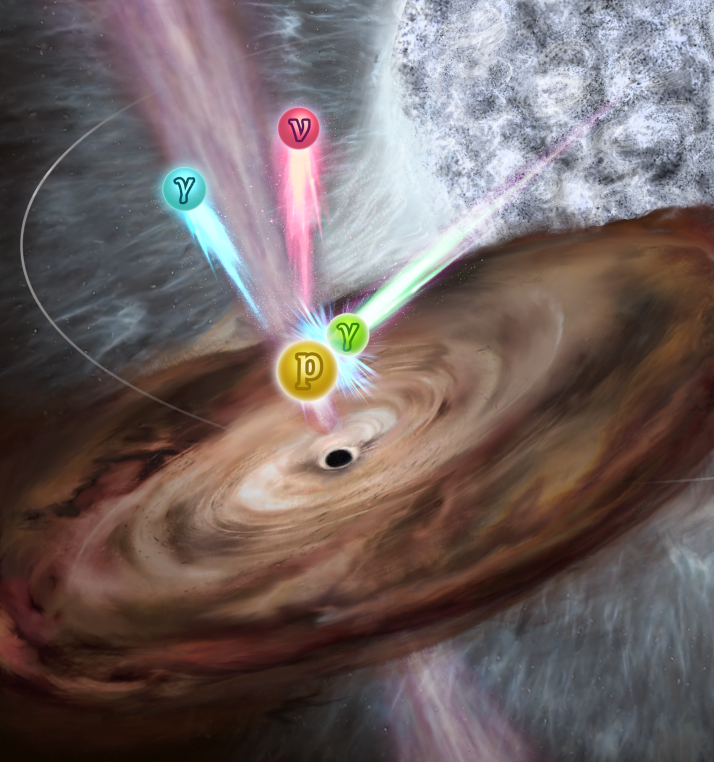
LHAASO "Sees" for the First Time How Black Holes Produce the Highest-Energy Particles in the Universe
How do black holes accelerate particles to the highest energies in the universe? The latest research provides the answer. On July 31, it was learned from the Institute of High Energy Physics of the Chinese Academy of Sciences that the Large High Altitude Air Shower Observatory (LHAASO, "Lasso"), a major national scientific and technological infrastructure, has for the first time clearly observed the process by which a black hole, while devouring material from its companion star, regularly produces the highest-energy particles in the universe like a metronome, and has identified the first PeV gamma-ray variable source. The related research results were published in the *National Science Review*. Cygnus X-3 is a binary system located in the constellation Cygnus, consisting of a black hole and a massive companion star. The gravitational pull there is extremely strong, and the black hole frantically accretes the stellar wind blown off by its companion. LHAASO detected...
2026-07-31

Russian researchers detect anomalous signs in bottomonium states using Belle II experiment data
The Budker Institute of Nuclear Physics of the Siberian Branch of the Russian Academy of Sciences recently announced that Russian researchers have detected anomalous phenomena in the analysis of data from the international Belle II experiment, indicating that the structure of certain excited states of bottomonium may be more complex than predicted by traditional models. Bottomonium is a class of unstable heavy particles composed of a bottom quark and an anti-bottom quark. Yevgeny Kovalenko, a young researcher at the Budker Institute of Nuclear Physics of the Siberian Branch of the Russian Academy of Sciences, stated that analysis of Belle II experiment data suggests that certain excited states of bottomonium may contain lighter quark components. In other words, these particles in specific states may not simply be plain bottom quark–anti-bottom quark combinations.
2026-07-31
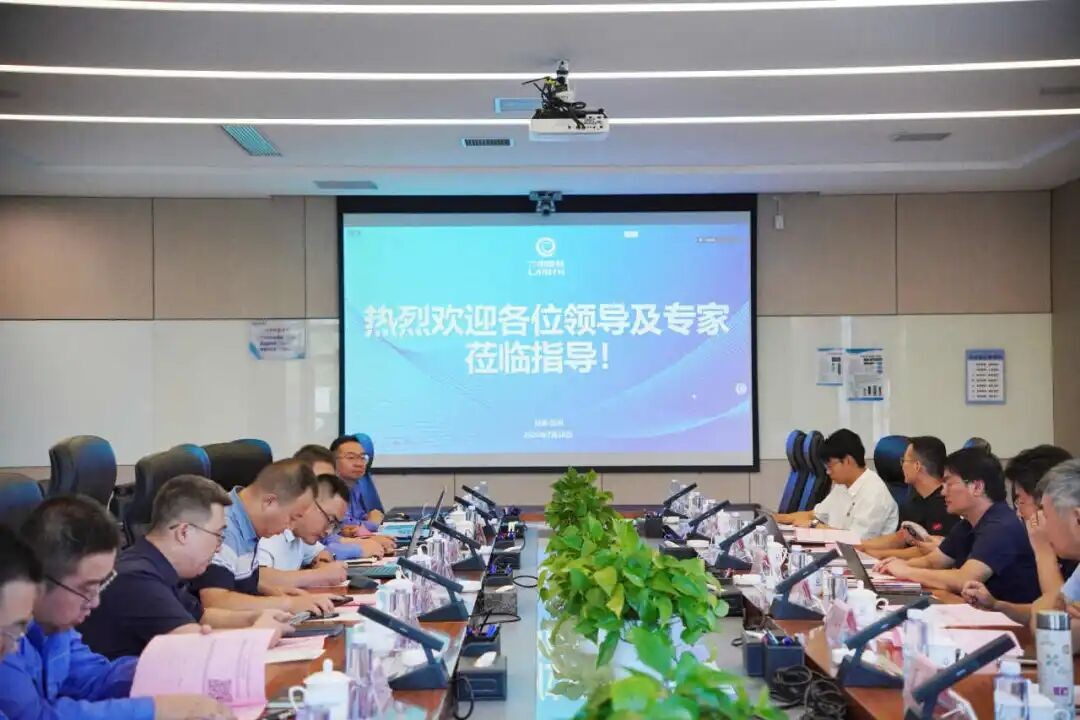
Factory Acceptance Test Completed for TM020 RF Cavity of Super Tau-Charm Facility
The 500MHz TM020 normal-conducting RF cavity, a key component of the STCF accelerator constructed by Lanzhou Taiji, passed its factory acceptance test on July 28, 2026. This marks a significant milestone in the key technology research project for the Super Tau-Charm Facility (STCF), a new-generation electron-positron collider led by the University of Science and Technology of China. The review meeting brought together experts from the Institute of High Energy Physics of the Chinese Academy of Sciences, Shanghai Advanced Research Institute of the Chinese Academy of Sciences, Chongqing University, Tsinghua University, the University of Science and Technology of China, and Dongsheng Fusion (Shanghai) Technology Co., Ltd. The expert panel conducted a comprehensive and rigorous review of the RF cavity (a 1200mm large-diameter cavity), including its structural design, secondary vacuum brazing, precision machining methods, vacuum performance, and cold test results, and unanimously agreed that all indicators met the design requirements. The measured unloaded quality factor (Q₀) reached 56900 (design value 61500), placing its performance at a leading level among similar high-performance normal-conducting RF cavities in China.
2026-07-31

n situ GIWAXS characterization using synchrotron radiation helps overcome challenges in wide-bandgap perovskites
Wide bandgap perovskites are key light-absorbing materials for preparing high-efficiency perovskite/organic tandem solar cells. To achieve spectral matching with the narrow bandgap organic rear cell, a higher proportion of bromine is usually introduced into the perovskite composition. However, due to the different crystallization rates of iodine and bromine components during film formation, the ph...
2026-07-30

U.S. Brookhaven National Laboratory Achieves Milestones in High-Luminosity Large Hadron Collider Upgrade
On July 29, the Large Hadron Collider (LHC) at CERN concluded its recent run and entered a four-year shutdown for maintenance. During this shutdown, some LHC components will be dismantled and rebuilt for the High-Luminosity LHC (HiLumi LHC) upgrade project. The U.S. Department of Energy's Brookhaven National Laboratory has recently achieved important production milestones in both accelerator and detector-related work. The LHC helps scientists study the fundamental structure of matter by accelerating and colliding two beams of protons traveling in opposite directions in a nearly 17-mile circular ring. The core goal of the HiLumi LHC upgrade is to significantly increase the number of particle collisions per unit time, i.e., enhance "luminosity," thereby increasing the chance of recording rare interactions.
2026-07-30
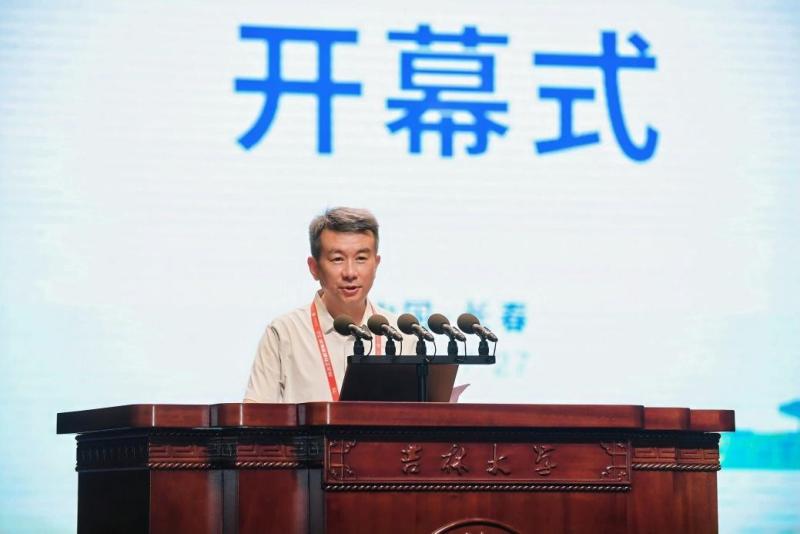
2026 User Annual Conference of Hefei Light Source and Hefei Advanced Light Source Successfully Held in Changchun
From July 26 to 28, the 2026 User Annual Conference of Hefei Light Source and Hefei Advanced Light Source was held in Changchun, Jilin Province. The conference was hosted by the National Synchrotron Radiation Laboratory of the University of Science and Technology of China, and co-organized by the State Key Laboratory of Superhard Materials and Comprehensive Extreme Condition High Pressure Science Center of Jilin University, and the State Key Laboratory of Special Luminescent Science and Technology of the Changchun Institute of Optics, Fine Mechanics and Physics, Chinese Academy of Sciences. A total of 317 experts, scholars, and user representatives from 69 universities and research institutes across the country gathered to conduct in-depth exchanges on the construction, operation, and cutting-edge achievements of large-scale scientific facilities. The conference was chaired by Liu Xiaosong, Director of the National Synchrotron Radiation Laboratory of the University of Science and Technology of China; Liu Bingbing, Director of the State Key Laboratory of Superhard Materials of Jilin University; and Li Dabing, Deputy Director of the Changchun Institute of Optics, Fine Mechanics and Physics, Chinese Academy of Sciences.
2026-07-30
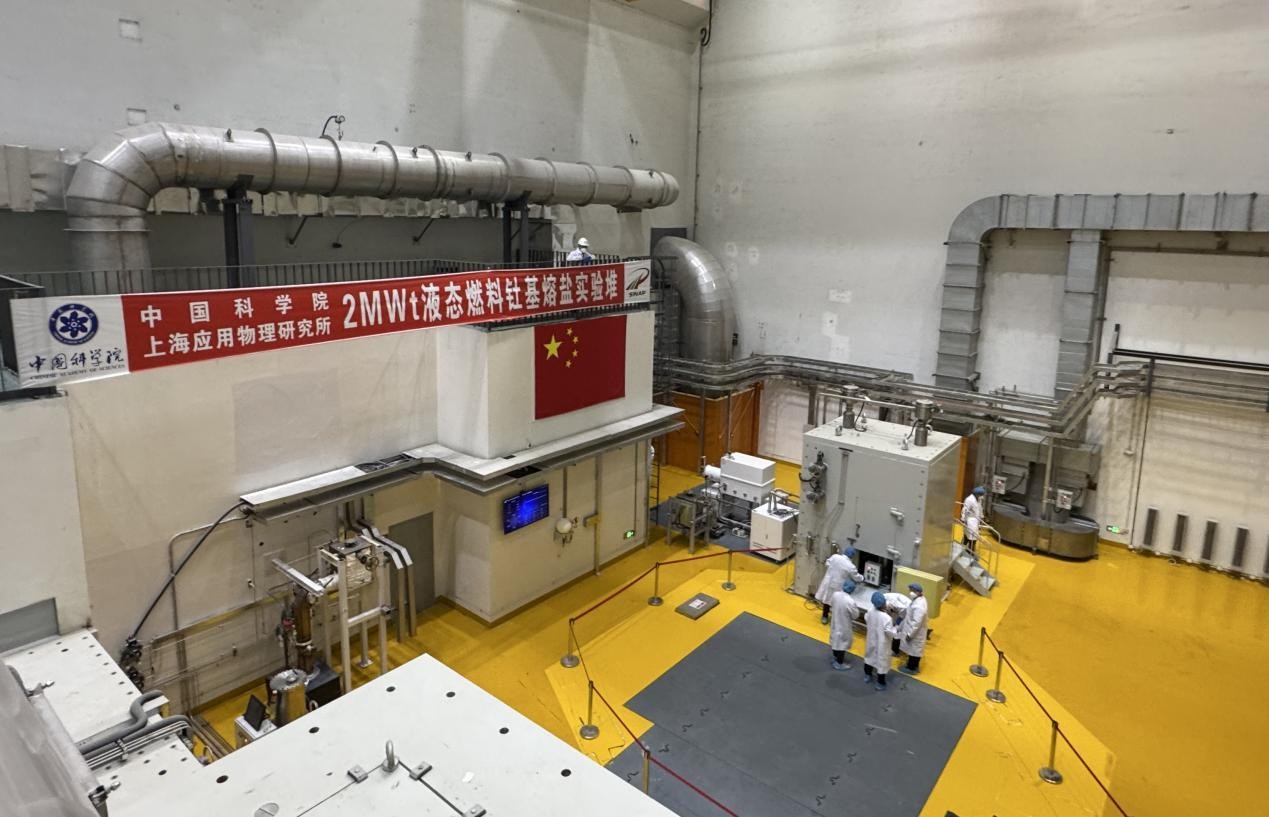
Northwest Nuclear and Radiation Safety Supervision Station of the Ministry of Ecology and Environment Completes Routine Supervision and Emergency Assessment of Thorium-based Molten Salt Reactor
Recently, the Northwest Nuclear and Radiation Safety Supervision Station of the Ministry of Ecology and Environment (hereinafter referred to as the Northwest Supervision Station) organized a supervision team to conduct routine nuclear and radiation safety supervision and comprehensive emergency drill assessment for the 2 MW Liquid Fuel Thorium-based Molten Salt Experimental Reactor (hereinafter referred to as the Thorium-based Molten Salt Reactor) of the Shanghai Institute of Applied Physics, Chinese Academy of Sciences (hereinafter referred to as Shanghai Institute of Applied Physics). This supervision focused on the operational safety of the Thorium-based Molten Salt Reactor, effluent and environmental monitoring, radiation safety of nuclear technology utilization projects, and comprehensive emergency drills. The supervision team, through document review, on-site verification, and record tracing, primarily examined the effectiveness of the quality assurance program, personnel training and authorization, effluent and environmental monitoring records, emergency system documents, and the rectification records from previous inspections. At the same time, the supervision team observed the comprehensive emergency drill on-site and provided guidance based on actual conditions, conducting a full-process assessment of accident response procedures, cross-departmental coordination, and emergency response measures. In response to the issues and deficiencies identified during the supervision, the supervision team held a special communication meeting with the Shanghai Institute of Applied Physics and proposed rectification requirements.
2026-07-30
Reading Ranking
- 1 German Research Team Completes First Phase Analysis of Chernobyl "Hot Particles": Nuclear Fuel Crystal Structure Still Exhibits Unexpectedly High Chemical Stability After 40 Years
- 2 Russian Scholars Analyze the Technical Secrets Behind the 2026 Nobel Prize in Physics: How IceCube Uses Photomultiplier Tubes to Capture Neutrino Tracks
- 3 Joint Institute for High Temperatures of the Russian Academy of Sciences Discovers a New Phase Transition in Cesium Plasma: Abrupt Conductivity Jump and a Rare Double Critical Point
- 4 The Chinese Academy of Sciences launches the "Scientific Frontier Extreme Breakthrough Program": the first batch deploys major tasks such as "new element synthesis," relying on large scientific facility clusters to push the limits of nuclear physics and materials science
- 5 Major Scientific Facility Enables Breakthrough in New Energy Materials: IHEP Leverages Beijing Synchrotron Radiation Facility to Reveal High-Efficiency Crystallization Mechanism of Perovskite, Sub-module Photoelectric Conversion Efficiency Reaches 22.9%
- 6 International Researchers Successfully Develop the First Autonomous Thorium-229 "Nuclear Clock": Featuring Ultra-Strong Interference Resistance and a Fully Autonomous Closed-Loop Stable Operation Mechanism
- 7 "Smashing Out" More New Particles Unknown to Humanity — Exploring the Upgraded Beijing Electron-Positron Collider After Its Second Renovation
- 8 Shanghai Institute of Applied Physics Makes Important Progress in Electrolyzer Design and Electrocatalytic Materials Research
- 9 Jiangmen Neutrino Experiment Targets Mass Ordering Challenge; Wang Yifang Says Expected to Be Resolved Within 3 to 5 Years
- 10 U.S. Research Team Discovers Strong Ultrafast Optical Response Induced by Ionizing Radiation, Potentially Advancing Medical Imaging and Sensing Technologies
- 11 Domestically Developed "Palm-Sized CT" Debuts: 6 kg Micro X-ray CT Enables 3D Non-Destructive Testing
- 12 State Nuclear Uranium Industry Achieves 100% Localization of Electron Linear Accelerator Development
- 13 IAEA Launches New Project to Enhance Nuclear Fuel and Materials Testing Capabilities in Research Reactors
- 14 U.S. STREAMLINE Project Advances Nuclear Quantum Many-Body Research with Artificial Intelligence
- 15 Russia masters production technology of ultra-pure germanium for gamma detectors