
Search Results
Keyword:B

BlueCore Energy showcases small modular nuclear reactor port deployment plan
Recently, people from various sectors gathered at the Port of Long Beach in southern California, USA, to discuss the application prospects of nuclear energy. The event was hosted by BlueCore Energy and aimed to present to potential investors, partners, and local government the company's plan to deploy small modular nuclear reactors at the Port of Long Beach. Kofi Asante, founder and CEO of BlueCore Energy, provided a detailed introduction to the project's feasibility and safety during a one-hour symposium. He emphasized that the company is committed to advancing the project in a safe, pragmatic, and inclusive manner. The Port of Long Beach is located in southern California, USA...
2026-09-16

Germany to provide an additional 1 million euros to help address nuclear safety issues at the Zaporizhzhia NPP
Germany will provide an additional 1 million euros to help address nuclear safety issues at the Zaporizhzhia NPP. Recently, according to the German Federal Ministry for the Environment, the German government will provide an additional 1 million euros in aid to improve the safety level of Ukrainian nuclear power plants. Rita Schwarzelühr-Sutter, Parliamentary State Secretary at the German Federal Ministry for the Environment, is expected to formally announce this additional 1 million euros in funding on Tuesday at a meeting of the International Atomic Energy Agency (IAEA) in Vienna. Previously, Germany had cumulatively provided 7.3 million euros in financial support to the IAEA's nuclear safety and security work in Ukraine. Since...
2026-09-16

European Investment Bank to invest €40 million in Finnish small modular reactor company Steady Energy
The European Investment Bank will invest up to €40 million (about $46 million) in Finnish small modular reactor company Steady Energy. The company's LDR-50 reactor is specifically designed for district heating networks, and this is also the European Investment Bank's first investment in small modular reactor technology. The European Investment Bank is jointly owned by the 27 EU member states, and these member states do not have a consistent attitude toward nuclear energy. In the past, the bank usually avoided new nuclear power projects and invested only in projects related to nuclear safety, such as Chernobyl-related projects. However, over the past year or so, the European Investment Bank has provided loans for the refurbishment project of a reactor in Romania, as well as for the Tricastin...
2026-09-16

UK Regulator Initiates Design Assessment of Xe-100 Reactor
The UK regulator has formally initiated the assessment of the Xe-100 high-temperature gas-cooled reactor design proposed by X-energy, marking an important step for the UK in developing advanced nuclear technology. This decision follows the completion of a review by the UK Department for Energy Security and Net Zero of the application from X-energy UK Holdings Limited. In the same period last year, Centrica signed a joint development agreement with an X-energy subsidiary, planning to deploy Xe-100 reactors in the UK and selecting Hartlepool in northeast England as the preferred site, with the potential to build up to 6 million kilowatts of nuclear power plant capacity in the future. The Generic Design Assessment (GDA) is a comprehensive assessment conducted by the UK Office for Nuclear Regulation, the Environment Agency, and Natural Resources Wales of new reactor designs proposed for deployment in the UK, aimed at ensuring their safety, reliability, and environmental impact meet strict standards. This assessment is independent of site-specific construction applications, and only after passing all stages of assessment can the relevant permits and approvals be obtained.
2026-09-16

IAEA's Rays of Hope Initiative Boosts Global Cancer Care
The IAEA's Rays of Hope initiative aims to expand access to cancer care, drive innovation, and build partnerships to narrow the global gap in cancer treatment. Every year, cancer claims more than 10 million lives, and that number is expected to nearly double by 2050. While many cancers are treatable, especially when detected early, timely diagnosis and life-saving treatment are unevenly distributed around the world. Low- and middle-income countries often lack modern medical imaging and radiotherapy equipment, trained oncologists, research capacity, and basic services. More than half of cancer cases occur in these countries, and nearly two-thirds...
2026-09-16

U.S. Army Deploys First Commercial Microreactor at Crane Base
The U.S. Army announced that it has ordered the first commercial microreactor for Naval Support Activity Crane in Indiana, marking a significant step in the United States' application of advanced nuclear energy technology. This micro-modular reactor (MMR), owned and operated by a commercial entity, will be installed at the base, becoming the U.S. Navy's first land-based advanced micro-modular reactor and Indiana's first power reactor. Naval Support Activity Crane is positioned by the U.S. Army as one of the leading centers in operational innovation and capability development. The deployment of the microreactor aims to provide reliable, 24-hour uninterrupted power, reducing dependence on the commercial power grid, thereby supporting critical missions in various...
2026-09-16

Russia helps Kyrgyzstan rehabilitate the Kristall plant and eliminate environmental risks
Rosatom will cooperate with the Ministry of Emergency Situations of Kyrgyzstan to restore the site of the former Kristall plant to a safe state using Russian engineering and environmental technologies. In Tashkumyr, the capital of Kyrgyzstan, Rosatom held an information session with local residents, public representatives and experts to present the upcoming work at the Kristall plant. Rosatom experts presented the work stages, technical solutions and environmental monitoring system. The site has stored up to 155 tonnes of toxic chemicals for about 15 years. These chemicals are kept in process tanks left after the production line was shut down and pose a potential hazard to the surrounding area....
2026-09-16
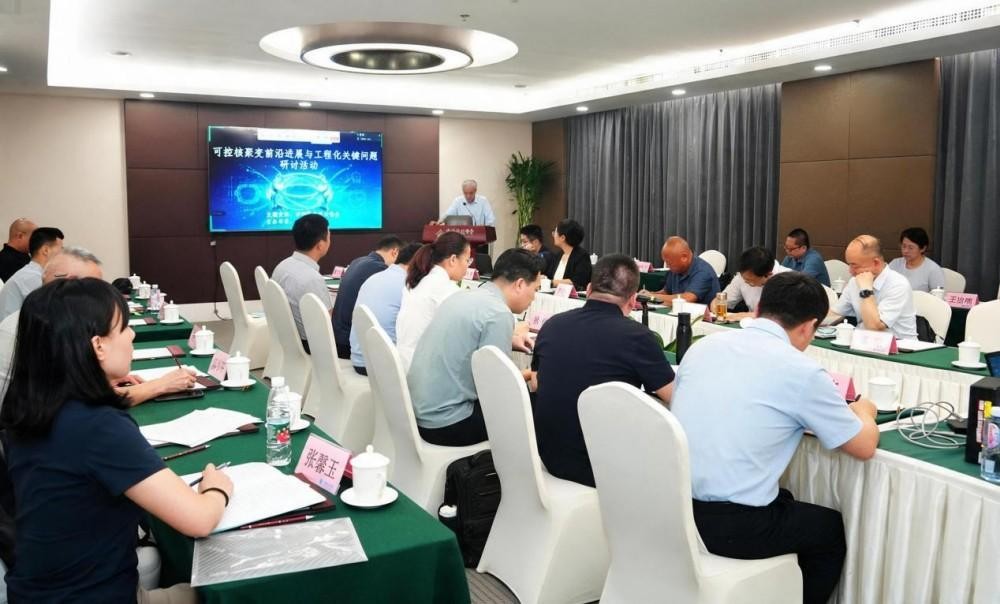
Symposium on Frontier Progress and Key Engineering Issues of Controlled Nuclear Fusion Held in Beijing
On August 30, a small-scale high-end brand exchange event—the Symposium on Frontier Progress and Key Engineering Issues of Controlled Nuclear Fusion, supported by the China Association for Science and Technology and hosted by the Chinese Nuclear Society—was held at the China Science and Technology Hall. More than 20 frontline experts from universities, research institutes, and industry engaged in exchange and discussion on relevant topics. The event focused on the strategic needs of national low-carbon transition and energy self-sufficiency and security, discussed frontier progress and key issues in the engineering implementation of controlled nuclear fusion, and aimed to help cultivate strategic emerging industries and accelerate the building of an energy powerhouse. Professor Luan Benli of Yantai University served as executive chairman, and Professor Liu Shichang of North China Electric Power University served as academic secretary. The symposium featured...
2026-09-15

Saudi Arabia Discovers Massive Rare Earth Mineral and Uranium Deposits
Saudi Arabia has recently made a major resource discovery in the Medina region, with estimated reserves of approximately 110 million tons, containing abundant rare earth minerals and uranium resources. This discovery will undoubtedly have a profound impact on Saudi Arabia's energy strategy and international cooperation. This discovery was formally announced by Saudi Arabia's Minister of Energy, Prince Abdulaziz bin Salman, at the International Atomic Energy Agency conference. Exploration and geological studies in the Jabal Sayid project indicate that the region has an extremely high content of rare earth elements, with particularly notable concentrations of heavy rare earth minerals, as well as uranium resources with development potential. It is worth noting that this discovery
2026-09-15

FDA Approves Telix's New Brain Tumor Imaging Agent Pixclara
The U.S. Food and Drug Administration (FDA) has approved a new brain tumor imaging agent developed by Australian pharmaceutical company Telix, the company announced on Monday. The product, called Pixclara, is a radioactive diagnostic drug used in combination with positron emission tomography (PET) imaging. Its primary use is to help doctors distinguish between recurrent brain tumors and harmless changes caused by prior treatment. The FDA approval comes after Telix faced an FDA rejection last year due to insufficient evidence. Kevin Richardson, CEO of Telix Precision Medicine, said in a statement: "As the first FDA-approved PET imaging drug for glioma (a type of brain tumor), Pixclara will provide physicians in the United States with more definitive diagnoses and greater confidence in patient treatment planning."
2026-09-15

GE HealthCare Plans $1 Billion Acquisition of Radiopharmaceutical Company Sofie Biosciences
According to reports, healthcare giant GE HealthCare is in talks to acquire radiopharmaceutical company Sofie Biosciences for $1 billion. It is understood that this acquisition will be another major business move for GE HealthCare since its spin-off from General Electric Company in 2023. Previously, the company reached an agreement in March of this year to acquire software company Intelerad for $2.3 billion, aiming to enhance its cloud-based enterprise imaging service capabilities. Sofie Biosciences was founded in 2008 and is headquartered in Dulles, Virginia. The company has a well-established radiopharmaceutical production and distribution network and provides contract manufacturing services. In addition, Sofie Biosci...
2026-09-15
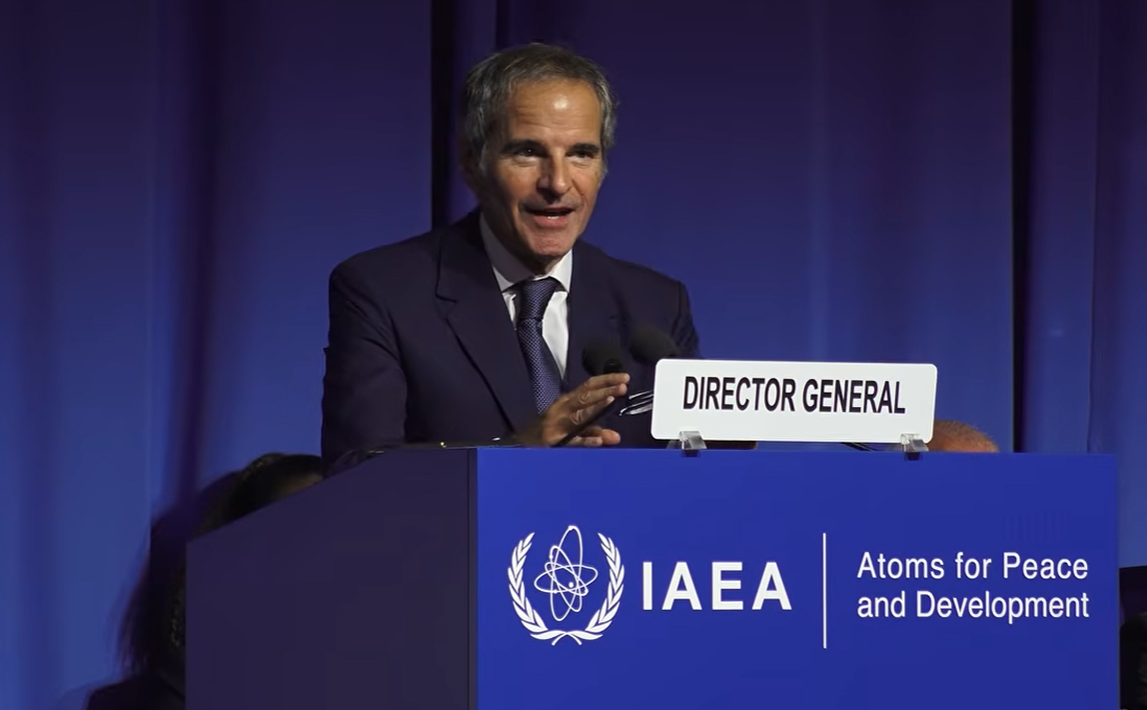
IAEA Director General Rafael Grossi: Urges Member States to Continue Firmly Supporting the Work of the International Atomic Energy Agency
The 68th General Conference of the International Atomic Energy Agency (IAEA) officially opened in Vienna, Austria. This year's conference welcomed nearly 4,000 delegates, setting a record high for attendance. In his opening address, IAEA Director General Rafael Grossi emphasized that despite current global tensions and numerous challenges, the international community's shared commitment to promoting the peaceful uses of nuclear technology and maintaining nuclear safety remains firm. In his address, Grossi first extended a warm welcome to Timor-Leste, which newly joined the IAEA, bringing the agency's membership to 182. Grossi recalled that 70 years ago, the IAEA...
2026-09-15
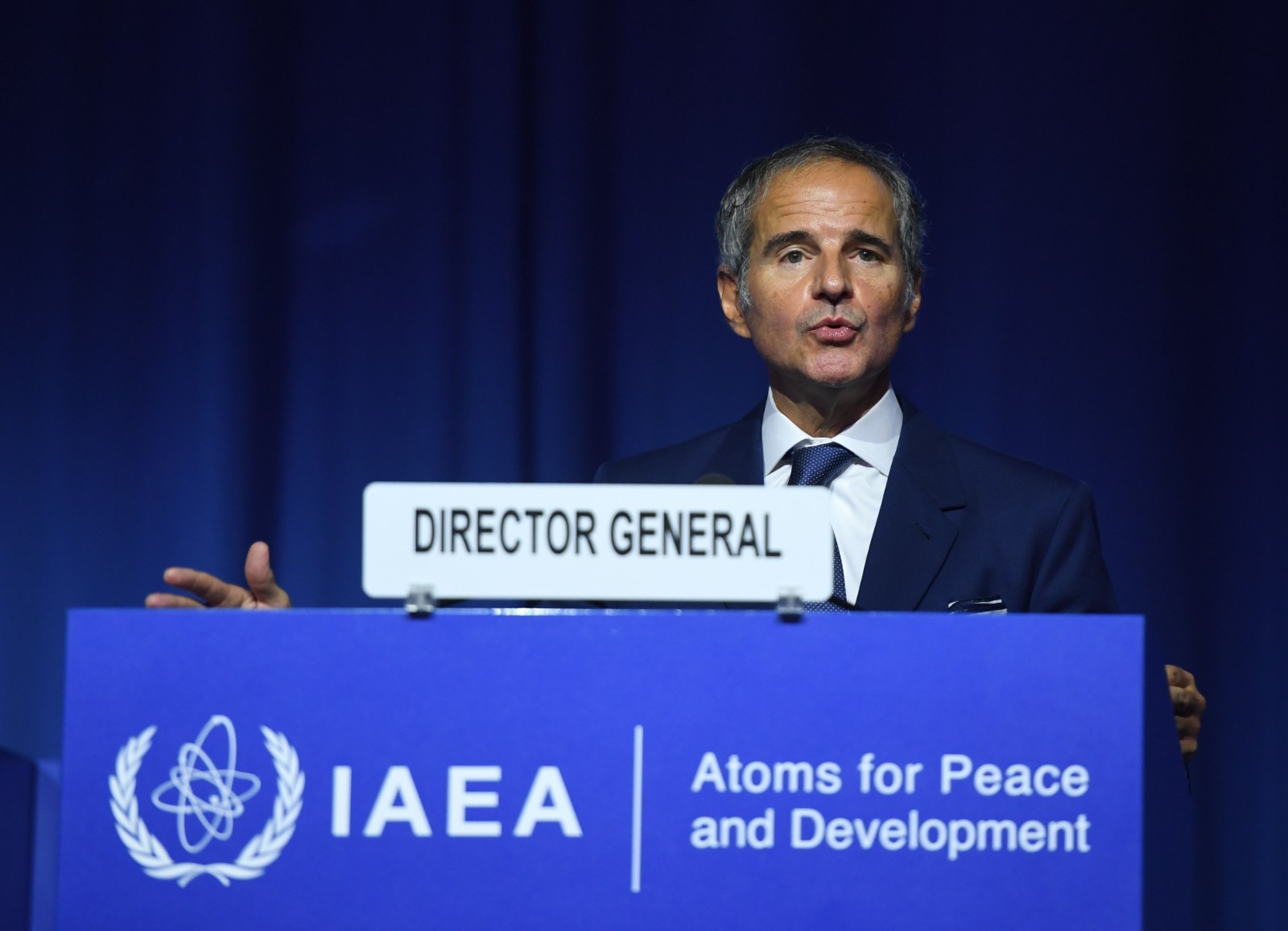
IAEA: Global nuclear power installed capacity could reach up to 1,284 GW by 2060
On September 14, the International Atomic Energy Agency released its latest forecast during the 70th General Conference held in Vienna, raising its global nuclear power growth projection for the sixth consecutive year. The forecast shows that global nuclear power installed capacity could reach up to 1,284 GW by 2060, approximately 3.4 times that of 2025. According to data disclosed by the IAEA, under the high growth scenario, global nuclear power installed capacity will reach 1,045 GW by 2050; even under the low growth scenario, it will reach 696 GW by 2060, nearly double that of 2025. The forecast figures under multiple scenarios jointly point to one trend—the global nuclear power scale is expected to achieve significant expansion in the coming decades. The International Atomic...
2026-09-15
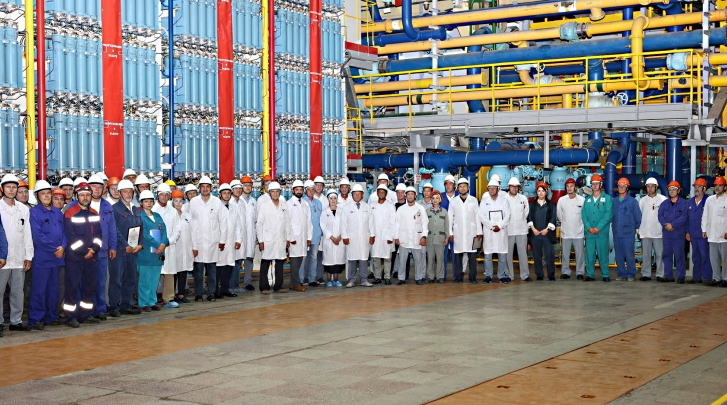
Russia's Second Depleted Uranium Hexafluoride Processing Plant Officially Commissioned, Uranium Conversion Capacity Expected to Double
The depleted uranium processing facility at the Zelenogorsk Electrochemical Plant in Krasnoyarsk Krai has been officially commissioned recently. According to a statement by Alexey Likhachev, Director General of Rosatom, the commissioning of this new facility has doubled Russia's capacity for depleted uranium hexafluoride (DUHF) processing. This is also the second such DUHF processing plant built in Russia, with an annual capacity of 10,000 tonnes, while the first plant of the same type previously operating at the same site had already been commissioned earlier. In his statement, Likhachev said that the commissioning of the new depleted uranium hexafluoride processing facility is of great significance for the Electrochemical Plant, Rosatom's fuel division...
2026-09-14

Alexey Likhachev: Commissioning of Units 5 and 6 of India's Kudankulam NPP will begin in 2028-2029
Alexey Likhachev, Director General of Rosatom, stated that commissioning of the fifth and sixth power units under construction at India's Kudankulam NPP will begin in 2028 to 2029. According to him, commissioning of the fourth power unit is expected to begin at the end of next year. Following that, commissioning of the fifth and sixth power units will commence in 2028 to 2029. He also mentioned the Make in India initiative launched by Indian Prime Minister Narendra Modi, which has been implemented for more than ten years. Rosatom is actively participating in this initiative, striving to maximize the localization of nuclear technology in India. A...
2026-09-14