
Search Results
Keyword:B

South Korea's Nuclear Safety Regulatory Budget for 2027 Rises to KRW 303 Billion
The Nuclear Safety and Security Commission (NSSC) of South Korea announced on September 1 that it has allocated KRW 303 billion for the 2027 budget, an increase of KRW 10.4 billion from this year. The new budget focuses on areas such as small modular reactor regulation, spent nuclear fuel safety, nuclear facility decommissioning review, environmental radiation monitoring, and nuclear safety information disclosure. Regarding small modular reactors, as non-light water reactor-type small modular reactor development projects aim to obtain licenses by the early 2030s, South Korea will invest KRW 8 billion in R&D to establish a new safety evaluation system. In addition, in line with the preliminary review system set to take effect in November this year, the government has allocated KRW 2.7 billion to conduct preliminary reviews of non-light water reactor-type small modular reactors expected to file applications next year. This system allows applicants to request regulatory review of reactor designs before formally submitting license applications.
2026-09-02

Major Breakthrough in Residual Stress Research on Key Aviation Materials in China
Nickel-based single-crystal superalloys are key materials for manufacturing turbine blades in aviation engines. Recently, the neutron scattering team from the Department of Nuclear Physics at the China Institute of Atomic Energy (CIAE) under CNNC, leveraging the Engineering Science Stress Spectrometer at the China Advanced Research Reactor (CARR), overcame technical challenges in residual stress measurement of single-crystal superalloys and established a precise three-dimensional residual stress testing method based on neutron diffraction. This provides an effective solution for residual stress assessment of critical aviation materials and lays a solid methodological foundation for the in-depth application of the CARR Engineering Science Stress Spectrometer in high-end manufacturing. During high-temperature heat treatment or service of nickel-based single-crystal superalloys...
2026-09-02

CGN Begoo Empowers Fuzhou Changle Airport T2 Terminal to Pass Provincial Acceptance
Recently, the opening of Terminal T2 at Fuzhou Changle International Airport successfully passed the provincial joint acceptance inspection, laying a solid foundation for the terminal's official operation and supporting the expansion and upgrade of Fujian's aviation ports. Among the achievements, the smart passenger inspection and customs intelligent supervision system constructed by CGN Begoo Technology Co., Ltd. passed comprehensive inspections and received full recognition from the acceptance team. As a core international aviation gateway hub in Fujian, the Phase II expansion project of Fuzhou Changle International Airport is a key infrastructure project for regional opening-up. The commissioning of Terminal T2 will effectively address the shortcomings in Fuzhou's aviation port support capacity, significantly enhancing the port's comprehensive carrying capacity, international service level, and clearance operational efficiency...
2026-09-02

Mobilization Meeting for High-Quality Fuel Loading of Haiyang Nuclear Power Unit 3 Convened
On September 1, Shandong Nuclear Power organized a themed joint Party building learning session and the mobilization meeting for high-quality fuel loading of Haiyang Nuclear Power Unit 3. Centering on the goal of high-quality fuel loading for Unit 3, the meeting further unified understanding, clarified responsibilities, and promoted the safe, orderly, and high-quality implementation of fuel loading preparations, laying the foundation for the subsequent commissioning of the Phase II project of Haiyang Nuclear Power. The meeting conducted a themed joint Party building learning session. The Haiyang Project Department of Shanghai Nuclear Engineering Research and Design Institute (SNERDI), the Commissioning Center of SNERDI, China Nuclear Industry Fifth Construction Co., Ltd., and Jiangsu Electric Power Construction No. 3 Engineering Company respectively reported on the fuel loading preparation status of Unit 3. Participants discussed topics including Party building leading project breakthroughs and ensuring high-quality fuel loading of Unit 3. The meeting also commended...
2026-09-02

Completion of Polar Crane Bridge Lifting for Unit 4 of Zhangzhou Nuclear Power Plant
On September 1, the lifting operation of the polar crane bridge for Unit 4 of the Zhangzhou Nuclear Power Project was successfully completed. The equipment was smoothly positioned under the traction of a 3200-ton crawler crane, with the entire process lasting 2 hours and 5 minutes, creating conditions for subsequent nuclear island plant construction and equipment installation. The polar crane bridge is a core component of the polar crane, installed at the top of the nuclear island plant, and serves as an important structure of the key lifting equipment within the nuclear island plant. Once put into operation, it will provide support for various lifting operations during the installation and operation phases of the nuclear power plant. The total weight of this lifting exceeded 420 tons, with a lifting height of over 100 meters. The project team selected a 3200-ton crawler crane and used a dedicated spreader beam for the operation. In response to challenges such as wind disturbance during high-altitude slewing, limited clearance between the bridge and plant structures, and high load-bearing requirements for the large crawler crane positioning, the construction team conducted simulation rehearsals in advance, optimized lifting condition parameters, verified the stress conditions of the crane, spreader beam, and lifting points, and refined control requirements for key operations.
2026-09-02
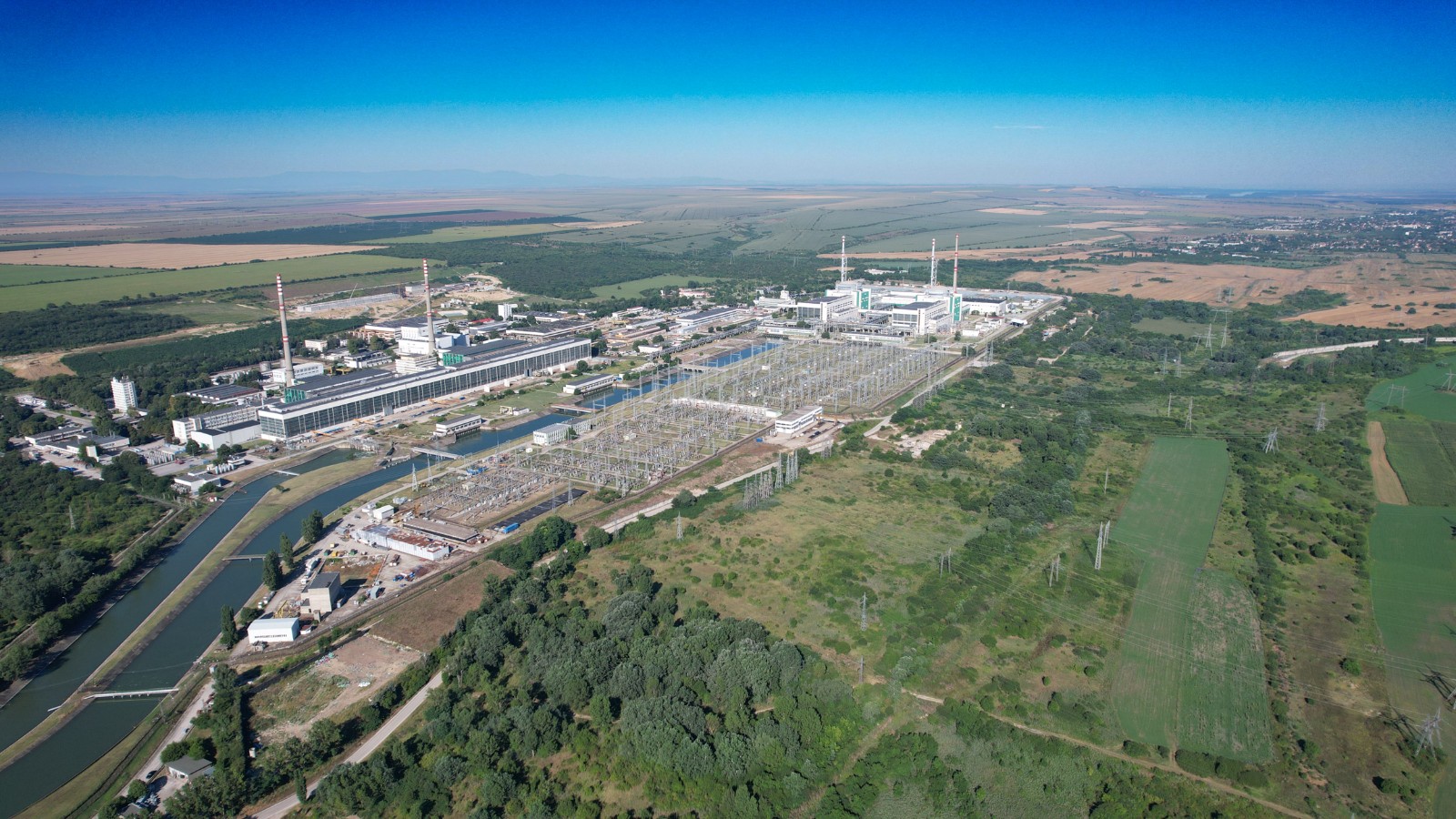
Unit 5 of Bulgaria's Kozloduy NPP Raises Power Output to 950 MW
At 10:00 on August 31, 2026, Unit 5 of Bulgaria's Kozloduy NPP (Kozloduy Nuclear Power Plant) began a phased increase in power output as scheduled. By 17:00 that day, the unit's power output had risen to 950 MW. In the preceding days, the Danube River water level in Bulgaria had recovered, and the plant proceeded accordingly to resume normal unit operation. Kozloduy NPP stated that the operating team continues to carry out relevant work to ensure the safe and reliable operation of the nuclear unit. In response to changes in river water levels, the plant continuously monitors the Danube River water level and maintains communication with the Danube Research and Maintenance Executive Agency to promptly track water level trends. At the same time, the plant strictly implements long-term low-water emergency procedures, conducts continuous monitoring of hydraulic structures in the technical water supply area, and takes necessary measures to ensure the effective operation of relevant facilities.
2026-09-01

GE HealthCare's Photonova Spectra Photon-Counting CT Receives CE Mark, to Be Commercialized in Countries Recognizing CE Marking
On August 31, GE HealthCare announced that its advanced photon-counting computed tomography (PCCT) system, Photonova Spectra, has received CE marking. The system utilizes GE HealthCare's proprietary Deep Silicon™ detector technology. This certification will expand the system's availability in countries and regions that recognize the CE mark and pave the way for its clinical use. According to reports, Photonova Spectra is designed to address the growing patient volumes and increasing diagnostic complexity faced by healthcare institutions today, aiming to provide clinicians with clearer and more timely imaging information. Leveraging deep silicon detector technology, the system can acquire spectral and spatial imaging information in each scan...
2026-09-01

U.S. Laboratory and Company Collaborate to Advance TRISO Thorium Fuel Development
Lawrence Livermore National Laboratory (LLNL) in the United States is collaborating with micro nuclear reactor startup AMPERA to advance next-generation reactor fuel development using novel metal particle manufacturing technology. The collaboration focuses on tristructural isotropic (TRISO) coated particle fuel, aiming to provide more durable fuel solutions for advanced reactors operating at higher temperatures and with longer service lifetimes. Small modular nuclear fission reactors are viewed as a distributed energy option deployable in remote areas, military installations, and industrial sites. Compared with traditional light-water reactors, some advanced reactors...
2026-09-01

Hokuriku Electric Power Submits Revised Nuclear Disaster Prevention Business Plan for Shika Nuclear Power Station
Hokuriku Electric Power Company announced on August 31 that it has submitted revisions to the "Nuclear Operator Disaster Prevention Business Plan" for the Shika Nuclear Power Station to the Prime Minister of Japan and the Nuclear Regulation Authority for filing. The plan is formulated under Japan's Act on Special Measures Concerning Nuclear Emergency Preparedness, and primarily stipulates the operations required of nuclear power stations in nuclear disaster prevention, emergency response, post-nuclear-disaster response, as well as preventing the occurrence and escalation of nuclear disasters and promoting recovery efforts. Hokuriku Electric Power stated that consultations with Ishikawa Prefecture, Shika Town, and Toyama Prefecture have been completed for this revision. Under relevant Japanese laws and regulations, nuclear power...
2026-09-01

Japan's Mihama Nuclear Power Station Unit 3 Plans Grid Connection on September 15
Kansai Electric Power announced on September 1, 2026, that work related to the periodic inspection of Unit 3 at Japan's Mihama Nuclear Power Station is progressing as planned. Based on the progress of the inspection and the status of corrective measures for the steam leakage issue in the high-pressure turbine, the unit is scheduled to be connected to the grid on September 15. Unit 3 of Mihama Nuclear Power Station is a pressurized water reactor unit with a rated electrical output of 826 MW and a rated thermal output of 2,440 MW. On May 8 this year, the unit underwent a manual reactor shutdown after steam leakage was confirmed in the high-pressure turbine. From June 16, the unit entered its 29th periodic inspection. Kansai Electric Power stated that, in response to the steam leakage in the high-pressure turbine, the upper cylinder sealing cover has been replaced based on the results of the cause investigation, and multiple measures such as the development of relevant guidelines are being advanced.
2026-09-01

Manila Electric Company Advances Small Modular Reactor Feasibility Study in the Philippines
Manila Electric Company (Meralco) and its power generation arm, Meralco PowerGen Corporation (MGEN), have commissioned U.S. engineering firm Sargent & Lundy and its Philippine local partner, AMH Philippines Inc. (AMH), to conduct a comprehensive feasibility study on Small Modular Reactors (SMRs). MGEN announced on September 1 (local time) that the study is part of a $2.8 million technical assistance program provided by the U.S. Trade and Development Agency (USTDA). The program was officially announced in February 2026, with the goal of completing the study by the fourth quarter of 2027...
2026-09-01
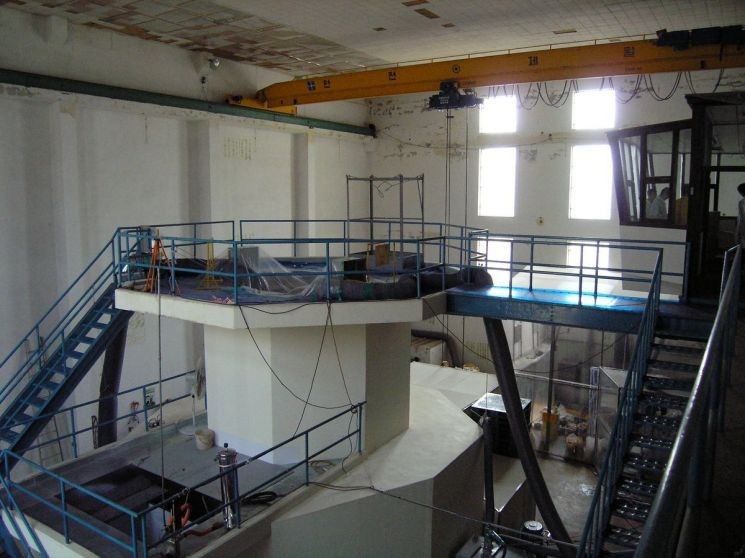
Fourteen academic societies in South Korea call for protection of KRR-1 research reactor auxiliary buildings
On September 1, fourteen academic societies and associations, including the Korean Nuclear Society, issued a statement welcoming the temporary registration of the reactor hall and auxiliary buildings of Research Reactor Unit 1 (KRR-1, TRIGA Mark-II) in Gongneung-dong, Nowon-gu, Seoul, as nationally registered cultural heritage, and urged Korea Electric Power Corporation (KEPCO), the owner of the site and buildings, to promptly submit a formal registration application. Panoramic view of KRR-1, South Korea's first research reactor. Korea National Heritage Administration The Korea National Heritage Administration had placed the KRR-1 reactor hall and auxiliary buildings on the temporary list of nationally registered cultural heritage on July 1 through the emergency measures system, suspending related demolition work. However, if a formal registration application is not submitted by the end of December this year, the temporary listing will lapse and demolition work may resume.
2026-09-01

U.S. University Establishes Fusion Energy Seed Fund to Support Four Interdisciplinary Research Projects
The Institute for Fusion Studies at The University of Texas at Austin recently launched a fusion energy seed fund to support four interdisciplinary research projects. These projects will bring together teams from plasma physics, engineering, and computational science to address challenges in control, materials, particle confinement, and edge plasma simulation faced by fusion devices such as tokamaks. The fund is supported by the Institute for Fusion Studies (IFS), the Oden Institute for Computational Engineering ...
2026-09-01

Beijing Jiluntai's ¹⁷⁷Lu-JLT003 Injection Receives IND Approval for Treatment of Integrin αvβ3-Positive Malignant Tumors
Beijing Jiluntai Pharmaceutical Co., Ltd. has recently achieved progress in radiopharmaceutical R&D. Its self-developed Class 1 innovative therapeutic radiopharmaceutical ¹⁷⁷Lu-JLT003 Injection (generic name: ¹⁷⁷Lu-AB-3PRGD2) has obtained the Clinical Trial Approval (IND) from the Center for Drug Evaluation (CDE) of the National Medical Products Administration (NMPA), intended for the treatment of integrin αvβ3-positive malignant tumors. ¹⁷⁷Lu-AB-3PRGD2 is a therapeutic radiopharmaceutical targeting integrin αvβ3. Integrin αvβ3 is highly expressed on various solid tumor cells and tumor neovascular endothelial cells, while showing low expression in normal tissues, a characteristic that...
2026-09-01

Russian Academician Says SKIF Synchrotron Light Source Will Not Produce Radionuclides, Safe and Controllable in Operation
Yevgeny Levichev, an academician of the Russian Academy of Sciences and director of the Collective Use Center of the Siberian Circular Photon Source (SKIF), recently stated that synchrotron light sources, including SKIF located near Novosibirsk, are electrophysical equipment with safe and controllable operation that poses no threat to personnel even in the event of a malfunction. Levichev said that unlike facilities such as nuclear power plants, synchrotron light sources do not generate isotopes or radionuclides in their systems. In the event of an anomaly, the beam is reset, and the facility's risk level is close to that of ordinary electrical equipment. According to reports, construction of the SKIF synchrotron was completed in June 2026, with an inauguration ceremony held in August. Once the facility is operational...
2026-09-01