
Search Results
Keyword:B

Two IPP studies reveal edge turbulence mechanisms in fusion plasmas from first principles
On August 10, 2026, two research teams at the Max Planck Institute for Plasma Physics (IPP) independently published findings that, for the first time, explain key phenomena in the extremely thin edge layer of fusion plasmas starting from fundamental physics equations. Both papers were published in Physical Review Letters, with one highlighted as an editor's suggestion. For stable operation of a fusion power plant, two requirements must be met simultaneously: on the one hand, the plasma at temperatures of around 100 million degrees Celsius must be effectively confined to achieve fusion ignition conditions; on the other hand, the generated heat must be distributed over a sufficiently large area to prevent damage to the device walls from excessive local heat loads. Whether this conflict can be resolved depends largely on a region only a few centimeters thick at the plasma edge.
2026-08-10
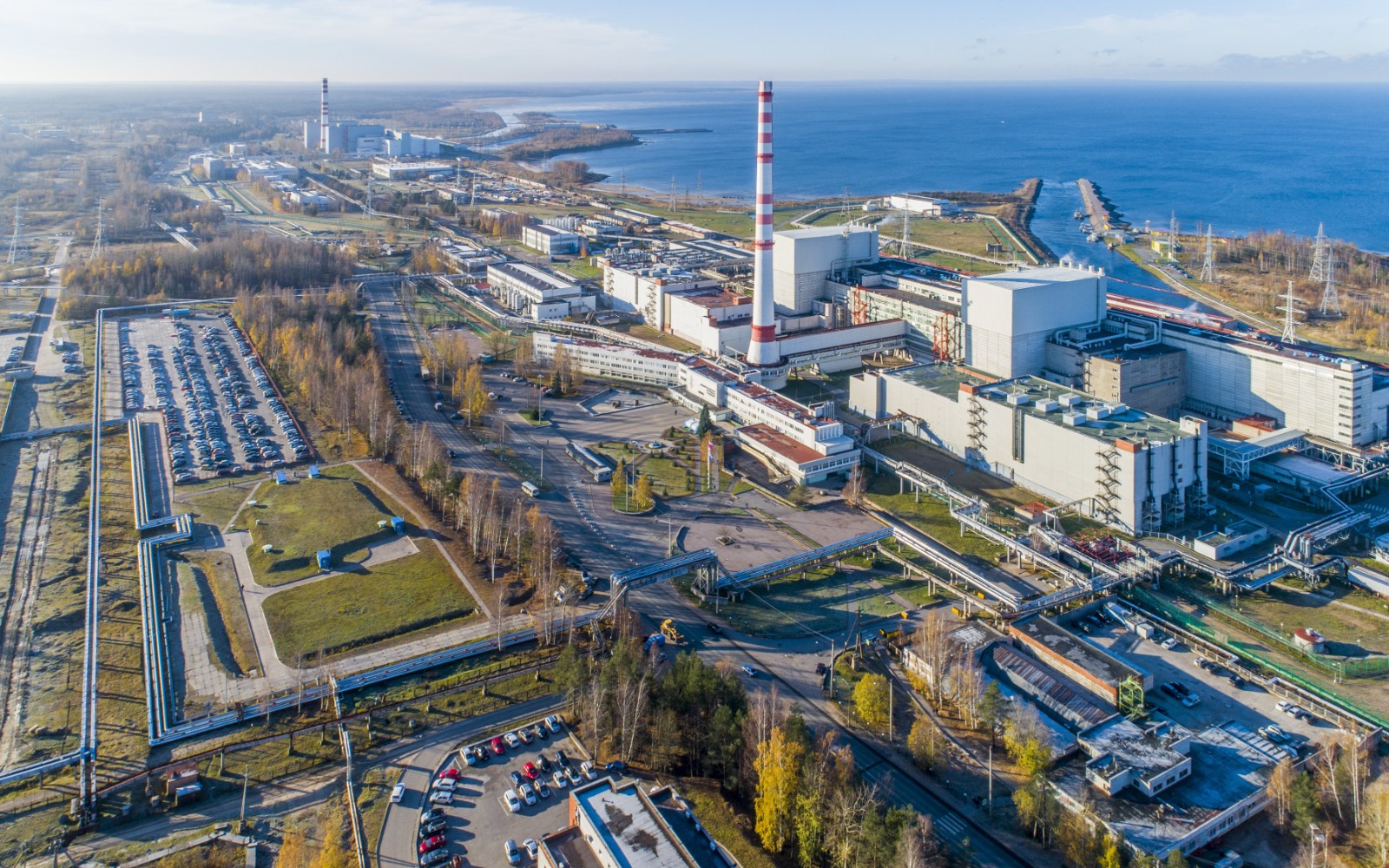
Unit 2 of Leningrad Nuclear Power Plant Phase II automatically shut down for equipment maintenance
At 21:45 local time on August 8, 2026, Unit 2 of Leningrad Nuclear Power Plant Phase II was shut down by the automatic system due to the need for thermal-mechanical equipment maintenance. After the maintenance work is completed, the unit will be reconnected to the grid. The shutdown was carried out in accordance with established procedures and design logic. The plant reported no violations of safe operation limits or operating conditions for any of the units. Currently, RBMK-1000 Units 3 and 4 of Leningrad Nuclear Power Plant, as well as Unit 1 of Phase II, are operating normally and carrying electrical loads in accordance with the dispatch schedule. RBMK-1000 Units 1 and 2 are in the preparation stage for decommissioning...
2026-08-10

UK Sizewell C Nuclear Power Station Financing Finalized, Project Worth Over £26 Billion to Supply Power for 60 Years
The Sizewell C nuclear power station project in the UK has completed its final financing arrangements, marking the official entry into the definitive construction phase of this large-scale nuclear project with a total investment target of approximately £38 billion, equivalent to around RMB 261 billion. Located on the Suffolk coast of England, the project will feature two EPR Generation III pressurised water reactor units, with a total installed capacity of approximately 3.2 gigawatts and a design operational lifespan expected to reach 60 years. This project holds significant importance for the UK's energy system. In recent years, the UK has faced the dual pressures of accelerating the phase-out of ageing fossil fuel infrastructure on one hand, and managing the variability of renewable energy and growing electricity demand on the other. Once completed, Sizewell C will provide long...
2026-08-10
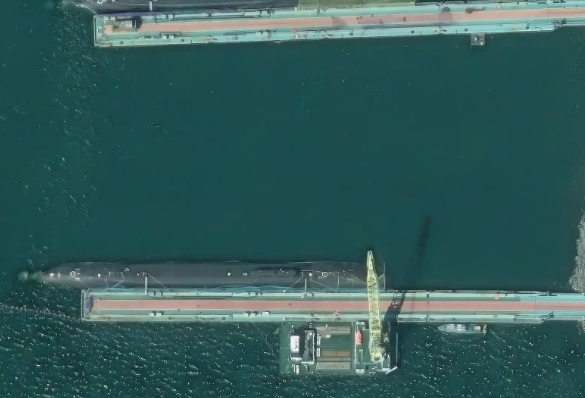
Russian Far East nuclear submarine base adds anti-drone nets, unmanned equipment protection prompts adjustments across multiple platforms
Satellite imagery shows Russia has installed anti-drone protective nets over multiple nuclear submarines at the Vilyuchinsk naval base on the Kamchatka Peninsula. The base hosts the Pacific Fleet's nuclear submarine deployment. A total of eight moored submarines are covered by the protection, including Borei-class and Borei-A-class ballistic missile submarines, as well as Oscar-class, Yasen-class, and Akula-class attack submarines. The protective installations consist mainly of L-shaped steel frames along the piers and retractable netting. When submarines are berthed, the nets can cover the upper hull; before submarines depart port, the netting is rolled up and stowed. Such facilities cannot withstand long-range cruise drones or heavy missile strikes, but can provide a degree of physical shielding against low-cost threats such as small FPV drones and improvised unmanned devices. The Russian side has also deployed double-layer floating barriers on the outer side of the mooring area to prevent unmanned surface vessels from entering the harbor.
2026-08-10

Arab League Holds Second Technical Committee Meeting on Nuclear and Radiation Emergency Preparedness Roadmap, Focusing on Cross-Border Coordination and Alignment with IAEA Obligations
The General Secretariat of the League of Arab States held its second open-ended technical committee meeting at its headquarters from August 9 to 10, focusing on following up on the implementation of the Arab cooperation roadmap for nuclear and radiation emergency preparedness and response. The meeting was attended by representatives of Arab member states, the Arab Atomic Energy Agency (AAEA), and relevant Arab and international organizations, indicating that this issue has risen from mere technical cooperation to an important component of regional security governance. The core objective of the meeting is to enhance the coordination capacity and response capability of Arab countries in the face of nuclear accidents and radiological emergencies. As nuclear technology continues to expand in energy, medical, industrial, and scientific research applications, nuclear...
2026-08-10

Russian Ambassador Says Willing to Transfer Civilian Nuclear Technology to Morocco, Covering Power Generation, Seawater Desalination, Nuclear Medicine, and Agriculture
New directions are emerging in Morocco-Russia economic and technical cooperation, with both sides intending to expand the scope of collaboration from traditional energy sectors to strategic industries such as civilian nuclear technology, seawater desalination, medicine, and agriculture. Russia's Ambassador to Morocco, Igor Belyaev, stated that Russia is willing to share civilian nuclear technology expertise with Morocco, a remark indicating that bilateral cooperation may extend from equipment supply and energy projects to more technology-intensive comprehensive partnerships. This development is closely linked to Morocco's current needs. In recent years, Morocco has continuously promoted the diversification of energy sources and accelerated efforts to address water scarcity, with seawater desalination having become a...
2026-08-10

The Mecca Mutual Defense Agreement Opens a "Finance-Industry-Nuclear" Triad, with Nuclear Energy as an Energy Security Sub-route among Six Economic Pathways
On August 7, Saudi Arabia, Turkey, and Pakistan signed the Mutual Defense Agreement in Mecca, attended by Saudi Crown Prince Mohammed bin Salman, Turkish President Erdogan, and Pakistani Prime Minister Shehbaz Sharif. The agreement binds Saudi financial weight + Turkish defense industry and manufacturing base + Pakistani nuclear and military experience into a single framework for the first time, stipulating that an armed attack on any one country is considered an attack on all, and covers joint defense industry, technology exchange, and training planning coordination. Saudi officials clarified that the agreement does not point to a military axis, religious bloc, or nuclear arms race, but rather to building self-sustaining capabilities. The New Arab, citing IISS, Chatham House, and Reuters/AP analyses...
2026-08-10

Former U.S. President Biden's Prostate Cancer Progress: Has Received Radiation Therapy and Hormone Therapy
The health condition of former U.S. President Joe Biden has recently drawn renewed attention. In an interview video, his son Hunter Biden stated that after Biden was diagnosed with prostate cancer, the cancer cells had metastasized, spreading to the bones and other parts of the body, and described the process as extremely painful. According to relevant information, Biden, now 83 years old, disclosed in May 2025 that he had been diagnosed with an aggressive form of prostate cancer, with cancer cells confirmed to have spread to the bones at that time. In October, a Biden spokesperson announced that he was undergoing radiation therapy and hormone therapy. Radiation therapy is one of the common nuclear technology medical applications in tumor treatment, primarily using ionizing radiation on tumor tissue to...
2026-08-10

Chernobyl Black Fungi Draw Attention: Potential Value in Ionizing Radiation Tolerance and Shielding Research
Nearly four decades after the explosion of Unit 4 at the Chernobyl Nuclear Power Plant, the areas surrounding the damaged reactor remain heavily contaminated with radiation. In this high-radiation environment, researchers have discovered that a type of black fungus is not only capable of surviving but may also exhibit strong environmental adaptability, drawing continued scientific interest in its radiation tolerance mechanisms. According to available data, this fungus, scientifically known as Cladosporium sphaerospermum, has been found on the interior walls of buildings associated with the contaminated reactor at Chernobyl. Researchers point out that its deep black appearance is linked to the large amounts of melanin accumulated within its cells. Compared with ordinary organisms, this type of fungus exhibits exceptional tolerance in high...
2026-08-10

U.S. Plans $1 Billion Security Assistance to Colombia, Civil Nuclear Energy Added to Bilateral Cooperation List
The U.S. Department of State announced on August 8 that it plans to provide $1 billion in security assistance to Colombia to support the security policies of the new administration of President Abelardo de la Espriella. The assistance package is viewed by the Trump administration as a core component of the "renewed alliance" between the U.S. and Colombia, and will be advanced in coordination with Congress. The State Department framed the assistance plan within the context of a "new chapter" in bilateral relations, while also proposing deeper economic cooperation in areas such as energy, critical minerals, infrastructure, technology, and civil nuclear energy. Compared to the previous tensions between Trump and former Colombian President Gustavo Petro over immigration and security issues, de la Espriella's...
2026-08-10

Jiangmen Neutrino Experiment Targets Mass Ordering Challenge; Wang Yifang Says Expected to Be Resolved Within 3 to 5 Years
On August 9, the 2026 International Congress of Basic Science opened in Beijing. Wang Yifang, academician of the Chinese Academy of Sciences and researcher at the Institute of High Energy Physics, Chinese Academy of Sciences, was awarded the Samuel C.C. Ting Physics Medal in recognition of his significant contributions to neutrino oscillation research, precise measurement of the mixing angle θ13, and the construction of the Jiangmen Underground Neutrino Observatory (JUNO). According to reports, the Basic Science Medal is established for scientists worldwide who have achieved groundbreaking results in basic sciences, covering three fields: mathematics, physics, and engineering. Wang Yifang's award-winning achievements include being the first to discover a new neutrino oscillation mode, first to precisely measure the mixing angle θ13, and leading the completion of the Jiangmen Neutrino Experiment...
2026-08-10

Paraguay's Nuclear Power Generation Debate Heats Up: Regulator Supports Private Sector Participation
Paraguay's Radiation and Nuclear Regulatory Authority (ARRN) has welcomed the open attitude shown by the National Electricity Administration (ANDE), stating that allowing or encouraging private sector participation in nuclear power generation projects would bring new discussion space to the country's energy mix. This stance indicates that nuclear energy is no longer just a long-term technical vision but has begun to enter the public agenda of policy, investment, and regulatory coordination. Paraguay has long relied on hydropower resources, with major projects such as Itaipu and Yacyretá giving it an advantage in clean electricity. However, with domestic industrialization, growing electricity consumption, and changes in the regional energy market, sole reliance on hydropower also faces pressures from seasonality, hydrological conditions, and long-term demand...
2026-08-10

Belarusian NPP safe operation period may be extended to 100 years, with first spent fuel to be shipped to Russia for reprocessing in 2034
Stanislav Levitsky, head of the Rosatom representative office in Belarus, stated on the "Economic Environment" program of Belarusian TV Channel One that Belarusian nuclear energy development is backed by comprehensive safety assurances. He emphasized that while nuclear facilities can indeed have serious consequences if mismanaged, under the existing risk control system and modern technological support at the Belarusian NPP, nuclear power can become a low-cost, stable, and safe energy source. Levitsky believes that amid intense competition in the energy sector, some irresponsible players may use information tactics to create anxiety and attempt to provoke panic among the public...
2026-08-10

Kazakh scholars call for integrated radioecological monitoring system in border regions amid Central Asian nuclear power development
As energy demand continues to grow in Central Asian countries, nuclear power is becoming an important direction in regional energy policy. Kazakhstan has decided to build its own nuclear power plant, while neighboring countries such as Uzbekistan are also advancing or preparing similar projects. Nuclear energy is regarded as a key option for ensuring electricity supply and reducing greenhouse gas emissions, but its development cannot be limited to the construction of power plants alone. It must be accompanied by a comprehensive ecological and radiation safety assurance system, particularly in areas where cross-border impacts may exist. Although modern nuclear power plants are designed in accordance with strict international safety standards, environmental monitoring cannot be predicated on the probability of accidents. The impact of large industrial facilities on the surrounding environment requires...
2026-08-10
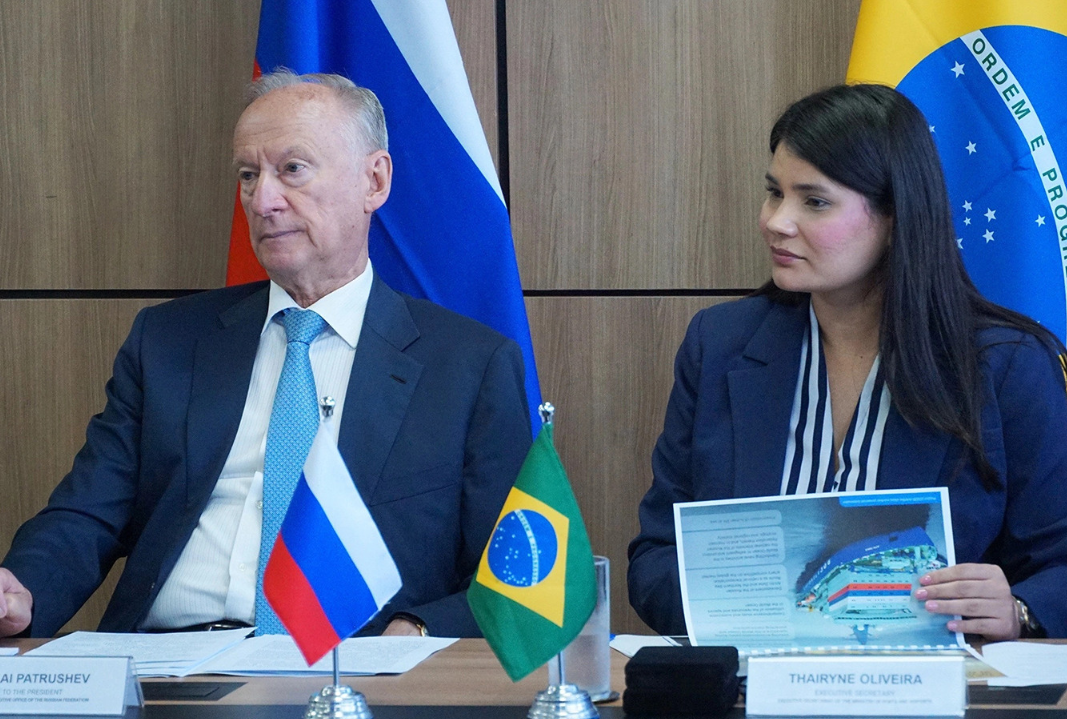
Russian Small Nuclear Technology May Help Power Remote Regions of Brazil
Nikolai Patrushev, aide to the Russian President and Chairman of the Maritime Board, stated during talks held in Brasilia on August 7 that Russia's accumulated experience in the field of low-power nuclear energy is expected to be valued by Brazil. He noted that given Brazil's ongoing development of its own ship-based nuclear reactors, relevant Russian technologies and engineering expertise could serve as a reference in this process. Patrushev mentioned that potential bilateral cooperation is not limited to ship-based reactors, but may also extend to areas such as small nuclear power plants and floating nuclear power units. Among these, the Elena-M small nuclear power plant and floating energy devices deployable in water areas or coastal regions are regarded as suitable for long-term,...
2026-08-10