
Search Results
Keyword:DOE
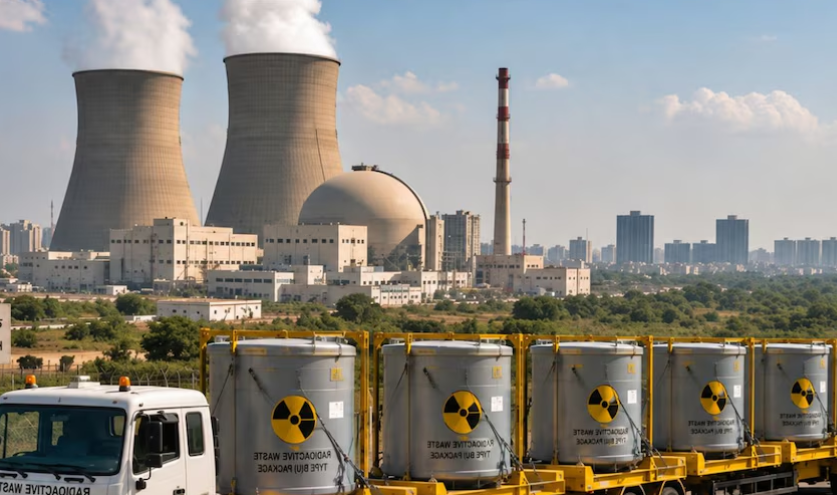
Behind India's Nuclear Power Expansion: Where Does Radioactive Waste Go? Government Details Management Process in Parliament for First Time
India is rapidly advancing its nuclear power expansion, but the safe disposal of radioactive waste is the least-publicized challenge. The government has for the first time detailed in Parliament how it handles hazardous waste. In a written reply, the Department of Atomic Energy disclosed that all nuclear power plants in India generate an average of 0.15 cubic meters (approximately 150 liters) of solid radioactive waste per megawatt (MW) of capacity annually, including waste from operational and decommissioning phases, equivalent to about 1.5 household bathtubs in volume; radioactive waste quantities and disposal records are regularly reported to the Atomic Energy Regulatory Board (AERB). The operation and maintenance of nuclear power plants generate various types of radioactive waste, including spent filter cartridges, protective clothing, tools, equipment, and other items that come into contact with radioactive materials. Waste is categorized into gaseous...
2026-08-03

Philippine DOE launches nuclear power plant site screening with IAEA support
The Philippine Department of Energy (DOE) recently stated that it has begun preparing nuclear power plant site screening work in accordance with internationally recognized safety standards. Collaborating with experts from the International Atomic Energy Agency (IAEA), the DOE is wrapping up an intensive workshop on site and external event design this week to strengthen the country's nuclear power plant site screening process. Energy Secretary Sharon Garin stated that selecting the right site is one of the most critical decisions in developing a nuclear power program, and that close collaboration with the IAEA ensures every step is guided by the highest international standards of science, rigorous technical assessment, and resilient public safety protection. The workshop brought together technical experts from the DOE and partner agencies alongside specialists from the IAEA's External Events Safety Section to share recognized methodologies for assessing potential sites against earthquakes, floods, volcanic activity, extreme weather, and other natural and human-induced risks.
2026-08-03

Utah Finalist for DOE Nuclear Fuel Cycle Site, with Great Salt Lake Rescue as Bargaining Chip
Utah is seeking an agreement with the U.S. Department of Energy (DOE), hoping to secure federal nuclear hub status while also gaining assistance in addressing the Great Salt Lake crisis. Governor Spencer Cox and U.S. Energy Secretary Chris Wright signed a memorandum agreeing to collaborate on realizing the full value of the nuclear fuel cycle. However, this agreement does not mean Utah has decided to build the nuclear hub, and the state will decline if it is deemed unsafe or disadvantageous. Currently, Utah is one of five states competing for the federal Nuclear Lifecycle Innovation Park, which aims to consolidate all aspects of the nuclear fuel cycle in one location, including fuel fabrication, enrichment,...
2026-08-03

South Korean Presidential Office: Expanding Renewable Energy Does Not Mean Abandoning Nuclear Power; New Nuclear and SMR Projects Already Decided
On July 3, Kim Woo-chang, Secretary for National AI Policy at the South Korean Presidential Office, responded on a program to external concerns over the power supply capacity of the semiconductor cluster in the Honam region, stating that the southwestern region of South Korea already possesses sufficient renewable energy conditions, with further room for expansion in the future. Kim Woo-chang said that South Korea's power generation resources are generally concentrated in the southwestern region, the Busan–Ulsan–Gyeongnam area, and the vicinity of nuclear power plants in Gangwon-do; the Seoul metropolitan area and central regions such as Chungcheong-do rely primarily on transmission networks for electricity. Therefore, locating large-scale power-consuming projects near power sources is one of the realistic options. In response to whether renewable energy alone is sufficient to support the semiconductor industry...
2026-07-03
DOE's Oak Ridge National Laboratory and REV Advance Shared Fusion Test Platform Construction
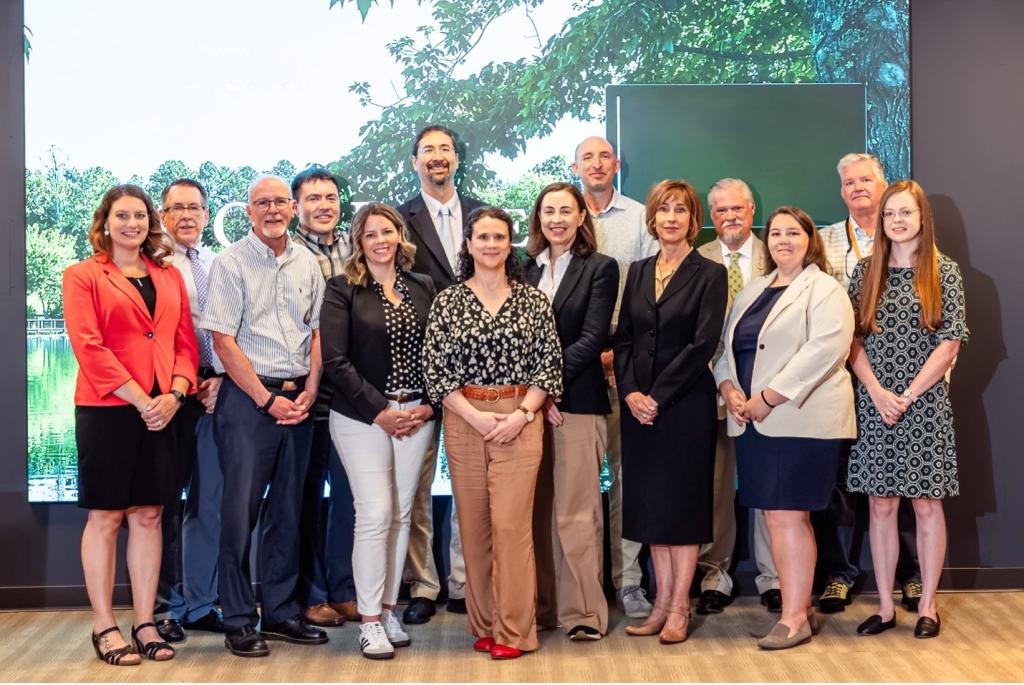
The U.S. Department of Energy (DOE)'s Oak Ridge National Laboratory (ORNL) and fusion energy consulting and investment firm Rutherford Energy Ventures (REV) have officially launched a new public-private partnership framework development effort to build shared fusion test platform infrastructure at Oak Ridge National Laboratory. The collaboration framework, named the Fusion Accelerated Scaling Leverage Alliance (FULCRA), aims to explore new design and financing models for the proposed Fulcrum test facility at Oak Ridge National Laboratory, addressing critical capability gaps identified in the DOE's Fusion Science and Technology Roadmap...
2026-07-29