
Search Results
Keyword:FAC

Aternium to Build First U.S. Heavy Water and High-Purity Hydrogen Production Facility in Delaware
Aternium announced on August 4 that it has selected Dover, Delaware, as the site for its first commercial heavy water and electrolytic hydrogen production facility. The company has reached a definitive sales agreement for a parcel within Garrison Oak Technical Park, with the transaction expected to close by mid-Q4 2026. The project will serve as Aternium's flagship production initiative in the United States, planned to produce heavy water (deuterium oxide) and high-purity hydrogen. According to company disclosures, the project is expected to bring at least $226 million in capital investment to Dover, create dozens of direct and supporting jobs, and generate hundreds of construction jobs during the build-out phase...
2026-08-05

ASP Isotopes PET Lab Revenue Grows Over 50% in First Half of Year, Isotope Enrichment Facilities Advance Toward Commercial Production
ASP Isotopes Inc. recently released a letter to shareholders outlining operational progress across its business segments ahead of the company's second-quarter 2026 financial results announcement. The company stated that its PET lab segment achieved organic revenue growth of more than 50% in the first half of 2026 compared to the same period in 2025. Based on current expectations, the segment's full-year 2026 revenue is projected to be approximately $14 million, up from $6 million in 2025. PET-related operations are typically closely associated with radiopharmaceutical preparation, molecular imaging, and nuclear medicine diagnostic applications. On the isotope front, ASP Isotopes stated that its silicon-28 and ytterbium-176 enrichment facilities have entered the final stage before commercial production, with first deliveries expected in the second half of 2026...
2026-08-05

Finland's Olkiluoto Spent Nuclear Fuel Final Disposal Facility Passes Regulatory Safety Assessment
The Radiation and Nuclear Safety Authority of Finland (STUK) released a safety assessment report on August 4, concluding that Posiva's spent nuclear fuel encapsulation plant and final disposal facility at Olkiluoto, Finland, meets the safety requirements for an operating license. This conclusion brings the project, regarded as the world's first industrial-scale geological final disposal facility for spent nuclear fuel, one step closer to obtaining government approval for operation. The facility is located on Olkiluoto Island in the municipality of Eurajoki, southwestern Finland, and is designed to dispose of spent nuclear fuel generated by the Olkiluoto nuclear power plant units of Teollisuuden Voima Oyj (TVO) and the Loviisa nuclear power plant units of Fortum. Posiva submitted its operating license application in December 2021...
2026-08-05

South Korea Accelerates Safety Reviews of Long-Term Operating Nuclear Reactors and Advances Licensing of First Spent Fuel Dry Storage Facility
The Nuclear Safety and Security Commission (NSSC) of South Korea stated at its second-half work report meeting on August 4 that it will accelerate safety reviews of long-term operating nuclear reactors while simultaneously advancing regulatory efforts such as licensing systems for spent fuel dry storage facilities and small modular reactors. Under the plan, the NSSC will conduct safety inspections on nine reactors applying for continued operation, with review standards referencing newly built nuclear power plants and confirming safety margins in consideration of the characteristics of long-term unit operation. Among these, whether Kori Nuclear Power Plant Units 3 and 4 will be approved for continued operation in the second half of this year, and whether Hanbit Nuclear Power Plant Units 1 and 2 will be approved for continued operation in the first half of next year, are the near-term review priorities...
2026-08-05

T-Robotics to Participate in South Korea's Radioactive Waste Management Robot Demonstration Project
T-Robotics, a South Korean industrial humanoid robot and autonomous mobile robot (AMR) company, announced on August 4 that it has signed a memorandum of understanding to advance the 2026 large-scale integrated robot demonstration project. The MOU was jointly signed by T-Robotics, the Korea Radioactive Waste Agency (KORAD), Klobot, and the Gyeongbuk ICT Convergence Industry Promotion Association. The parties plan to jointly pursue a government demonstration project targeting high-risk radioactive waste safety management scenarios, exploring the collaborative application of multiple types of robots in radioactive waste disposal facilities. Under the agreement, the participating organizations will establish...
2026-08-04

USDA Plans $25 Million Investment in Sterile Fly Release Facility in Arizona
The U.S. Department of Agriculture will invest $25 million to build a new sterile fly release facility in Arizona, strengthening efforts to control New World screwworm and reduce the risk of it invading American livestock herds. Agriculture Secretary Brooke Rollins announced the plan during a visit to the Douglas Port of Entry in Arizona. According to the department, releasing sterile flies is a key method for suppressing and ultimately eradicating New World screwworm populations. The proposed Arizona facility will enhance USDA's sterile fly release capacity and complement existing facilities and operations in Texas, Mexico, and Panama, further strengthening emergency response capabilities along the U.S. southwest border. The U.S...
2026-08-04

Key Breakthroughs Achieved in Development of Core Equipment for BEST Compact Fusion Energy Test Facility
Recently, at a critical juncture in the all-out sprint toward the "double-half" goals, the development of two core components of the compact fusion energy test facility (BEST) main machine equipment—the vacuum vessel and the mid-plane thermal shield—undertaken by Shanghai Electric Nuclear Power Group and manufactured by No.1 Machine Tool Plant, has achieved successive milestone results. Multiple key manufacturing tasks have been successfully completed and delivered upon acceptance, marking that the development of BEST main machine core equipment has fully entered the critical stage of tackling difficulties and accelerating the sprint, laying a solid foundation for high-quality project delivery. As the core key equipment of the compact fusion energy test facility, the BEST vacuum vessel and mid-plane thermal shield feature complex structures, extremely high precision requirements, and difficult manufacturing processes...
2026-08-03

First Experimental Result Published from the High-Intensity Heavy-Ion Accelerator Facility
Recently, the research team from the Institute of Modern Physics (IMP) of the Chinese Academy of Sciences, together with collaborators, successfully produced and identified the rare isotope hafnium-153 using the High-Intensity Heavy-Ion Accelerator Facility (HIAF). This is the first physics result obtained during the commissioning of HIAF, demonstrating that China's new-generation high-intensity heavy-ion research facility is capable of exploring unknown nuclides and expanding the nuclear chart. It marks the official commencement of HIAF's scientific discovery journey. The result was published as a short communication in *Science Bulletin*. Figure: Position of hafnium-153 on the nuclear chart; the blue line indicates the boundary of known nuclides. Image | Hu Houyu, Li Hongfu. Atomic nuclei are composed of protons and neutrons, and different combinations of proton and neutron numbers form the diverse world of nuclides. Exploring unknown nuclides and investigating the boundaries of nuclear existence are important frontiers in nuclear physics. Hafnium-153 is located in the neutron-deficient heavy-mass region and is an important subject for studying the evolution of nuclear structure and the limits of nuclear stability. It had not been reported prior to this experiment. The discovery and precise measurement of this nuclide will help test nuclear theory models and deepen our understanding of nuclear structure regularities.
2026-08-03

Danube at Record Low, Hungary's Paks Nuclear Plant Faces First Full Shutdown in 44 Years
On August 2, Hungarian authorities stated that the Paks Nuclear Power Plant may halt electricity generation due to the Danube River dropping to a historic low. This is the country's only nuclear power plant, with an installed capacity of approximately 2 gigawatts, generating nearly half of Hungary's total electricity output. The Paks Nuclear Power Plant draws water from the Danube for cooling. Due to persistent high temperatures and insufficient rainfall, the Danube's water level has been continuously declining recently. Hungarian water authorities predict that the river, which flows from Germany to the Black Sea, will see further drops in water levels in the coming days. As of 18:37 GMT on August 2, the Paks Nuclear Power Plant's output was only slightly above 10% of its installed capacity. Péter M...
2026-08-03
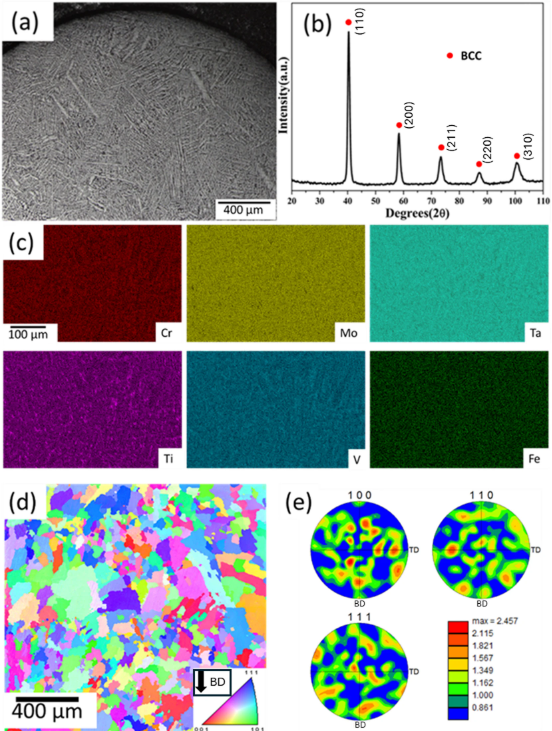
Additively Manufactured CrMoTaTiV Refractory Alloy Demonstrates Excellent Radiation Resistance
A materials study released on July 31 shows that a research team used laser powder directed energy deposition (LP-DED) technology to fabricate a novel Cr₁₀Mo₂₅Ta₂₅Ti₁₅V₂₅ refractory complex concentrated alloy and systematically evaluated its structural stability and mechanical properties under irradiation environments. The study targets the demand for high-temperature, high-irradiation structural materials in next-generation nuclear fission and fusion devices. In the study, samples were subjected to 3.5 MeV Fe²⁺ ion irradiation at the Ion Beam Materials Laboratory of Los Alamos National Laboratory in the United States, at irradiation temperatures of room temperature and 650°C, with local doses reaching approximately 1.8, 6, and 18 dpa. Microstructural analysis...
2026-08-01

Kangbuk Samsung Hospital in South Korea Validates Precision of New-Generation Surface-Guided Radiation Therapy System
The research team from the Department of Radiation Oncology at Kangbuk Samsung Hospital in South Korea announced on July 31 that they have completed validation of the geometric accuracy and respiratory tracking performance of a new-generation surface-guided radiation therapy system. The research findings have been published in the latest issue of the international academic journal *Radiation Physics and Chemistry*. In breast cancer radiotherapy, the deep inspiration breath-hold technique is commonly used in clinical practice to reduce radiation exposure to the heart and lungs. Traditional procedures typically require tattoo marks or drawn guide lines on the patient's skin surface, along with wearing sensors to monitor respiratory motion, which somewhat compromises treatment convenience and patient comfort. The new-generation surface-guided radiation therapy system validated in this study utilizes 3D stereoscopic cameras and thermal imaging technology...
2026-08-02

Japan's Nuclear Plant Renewal Faces Labor Shortage Challenges
Japan is planning to replace its aging nuclear reactors to enhance the nation's energy independence. However, the key issue is that labor shortages are threatening the progress of this effort. According to reports, up to 70% of related companies have reported difficulties in recruiting personnel, placing greater strain on an already tight schedule. The government has approved plans to build up to five new nuclear reactors by 2040, but the human resource bottleneck at the operational level is becoming an increasingly serious problem. The labor shortage not only affects the progress of new projects but also puts pressure on the safe operation and maintenance of existing nuclear power plants. As aging reactors are gradually...
2026-08-02

Thor Medical Launches Commercial Production of Lead-212 at AlphaOne Facility
Thor Medical ASA announced on July 31 that commercial production has commenced at its industrial-scale AlphaOne production facility located in the Herøya industrial park. The facility will produce lead-212 (Pb-212) and its precursors thorium-228 (Th-228) and radium-224 (Ra-224) to support demand related to radiopharmaceuticals and targeted cancer radiotherapy. According to the company, Thor Medical has signed supply agreements with multiple types of customers across the radiopharmaceutical value chain, including startup biotechnology companies, contract development and manufacturing organizations (CDMOs), and global pharmaceutical companies. The company expects the AlphaOne facility to deliver its first products to customers in August 2026. AlphaOn...
2026-08-01

U.S. Team Traces Source of Anomalous Gamma Rays from Zinc-70, Nuclear Magnetic Transitions May Improve Models of Heavy Element Formation
An international research team led by scientists from the Facility for Rare Isotope Beams (FRIB) at Michigan State University has recently identified the source of the large number of low-energy gamma rays emitted by zinc-70 nuclei. The study suggests that magnetic transitions occurring within the nucleus are the key reason for this anomalous signal enhancement. The findings were published in the journal Nature under the title "Magnetic character of the low-energy enhancement in 70Zn." Gamma rays are electromagnetic radiation released when excited atomic nuclei transition to lower, more stable energy levels. For a long time, scientists have observed an anomalous increase in the number of low-energy gamma rays in some atomic nuclei, known as the low-energy enhancement (LEE), but its physical mechanism had remained unclear...
2026-08-02

The Nuclear and Radiation Safety Center of the Ministry of Ecology and Environment Successfully Held a Technical Seminar on Performance Testing of Iodine Adsorbers in Nuclear Facilities
Recently, the technical seminar on performance testing of iodine adsorbers in nuclear facilities, hosted by the Nuclear and Radiation Safety Center of the Ministry of Ecology and Environment (hereinafter referred to as "the Center") and organized by the Key Laboratory of Radioactive Gas Purification Technology of CNNC, was held in Taiyuan, Shanxi Province. Representatives from domestic nuclear facility operation, design, testing and inspection organizations, as well as relevant personnel from the Center's Reactor Department, Event Assessment Department, and General Operations Department attended the meeting. The seminar focused on core topics such as periodic testing methods for iodine adsorbers in ventilation systems of nuclear facilities, acceptance criteria, and test cycle requirements under long-term operation. Participants conducted in-depth exchanges on the advantages and disadvantages of radioactive versus non-radioactive test methods for iodine adsorber adsorption efficiency, 2-inch...
2026-08-01