
Search Results
Keyword:ITER

US PPPL Reconstructs 70-Year-Old Lawson Criterion, Proposes New Fusion Ignition Pathway of "Heat First, Fuel Later"
The Princeton Plasma Physics Laboratory (PPPL), under the U.S. Department of Energy (DOE), released its latest findings on October 5. Laboratory physicists have reconstructed the classic Lawson criterion that has been in use for over 70 years and published the results in Physical Review Letters. The research team integrated four real-world physics effects that were previously treated separately into a unified model, mapping out an entirely new fusion ignition topography. The study shows that adopting a pathway of first heating the plasma and then increasing fuel density can achieve the ignition conditions for self-sustaining burn with far less energy consumption than traditional pathways. For over 70 years, the nuclear fusion field has relied on...
2026-10-07

Europe Completes Delivery of Final ITER Vacuum Vessel Sector, Marking Conclusion of 16 Years of Manufacturing
Recently, Fusion for Energy (F4E), in collaboration with Ansaldo Nucleare, Westinghouse, and Walter Tosto, has completed the manufacturing of Europe's final vacuum vessel sector for the International Thermonuclear Experimental Reactor (ITER) and delivered it to the ITER project site at Cadarache in southeastern France. It is understood that the ITER vacuum vessel has an internal volume of 1,400 cubic meters and is composed of nine wedge-shaped steel sectors, each over 14 meters tall and weighing up to 440 tonnes. Once assembled, the vacuum vessel will have an outer diameter of 19.4 meters, a height of 11.4 meters, and weigh approximately 520...
2026-10-06

All Four ITER Test Blanket Module (TBM) Conceptual Designs Pass Preliminary Design Review
Recently, the ITER Organization officially completed the Preliminary Design Review (PDR) of four Test Blanket Module (TBM) conceptual designs. The four blanket system technical designs led by China, the EU, Japan, and Korea — core ITER member parties — all passed independent review to high standards, marking that "tritium breeding and energy extraction validation," one of ITER's three major engineering goals, has fully entered the final engineering implementation phase, providing critical engineering pathway support for the next-generation fusion demonstration reactor (DEMO) to achieve commercial tritium self-sufficiency. In the blueprint for magnetic confinement fusion power generation, deuterium-tritium (D-T) fusion reactions...
2026-09-30

MOST Sets the Pathway for Hard-Core Science and Technology Breakthroughs in the "15th Five-Year Plan": Comprehensive and Systematic Deployment of Major Basic Research on Controlled Nuclear Fusion to Solidify the Foundation of Future Strategic Energy
At the series-themed press conference on "Getting Off to a Good Start in the '15th Five-Year Plan'" held by the State Council Information Office, the Ministry of Science and Technology officially released the top-level design and core breakthrough roadmap for building a science and technology powerhouse over the next five years. When outlining the layout for major science and technology breakthroughs and original innovation, Minister of Science and Technology Yin Hejun explicitly emphasized that, in strengthening the strategic depth of basic research, China will closely anchor itself to the frontiers of the global energy revolution and, centering on underlying scientific bottlenecks in key fields such as energy and materials, comprehensively and systematically deploy major basic research tasks including controlled nuclear fusion (Controlled Nuclear Fusion), so as to seize the future...
2026-09-30
Innovating the Safety Review Pathway to Strengthen the Safety Foundation of High-Temperature Gas-Cooled Reactors — National Nuclear Safety Administration Approves Safety Design Criteria for High-Temperature Gas-Cooled Reactors
Recently, the National Nuclear Safety Administration approved the Safety Design Criteria for the High-Temperature Gas-Cooled Reactor of the Jiangsu Xuwei Nuclear Heating and Power Plant (hereinafter referred to as the Safety Design Criteria). This document further refines the specific safety requirements for high-temperature gas-cooled reactors, provides a foundational basis for the safety design of high-temperature gas-cooled reactors, and serves as an important basis for subsequent safety review. This is China's first approved safety design criteria for small nuclear power reactors (hereinafter referred to as small nuclear power reactors), marking that the safety review of small nuclear power reactors has explored a new pathway led by safety design criteria. I. Relevant Background: The Rapid Development of Small Nuclear Power Reactors Calls for Innovation in Review Methods. In recent years, global advanced nuclear energy technologies have been accelerating their evolution...
2026-09-30
ITER Tritium Plant Completes Final Design, Fully Transitions to Equipment Manufacturing, Installation, and Commissioning
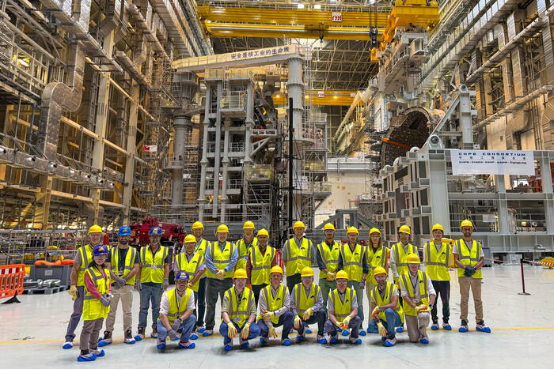
At the Saint-Paul-lès-Durance site in France, the International Thermonuclear Experimental Reactor (ITER) Organization officially convened the Third Tritium Plant Summit. More than 70 core experts from the ITER Organization, Fusion for Energy (F4E), Japan's Domestic Agency (QST), Korea's Domestic Agency (KFE), and the US Domestic Agency (US ITER), as well as global engineering contractors and equipment manufacturers, gathered together. This summit released a decisive...
2026-09-28

ITER Organization Deputy Director-General Luo Delong and his delegation visited China Fusion Energy Co., Ltd. for research and guidance
On September 11, Luo Delong, Deputy Director-General of the International Thermonuclear Experimental Reactor (ITER) Organization, and his delegation visited China Fusion Energy Co., Ltd. (hereinafter referred to as "China Fusion") for research and guidance, gaining an in-depth understanding of China Fusion's overall development situation and the progress of key task implementation. Zhang Libo, General Manager of China Fusion, accompanied the research visit. During the visit, both parties held a special symposium. On behalf of China Fusion, Zhang Libo extended a warm welcome to Luo Delong and his delegation, and expressed sincere gratitude to the ITER Organization and Mr. Luo Delong for their concern, support, and guidance regarding China Fusion's development and the fulfillment of ITER Project-related tasks. At the meeting, Zhong Wulv, Chief Engineer of China Fusion, delivered an overall situation report, focusing on...
2026-09-14
Hitachiota City, Ibaraki Prefecture, Japan to Reconsider Literature Survey for Final Disposal Site of High-Level Radioactive Waste
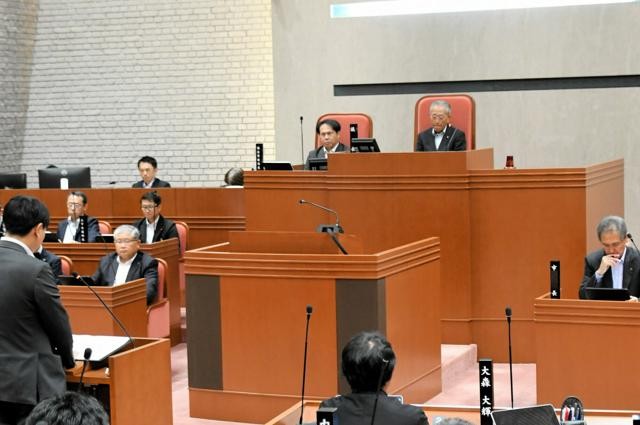
The Hitachiota City Council in Ibaraki Prefecture, Japan, held a closed-door meeting on September 9 to hear council members' opinions on the Ministry of Economy, Trade and Industry's request for the city to conduct a literature survey for selecting a final disposal site for high-level radioactive waste. After the meeting, sources said that two council members expressed support and two expressed opposition, and the city council failed to reach a consensus, deciding to hold another meeting on September 16 for discussion. The closed-door meeting was initiated by Hitachiota Mayor Sadayuki Suzuki, with the aim of providing reference for the city government to judge whether to accept the literature survey. The Ministry of Economy, Trade and Industry made the request to the city on August 31. Suzuki previously said he would "actively consider" conducting the literature survey and hoped...
2026-09-10
Hitachioomiya City Assembly in Ibaraki Prefecture, Japan, discusses literature survey request for nuclear waste disposal site
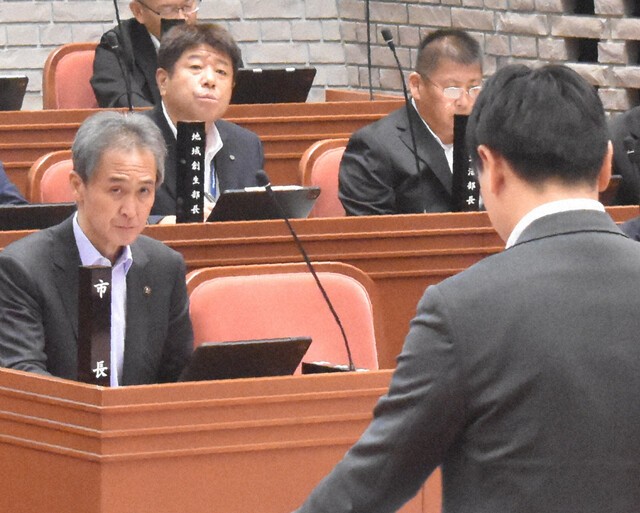
Hitachioomiya City in Ibaraki Prefecture, Japan, received a request from Japan's Ministry of Economy, Trade and Industry (METI) asking the city to accept a literature survey for the siting of a final disposal facility for high-level radioactive waste. On September 8, the Hitachioomiya City Assembly held a general question-and-answer session, during which multiple city assembly members expressed their views on whether to accept the survey. Of the five assembly members who filed questions that day, two expressed opposition to accepting the request and one expressed support. The assembly plans to hold a closed-door meeting on September 9, at which each assembly member will state their position, and the relevant content will subsequently be conveyed to Mayor Sadayuki Suzuki for his consideration in formulating the city government's response. Assembly member Toshiyuki Kurata stated that if the literature survey proceeds, it would impact the policies and projects currently being implemented by the city...
2026-09-09
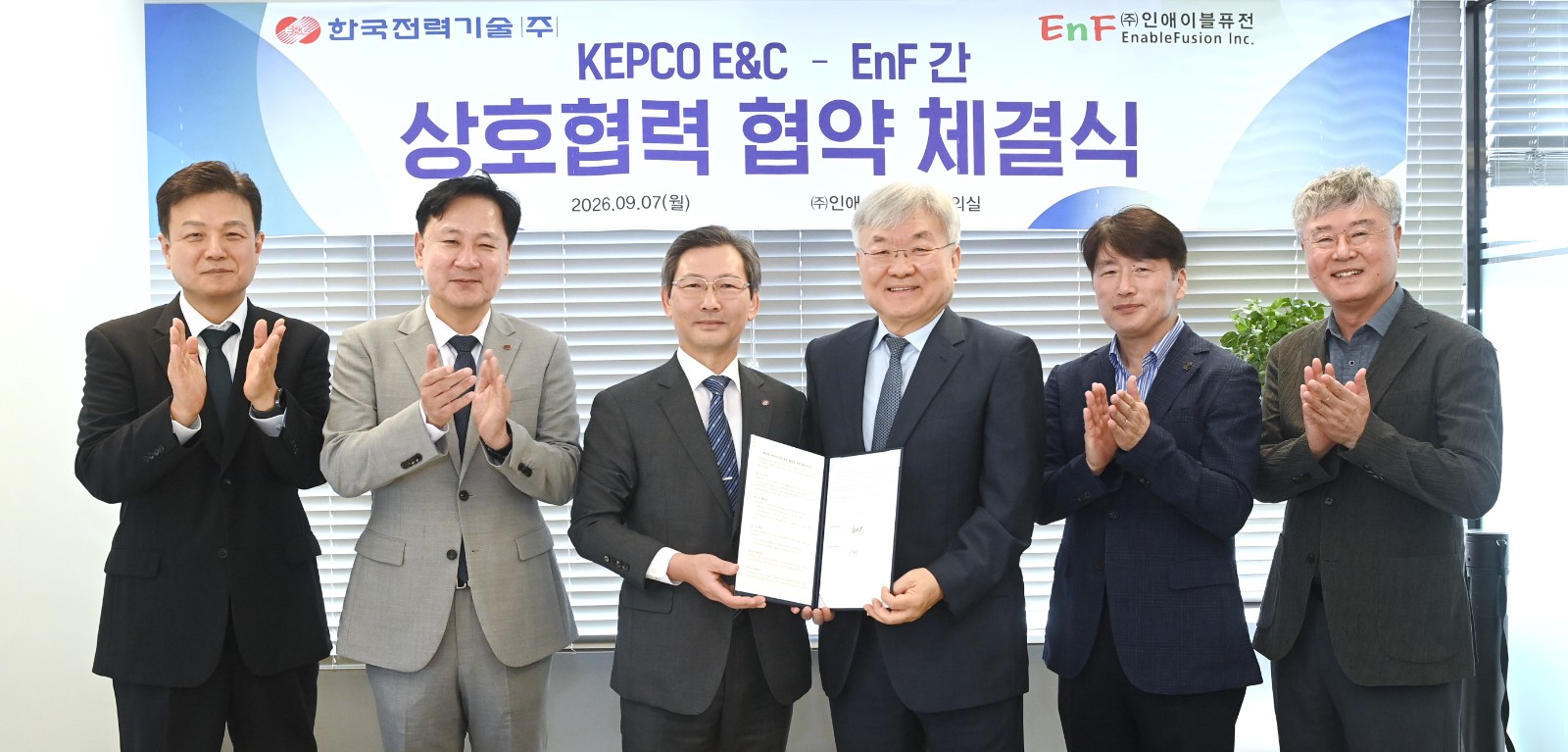
Two South Korean companies to collaborate on expanding fusion energy projects
KEPCO Engineering & Construction (KEPCO E&C) signed a Memorandum of Understanding (MOU) with Enable Fusion on September 7 at the Daejeon Science Center to establish a cooperation framework for participation in fusion energy projects, technology sharing, and joint business development. Kim Tae-kyun, President of KEPCO E&C, and Lee Kyung-soo, CEO of Enable Fusion, attended the signing ceremony. Under the MOU, the two parties will provide each other with technical and commercial information required for participation in the construction of fusion power facilities and jointly develop fusion energy projects both domestically and overseas. KEPCO E&C plans to...
2026-09-08
Hitachiomiya City Assembly in Japan Hears Briefing on Literature Survey for High-Level Radioactive Waste Disposal Site
On September 4, the Hitachiomiya City Assembly in Ibaraki Prefecture, Japan, held a closed-door briefing session regarding the central government's request for the city to initiate a literature survey for the final disposal site selection of high-level radioactive waste. Representatives from the Ministry of Economy, Trade and Industry (METI) and the Nuclear Waste Management Organization of Japan (NUMO) attended the meeting to explain the national energy policy, an overview of the geological disposal project, and the background behind the survey request. All 16 members of the Hitachiomiya City Assembly participated in the briefing, with Mayor Suzuki Sadayuki attending as an observer. The meeting was originally scheduled for approximately two hours but actually lasted about three and a half hours due to the large number of questions from assembly members. After the meeting, Yokote Hiroki, Director of the Radioactive Waste Policy Division at METI's Agency for Natural Resources and Energy, stated that assembly members raised questions covering multiple aspects, including technical details of geological disposal and the site selection procedure for disposal facilities, and that the government side would continue its outreach efforts. Should the City Assembly make a request, METI would provide further explanations.
2026-09-06

Russia's SKIF Synchrotron Announces Criteria for Selecting Future Research Teams
On August 31, Andrei Bukhtiyarov, Deputy Director of the Shared Use Center of the Siberian Circular Photon Source (SKIF) synchrotron, stated that the scientific innovation of research proposals will be one of the key criteria when selecting research teams for future experiments at SKIF. According to reports, the selection process will also focus on the clarity of research ideas and the feasibility of experimental plans. Since some experiments may not be feasible under existing or planned experimental station conditions, applications will first undergo technical review to confirm whether the experiments can be conducted within the facility's capabilities. The SKIF Shared Use Center has established a Scientific Committee to review applications submitted by research teams. The Center plans to...
2026-09-01

Japan Requests Hitachiomiya City in Ibaraki Prefecture to Conduct Literature Survey for High-Level Radioactive Waste Disposal Site
Japan's Ministry of Economy, Trade and Industry (METI) on August 31 requested Hitachiomiya City in Ibaraki Prefecture to conduct a literature survey, as the first step in siting a final disposal facility for high-level radioactive waste generated from nuclear power plant operations. If Hitachiomiya City agrees, it will become the fifth municipality in Japan to accept such a literature survey, and the second time the Japanese government has proactively requested a survey from a local government, following Minamitorishima in Ogasawara Village, Tokyo. On the same day, Takashi Kume, Vice Commissioner of Japan's Agency for Natural Resources and Energy, visited the Hitachiomiya City government and submitted the survey request to Mayor Sadanori Suzuki. Suzuki stated that he personally takes a positive stance toward accepting the literature survey, and noted that the city faces issues such as rapid population decline and a weak local economy, adding that if the area has favorable geological conditions, participating in the national geological disposal policy would be of "significant importance." He said he would make a decision after hearing the views of the city assembly, with the matter possibly being discussed at the regular assembly meeting as early as September.
2026-09-01
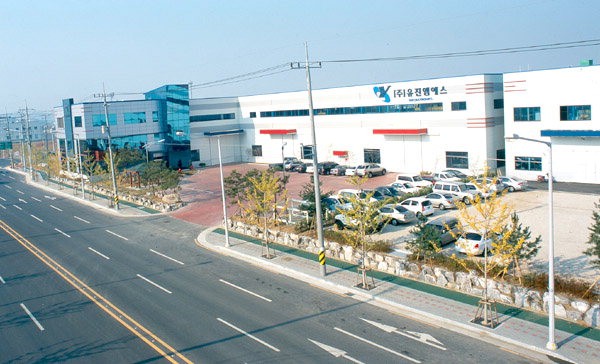
Korea's Eugene MS Wins KRW 11.4 Billion Order for ITER Core Components
Korea's Eugene MS announced on August 31 that it has signed a contract with the Korea Institute of Fusion Energy (KFE) to produce and supply the second batch of vacuum vessel port sealing flanges for the International Thermonuclear Experimental Reactor (ITER). The contract is valued at approximately KRW 11.4 billion, equivalent to about 44% of Eugene MS's 2025 revenue of KRW 25.9 billion. The contract period runs through December 2030. Under the arrangement, the sealing flanges will be delivered to the ITER Organization in three batches, with final inspection and related procedures scheduled for completion by June 30, 2031. The ITER vacuum vessel port sealing flanges consist of large fasteners and other components...
2026-08-31
Japan nuclear waste, geological disposal, literature survey, Hitachiomiya City
Japan's Ministry of Economy, Trade and Industry (METI) is in the final stages of coordination regarding the site selection process for the final disposal of high-level radioactive waste, with plans to request Hitachiomiya City in Ibaraki Prefecture to conduct a literature survey. The literature survey is the first phase of Japan's screening process for selecting a final disposal site for high-level radioactive waste generated from nuclear power generation. It primarily relies on existing literature and materials to assess whether candidate areas have safety concerns such as volcanoes and active faults. Hitachiomiya City is located in the northwestern part of Ibaraki Prefecture, bordering Tochigi Prefecture, with a population of slightly over 35,000. The city does not face the sea, with the Kuji River and Naka River flowing through its territory. Forests account for approximately 60% of the city's total area, and agriculture and manufacturing are the main industries. In recent years, the city has been promoting tourism and emerging industries leveraging the natural environment, while also facing challenges such as population decline, aging, and fiscal pressure.
2026-08-31