
Search Results
Keyword:Mark
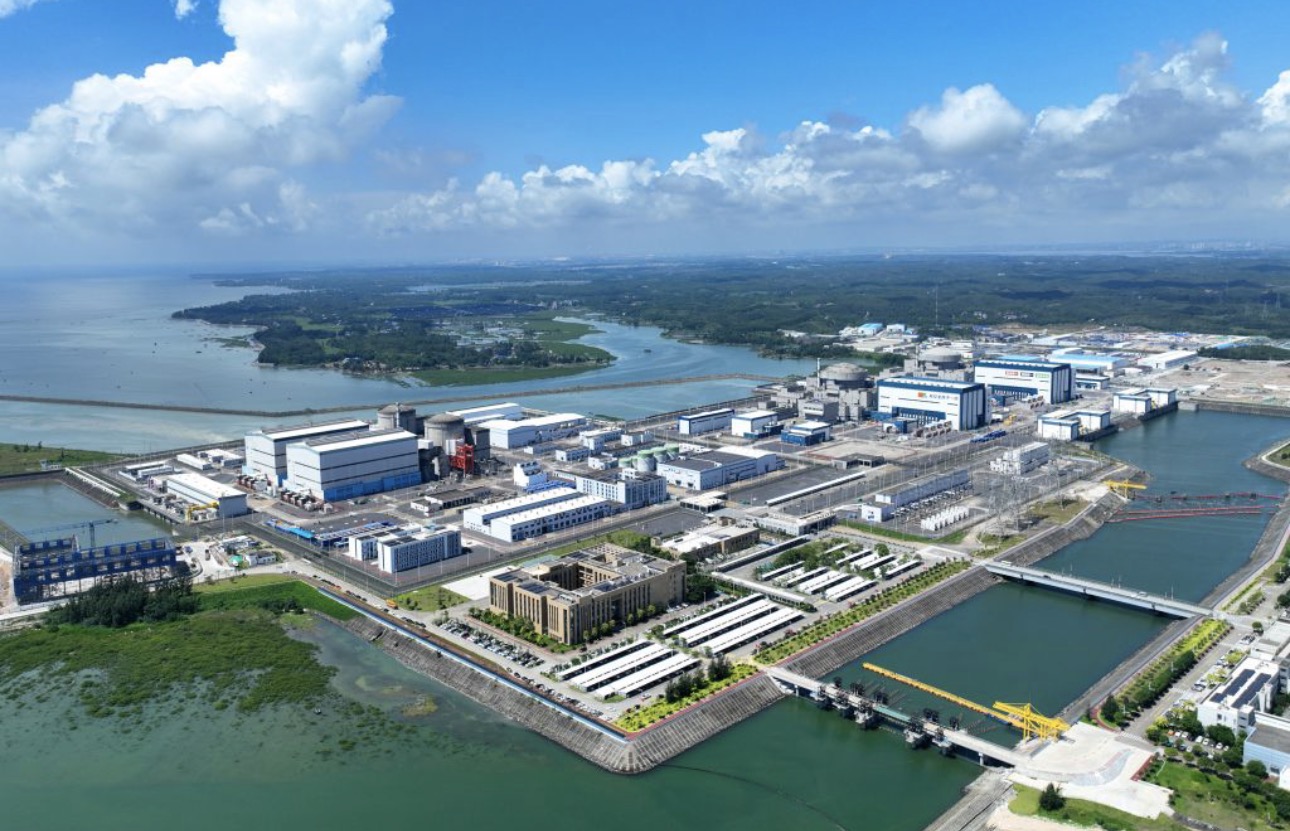
Fangchenggang Nuclear Power Phase I Marks 10th Anniversary of Commercial Operation: Two Units Have Cumulatively Supplied Over 160 Billion kWh, with WANO Indicators Achieving Full Marks for Seven Consecutive Years
Recently, Phase I of the Fangchenggang Nuclear Power Plant under China General Nuclear Power Group officially ushered in the 10th anniversary of its commercial operation. As the first nuclear power project in western China and in an ethnic minority region, the two million-kilowatt-class pressurized water reactor units at the site have maintained safe and stable operation for ten years since being put into operation. Their WANO composite index has achieved full marks for seven consecutive years, and they have cumulatively delivered over 160 billion kWh of clean electricity to the Beibu Gulf Economic Zone. It is understood that Phase I of the Fangchenggang Nuclear Power Project is located on Qisha Peninsula in Fangchenggang City, Guangxi Zhuang Autonomous Region, and is an important energy backbone project of the national Western Development Strategy. The project planned to build two self-developed CPR1000 pressurized water reactor nuclear power units with a single-unit capacity of 1.08 million kilowatts...
2026-10-04

Europe Completes Delivery of Final ITER Vacuum Vessel Sector, Marking Conclusion of 16 Years of Manufacturing
Recently, Fusion for Energy (F4E), in collaboration with Ansaldo Nucleare, Westinghouse, and Walter Tosto, has completed the manufacturing of Europe's final vacuum vessel sector for the International Thermonuclear Experimental Reactor (ITER) and delivered it to the ITER project site at Cadarache in southeastern France. It is understood that the ITER vacuum vessel has an internal volume of 1,400 cubic meters and is composed of nine wedge-shaped steel sectors, each over 14 meters tall and weighing up to 440 tonnes. Once assembled, the vacuum vessel will have an outer diameter of 19.4 meters, a height of 11.4 meters, and weigh approximately 520...
2026-10-06

The Fully Superconducting Tokamak EAST Marks 20 Years of Operation: From a 3-Second First Cry to Thousand-Second Steady State, China's "Artificial Sun" Opens a Leap Toward Fusion Engineering
On September 28, 2006, the Experimental Advanced Superconducting Tokamak (EAST), independently designed and developed by the Institute of Plasma Physics (ASIPP) under the Hefei Institutes of Physical Science of the Chinese Academy of Sciences, successfully achieved its first plasma discharge on Hefei Science Island, with a current of 200 kA and a duration of nearly 3 seconds. This historic moment marked the official completion and operation of the world's first fully superconducting non-circular cross-section nuclear fusion experimental device, propelling China into the club of fully superconducting tokamak technology ahead of others. Over the past two decades, this artificial sun has completed more than 160,000 physical discharge experiments...
2026-09-28

Samsung C&T Teams Up with GE, Hitachi and Synthos to Enter Europe's Small Modular Reactor Market
Samsung C&T's construction division has partnered with GE Vernova, Hitachi and Synthos Green Energy (SGE) to expand into Europe's small modular reactor (SMR) market. By integrating technology, engineering, procurement and construction (EPC) and business development capabilities, the parties aim to establish a business model for the repeat deployment of standardized small modular reactors across European countries. Samsung C&T announced on the 23rd that it signed a memorandum of understanding (MOU) on the 22nd (local time) with GE Vernova, Hitachi and SGE to pursue market development and commercial...
2026-09-23

South Korea Plans to Open Up "Direct Purchase" of Nuclear Power: A Low-Cost Pathway for Industrial Decarbonization, or a New Challenge for the Electricity Market?
2026-09-17
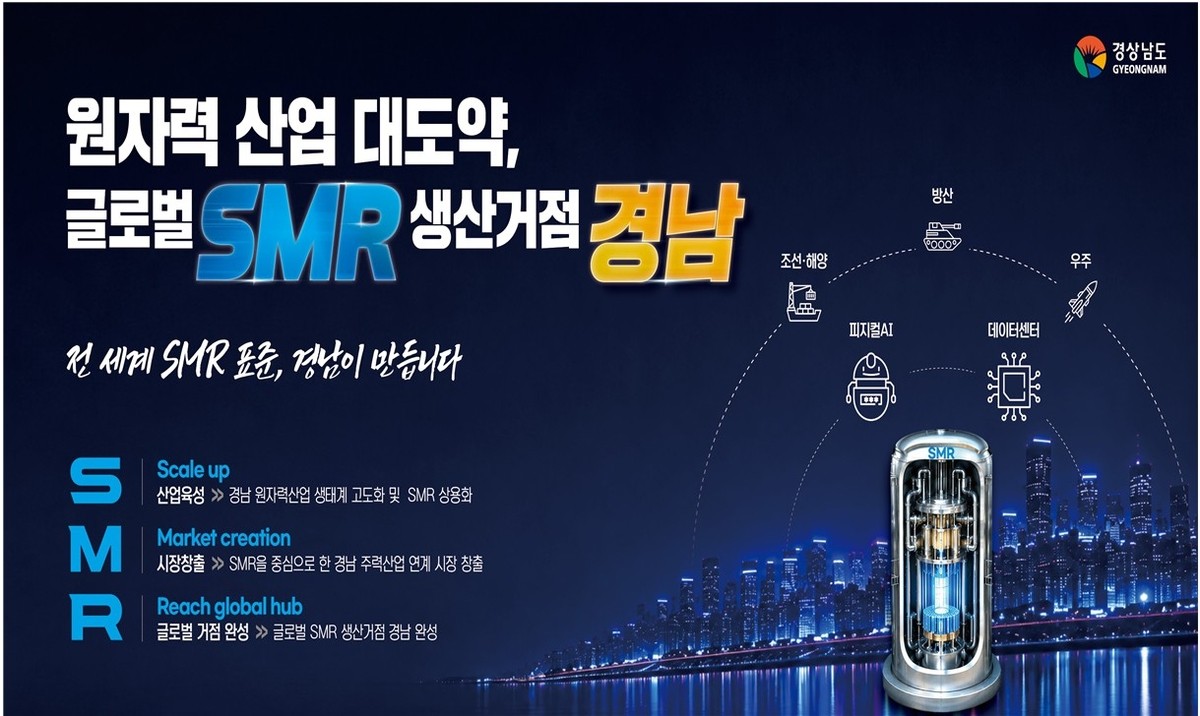
South Gyeongsang Province, South Korea Releases SMR Development Strategy 2.0, Sets 2035 Manufacturing Market Share Target
On September 10, 2026, South Gyeongsang Province, South Korea announced the Small Modular Reactor Global Development Strategy 2.0, proposing to build the region into the world's leading small modular reactor (SMR) production hub by 2035, and striving to capture 60% of the global SMR manufacturing market and achieve 100% self-sufficiency in related technologies. South Gyeongsang Province stated that multiple tasks included in the Small Modular Reactor Global Development Strategy 1.0 formulated last year, including promoting the enactment of a special SMR law, designating SMR as a national strategic technology, designating an SMR specialized complex, establishing a full-cycle SMR support system, and relaxing relevant regulatory requirements, have already been reflected in the South Korean government's policies. Therefore...
2026-09-13

Denmark's Region East Denmark to expand Sectra One imaging platform, unifying regional nuclear medicine and other medical imaging services
Swedish medical imaging IT and cybersecurity company Sectra has recently signed a contract to expand the application of its Sectra One enterprise imaging solution from hospitals in Denmark's Capital Region to the entire Region East Denmark. Region East Denmark was formed by merging the Capital Region and Region Zealand, and this expansion aims to promote unified operation of imaging services across hospitals in the entire region. Under the contract, Sectra One will be delivered as a fully managed cloud service, covering all hospitals in Region East Denmark for the review and storage of radiology medical images, including breast imaging, nuclear medicine, and clinical physiology. Hospitals in Region Zealand will migrate to the system currently in use in the Capital Region,...
2026-09-11

UK Report Says Russia's Uranium Supply Share Could Rise to 36% by 2040
The UK-based non-governmental organization Center for Strategic Advantage (CSA) recently released a report stating that if countries advance uranium production according to existing plans and operate all deposits at full capacity, Russia's share of global uranium supply could rise from roughly one-quarter at present to 36% by 2040. The report argues that Western countries face issues such as insufficient investment and delays in permitting new mine development, making it difficult to meet future demand. Meanwhile, Russia's uranium mining capacity is expected to continue growing. Project director Gareth Heywood stated that by 2040, some countries' dependence on Russian uranium production could approach the level of their dependence on Russian natural gas and oil around 2022.
2026-09-08

South Korean Companies Advance Nuclear Hydrogen Demonstration Project in Czech Republic
Korea Hydro & Nuclear Power (KHNP) announced on September 8 that it has completed a joint research review with the Czech Hydrogen Association (HYTEP) on the legal, institutional, and policy environment for nuclear hydrogen production in the Czech Republic and the European Union, and exchanged views on advancing a clean hydrogen production demonstration project in the Czech Republic. The two sides held a results-sharing meeting on September 7 at Hwangnyongwon in Gyeongju, South Korea, to review the final outcomes of the research. The study, launched in September 2025 and spanning approximately 11 months, primarily examined policy directions, laws and regulations, certification requirements, and market access conditions in the nuclear and hydrogen sectors in the Czech Republic and the EU, providing an institutional basis for the implementation of nuclear hydrogen production projects. Based on the research findings, KHNP plans to promote a clean hydrogen production demonstration project integrated with nuclear power in the Czech Republic.
2026-09-08

China officially promotes Hualong One 2.0 Gen-III+ nuclear power technology to the global market
Nine key safety indicators of the Hualong One 2.0 Gen-III+ nuclear power technology have been significantly improved, the number of cabinets in the new-generation Harmony system has been reduced by approximately 40%, and the world's first 8.6-meter-aperture solar thermal collector, Yuanyao-1, can achieve a photoelectric efficiency of 17%... These were the highlights reported by this journalist at the CGN 2026 Sustainable Development Conference held in Shenzhen on September 7. At the conference, CGN officially released the "2025 CGN Sustainable Development Report," and simultaneously launched its global responsibility brand, the "CGN Firefly Plan." As the APEC Economic Leaders' Meeting draws near, Shenzhen is becoming the focus of Asia-Pacific attention. On September 7, CGN, headquartered in Shenzhen, hosted a sustainable development conference themed "Green Energy Illuminating Mountains and Seas, Joining Hands to Create the Future," showcasing China's clean energy development landscape and its latest progress in going global to think tanks, media, and other stakeholders from APEC member economies and countries jointly building the "Belt and Road."
2026-09-07
South Korea Exports Molten Salt Reactor R&D Technology to Denmark
The Korea Atomic Energy Research Institute (KAERI) announced on September 4 that it has signed a two-year contract worth USD 2.26 million (approximately KRW 3 billion) with Danish nuclear energy company Saltforce to provide molten salt reactor-related R&D services, covering areas such as nuclear fuel manufacturing, molten salt testing, and material corrosion assessment. Molten salt reactors are a class of next-generation reactors that typically use high-temperature molten salt as a fuel carrier or coolant medium. Based on the molten salt chemical system, this type of technology is mainly divided into fluoride-based and chloride-based systems. Under the contract arrangement, KAERI will provide support for the fluoride-based...
2026-09-04

Institute of Nuclear Technology at Samarkand State University Introduces Radiation Monitoring Training Equipment
On August 24–25, 2026, experts from Doza Scientific Production Enterprise (NPP Doza) visited the Institute of Nuclear Technology at Samarkand State University named after Sharof Rashidov (SamSU) and completed the installation and commissioning of a demonstration model of the Fregat radiation monitoring system. The equipment has been integrated into the institute's teaching and research infrastructure and will be used for laboratory courses, student practical training, and related research work. Through this demonstration model, students and young professionals can gain exposure to modern technological solutions in the field of radiation monitoring, enhancing their understanding of the operation and application scenarios of relevant equipment. This installation...
2026-09-02

Global Advanced Nuclear Energy Market Report Focuses on SMR and Fusion Development
The recently released "Global Advanced Nuclear Energy Market Report 2027–2047" shows that the global advanced nuclear energy industry is transitioning from concept validation and early-stage R&D to a new phase where project deployment, capital inflow, and supply chain development proceed in parallel. The report uses 2027 as the base year with a two-year baseline period to assess the development trajectory of the advanced nuclear energy market over the next 20 years. It covers small modular reactors (SMRs), nuclear fusion, and a range of emerging advanced nuclear technologies, including molten salt reactors, high-temperature gas-cooled reactors, lead-cooled fast reactors, sodium-cooled fast reactors, microreactors, advanced fuel cycles, integrated nuclear energy systems, and the application of artificial intelligence in nuclear power plant operations...
2026-09-02
GE HealthCare's Photonova Spectra Photon-Counting CT Receives CE Mark, to Be Commercialized in Countries Recognizing CE Marking
On August 31, GE HealthCare announced that its advanced photon-counting computed tomography (PCCT) system, Photonova Spectra, has received CE marking. The system utilizes GE HealthCare's proprietary Deep Silicon™ detector technology. This certification will expand the system's availability in countries and regions that recognize the CE mark and pave the way for its clinical use. According to reports, Photonova Spectra is designed to address the growing patient volumes and increasing diagnostic complexity faced by healthcare institutions today, aiming to provide clinicians with clearer and more timely imaging information. Leveraging deep silicon detector technology, the system can acquire spectral and spatial imaging information in each scan...
2026-09-01
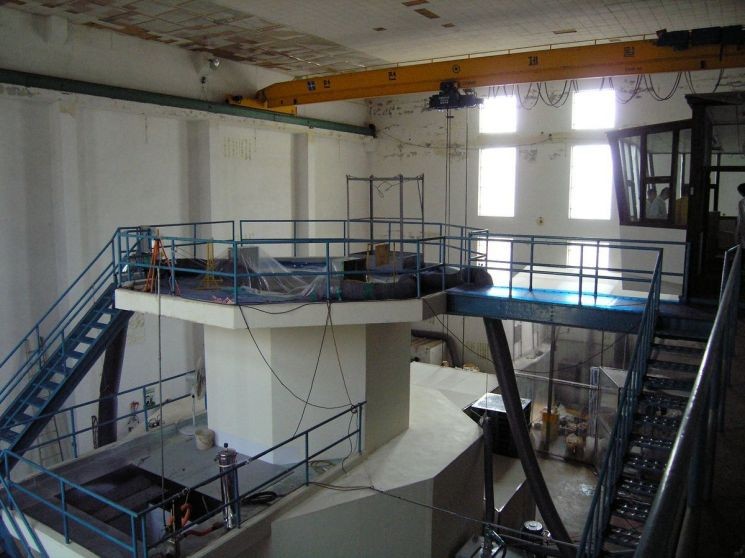
Fourteen academic societies in South Korea call for protection of KRR-1 research reactor auxiliary buildings
On September 1, fourteen academic societies and associations, including the Korean Nuclear Society, issued a statement welcoming the temporary registration of the reactor hall and auxiliary buildings of Research Reactor Unit 1 (KRR-1, TRIGA Mark-II) in Gongneung-dong, Nowon-gu, Seoul, as nationally registered cultural heritage, and urged Korea Electric Power Corporation (KEPCO), the owner of the site and buildings, to promptly submit a formal registration application. Panoramic view of KRR-1, South Korea's first research reactor. Korea National Heritage Administration The Korea National Heritage Administration had placed the KRR-1 reactor hall and auxiliary buildings on the temporary list of nationally registered cultural heritage on July 1 through the emergency measures system, suspending related demolition work. However, if a formal registration application is not submitted by the end of December this year, the temporary listing will lapse and demolition work may resume.
2026-09-01