
Search Results
Keyword:Meta

Destroyed Syrian Nuclear Reactor May Have Had Capability to Produce Nuclear Weapons Material
International Atomic Energy Agency (IAEA) Director General Rafael Grossi said on September 7 that a Syrian nuclear reactor, which was destroyed in an Israeli airstrike in 2007 while it was nearly complete, was of a type capable of relatively quickly producing fissile material that could be used in nuclear weapons. The IAEA recently concluded its investigation into Syria's past covert nuclear activities. The investigation found approximately 73 tons of natural uranium metal, primarily in the form of reactor fuel. In a report submitted to member states, the agency confirmed that its previous assessment remained unchanged: the destroyed facility in Deir ez-Zor Province in eastern Syria was a nuclear reactor under construction, and the associated fuel had also been manufactured within Syria.
2026-09-08
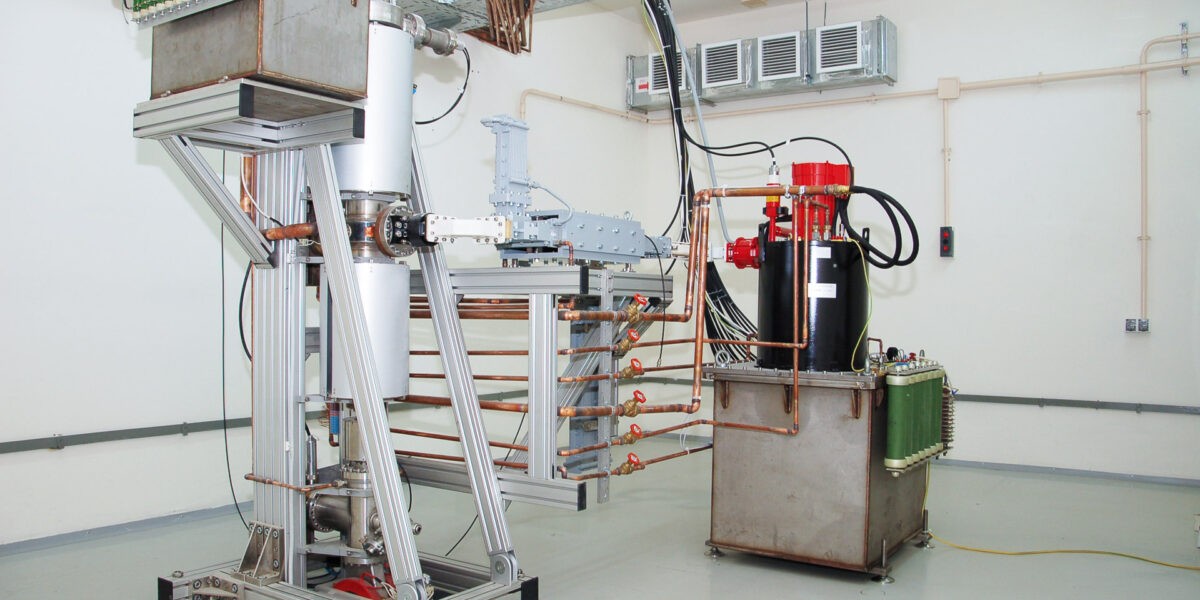
Russian Research Team Synthesizes Novel Metal-Organic Framework Material Capable of Immobilizing Radioactive Cesium
The Frumkin Institute of Physical Chemistry and Electrochemistry of the Russian Academy of Sciences has synthesized a novel metal-organic framework material containing neptunium and cesium atoms. Research shows that this material is insoluble in water, resistant to high temperatures and intense radiation, and can stably "lock" radioactive cesium within its own structure, offering new insights for research on radionuclide immobilization and radioactive waste treatment materials. Metal-organic framework materials are a class of materials with high porosity and controllable crystal structures, whose lattices are typically composed of metal atoms connected by organic molecules. Since their pore sizes and structures can be tuned at the molecular level, these materials can be used to adsorb gases or specific nuclides. However, compared with traditional adsorbents such as activated carbon...
2026-09-04
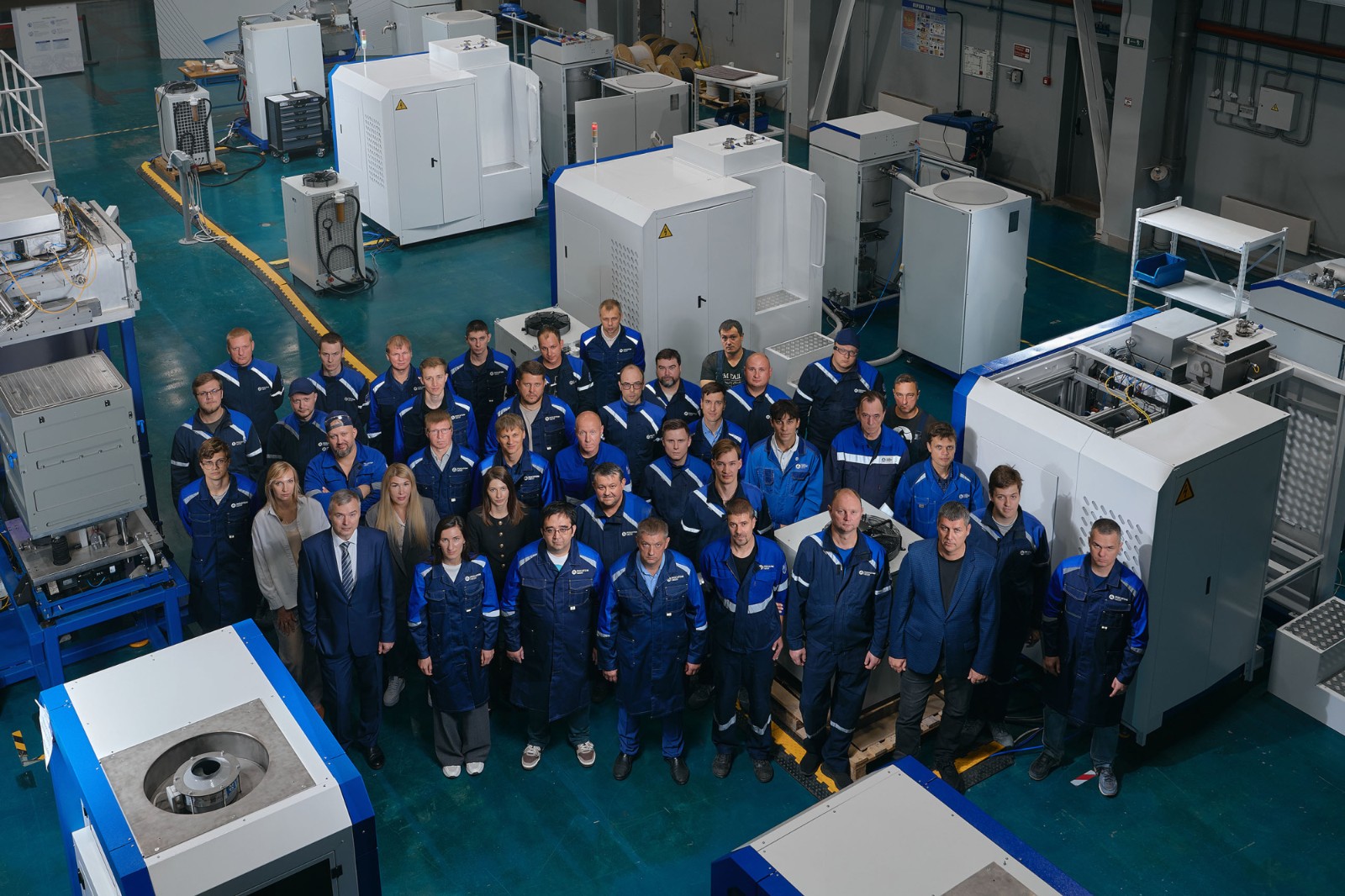
Rosatom Fuel Division Completes Assembly of 30th Industrial Metal 3D Printer
On September 3, 2026, the Moscow Additive Manufacturing Technology Center of Rosatom's Fuel Division completed the assembly of its 30th industrial metal 3D printer. The equipment is the medium-sized RusMelt 300M, a flagship model in Rosatom's metal 3D printer product line. The rollout of the 30th unit coincides with the 30th anniversary of TVEL JSC, the management company of Rosatom's Fuel Division. According to reports, the additive manufacturing technology business unit of Rosatom's Fuel Division currently produces industrial-grade 3D printers capable of meeting manufacturing needs for components of various sizes, utilizing mainstream metal additive manufacturing technologies such as selective laser melting (SLM), direct metal deposition (DMD), and electron beam additive manufacturing (EBAM)...
2026-09-04

U.S. Develops Refractory Metal Powder Atomization System to Support Fusion Energy Materials Research
U.S. researchers are developing a new refractory metal powder atomization system to produce high-temperature alloy powders for extreme-environment applications. The system will support new materials research in areas such as gas turbines, aerospace equipment, and fusion energy systems. Jordan Tiarks, a scientist at Ames National Laboratory, stated that the laboratory has long been engaged in specialty powder production research, and the new system will expand its materials processing capabilities to higher temperature ranges and more challenging material systems. The research team noted that metal powders are a critical foundation for advanced manufacturing technologies such as powder metallurgy and additive manufacturing...
2026-09-03

Northeast Regional Office of the Ministry of Ecology and Environment Conducts Research on Radiation Risk Prevention and Control in the Scrap Metal Recycling and Smelting Industry
To strengthen radiation risk prevention and control across the entire chain of the scrap metal recycling and smelting industry and guide young cadres to conduct research and tackle challenges at the grassroots level, the Northeast Regional Office of Nuclear and Radiation Safety Supervision of the Ministry of Ecology and Environment (hereinafter referred to as the Northeast Regional Office) recently conducted special research at scrap metal resource recycling and steel smelting enterprises as well as customs ports. This research comprehensively mapped out the sources of scrap metal recycling, supply destinations, and the current status of radioactive monitoring management in the processing and sorting stages; focused on verifying the effectiveness of radiation monitoring requirements implementation at steel smelting enterprises, and meticulously examined the monitoring point deployment and control measures at key stages such as raw material entry, production process connection, and product shipment; further clarified the import and export radioactive monitoring management procedures, coordination and linkage working mechanisms, and the response and handling of abnormal events; and conducted in-depth exchanges and discussions with relevant units on some issues identified during the research.
2026-09-01
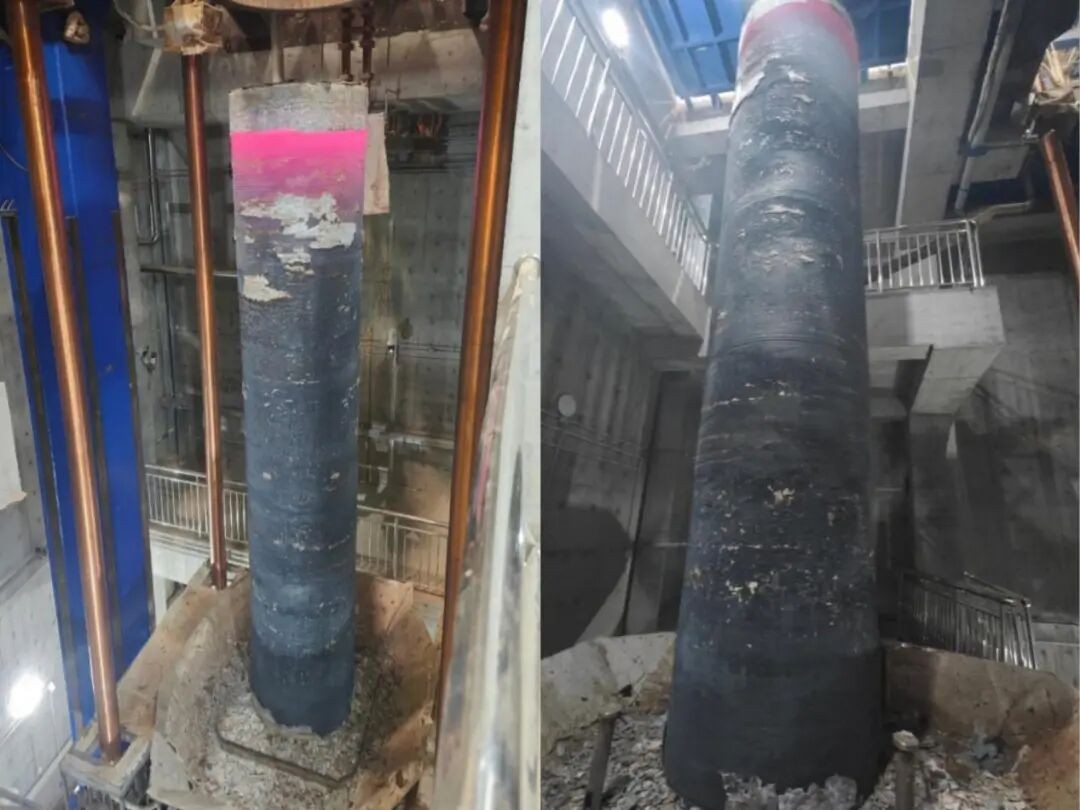
Manur Nuclear Power Produces Domestically Heaviest Slender Withdrawal-Type ESR Ingot
On August 30, 2026, the 60t withdrawal station of the 150-ton-class atmosphere-protected electroslag remelting (ESR) furnace at Yantai Taihai Manur Nuclear Power Equipment Co., Ltd. successfully produced a slender ESR ingot with a diameter of approximately 1270 mm and a weight of 61.2 tons, setting a new record for domestically manufactured special metallurgy equipment and consolidating the equipment foundation for the supply of high-end nuclear power forgings. The 61.2-ton slender withdrawal-type ESR ingot produced this time features a regular appearance and excellent surface quality. During the smelting process, equipment and operations including atmosphere protection, melt rate control, precise molten metal level control, fully automatic electrode exchange, and the complete withdrawal process remained stable and controllable. This ingot is currently the heaviest slender withdrawal-type ESR ingot produced in China, representing another critical leap in domestically manufactured large-tonnage withdrawal-type ESR equipment...
2026-08-31

Japanese research team visualizes cellular metabolic changes during fracture healing using hyperpolarized MRI
August 21, 2026, Gifu Pharmaceutical University and Gifu University announced that a multi-institutional Japanese research team successfully visualized changes in the redox state of skeletal progenitor cells during fracture healing in living mice using hyperpolarized magnetic resonance imaging technology. The findings were published online on August 15, 2026, in the British academic journal *npj Imaging*. The study was led by Takuya Kubo, a graduate student in the Department of Pharmacology at Gifu Pharmaceutical University, Professor Eiichi Hinoi, and related research teams at Gifu University, in collaboration with the University of Tokyo, Osaka University, the Research Institute of National Rehabilitation Center for Persons with Disabilities, and other institutions. After a fracture occurs, a tissue called a...
2026-08-31

ASP Isotopes Subsidiary Evaluates Metal Hydrofluorination and Fluorination Project in Namibia
ASP Isotopes Inc. recently announced that its wholly-owned subsidiary, Quantum Leap Energy LLC, is evaluating metal conversion opportunities in Namibia, with work focusing on technologies and processes required for critical stages of the fission and fusion nuclear fuel cycles. According to the disclosure, the evaluation includes plans to construct a pilot-scale hydrofluorination and fluorination facility in the Walvis Bay area of Namibia. Public environmental and social impact assessments and consultation procedures for the project have already been initiated. The proposed facility will be used to develop, test, and demonstrate metal hydrofluorination and fluorination processes. In accordance with Namibian regulatory requirements, relevant public consultation notices have been published through customary local channels. The company...
2026-08-19

Korean Hospital Team Develops AI Model to Improve Bone Metastasis Detection Using PET/CT and Other Information
A research team at Seoul Metropolitan Government Seoul National University Boramae Medical Center has recently developed an artificial intelligence model capable of identifying bone metastases that are difficult to detect on CT images. By incorporating MRI and PET/CT information during the training process, the model enables lesions that are inconspicuous on CT and prone to being missed to be included in the training data, thereby enhancing detection capability. Bone metastasis is an important basis for determining cancer staging and formulating treatment plans. If lesions are not clearly visible on CT images, bone metastasis may be detected late and may lead to complications such as pathological fractures and spinal cord compression. Previous related AI studies have largely relied on lesions clearly visible on CT to build training data, and the research team believes that this approach may...
2026-08-17

Study Reveals Three-Dimensional Pore Networks Inside Uranium-Zirconium Metallic Nuclear Fuel
Researchers at the Massachusetts Institute of Technology (MIT), in collaboration with Idaho National Laboratory (INL), conducted three-dimensional imaging studies on irradiated uranium-10 zirconium metallic fuel, revealing the internal pore networks within the fuel and their relationship with chemical changes and fuel-cladding interactions. The researchers believe these results will help improve metallic fuel performance models, providing references for extending the operating cycles of certain reactors and for the design of next-generation sodium-cooled fast reactor fuel systems. Uranium-10 zirconium (U-10Zr) is a uranium-zirconium alloy metallic fuel containing 10% zirconium, which has been extensively tested in sodium-cooled fast reactors such as Experimental Breeder Reactor II (EBR-II) and the Fast Flux Test Facility (FFTF). As advanced reactor research and development progresses, this type of metallic fuel has regained attention, but the details of pore formation, swelling, heat transfer, and interactions with cladding materials under reactor irradiation conditions still require further clarification.
2026-08-13

Japanese research team uses PET imaging to find tau protein pathology may be involved in onset of hallucinations and delusions in middle-aged and elderly
A research team comprising the National Institutes for Quantum Science and Technology (QST), Keio University, Kyoto University, Tokyo University of Science, and other institutions recently announced that researchers used PET imaging to observe tau protein pathology in the living brains of middle-aged and elderly psychiatric patients, and believe that such pathology may be related to psychiatric symptoms such as hallucinations and delusions that first appear after age 40. Proportion of positive tau PET and amyloid PET results Middle-aged and elderly psychosis generally refers to diseases in which psychiatric symptoms such as hallucinations and delusions first appear after age 40. Previous epidemiological studies and postmortem brain tissue studies have suggested that such symptoms may be related to neurodegenerative changes associated with dementia, but due to limited techniques for precise visualization and quantification of abnormal proteins in living brains, relevant evidence has long been insufficient.
2026-08-10

Russia Advances Rare Earth Extraction Technology Using Hyperaccumulator Plants, Plans Field Trials
August 7 news - Russian researchers have developed a technology for extracting rare earth metals using hyperaccumulator plants. The technology involves planting crops such as mustard, buckwheat, and sunflower at engineered landfill sites, allowing them to absorb metal elements from the soil and concentrate them in their biomass; after harvest, the plants are incinerated, and valuable elements are extracted from the ash. Mustard plantation. Photo: Pustovoit All-Russian Research Institute of Oil Crops. According to reports, under natural conditions in Russia, the relevant crops can be harvested two to three times per growing season. Estimates indicate that a single landfill site can yield up to 15 tons of rare earth metals annually. Currently, the laboratory has conducted tests using phosphogypsum waste from the Voskresensk and Balakovo areas, as well as loparite from the Lovozersky Mining and Processing Plant. The project plans to conduct field trials under real-world conditions this year, with pilot planting scheduled for next year.
2026-08-09

CNNC Delegation Visits Chen Dexin, Party Secretary and Chairman of China Minmetals
On August 7, Shen Yanfeng, Party Secretary and Chairman of CNNC, led a delegation to China Minmetals Corporation to meet with Chen Dexin, Party Secretary and Chairman of China Minmetals, where both parties exchanged views on further strengthening strategic cooperation. Wang Jiezhi, Deputy Party Secretary and Director of China Minmetals, Wang Xingquan, Party Member and Vice President, Liu Jianping, Deputy Party Secretary and Director of CNNC, and Chen Junli, Party Member and Vice President, attended the meeting. Chen Dexin welcomed the visit of Shen Yanfeng and his delegation, and introduced the business segments of China Minmetals. He stated that since the signing of the strategic cooperation agreement between China Minmetals and CNNC, fruitful cooperation results have been achieved in multiple fields, including uranium resource development, overseas nuclear power construction, and scientific research project breakthroughs...
2026-08-08

Study Shows Sustained Deuterium Fusion in Palladium and Titanium Metal Foils at Ultra-Low Energies
U.S. researchers have observed a low-energy deuterium fusion phenomenon in thin palladium and titanium metal foils: when the incident deuteron energy drops to levels where fusion reactions are generally expected to weaken significantly or even nearly cease, the reactions continue to occur. Experiments show that as incident energy decreases, the fusion rate does not continue to decline exponentially but instead enters a plateau region below approximately 2 keV. At the lowest detectable energy, the measured low-energy fusion rate exceeds predictions from isolated-nucleus models by more than 10^18 times. Image courtesy of Marina Light/University of California, Davis. The related research was conducted by teams at the University of California, Davis and Lawrence Berkeley National Laboratory...
2026-08-04

National Standard Compiled by CNNC Mining and Metallurgy Technology Successfully Released
Recently, the national standard "Methods of Analysis of Uranium Ore Concentrate - Part 1: Determination of Uranium - Ferrous Sulfate Reduction - Potassium Dichromate Titration Method" (GB/T 11848.1-2026), compiled by CNNC Mining and Metallurgy Technology Group Co., Ltd. (Beijing Research Institute of Chemical Engineering and Metallurgy, CNNC), was officially released. With this, all 15 national standard methods for "Methods of Analysis of Uranium Ore Concentrate" (GB/T 11848.2-11848.16, implemented in May 2026) led by our company have been fully released. Uranium ore concentrate is an important intermediate product in the nuclear fuel cycle, with its core value lying in the uranium it contains. The determination of uranium content is a crucial link throughout the entire industrial chain from ore to nuclear fuel. This is not merely a simple compositional analysis, but a core step in ensuring economic benefits, product compliance, process safety, and conformity with international regulations. The control of impurity elements plays an important role in the uranium purification and conversion process. The determination of impurity elements is primarily aimed at meeting product control and quality assurance requirements, ensuring downstream process safety, and supporting nuclear safeguards and forensic traceability. The new series of analytical methods is better adapted to modern production processes and detection techniques.
2026-08-03