
Search Results
Keyword:NI
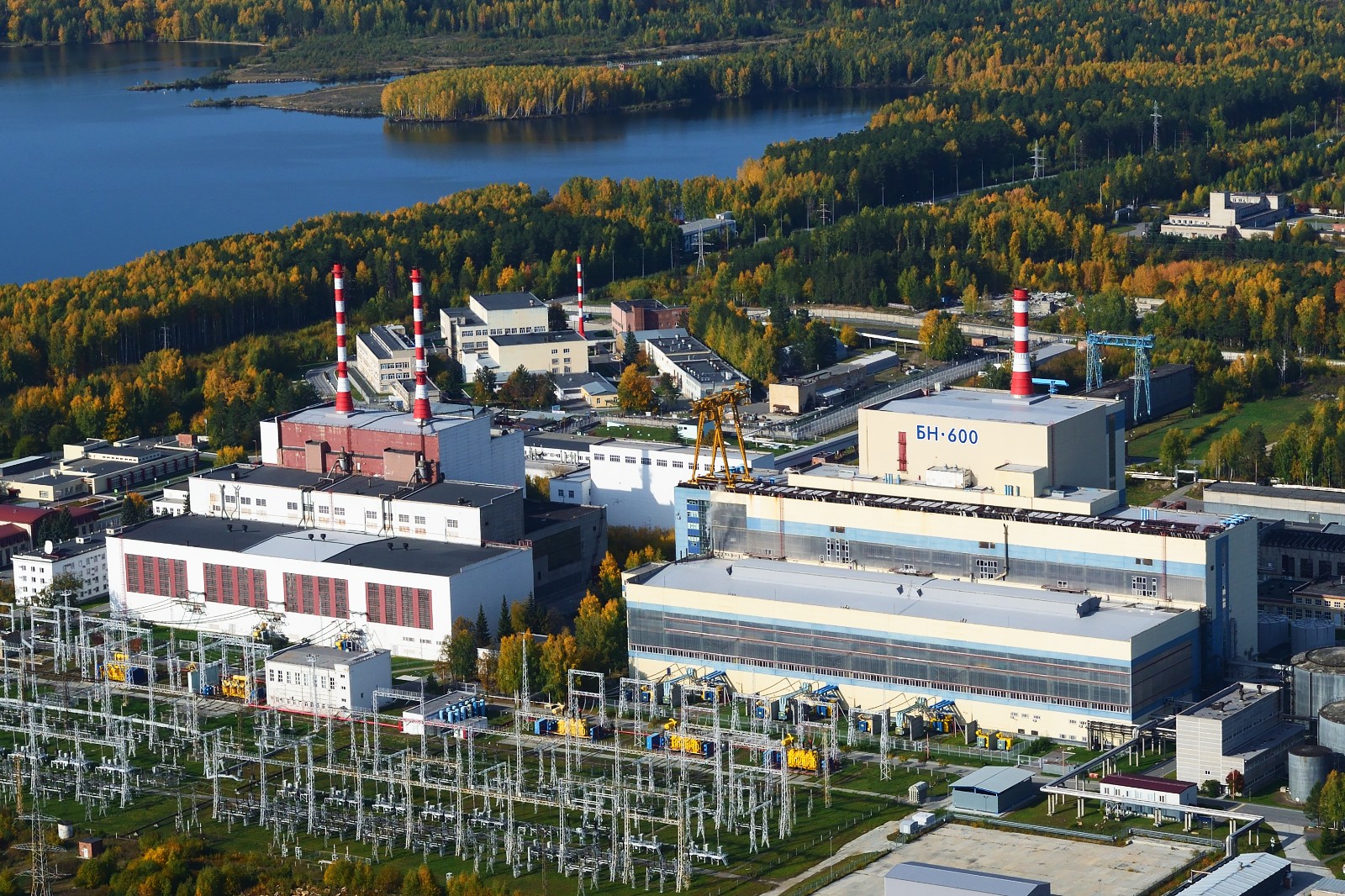
Large-Scale Nuclear Emergency Exercise Held at Russia's Beloyarsk NPP: Simulating Response to Concurrent Dual-Reactor Accident
The Beloyarsk NPP in Russia's Sverdlovsk Region launched a two-day comprehensive nuclear emergency exercise on October 6, 2026. The exercise is based on a hypothetical scenario of a natural disaster compounded by a reactor safety system failure, with a focus on emergency response and cross-departmental coordinated handling capabilities when two nuclear reactors experience severe accidents simultaneously. The exercise is being conducted simultaneously at the Beloyarsk NPP site and the neighboring city of Zarechny, and is the largest annual comprehensive nuclear emergency drill in the Russian nuclear industry system and the Ural Federal District. Beloy...
2026-10-08
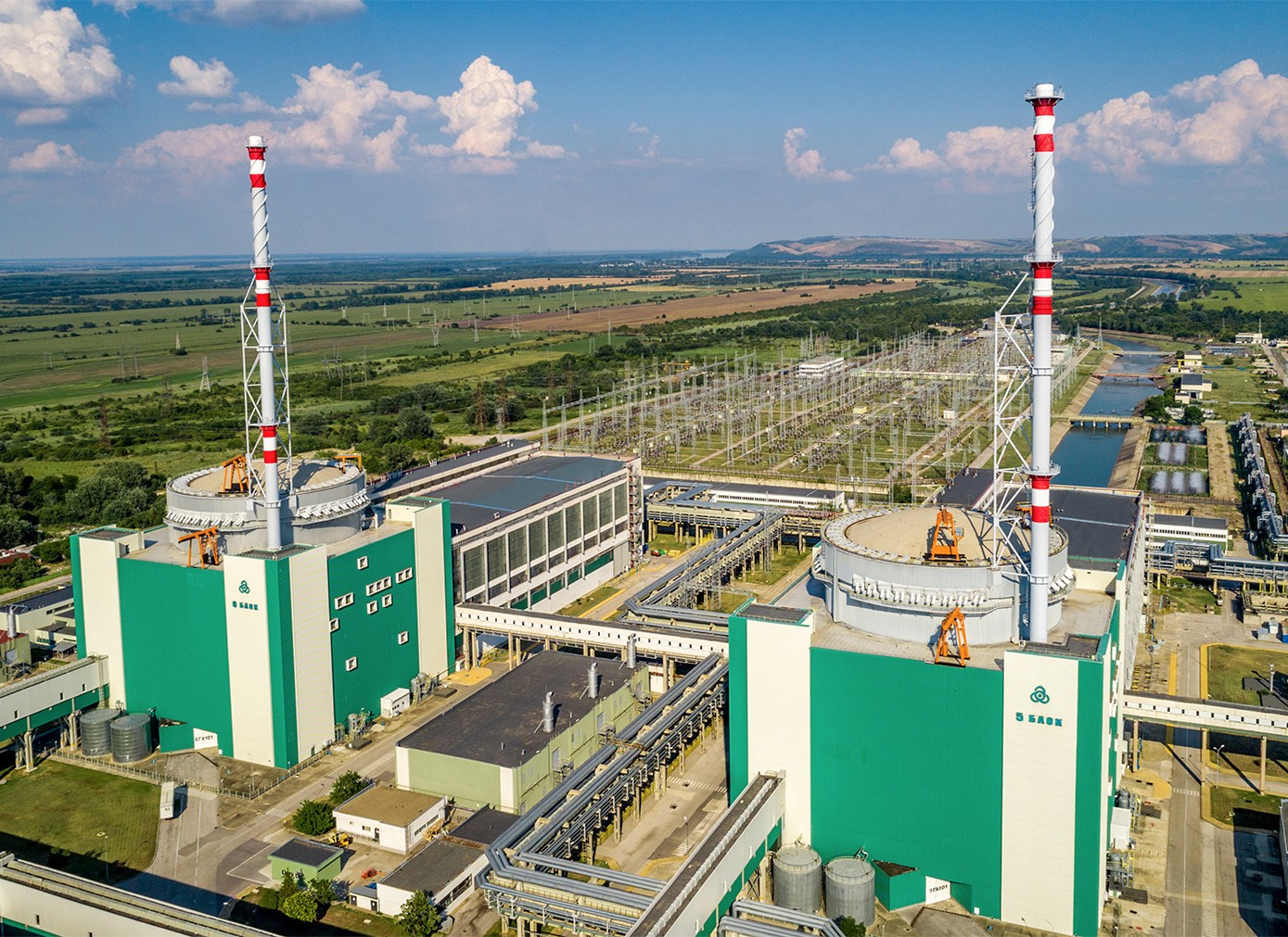
Bulgarian Energy Minister: Kozloduy NPP Implements Preventive Power Reduction Due to Continuous Decline in Danube River Water Levels
Bulgarian Energy Minister Iva Petrova confirmed on October 7, 2026, at a meeting of the parliamentary energy committee that the recent unit output reduction at the Kozloduy NPP was a preventive technical measure to ensure nuclear safety. Due to the continuous decline in Danube River water levels, the nuclear power plant synchronized a power reduction operation on Tuesday for the two operating nuclear units to ensure the stability and safety of the secondary-side cooling water circulation system. Petrova stated that in response to the impact of the Danube River's dry season on the nuclear power plant's water intake structures, the government and the power sector are actively seeking fundamental engineering technical...
2026-10-08

Hinkley Point B Nuclear Power Station Formally Handed Over to Nuclear Restoration Services: Becomes England's First Advanced Gas-Cooled Reactor Transferred by EDF for Decommissioning
On 1 October 2026, the UK Office for Nuclear Regulation (ONR) formally approved the transfer of the nuclear site licence, and Hinkley Point B Nuclear Power Station was officially handed over from Électricité de France (EDF) to Nuclear Restoration Services (NRS), a subsidiary of the UK government. This marks Hinkley Point B as the first Advanced Gas-Cooled Reactor (AGR) nuclear power station in England to formally enter the national specialist decommissioning sequence, and the second AGR unit in the UK to complete such a transfer, following Hunterston B Nuclear Power Station in Scotland earlier this year. Hinkley Point B Nuclear Power Station is located in Somerset and was built between 196...
2026-10-08
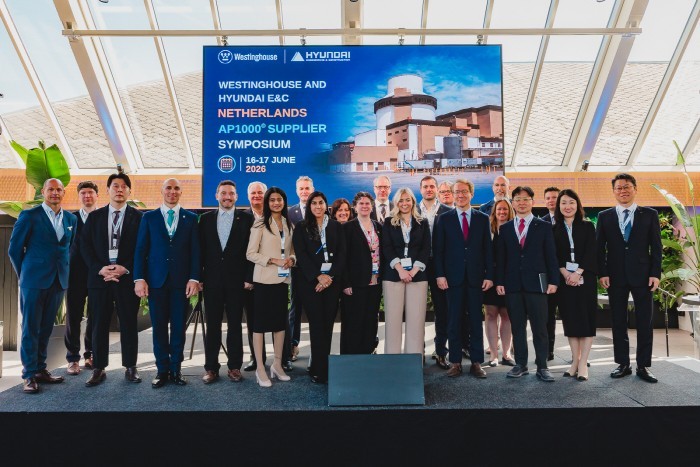
Hyundai E&C Joins Forces with Westinghouse to Sign Pre-FEED Contract for Two Large Nuclear Power Units in the Netherlands
Hyundai E&C recently announced that it has formally signed a subcontract with Westinghouse of the United States for Phase 1 Front-End Engineering Design (FEED 1) of the Netherlands' new large nuclear power plant project. The contract derives from the FEED 1 main contract awarded to Westinghouse by the Nuclear Energy Organization Netherlands (NEO NL). As a key engineering partner of Westinghouse, Hyundai E&C will focus on two gigawatt-scale large nuclear power units adopting Westinghouse's AP1000 advanced pressurized water reactor technology, comprehensively carrying out front-end engineering design and integrated project assessment work. According to the division of work, Hyundai E&C...
2026-10-08

South Korea's HD Hyundai Deepens Marine SMR Layout: Joint Industry-University-Research Initiative Establishes Demonstration Center to Accelerate Commercialization Validation of Marine SMRs
South Korean shipbuilding giant HD Hyundai is comprehensively accelerating the commercialization process of Small Modular Reactors (SMRs). The company recently joined hands with South Korea's nuclear energy industry, academia, and authoritative classification societies to sign a multi-party cooperation agreement, announcing the formal establishment of the SMR Marine Technology Demonstration Center, aimed at deeply integrating the construction capabilities of shipbuilding engineering with the cutting-edge research strengths of the nuclear industry and universities, creating a core catalyst for the commercial deployment of marine nuclear power. The demonstration center brings together a total of 12 industry-university-research units, including the Korean Register (KR), key nuclear energy institutions, and multiple major South Korean universities....
2026-10-08

GE HealthCare Plans $945 Million All-Cash Acquisition of Sofie Biosciences: Full-Scale Positioning in the "Final Mile" Delivery of Positron Radiopharmaceuticals and CDMO Capacity
GE HealthCare, the Chicago-based medical imaging and radiodiagnostics giant, has announced that it has entered into a definitive acquisition agreement to acquire radiopharmaceutical company Sofie Biosciences in an all-cash deal valued at $945 million from private equity firm Trilantic North America. The transaction is expected to complete all regulatory approvals and closing procedures by July 2027, and is expected to be accretive to GE HealthCare's revenue growth and adjusted earnings in the first full fiscal year following closing. Founded in 2008 and headquartered in Dulles, Virginia, Sofie Biosciences has built a broad radiopharmaceutical production and distribution network across the United States...
2026-10-08

Tianwan Nuclear Power Unit 7 Successfully Connected to Grid for the First Time
On October 8, Tianwan Nuclear Power Unit 7, invested in and controlled by China National Nuclear Power under CNNC, was successfully connected to the grid for the first time, officially delivering its first kilowatt-hour of electricity to the grid and laying a solid foundation for the subsequent commercial operation of the unit. The first grid connection and power generation of Tianwan Nuclear Power Unit 7 is a vivid practice of CNNC joining hands with all parties to deeply study the spirit of General Secretary Xi Jinping's important speech at the groundbreaking ceremony of China-Russia nuclear energy cooperation projects, thoroughly implement the "four revolutions, one cooperation" new energy security strategy, and respond to national strategic deployments with concrete actions. On May 19, 2021, President Xi Jinping, via video link in Beijing, together with Russian President Putin, witnessed the groundbreaking ceremony of the two countries' nuclear energy cooperation projects — Tianwan Nuclear Power Plant Units 7 and 8 and Xudabao Nuclear Power Plant Units 3 and 4. General Secretary Xi Jinping put forward the earnest instructions of "adhering to safety first and setting a model for global nuclear energy cooperation," "adhering to innovation-driven development and deepening the connotation of nuclear energy science and technology cooperation," and "adhering to strategic collaboration and promoting the coordinated development of the global energy governance system." Over the past five years and more, under the guidance of higher-level ministries and commissions as well as local governments at all levels, all construction participants of Tianwan Nuclear Power Units 7 and 8 have fully implemented General Secretary Xi Jinping's earnest instructions at the project construction site, and in accordance with the requirements of the Party Group of the Group Company, advanced project construction, commissioning, and other work with high quality and high standards, building Tianwan Nuclear Power Units 7 and 8 into a demonstration project of China-Russia nuclear energy cooperation, a benchmark project for global nuclear power construction, and a livelihood project benefiting the local area. In particular, to ensure the smooth grid connection of Unit 7, Jiangsu Nuclear Power joined hands with all parties to uphold a rigorous and meticulous working attitude and collaboratively completed key operations such as reactor protection logic verification, reactor criticality, steam turbine rolling, and generator short-circuit tests. Subsequently, the unit will carry out a series of tests as planned to further verify unit performance and ensure that commercial operation conditions are met. It is understood that the Tianwan Nuclear Power Base plans to build 8 units. Units 1-6 have already generated more than 550 billion kilowatt-hours of electricity safely and stably, and Unit 7 is expected to enter commercial operation within the year. After all 8 units of the Tianwan Nuclear Power Base are put into operation, the total installed capacity will exceed 9 million kilowatts, with annual power generation exceeding 70 billion kilowatt-hours, and annual carbon dioxide emissions reduced by 57.4 million tons, injecting strong nuclear power into optimizing the energy structure of East China, ensuring regional energy security, helping achieve the national "dual carbon" goals, and promoting green, low-carbon, and high-quality development.
2026-10-08

Urenco Officially Commissions Uranium Oxide Storage Facility at Gronau, Germany: Deepening Long-Term Safe Management of Depleted Uranium By-Products
Global nuclear fuel enrichment services giant Urenco recently announced the official commissioning of a specialized uranium oxide storage facility located at its Gronau enrichment plant site in North Rhine-Westphalia, Germany. The formal commissioning of this facility marks the completion of a key piece in Urenco's layout for the full lifecycle harmless disposal of depleted uranium tails and strategic resource reserves. The construction permit for this storage facility originated from the expansion approval issued by the North Rhine-Westphalia nuclear regulatory authority to the Gronau enrichment plant in 2005, which authorized the plant's annual enrichment capacity ceiling to reach 4.5 million separative work units (SWU). As a precondition for environmental and nuclear safety regulatory approval, the state government explicitly...
2026-10-08
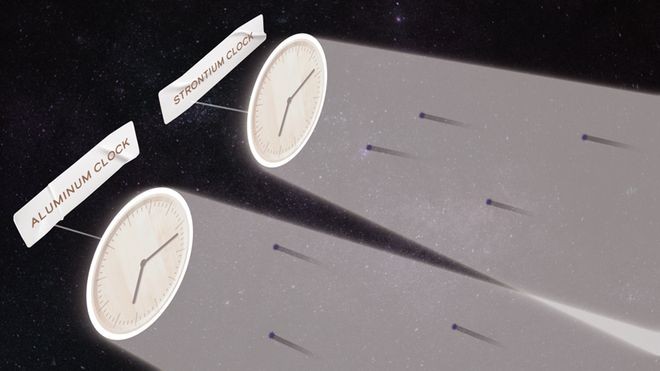
International Researchers Successfully Develop the First Autonomous Thorium-229 "Nuclear Clock": Featuring Ultra-Strong Interference Resistance and a Fully Autonomous Closed-Loop Stable Operation Mechanism
Recently, the press office of TU Wien (Vienna University of Technology) announced that a team of scientists from Austria, Germany, and the Czech Republic has successfully developed the world's first nuclear clock based on the thorium-229 (chemical symbol ²²⁹Th) atomic nucleus. This nuclear clock possesses extremely high interference resistance and is capable of operating in a fully autonomous mode without external stabilization. The research team stated that, compared with traditional atomic clocks that operate using entire atoms, timekeeping using atomic nuclei can theoretically achieve higher measurement precision. Two years ago, they successfully controlled the transition process of the thorium-229 atomic nucleus for the first time, but to achieve extremely high-precision timekeeping, it was still necessary to solve the nuclear clock...
2026-10-08

Armenia and Rosatom Coordinate the Second Life Extension of Metsamor NPP Unit 2: Reviewing Phase Results and Locking In Key Tasks for 2027–2030
On October 7, 2026, the fifth working meeting of the Joint Coordination Committee of the Republic of Armenia and Rosatom was held in Yerevan, comprehensively reviewing the phased implementation results of the major project for the second life extension (LTO-2) of Unit 2 of the Armenian NPP (ANPP, located in Metsamor), and formally countersigned the execution agreement for advancing engineering tasks from 2027 to 2030. Kirill Komarov, First Deputy Director General and Director for International Business Development of Rosatom, led the Russian delegation, while Narek Apitonyan, Deputy Minister of Territorial Administration and Infrastructure of Armenia, led the Armenian delegation.
2026-10-08

Russian Scholars Analyze the Technical Secrets Behind the 2026 Nobel Prize in Physics: How IceCube Uses Photomultiplier Tubes to Capture Neutrino Tracks
The 2026 Nobel Prize in Physics was awarded for a major scientific discovery in the field of astrophysical high-energy neutrino detection. The key engineering foundation that made this historic breakthrough possible is a giant scientific facility located near the South Pole——the IceCube Neutrino Observatory. The facility uses nearly 1 cubic kilometer of highly transparent deep Antarctic ice as a natural detection medium, and densely arrays thousands of digital optical modules deep within the ice. Genrikh Scheibler, senior researcher and Candidate of Physical and Mathematical Sciences at the Institute of Semiconductor Physics of the Siberian Branch of the Russian Academy of Sciences (ISP SB RAS), has...
2026-10-08

Princeton Plasma Physics Laboratory Opens a New Path to Controlled Fusion Ignition: Implementing a "Heat First, Fuel Later" Strategy to Substantially Lower the Energy Threshold
A research team at the Princeton Plasma Physics Laboratory (PPPL), under the U.S. Department of Energy (DOE), has recently proposed an innovative fusion ignition control framework, charting an optimized path toward a self-sustaining burning plasma that requires the lowest external input energy. The study, jointly led by physicists Luis Delgado-Aparicio, Masayuki Ono, and Jonathan Menard, has been formally published in the top-tier physics academic journal Physical Review Letters (Phys...
2026-10-08

Princeton Plasma Physics Laboratory Hosts International Workshop: Deepening Cross-Disciplinary Applications of Plasma in Semiconductor Manufacturing and Controlled Nuclear Fusion
On the occasion of its 75th anniversary, the Princeton Plasma Physics Laboratory (PPPL), under the U.S. Department of Energy (DOE), hosted the second Adopting Sustainable Partnerships for Innovative Research Ecosystem (ASPIRE) international workshop in the fall of 2026. The workshop was organized by the laboratory's Applied Materials and Sustainability Sciences Directorate and brought together scholars from the University of Osaka in Japan and the Ulsan National Institute of Science and Technology (UNIST) in South Korea, as well as researchers from PPPL, to focus on...
2026-10-08
The North China Regional Office of the Ministry of Ecology and Environment organized the 2026 North China Regional Radiation Safety Regulatory Experience Exchange Activity
In October 2026, the North China Nuclear and Radiation Safety Supervision Station of the Ministry of Ecology and Environment (hereinafter referred to as the North China Supervision Station) officially organized the 2026 North China Regional Radiation Safety Regulatory Experience Exchange Activity in Shijiazhuang City, Hebei Province, aiming to further deepen the cross-regional collaborative regulatory mechanism for nuclear and radiation safety. Relevant officials from the Nuclear Facility Safety Regulation Department and the Radiation Source Safety Regulation Department of the Ministry of Ecology and Environment made special trips to the site to provide guidance, conducted in-depth exchanges with frontline regulatory representatives from North China and surrounding key provinces, and put forward clear guidance on current and future regulatory directions. During the exchange activity, representatives from Beijing Municipality, Tianjin Municipality, Hebei Province, Shanxi Province, Inner Mongolia Autonomous Region, Shandong...
2026-10-08

US PPPL Reconstructs 70-Year-Old Lawson Criterion, Proposes New Fusion Ignition Pathway of "Heat First, Fuel Later"
The Princeton Plasma Physics Laboratory (PPPL), under the U.S. Department of Energy (DOE), released its latest findings on October 5. Laboratory physicists have reconstructed the classic Lawson criterion that has been in use for over 70 years and published the results in Physical Review Letters. The research team integrated four real-world physics effects that were previously treated separately into a unified model, mapping out an entirely new fusion ignition topography. The study shows that adopting a pathway of first heating the plasma and then increasing fuel density can achieve the ignition conditions for self-sustaining burn with far less energy consumption than traditional pathways. For over 70 years, the nuclear fusion field has relied on...
2026-10-07