
Search Results
Keyword:NI

Urenco Officially Commissions Uranium Oxide Storage Facility at Gronau, Germany: Deepening Long-Term Safe Management of Depleted Uranium By-Products
Global nuclear fuel enrichment services giant Urenco recently announced the official commissioning of a specialized uranium oxide storage facility located at its Gronau enrichment plant site in North Rhine-Westphalia, Germany. The formal commissioning of this facility marks the completion of a key piece in Urenco's layout for the full lifecycle harmless disposal of depleted uranium tails and strategic resource reserves. The construction permit for this storage facility originated from the expansion approval issued by the North Rhine-Westphalia nuclear regulatory authority to the Gronau enrichment plant in 2005, which authorized the plant's annual enrichment capacity ceiling to reach 4.5 million separative work units (SWU). As a precondition for environmental and nuclear safety regulatory approval, the state government explicitly...
2026-10-08
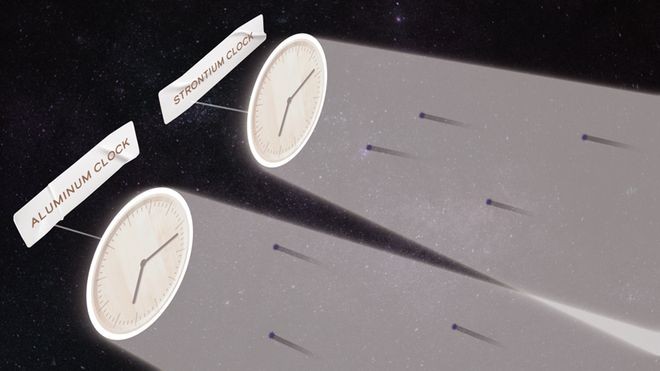
International Researchers Successfully Develop the First Autonomous Thorium-229 "Nuclear Clock": Featuring Ultra-Strong Interference Resistance and a Fully Autonomous Closed-Loop Stable Operation Mechanism
Recently, the press office of TU Wien (Vienna University of Technology) announced that a team of scientists from Austria, Germany, and the Czech Republic has successfully developed the world's first nuclear clock based on the thorium-229 (chemical symbol ²²⁹Th) atomic nucleus. This nuclear clock possesses extremely high interference resistance and is capable of operating in a fully autonomous mode without external stabilization. The research team stated that, compared with traditional atomic clocks that operate using entire atoms, timekeeping using atomic nuclei can theoretically achieve higher measurement precision. Two years ago, they successfully controlled the transition process of the thorium-229 atomic nucleus for the first time, but to achieve extremely high-precision timekeeping, it was still necessary to solve the nuclear clock...
2026-10-08

Armenia and Rosatom Coordinate the Second Life Extension of Metsamor NPP Unit 2: Reviewing Phase Results and Locking In Key Tasks for 2027–2030
On October 7, 2026, the fifth working meeting of the Joint Coordination Committee of the Republic of Armenia and Rosatom was held in Yerevan, comprehensively reviewing the phased implementation results of the major project for the second life extension (LTO-2) of Unit 2 of the Armenian NPP (ANPP, located in Metsamor), and formally countersigned the execution agreement for advancing engineering tasks from 2027 to 2030. Kirill Komarov, First Deputy Director General and Director for International Business Development of Rosatom, led the Russian delegation, while Narek Apitonyan, Deputy Minister of Territorial Administration and Infrastructure of Armenia, led the Armenian delegation.
2026-10-08

Russian Scholars Analyze the Technical Secrets Behind the 2026 Nobel Prize in Physics: How IceCube Uses Photomultiplier Tubes to Capture Neutrino Tracks
The 2026 Nobel Prize in Physics was awarded for a major scientific discovery in the field of astrophysical high-energy neutrino detection. The key engineering foundation that made this historic breakthrough possible is a giant scientific facility located near the South Pole——the IceCube Neutrino Observatory. The facility uses nearly 1 cubic kilometer of highly transparent deep Antarctic ice as a natural detection medium, and densely arrays thousands of digital optical modules deep within the ice. Genrikh Scheibler, senior researcher and Candidate of Physical and Mathematical Sciences at the Institute of Semiconductor Physics of the Siberian Branch of the Russian Academy of Sciences (ISP SB RAS), has...
2026-10-08

Princeton Plasma Physics Laboratory Opens a New Path to Controlled Fusion Ignition: Implementing a "Heat First, Fuel Later" Strategy to Substantially Lower the Energy Threshold
A research team at the Princeton Plasma Physics Laboratory (PPPL), under the U.S. Department of Energy (DOE), has recently proposed an innovative fusion ignition control framework, charting an optimized path toward a self-sustaining burning plasma that requires the lowest external input energy. The study, jointly led by physicists Luis Delgado-Aparicio, Masayuki Ono, and Jonathan Menard, has been formally published in the top-tier physics academic journal Physical Review Letters (Phys...
2026-10-08

Princeton Plasma Physics Laboratory Hosts International Workshop: Deepening Cross-Disciplinary Applications of Plasma in Semiconductor Manufacturing and Controlled Nuclear Fusion
On the occasion of its 75th anniversary, the Princeton Plasma Physics Laboratory (PPPL), under the U.S. Department of Energy (DOE), hosted the second Adopting Sustainable Partnerships for Innovative Research Ecosystem (ASPIRE) international workshop in the fall of 2026. The workshop was organized by the laboratory's Applied Materials and Sustainability Sciences Directorate and brought together scholars from the University of Osaka in Japan and the Ulsan National Institute of Science and Technology (UNIST) in South Korea, as well as researchers from PPPL, to focus on...
2026-10-08
The North China Regional Office of the Ministry of Ecology and Environment organized the 2026 North China Regional Radiation Safety Regulatory Experience Exchange Activity
In October 2026, the North China Nuclear and Radiation Safety Supervision Station of the Ministry of Ecology and Environment (hereinafter referred to as the North China Supervision Station) officially organized the 2026 North China Regional Radiation Safety Regulatory Experience Exchange Activity in Shijiazhuang City, Hebei Province, aiming to further deepen the cross-regional collaborative regulatory mechanism for nuclear and radiation safety. Relevant officials from the Nuclear Facility Safety Regulation Department and the Radiation Source Safety Regulation Department of the Ministry of Ecology and Environment made special trips to the site to provide guidance, conducted in-depth exchanges with frontline regulatory representatives from North China and surrounding key provinces, and put forward clear guidance on current and future regulatory directions. During the exchange activity, representatives from Beijing Municipality, Tianjin Municipality, Hebei Province, Shanxi Province, Inner Mongolia Autonomous Region, Shandong...
2026-10-08

US PPPL Reconstructs 70-Year-Old Lawson Criterion, Proposes New Fusion Ignition Pathway of "Heat First, Fuel Later"
The Princeton Plasma Physics Laboratory (PPPL), under the U.S. Department of Energy (DOE), released its latest findings on October 5. Laboratory physicists have reconstructed the classic Lawson criterion that has been in use for over 70 years and published the results in Physical Review Letters. The research team integrated four real-world physics effects that were previously treated separately into a unified model, mapping out an entirely new fusion ignition topography. The study shows that adopting a pathway of first heating the plasma and then increasing fuel density can achieve the ignition conditions for self-sustaining burn with far less energy consumption than traditional pathways. For over 70 years, the nuclear fusion field has relied on...
2026-10-07
Jefferson Lab Signs CRADA to Advance Commercialization of Subsurface Tritium Continuous Monitor: Overcoming the Challenge of Online Monitoring of Low-Energy Beta Particles in Groundwater at Nuclear Power and Fusion Facilities
The U.S. Department of Energy (DOE) Thomas Jefferson National Accelerator Facility (Jefferson Lab) announced that it has formally signed a Cooperative Research and Development Agreement (CRADA) with startup company Canary Instruments to jointly advance the commercialization of its independently developed Subsurface Continuous Radioisotope Environmental Monitor (SCREM). This technology is specifically designed for nuclear power plants, nuclear fuel facilities, and future...
2026-10-07

The Supply-Demand Fault Line Beneath the Boom: Can the Uranium Mining Industry Support the Global Nuclear Renaissance?
Driven by the explosive electricity demand of global AI data centers and the COP commitment to triple nuclear power capacity, nuclear energy is ushering in the most certain renaissance in half a century. However, behind the capital market's frenzied pursuit of nuclear power concept stocks and commodities, the core raw material upstream in the nuclear power industrial chain—uranium mining and nuclear fuel processing—is facing severe constraints from insufficient production capacity elasticity, lengthy development cycles, and geopolitical fragmentation. The optimistic signals recently released by renowned Wall Street asset management institution Sprott certainly reflect the momentum of capital return, but upon closer examination of its supply-demand fundamentals and technical barriers, whether the uranium mining industry can timely and smoothly support this wave of nuclear power infrastructure construction still requires a huge question mark.
2026-10-07

German Research Team Completes First Phase Analysis of Chernobyl "Hot Particles": Nuclear Fuel Crystal Structure Still Exhibits Unexpectedly High Chemical Stability After 40 Years
Nearly 40 years after the 1986 Chernobyl Nuclear Power Plant accident, a research team from Leibniz University Hannover and Helmholtz-Zentrum Dresden-Rossendorf (HZDR) in Germany has completed the world's first synchrotron radiation X-ray-based precision crystal phase analysis of 6 micron-sized highly radioactive fragments (commonly known in the industry as Hot Particles) ejected from the destroyed reactor. The related breakthrough research findings have been officially published in the top-tier journal in environmental and radioecology, the Journal of Hazardous Materials.
2026-10-07
Indiana Launches "Nuclear Ready Communities Program" Applications: Promoting Clean Nuclear Energy Investment to Empower High-Tech Industry Development
Indiana Governor Mike Braun officially announced on Tuesday local time the opening of the application channel for the state's Nuclear Ready Communities Program. The policy aims to guide and assist local municipalities across the Hoosier State in establishing readiness mechanisms to accept advanced clean energy investment, attracting large nuclear power developers to locate there through upfront assessment and certification. Indiana officials position civilian nuclear energy as a core engine for driving future high-tech industry investment, building a resilient power grid, and providing local communities with low-cost, highly reliable electricity. As data centers...
2026-10-07
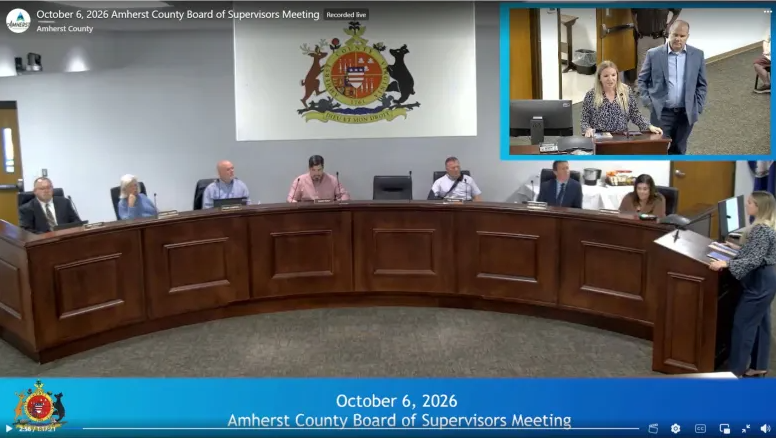
US-based Geenex Power Unveils SMR Nuclear Plan for Amherst County, Virginia: Up to 650 MW Capacity, Construction Targeted for 2030
Charlotte, North Carolina-based clean energy developer Geenex Power officially announced on October 6, 2026, that it plans to build an advanced small modular reactor (SMR) nuclear project with a capacity of up to 650 megawatts — Beck Creek Energy — in Amherst County, Virginia. During the routine public inquiry session held by the Amherst County Board of Supervisors on Tuesday, Geenex Project Development Manager Delany Bolton and Director of External Affairs Chris Hallameyer...
2026-10-07
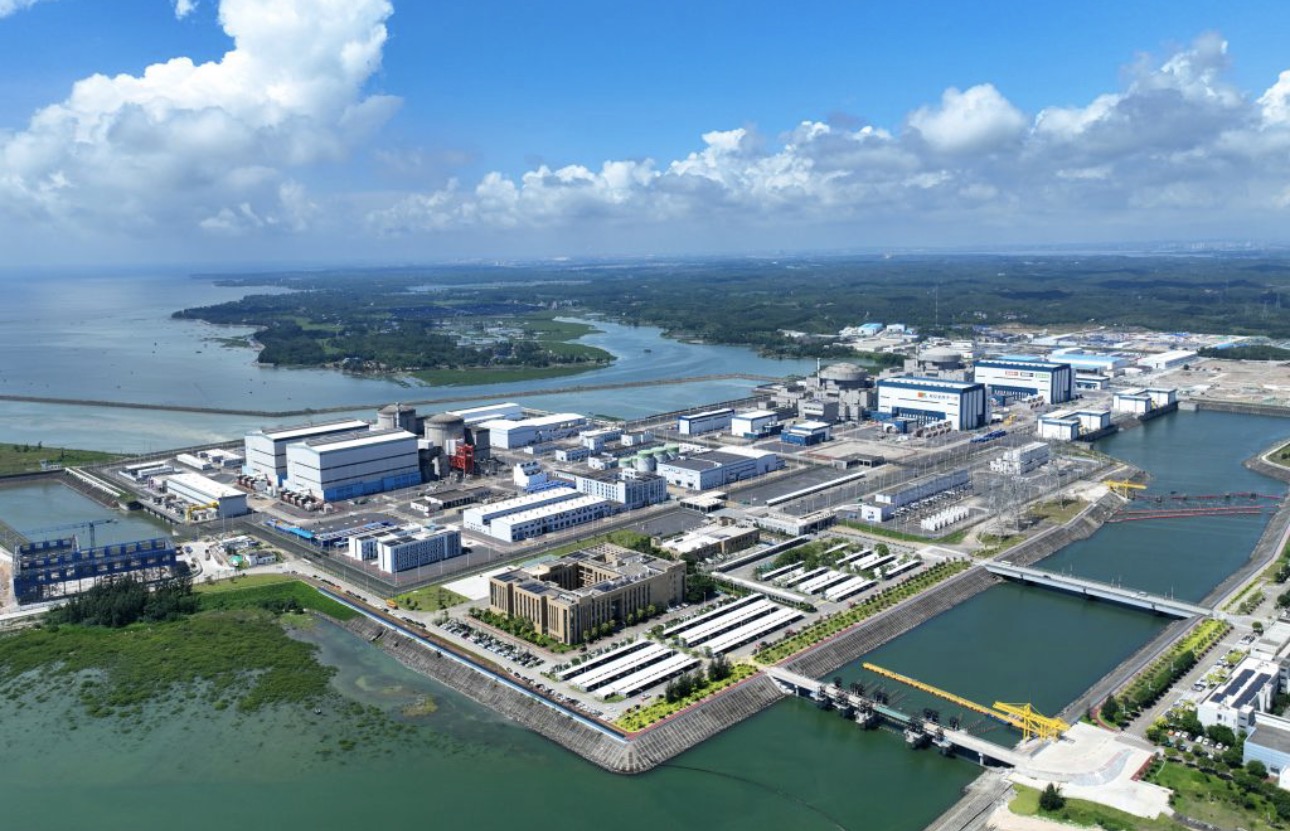
Fangchenggang Nuclear Power Phase I Marks 10th Anniversary of Commercial Operation: Two Units Have Cumulatively Supplied Over 160 Billion kWh, with WANO Indicators Achieving Full Marks for Seven Consecutive Years
Recently, Phase I of the Fangchenggang Nuclear Power Plant under China General Nuclear Power Group officially ushered in the 10th anniversary of its commercial operation. As the first nuclear power project in western China and in an ethnic minority region, the two million-kilowatt-class pressurized water reactor units at the site have maintained safe and stable operation for ten years since being put into operation. Their WANO composite index has achieved full marks for seven consecutive years, and they have cumulatively delivered over 160 billion kWh of clean electricity to the Beibu Gulf Economic Zone. It is understood that Phase I of the Fangchenggang Nuclear Power Project is located on Qisha Peninsula in Fangchenggang City, Guangxi Zhuang Autonomous Region, and is an important energy backbone project of the national Western Development Strategy. The project planned to build two self-developed CPR1000 pressurized water reactor nuclear power units with a single-unit capacity of 1.08 million kilowatts...
2026-10-04
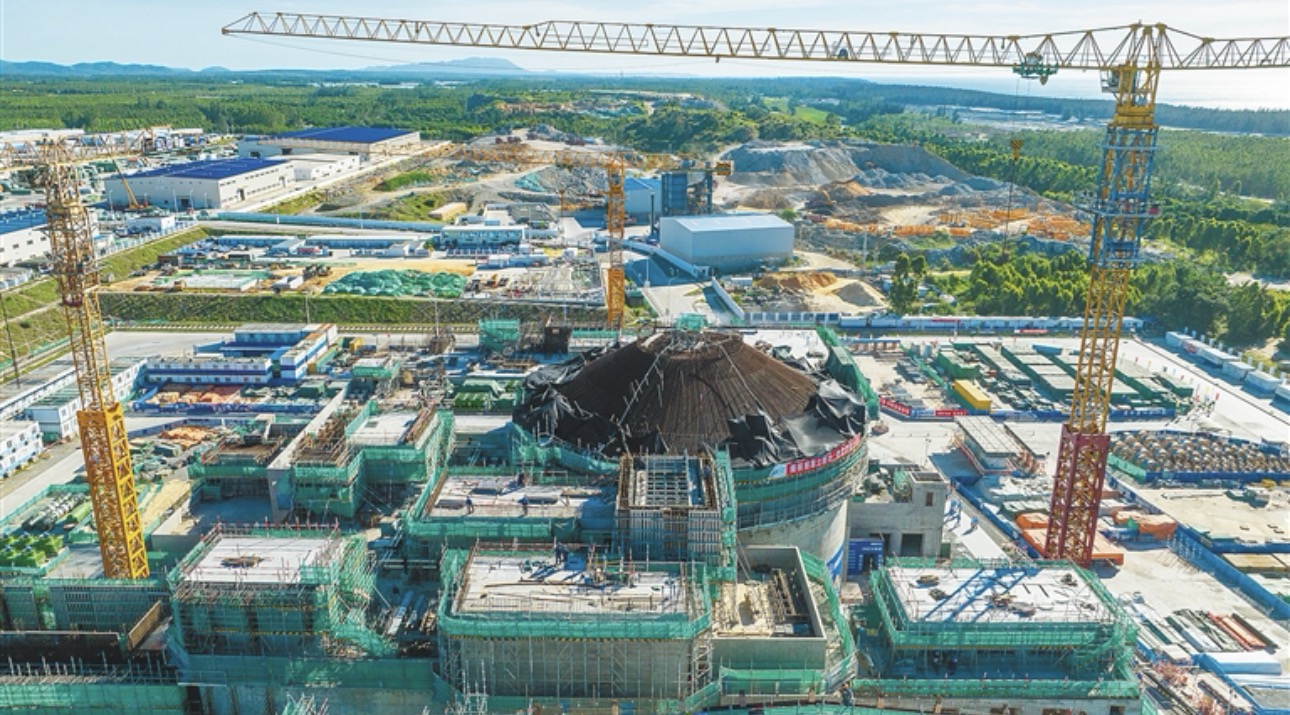
China's Linglong One global first-of-a-kind unit hot test steadily advances, moving toward the goal of fuel loading within the year
Recently, the Linglong One global first-of-a-kind unit at Changjiang, Hainan, China, is currently advancing hot functional testing in an orderly manner, steadily moving toward the goal of fuel loading within the year. It is understood that modular small reactors feature flexible deployment and outstanding inherent safety, and can be adapted to diverse application scenarios such as island power supply and industrial steam supply. Linglong One is the world's first onshore commercial modular small nuclear reactor to pass the safety review of the International Atomic Energy Agency (IAEA). At present, all civil construction of the project has been completed, and the installation of core equipment is basically complete. The hot functional test currently being carried out is a key comprehensive commissioning stage before unit fuel loading, used to verify the performance of the reactor primary loop and supporting systems under high-temperature conditions. If fuel loading is achieved within the year, it will mark the transition of the world's first onshore commercial modular small reactor from the construction stage to the operation preparation stage.
2026-10-05