
Search Results
Keyword:Nuclear technology
North China Regional Office of Nuclear and Radiation Safety Supervision of the Ministry of Ecology and Environment Conducts Inspections of Key Nuclear Technology Utilization Units
In order to firmly safeguard the nuclear and radiation safety barrier in the capital region, the North China Regional Office of Nuclear and Radiation Safety Supervision of the Ministry of Ecology and Environment (hereinafter referred to as the North China Supervision Office) recently carried out safety inspections of 4 key nuclear technology utilization units in the capital, including source-related units and radioisotope production units. The inspection team went deep into frontline workplaces such as radioisotope production lines and radioactive source storage warehouses, conducted on-site inspections of the operation of radiation safety protection facilities, and carried out key verification of the emergency supplies equipped by each unit and holiday duty arrangements, strictly and practically investigating various types of safety hazards. The North China Supervision Office required all units to further raise their political stance, always keep the string of safety taut, strengthen...
2026-10-10

CGN Begood's Two Self-Developed CT Security Inspection Devices Obtain CAAC Use License
The BGCT-0824 medium-sized CT security inspection device and the BGCT-1050S large-sized CT security inspection device, independently developed by CGN Begood Technology Co., Ltd. (CGN Begood), have recently officially obtained the "Civil Aviation Administration of China Security Inspection Equipment Use License." The acquisition of this qualification marks that CGN Begood has officially entered the core field of civil aviation passenger checked baggage security inspection, achieving a key access breakthrough in the high-end equipment field of civil aviation aviation security. Both devices certified this time are X-ray computed tomography (CT) explosive detection security inspection devices for passenger checked baggage. Prior to certification, both models had successfully passed the full-process on-site rigorous qualification testing conducted by the Aviation Security Research Institute of the China Academy of Civil Aviation Science and Technology (CAST)...
2026-10-09

IAEA and IDB Sign Cooperation Agreement to Advance Nuclear Energy and Nuclear Technology for Sustainable Development in Latin America and the Caribbean
On September 24, 2026, on the margins of the United Nations General Assembly in New York, the International Atomic Energy Agency (IAEA) and the Inter-American Development Bank (IDB) formally signed a Memorandum of Understanding (MoU) on cooperation. The two sides aim to establish a long-term partnership to jointly advance in-depth cooperation in Latin America and the Caribbean in the safe, secure and sustainable use of nuclear energy and nuclear technology. This also represents an important step by the IAEA to expand its network of cooperation with multilateral development finance institutions in support of the global low-carbon clean transition. The memorandum was signed by...
2026-09-27

Rwanda Plans to Introduce Nuclear Technology to Boost Agricultural Production and Address Climate Change
Armand Zingiro, Minister of State in Rwanda's Ministry of Infrastructure, stated at the 70th General Conference of the International Atomic Energy Agency (IAEA) held in Vienna that the government is exploring the use of nuclear and isotope technologies to improve agricultural productivity, ensure food security, and enhance capacity to address climate change. The conference was held from September 14 to 18, and Zingiro led the Rwandan delegation to attend the meeting. Zingiro pointed out that Rwanda fully recognizes the enormous potential of nuclear and isotope technologies in the fields of agriculture and food security. The application of nuclear technology in agriculture is mainly reflected in improving crop yields, controlling...
2026-09-17

Oman Reaffirms Cooperation Commitment at IAEA General Conference, Promotes Peaceful Uses of Nuclear Technology
The Sultanate of Oman delivered a statement at the 70th Regular Session of the International Atomic Energy Agency (IAEA) General Conference held in Vienna, Austria, expressing appreciation for the work of the IAEA Secretariat and reaffirming its continued close cooperation with the Agency and its Member States to achieve strategic objectives and further enhance the key role of nuclear technology in peace and modern development. The statement was delivered on behalf of the Sultanate of Oman by Faiza Saif Al Siyabi, Chargé d'Affaires of Oman's Permanent Mission to the IAEA. In its statement, Oman welcomed the Democratic Republic of Timor-Leste as a new member of the IAEA. Oman emphasized in its statement its active participation...
2026-09-17

Bangladesh Reaffirms Commitment to Peaceful Uses of Nuclear Technology
Minister of Science and Technology Fakir Mahbub Anam recently attended the 70th General Conference of the International Atomic Energy Agency (IAEA) on behalf of Bangladesh, where he reaffirmed Bangladesh's firm commitment to the peaceful uses of nuclear technology and its dedication to the highest safety standards and strengthened international cooperation. This statement highlights Bangladesh's increasingly important position and sense of responsibility in the field of nuclear technology. In a statement by the delegation in Vienna, Bangladeshi Prime Minister Tarique Rahman expressed congratulations to the President of the IAEA General Conference, and also expressed gratitude to IAEA Director General Rafael Mariano Grossi for his outstanding role in promoting the peaceful uses of nuclear technology and international cooperation...
2026-09-16
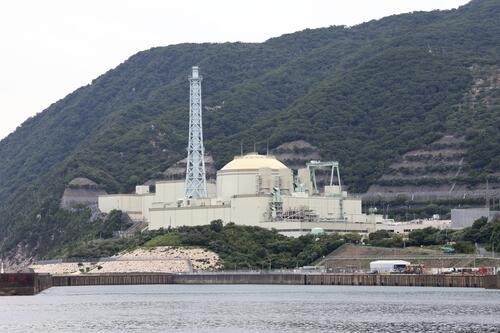
Japan's Monju Fast Breeder Reactor Sodium Coolant Overseas Transport Planned to Start in Fiscal 2028
Japan's Ministry of Education, Culture, Sports, Science and Technology plans to include 23.7 billion yen in its fiscal 2027 budget request to advance decommissioning work for the Monju fast breeder reactor in Tsuruga City, Fukui Prefecture, including preparation costs for overseas transport of sodium coolant. The amount represents an increase of 4.9 billion yen over the previous fiscal year's budget, including supplementary budgets. Under the plan, overseas transport of sodium coolant from the Monju reactor will begin in fiscal 2028. Unlike conventional light water reactors, Monju uses metallic sodium rather than water as a coolant to remove heat from the reactor. Sodium has a boiling point of approximately 880 degrees Celsius and does not easily pressurize at high temperatures, but it can burn upon contact with water or air, making handling and management highly difficult...
2026-09-11

US Study Says Third Course of Radiation Therapy May Improve Survival and Symptoms in Children with Recurrent DIPG
According to news from the Icahn School of Medicine at Mount Sinai in the United States on September 2, researchers at the institution released a new study on re-irradiation for recurrent diffuse intrinsic pontine glioma (DIPG). The study shows that carefully selected pediatric patients who receive a third course of radiation therapy after disease recurrence may achieve symptom relief, improved quality of life, and potentially prolonged survival. The related study has been published in Practical Radiation Oncology. DIPG is a highly aggressive pediatric brain tumor that occurs in the brainstem region. The brainstem controls critical life functions such as breathing and movement, so the tumor usually cannot be removed surgically. Data show that DIPG mainly affects children aged 5 to 10, and even...
2026-09-10

India's Fortis Healthcare Plans to Introduce the Country's First Upright Proton Therapy System
India's Fortis Healthcare has announced plans to install Mevion Medical Systems' MEVION S250-FIT proton therapy system at Fortis Memorial Research Institute (FMRI) in Gurugram. The hospital is Fortis' flagship quaternary care hospital and its comprehensive oncology and precision cancer treatment center. According to reports, the system will be equipped with Leo Cancer Care's Marie® upright patient positioning and imaging solution, as well as RaySearch Laboratories' RayStation® treatment planning software. If the project receives relevant regulatory approvals and completes site preparation, Fortis will become India's first planned...
2026-09-10

Russia's SKIF Synchrotron Considers Building Enterprise-Funded Experimental Stations
The Siberian Circular Photon Source (SKIF) synchrotron project in Russia is considering the construction of enterprise-funded experimental stations. Andrei Bukhtiyarov, Deputy Director of the SKIF Shared Use Center, stated that this idea is expected to advance after the first-phase experimental stations are put into operation and their operational capabilities are verified. According to reports, construction of the SKIF synchrotron was completed in June 2026. Once the facility becomes operational, it will help researchers obtain high-precision data on the internal structure and behavior of materials. The first phase of the SKIF project, located near Novosibirsk, plans a total of 7 experimental stations, all scheduled to become operational by August 2027, when research teams can begin conducting relevant experiments. Bukhtiyarov...
2026-09-09

National Major Science and Technology Infrastructure Project "High-Intensity Heavy-Ion Accelerator Facility" Passes Special Financial and Asset Acceptance
From September 6 to 7, the Bureau of Finance and Assets and the Bureau of Science and Technology Basic Capacity of the Chinese Academy of Sciences organized a financial expert group and an asset expert group to carry out special financial and asset acceptance work on the National Major Science and Technology Infrastructure—the High-Intensity Heavy-Ion Accelerator Facility (HIAF) project. The expert group consisted of 13 experts from the Chinese Academy of Sciences, research institutes, and universities. Figure: Acceptance meeting site. The expert group listened to reports on the project's construction, financial asset management, and investment completion. The financial acceptance expert group reviewed materials such as the financial summary report and the completion financial final accounts audit report, conducted on-site inspections of final account statements and account books, and spot-checked contracts and accounting vouchers, followed by on-site inquiries and discussions on the financial investment completion status. The asset acceptance expert group reviewed materials including the asset summary report and procurement ledgers, conducted on-site spot checks of process equipment for the High-Intensity Heavy-Ion Accelerator, experimental terminal systems, facility auxiliary equipment, and public supporting systems, and held on-site inquiries and discussions on asset delivery status.
2026-09-09

BESIII Experiment Achieves High-Precision Measurement of Charm Meson Semileptonic Decays and First Constraint on "Scalar Current"
Recently, the BESIII international collaboration utilized the world's largest near-threshold charm meson data sample to perform a combined measurement of four semileptonic decay channels: D⁰→K⁻e⁺νₑ, D⁰→K⁻μ⁺νμ, D⁺→K̄⁰e⁺νₑ, and D⁺→K̄⁰μ⁺νμ. The research team extracted the quark mixing matrix element |Vcs| with a precision better than 0.5%, determined the form factor zero-point value f₊(0) with a precision better than 0.2%, and verified lepton universality in the above processes at the 0.5% precision level. Beyond these precise determinations of Standard Model parameters, what is particularly noteworthy is that this experiment has, for the first time...
2026-09-08

Türkiye partners with Danish company to develop thorium-based nuclear technology
Türkiye's Ministry of Energy and Natural Resources stated on September 7 that the Turkish Energy, Nuclear and Mineral Research Agency (TENMAK) has signed a memorandum of understanding with Danish nuclear technology developer Copenhagen Atomics to cooperate on developing next-generation nuclear energy technologies centered on Türkiye's thorium resources. According to the Turkish statement, the cooperation priorities include research and development of technologies that can utilize thorium, domestic production of thorium compounds in Türkiye, and promoting the participation of Turkish industrial enterprises, technology companies, and researchers in thorium-based nuclear technology development. The two sides will focus on thorium material preparation, research and development, and project design applicable to next-generation nuclear reactors, particularly molten salt reactors.
2026-09-08

ORNL Neutron Imaging Technology Reveals Healed Rib Fracture in Tyrannosaurus Rex Fossil
Neutron imaging technology at the U.S. Department of Energy's Oak Ridge National Laboratory (ORNL) has helped researchers from the University of Regina in Canada and other institutions observe rare healing signs inside the fossilized bones of a Tyrannosaurus rex, providing new insights into ancient life from approximately 66 million years ago. The subject of this study is a fractured rib from "Scotty," the largest Tyrannosaurus rex skeleton ever discovered. Researchers found that this rib preserved a wound-healing process rarely seen in the fossil record: after the fracture occurred, iron-rich blood entered the injured area and formed a network of blood vessels to promote healing; however, before the rib had fully healed, Scotty died and was preserved in a salt marsh environment, which slowed the decomposition of the remains...
2026-09-07

Malaysia Expands Nuclear Radiation Mutation Breeding Applications to Bolster Food Security and Industrial Inspection
Malaysia's nuclear technology applications are extending from traditional fields such as medicine and industry further into agricultural production and food security. Dr. Sukri, Senior Director of Project Management at the Malaysian Nuclear Agency, stated that through research and development using nuclear radiation mutation breeding technology, the agency has shortened the maturation period of cassava from the original 10 to 12 months down to 6 months. Sukri noted that this technological application helps reduce farmers' production costs, improve land use efficiency, and cultivate larger cassava varieties. In addition to cassava, the Malaysian Nuclear Agency, in collaboration with the Ministry of Agriculture and Food Security and the Department of Agriculture, has successfully developed two new rice varieties, NMR 151 and NMR 152. These new varieties feature higher yields and demonstrate strong resistance to diseases, extreme weather conditions such as prolonged drought, and flooding.
2026-09-07