
Search Results
Keyword:SiC

Southwest Supervision Station of the Ministry of Ecology and Environment Conducts 2026 Annual Routine Inspection of CNNC Sichuan Environmental Protection: Strengthening Safety Supervision of Nuclear Facility Decommissioning and Radioactive Waste Disposal
Recently, the Southwest Nuclear and Radiation Safety Supervision Station of the Ministry of Ecology and Environment (Southwest Supervision Station), in accordance with its annual supervision and inspection work plan, officially launched the 2026 annual comprehensive routine inspection of nuclear and radiation safety at CNNC Sichuan Environmental Protection Engineering Co., Ltd. This inspection strictly follows the principles of precision, science, and law-based administration. The Southwest Supervision Station, drawing on past regulatory practices and historical rectification items, targeted core risk areas of the operating unit, including radioactive waste management in aging nuclear facility decommissioning projects, implementation of environmental protection measures, the quality assurance system of in-service treatment facilities, and the execution of institutional procedures. The inspection team strictly referenced the national supervision and inspection outline, Safety Analysis Report (SAR...
2026-10-11

Russia Completes Qualification Tests of ITER First Wall Tungsten Lining, Advancing Development of Key Components for International Thermonuclear Fusion
The Efremov Institute of Electrophysical Apparatus (NIIEFA), a subsidiary of Rosatom State Atomic Energy Corporation, recently successfully completed the qualification testing phase of tungsten materials for the first wall lining of the International Thermonuclear Experimental Reactor (ITER). This testing aimed to verify the feasibility of the selected technical solution. The expert team completed vacuum rapid brazing of the tungsten lining, robotic ultrasonic inspection, and rigorous thermal cycling tests, laying a solid foundation for subsequent mass production of key components. As the physical boundary between the scorching plasma and the main reactor equipment in a tokamak device, the first wall lining must protect the equipment from high-energy particle bombardment while...
2026-10-10

When the Water Runs Dry, the Reactors Stop: Behind Romania Losing One-Fifth of Its Electricity, Heavy-Industry Reactor Designs Are Suffering a Fatal "Cold Source Asphyxiation" — Examining the Physical Interrogation of High-Water-Consumption Baseload Plants by Extreme Drought Through the Prolonged Paralysis of the Cernavodă Nuclear Power Plant
For a long time, nuclear power has been regarded as the unwavering backbone of round-the-clock baseload electricity, immune to weather conditions, cloud cover, or lulls in wind. However, the nearly two-month total shutdown of Romania's Cernavodă Nuclear Power Plant is breaking this industry paradigm in an extreme and brutal manner. Because the Danube River has experienced a historically rare drought exceeding warning thresholds and a cliff-edge collapse in water levels, the country's only nuclear power plant—which safeguards one-fifth of its electricity supply—has been paralyzed by the loss of cooling water assurance, with no prospect of near-term restart. This extreme case not only tears open a massive gap in winter energy security for Romania and even Southeastern Europe, but also sounds an alarm for the global energy community: in the face of increasingly...
2026-10-08

Joint Institute for High Temperatures of the Russian Academy of Sciences Discovers a New Phase Transition in Cesium Plasma: Abrupt Conductivity Jump and a Rare Double Critical Point
A research team from the Joint Institute for High Temperatures of the Russian Academy of Sciences (JIHT RAS / ОИВТ РАН) has achieved an important physics advance in the study of extreme high-temperature and high-pressure states: researchers have discovered a previously undescribed phase transition in cesium (Cesium) under dense plasma conditions, accompanied by a dramatic jump-like change in electrical conductivity. The study focuses on the microscopic physical behavior of matter at temperatures from 500 to 20,000 Kelvin (K) and pressures ranging from about 1 hectopascal (hPa) to several terapascals (TPa). Under such severe extreme conditions, interatomic distances are greatly compressed, matter undergoes multiple deep ionizations, and the traditional criteria for distinguishing solid, liquid, and gas states can no longer...
2026-10-08

Russian Scholars Analyze the Technical Secrets Behind the 2026 Nobel Prize in Physics: How IceCube Uses Photomultiplier Tubes to Capture Neutrino Tracks
The 2026 Nobel Prize in Physics was awarded for a major scientific discovery in the field of astrophysical high-energy neutrino detection. The key engineering foundation that made this historic breakthrough possible is a giant scientific facility located near the South Pole——the IceCube Neutrino Observatory. The facility uses nearly 1 cubic kilometer of highly transparent deep Antarctic ice as a natural detection medium, and densely arrays thousands of digital optical modules deep within the ice. Genrikh Scheibler, senior researcher and Candidate of Physical and Mathematical Sciences at the Institute of Semiconductor Physics of the Siberian Branch of the Russian Academy of Sciences (ISP SB RAS), has...
2026-10-08

Princeton Plasma Physics Laboratory Opens a New Path to Controlled Fusion Ignition: Implementing a "Heat First, Fuel Later" Strategy to Substantially Lower the Energy Threshold
A research team at the Princeton Plasma Physics Laboratory (PPPL), under the U.S. Department of Energy (DOE), has recently proposed an innovative fusion ignition control framework, charting an optimized path toward a self-sustaining burning plasma that requires the lowest external input energy. The study, jointly led by physicists Luis Delgado-Aparicio, Masayuki Ono, and Jonathan Menard, has been formally published in the top-tier physics academic journal Physical Review Letters (Phys...
2026-10-08

Princeton Plasma Physics Laboratory Hosts International Workshop: Deepening Cross-Disciplinary Applications of Plasma in Semiconductor Manufacturing and Controlled Nuclear Fusion
On the occasion of its 75th anniversary, the Princeton Plasma Physics Laboratory (PPPL), under the U.S. Department of Energy (DOE), hosted the second Adopting Sustainable Partnerships for Innovative Research Ecosystem (ASPIRE) international workshop in the fall of 2026. The workshop was organized by the laboratory's Applied Materials and Sustainability Sciences Directorate and brought together scholars from the University of Osaka in Japan and the Ulsan National Institute of Science and Technology (UNIST) in South Korea, as well as researchers from PPPL, to focus on...
2026-10-08

The Chinese Academy of Sciences launches the "Scientific Frontier Extreme Breakthrough Program": the first batch deploys major tasks such as "new element synthesis," relying on large scientific facility clusters to push the limits of nuclear physics and materials science
On September 29, the Chinese Academy of Sciences held a press conference in Beijing, announcing the official launch of the Scientific Frontier Extreme Breakthrough Program and unveiling the first batch of launched projects. The program is based on the advantages of national major science and technology infrastructure clusters and a comprehensive disciplinary institutional framework, launching a systematic scientific expedition in the directions of the extremely macroscopic, extremely microscopic, extreme conditions, and extreme comprehensive interdisciplinarity (the "four extremes"). Zhou Qi, Vice President of the Chinese Academy of Sciences, stated that the program aims to break the traditional single-point breakthrough model through the open and combined use of major science and technology infrastructure and the deep empowerment of artificial intelligence (AI for Science), building a systematic research paradigm for tackling key problems in the context of great power competition. In the released layout of the "four extremes" breakthrough tasks, the first...
2026-09-30

MOST Sets the Pathway for Hard-Core Science and Technology Breakthroughs in the "15th Five-Year Plan": Comprehensive and Systematic Deployment of Major Basic Research on Controlled Nuclear Fusion to Solidify the Foundation of Future Strategic Energy
At the series-themed press conference on "Getting Off to a Good Start in the '15th Five-Year Plan'" held by the State Council Information Office, the Ministry of Science and Technology officially released the top-level design and core breakthrough roadmap for building a science and technology powerhouse over the next five years. When outlining the layout for major science and technology breakthroughs and original innovation, Minister of Science and Technology Yin Hejun explicitly emphasized that, in strengthening the strategic depth of basic research, China will closely anchor itself to the frontiers of the global energy revolution and, centering on underlying scientific bottlenecks in key fields such as energy and materials, comprehensively and systematically deploy major basic research tasks including controlled nuclear fusion (Controlled Nuclear Fusion), so as to seize the future...
2026-09-30
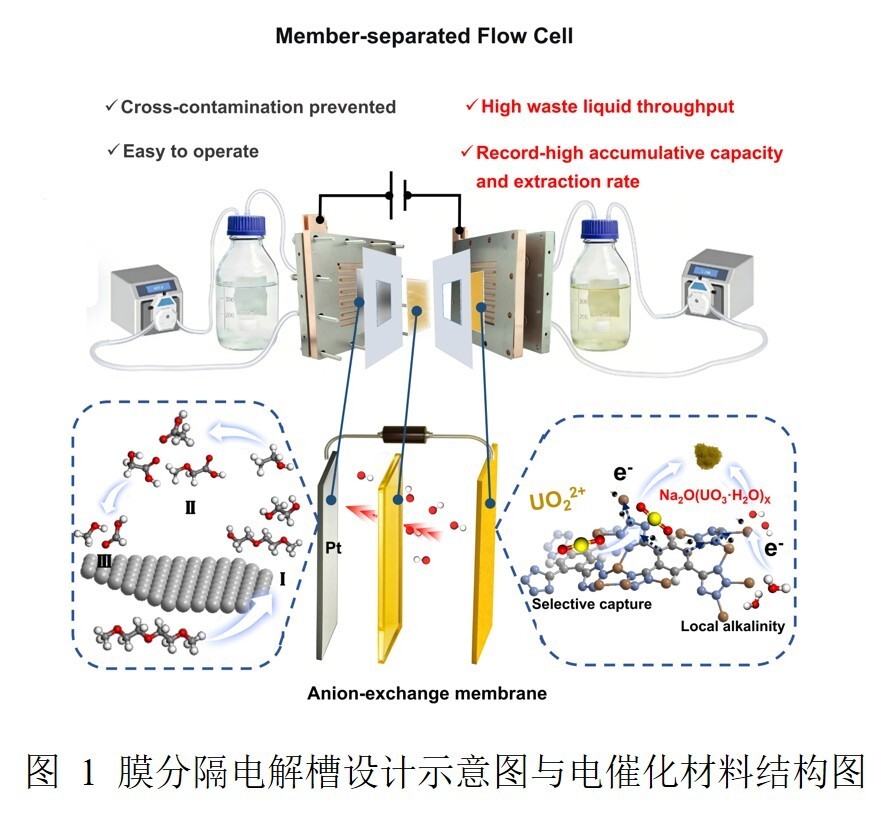
Shanghai Institute of Applied Physics Makes Important Progress in Electrolyzer Design and Electrocatalytic Materials Research
Recently, the National Key Laboratory of Thorium-based Nuclear Fission Energy at the Shanghai Institute of Applied Physics, Chinese Academy of Sciences, has made important progress in the fields of membrane-divided electrolyzer design and electrocatalytic materials. Researchers combined electrolyzer reactor design with electrocatalytic material innovation to develop an anion exchange membrane-divided H-type electrolysis system based on nonporous metal-organic framework (MOFs) materials, achieving efficient electrochemical recovery of uranium resources and complete degradation of organic ether solvents in uranium-containing organic ether wastewater. The related results, titled "Nonporous Metal-Organic Framework Enables Record-High Uranium Extraction and Complete Diglyme Degra...
2026-09-30
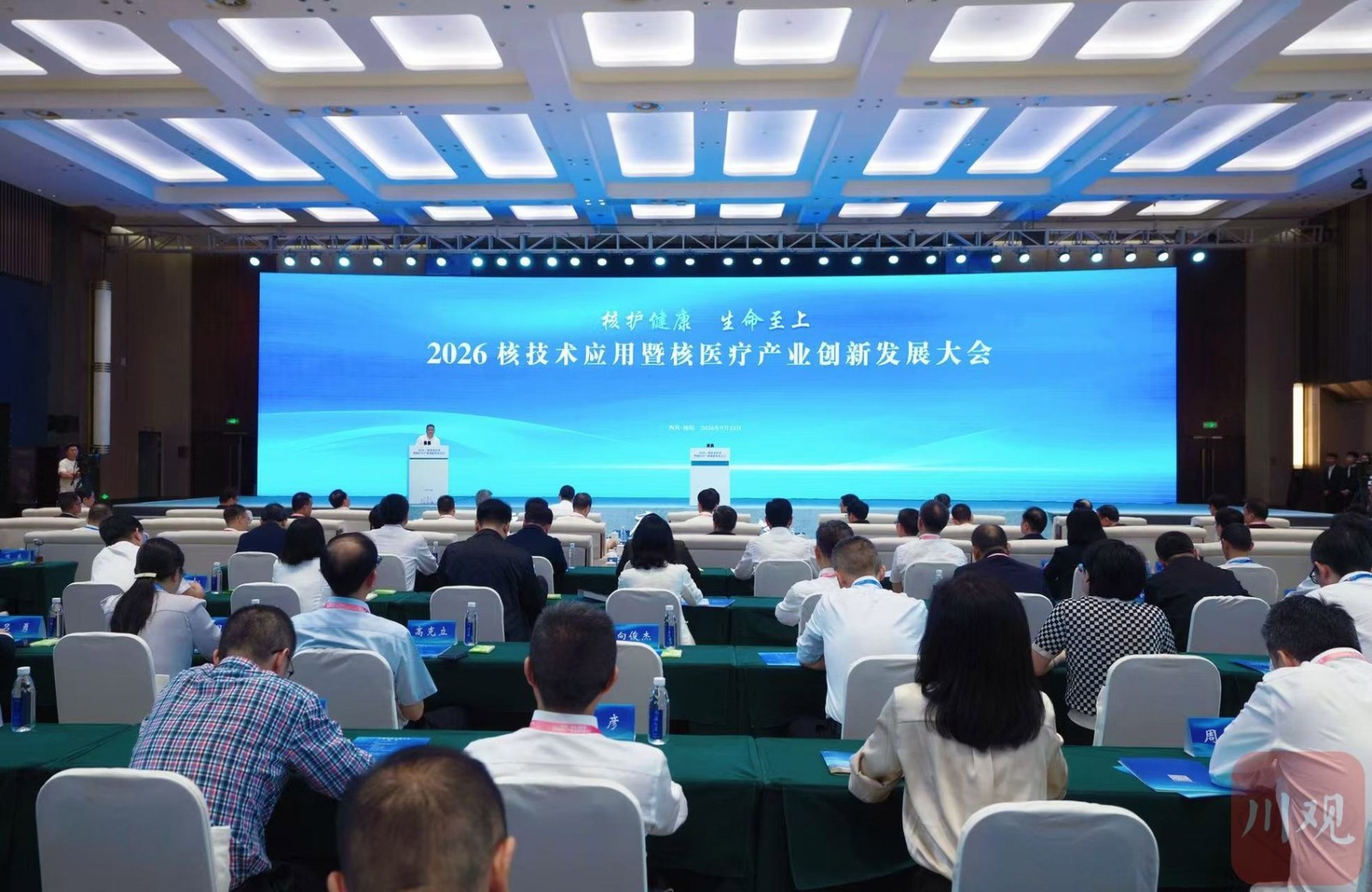
Sichuan Advances Cluster-Based Breakthroughs in Nuclear Medicine, Leveraging "One Chain, Four Poles" to Accelerate Clinical Translation and Deployment
At the 2026 Nuclear Technology Application and Nuclear Medicine Industry Innovation Development Conference held in Mianyang, Sichuan, participants focused on the strategic emerging industry track of deep integration between nuclear technology and modern medicine. As a key vehicle for developing new quality productive forces, Sichuan's nuclear medicine industry, relying on its long-accumulated advantages in scientific research and reactor irradiation resources, continues to expand in scale; according to the China Isotope & Radiation Association, Sichuan's nuclear medicine output value is projected to surpass the 10 billion yuan mark in 2026. In the fields of basic raw materials and therapeutic equipment, Sichuan possesses outstanding advantages in resource security and manufacturing concentration. More than 80% of the nation's medical isotopes rely on reactor irradiation for production, and the relevant reactors currently owned by Sichuan...
2026-09-24
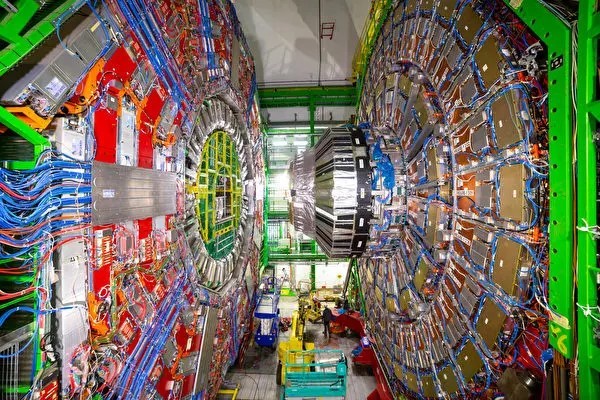
Breakthrough in High-Energy Nuclear Physics Research: Chinese Research Team Leverages CERN's Large Hadron Collider to Reveal How Nuclear Geometry Influences Matter Flow
Relying on the A Large Ion Collider Experiment (ALICE) at the Large Hadron Collider (LHC), the research team led by Professor Li Xiaomei at the National Key Laboratory of Nuclear Data, China Institute of Atomic Energy (CIAE), in international collaboration with the team led by Professor Zhou You at the Niels Bohr Institute, University of Copenhagen, Denmark, conducted research. The joint team studied the Oxygen-16 (Oxygen-16, $^{16}\text{O}$) and Neon-20 (Neon-20, $^{20}\text{Ne}$) light-nucleus collision system and achieved important progress regarding collective flow phenomena dominated by nuclear structure, confirming that the spatial geometric configuration of atomic nuclei can directly regulate the laws of matter flow in high-energy nuclear collisions, providing key experimental constraints for improving relativistic heavy-ion collision theory and resolving microscopic nuclear structure.
2026-09-24

CGN and the People's Government of Sichuan Province Sign a Strategic Cooperation Agreement
On September 21, China General Nuclear Power Group Co., Ltd. and the People's Government of Sichuan Province signed a strategic cooperation agreement in Chengdu. Wang Xiaohui, Secretary of the Sichuan Provincial Party Committee and Director of the Standing Committee of the Sichuan Provincial People's Congress, Shi Xiaolin, Deputy Secretary of the Provincial Party Committee and Governor, held a working meeting with Yang Changli, Secretary of the Party Committee and Chairman of China General Nuclear Power Group Co., Ltd., and Pang Songtao, Deputy Secretary of the Party Committee and General Manager, and together witnessed the signing of the agreement. During the meeting, the two sides, focusing on implementing General Secretary Xi Jinping's important instructions on Sichuan's work and the decisions and arrangements of the Party Central Committee, exchanged views on deepening strategic cooperation during the 15th Five-Year Plan period, further optimizing the investment layout in Sichuan, promoting clean energy development and construction, strengthening the high-end energy equipment manufacturing industry, and advancing...
2026-09-22
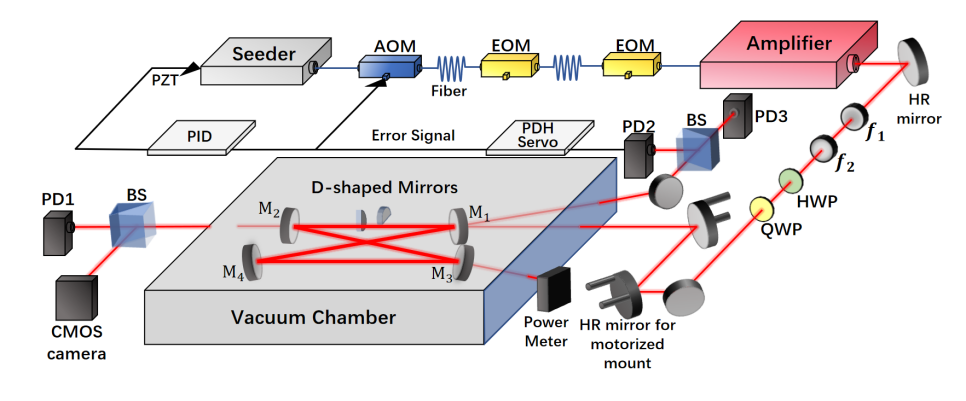
Professor Yan Lixin's Research Group in the Department of Engineering Physics at Tsinghua University Collaborates to Achieve a Beyond-Megawatt Average Power Laser Optical Enhancement Cavity
Recently, the research group of Professor Yan Lixin from the Department of Engineering Physics at Tsinghua University, in collaboration with the team of Professor Fabian Zomer from IJCLab at Université Paris-Saclay, France, published important progress in the field of high-finesse optical enhancement cavities. The research team achieved a four-mirror bow-tie optical cavity with an average laser power exceeding 1 megawatt and its stable operation at the Tsinghua University Accelerator Laboratory, with a maximum intracavity average power of 1.15 MW, while maintaining an excellent Gaussian fundamental mode. This is the first published work internationally on an optical enhancement cavity with an intracavity average laser power reaching the megawatt level, which will lay a solid foundation for important applications such as the development of steady-state microbunching (SSMB) extreme ultraviolet light sources, quantum electrodynamics (QED) vacuum nonlinearity detection, ion beam photoneutralization for magnetic confinement fusion, and the development of future inertial confinement fusion reactors.
2026-09-18

The Nuclear Medicine Full-Chain High-Quality Development Empowerment Training Program Was Successfully Held in Mianyang, Sichuan
From September 6 to 11, the Nuclear Medicine Full-Chain High-Quality Development Empowerment Training Program, hosted by the Department of Human Resources and Social Security of Sichuan Province and organized by Mianyang Central Hospital, was successfully held in Mianyang, Sichuan. Hundreds of nuclear medicine peers from all over the country, including Beijing, Shanghai, Guangzhou, Tianjin, Chongqing, and Chengdu, completed all course studies and returned to their posts fully loaded with training results. This training was hosted by the Department of Human Resources and Social Security of Sichuan Province, organized by Mianyang Central Hospital, and co-organized by multiple departments including the Mianyang Municipal Human Resources and Social Security Bureau and the Fourth Division of Science and Technology Innovation and Industrial Innovation Integration Development of Mianyang Science and Technology City. The training content focused on nuclear medicine from laboratory research and development to clinical application...
2026-09-14