
Search Results
Keyword:U.S.
U.S. Electron-Ion Collider ePIC Detector Completes First Batch of Lead Tungstate Crystal Procurement and Acceptance
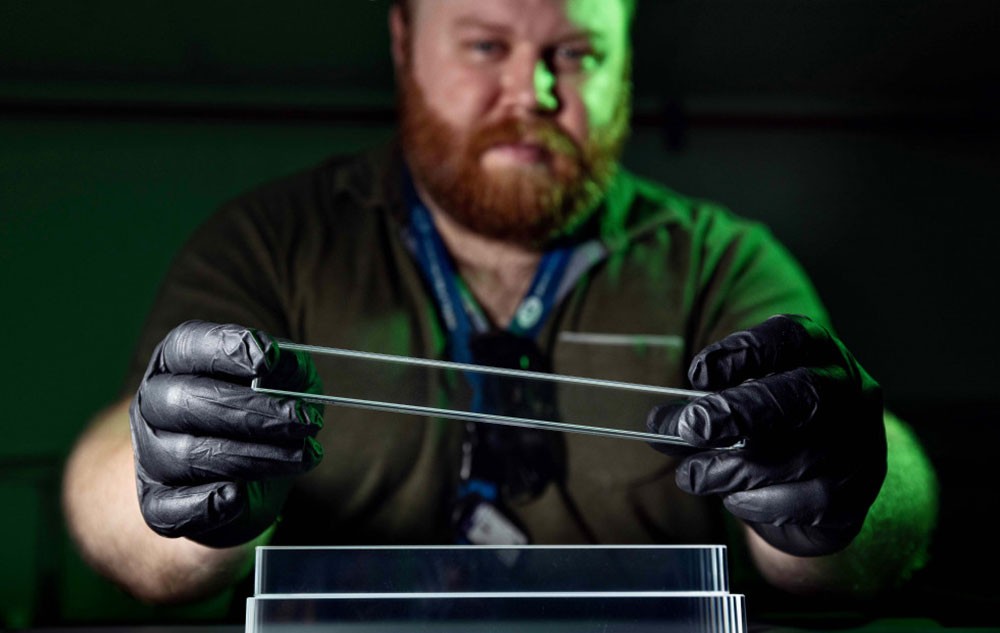
The U.S. Electron-Ion Collider (EIC) project recently achieved its first long-lead procurement milestone: 1,069 custom lead tungstate crystals for the new ePIC detector have been delivered, tested, and accepted. These crystals will be used in the Electron Endcap Electromagnetic Calorimeter (EEEMCAL) to help precisely measure the energy of scattered electrons during collisions. The EIC is being built by the U.S. Department of Energy's Brookhaven National Laboratory, in collaboration with the Thomas Jefferson National Accelerator Facility. The facility will circulate electron and ion beams in opposite directions, colliding them inside the ePIC detector. The ePIC detector records information about particles produced in the collisions, providing data for studying the fundamental constituents of visible matter...
2026-08-31

Portable X-ray Equipment in the U.S. Used for On-Site Assessment of American Football Injuries
As the 2026–2027 American football season approaches, team training camps, player evaluations, and medical support preparations are getting underway. Given the risk of acute sports injuries from the high-intensity physical contact in American football, portable X-ray equipment is being used to improve the efficiency of injury assessment on the sidelines and at training facilities. According to reports, American football players are prone to fractures, sprains, joint dislocations, and contusions. Relevant data indicates that the incidence of severe injuries such as fractures, dislocations, and contusions in this sport is higher than in other sports, with fractures accounting for approximately 10% of all football injuries. Such injuries typically require X-ray radiography to aid diagnosis, but traditional X-ray machines are bulky and fixed in place, usually requiring use in facilities with appropriate shielding. Injured players often need to be transported to the radiology department for examinations, which may delay diagnosis and treatment decisions.
2026-08-31

Korea Hosts ROK-U.S. Nuclear Industry Cooperation Seminar in the United States
The Korea Nuclear Energy Export Industry Association (KNA) announced on August 30 that it held the ROK-U.S. Nuclear Industry Cooperation Seminar in Dallas, Texas, on August 27. The seminar was held in conjunction with NECX 2026, a major nuclear energy event in North America, with the primary purpose of consolidating the foundation for ROK-U.S. nuclear industry cooperation and creating networking opportunities for Korean companies to enter the U.S. market and participate in related nuclear projects. Approximately 70 representatives from the nuclear industry sectors of both countries attended the meeting. Participants included a Korean delegation comprising Korea Electric Power Corporation (KEPCO) and Korea Hydro & Nuclear Power (KHNP), representatives of Korean small and medium-sized enterprises, and officials from relevant U.S. state government agencies...
2026-08-31

U.S. Deployable Energy Microreactor Selected for Two Nuclear Energy Demonstration Projects
Deployable Energy announced on August 28 that its advanced deployable energy system has been selected for two upcoming demonstration projects under the National Reactor Innovation Center (NRIC): a full-power demonstration of the nuclear energy startup platform at Idaho National Laboratory (INL), and an offshore demonstration of the U.S. nuclear energy startup platform in collaboration with Hornbeck Offshore. Established in 2019, the National Reactor Innovation Center works primarily with industry and the U.S. national laboratory system to advance nuclear technologies from conceptual design through demonstration, validation, and commercial deployment. The two selected projects will continue Deployable Energy's prior collaboration with INL under the nuclear energy startup platform program, accumulating technical and operational data to support subsequent testing, validation, and regulatory engagement for advanced nuclear technologies.
2026-08-29

U.S. NNSA and DTRA Remove High-Risk Cobalt-60 Radioactive Source from Guatemala
The U.S. National Nuclear Security Administration (NNSA) announced on August 27 that, in cooperation with the U.S. Defense Threat Reduction Agency (DTRA), it has removed a high-risk cobalt-60 radioactive source from a facility in Guatemala and transported the associated components to a secure storage location in the United States. This operation aims to reduce security risks associated with radioactive materials and prevent high-activity radioactive substances from being illegally acquired or misused. According to reports, cobalt-60 can be used in medical equipment for cancer treatment, but high-activity radioactive sources, if improperly managed, may pose radiological safety hazards. In May of this year, an NNSA Los Alamos National Laboratory team, in cooperation with relevant Guatemalan agencies, worked on a decommissioned U.S.-manufactured cobalt-60 teletherapy...
2026-08-28

U.S. SUPC Completes Independent Engineering Assessment of Seawater Uranium Extraction Platform
SuperCritical Materials Corp. (SUPC) of the United States announced on August 26 that an independent engineering assessment conducted by Kellogg Brown & Root (KBR) has been completed. The assessment focused on the deployment architecture, offshore operation scheme, uranium recovery process, commercialization pathway, and key engineering conditions required for future large-scale deployment of SUPC's seawater uranium extraction platform. According to the assessment, SUPC's conceptual production plan proposes the use of approximately 10,000 tons of adsorbent, operating on a continuous 21-day deployment cycle, to supply adsorbent for a uranium processing facility with an annual production capacity of 1.85 million pounds of triuranium octoxide (U3O8)...
2026-08-28
U.S. Fusion Company Advances Deuterium-Helium-3 Fusion Testing
American Fusion Inc. on August 27 announced progress in ongoing testing of the Texatron Fusion Engine and released computational and experimental observations regarding the device's ability to achieve deuterium-helium-3 (D-³He) fusion conditions. The company stated that the test program is evaluating two Texatron configurations at approximately 500 kilowatts and 5 megawatts, with the core technical approach being proprietary pulsed magnetic compression. Texatron's R&D focus is on utilizing short-duration, high-intensity electromagnetic pulses to compress and heat plasma in extremely short timeframes, simultaneously creating the conditions required for fusion, including high temperature, high pressure, high density, and a certain confinement time. American Fusion Inc...
2026-08-28

Auburn University Installs 200 MeV Superconducting Proton Accelerator to Build First University-Led Space Electronics Radiation Testing Facility in the U.S.
Auburn University's Applied Research Institute has announced the installation of a new 200 MeV superconducting proton accelerator, advancing the construction of the nation's first university-led proton testing facility dedicated to space electronics qualification. The system, a RAD-FX-200 superconducting synchrocyclotron manufactured and installed by Mevion Medical Systems, serves as the core component of Auburn University's new radiation-hardening facility. According to reports, the facility will help address gaps in U.S. space qualification testing capacity, providing radiation testing services for microelectronics to government agencies, aerospace, and defense-related industries. Systems such as satellites, missile defense interceptors, spacecraft, and launch vehicles rely on microelectronics, which may be affected by proton radiation in orbital environments. A single radiation-induced failure can cause system loss, and such failures are typically difficult to repair once in orbit...
2026-08-28

U.S. Marathon Fusion Demonstrates Hydrogen and Lithium Isotope Enrichment Technology
U.S.-based Marathon Fusion announced on August 27 that it has successfully demonstrated hydrogen and lithium isotope enrichment technology using its proprietary plasma centrifuge. The company stated that this advancement addresses the fuel cycle needs of fusion energy and related isotope supply requirements. In the deuterium-tritium fusion pathway, hydrogen isotope processing is critical to the continuous operation of fusion devices, while lithium isotope enrichment is closely tied to tritium production. The U.S. Department of Energy (DOE) released its "Fusion Science and Technology Roadmap" in June of this year, which identifies tritium processing as one of the core challenges, noting that related progress is essential for achieving sustained deuterium-tritium fusion operation and validating fusion as a large-scale energy form...
2026-08-28
U.S. Advanced Light Source Upgrade to Enhance Nanoscale Research Capabilities for Quantum Materials
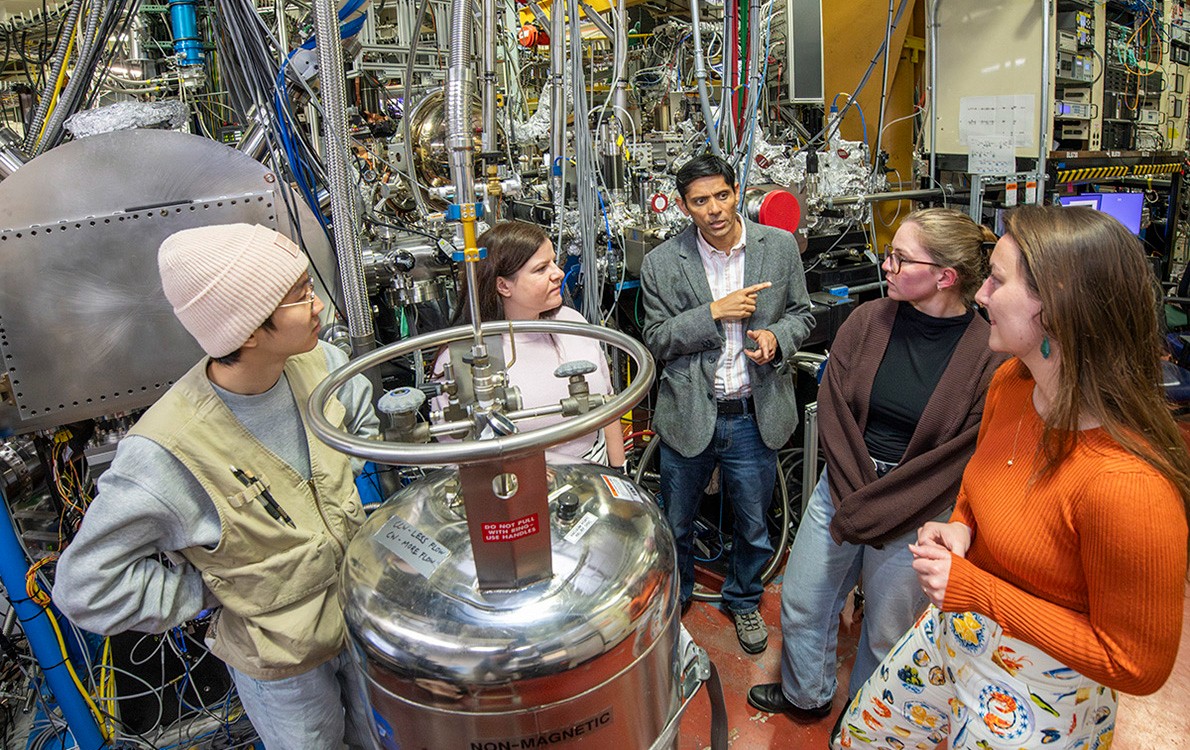
The Advanced Light Source (ALS) at Lawrence Berkeley National Laboratory in the United States is enhancing its quantum materials research capabilities through an upgrade project. As a U.S. Department of Energy Office of Science user facility, ALS has supported researchers worldwide over the past 30+ years in studying quantum materials such as superconductors, topological insulators, and correlated electron materials, leveraging its synchrotron soft X-ray, ultraviolet, and full-spectrum X-ray experimental capabilities. Doctoral students Wei Francis He (left), Kate Matthews (second from right), and Robin Greifke (right) from the University of California, San Diego, are from the Alex Frañó research group at the ALS COSMIC beamline (7.0.1)...
2026-08-27

Moffitt Cancer Center in the U.S. Launches $600 Million Radiopharmaceutical Program
Moffitt Cancer Center in Tampa, Florida, recently announced the launch of a new radiopharmaceutical program, planning to accelerate radiopharmaceutical research, development, and clinical translation through a total infrastructure investment of $600 million. The program will be advanced at the Speros campus of Moffitt Cancer Center in Pasco County, Florida. The campus spans 775 acres, and the related investment will support the development of radiopharmaceutical research and development capabilities, including the construction of new radiochemistry laboratories within the Moffitt Discovery and Innovation Center, which opens this fall. The innovation center has a building area of approximately 255,000 square feet. The program funding will also support the planned comprehensive theranostics center...
2026-08-27

U.S. Interlune injects helium-4 into lunar soil simulant, simulating 15,000 years of solar wind exposure on the Moon in 4 hours
U.S. space infrastructure and resources company Interlune announced on August 26, 2026, that it has successfully injected helium-4 into and released it from simulated lunar soil material, with experimental results consistent with the behavior of real lunar samples collected by the Apollo program. The company stated that this capability can simulate nearly 15,000 years of solar wind exposure on the lunar surface in approximately 4 hours, providing a material basis closer to real conditions for testing lunar resource development equipment on Earth. The experiment focused primarily on ilmenite. According to studies of Apollo mission samples, ilmenite is the main helium-bearing mineral in lunar soil. Interlune formed a plasma by ionizing helium gas in a vacuum environment, then...
2026-08-27

U.S. SuperCritical Materials Corp. Completes Independent Engineering Assessment of Seawater Uranium Extraction Platform
SuperCritical Materials Corp. announced on August 26 that Kellogg Brown & Root (KBR) has completed an independent engineering assessment of its seawater uranium extraction platform. The assessment covered the uranium extraction platform, deployment architecture, offshore operation plans, uranium recovery process, commercialization pathway, and key engineering conditions required for future large-scale deployment. The assessment reviewed SuperCritical Materials' conceptual production plan. Under this plan, the system would use approximately 10,000 metric tons of adsorbent and operate on a continuous 21-day deployment cycle, capable of supporting a uranium processing facility with an annual output of 1.85 million pounds of triuranium octoxide (U3O8)...
2026-08-27

U.S. Army Plans to Deploy Over 20 Micro Nuclear Reactors at Military Bases
The U.S. Army has signed contracts with five companies to develop, build, and operate micro nuclear power plants at military bases, with a total contract value of up to $2.2 billion. According to relevant information, the U.S. Department of Defense requires the companies to construct, own, and operate more than 20 micro nuclear reactors at military installations by 2028. The plan is intended to enhance energy security for critical defense facilities and reduce dependence on the external power grid. The deployment is incorporated into the framework of the Janus Project, which the U.S. Army launched in 2025. The project aims to establish a power supply network composed of compact micro nuclear reactors at military bases, providing continuous and stable electricity to vital defense facilities....
2026-08-27
Fifth Mega Saltstone Disposal Unit Approved for Operation at U.S. Savannah River Site
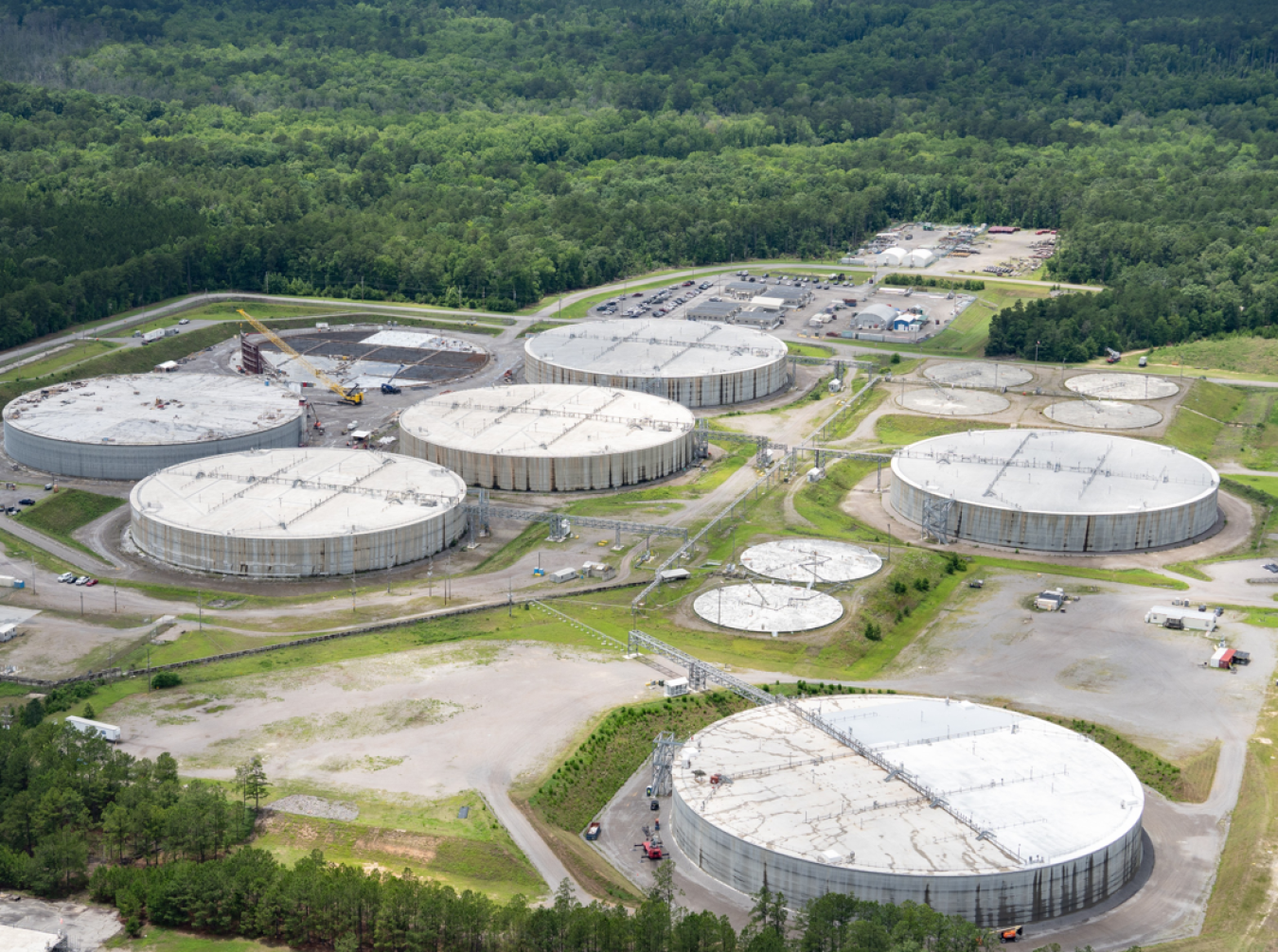
The U.S. Department of Energy Office of Environmental Management announced on August 25 that it has approved the operation of the fifth mega saltstone disposal unit at the Savannah River Site in Aiken, South Carolina. Designated as SDU 10, the facility will receive purified material for final disposal, marking a new milestone in the site's cleanup program. According to reports, SDU 10 completed construction in June 2024, nearly 10 months ahead of schedule. Its leak-tightness testing was completed in December 2025, and the test results verified that the unit can safely store up to 33 million gallons of purified, solidified salt solution generated at the Savannah River Site. Saltstone disposal units are the end-stage facilities in the salt waste treatment process.
2026-08-26