
Search Results
Keyword:geological disposal
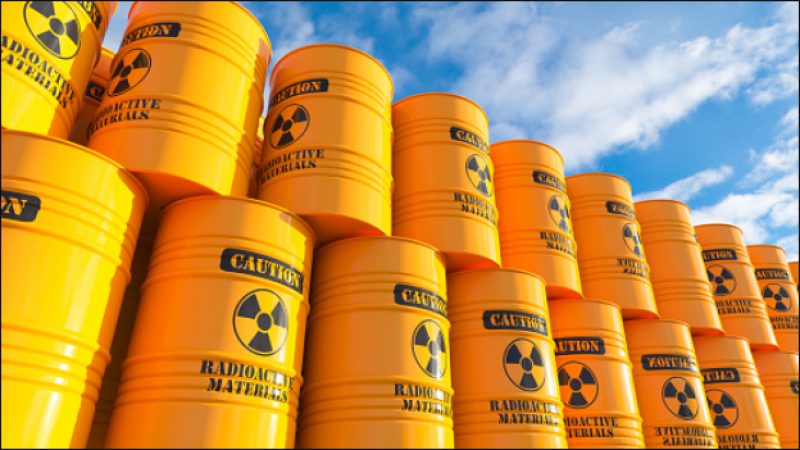
Hitachiomiya City Assembly in Japan Hears Briefing on Literature Survey for High-Level Radioactive Waste Disposal Site
On September 4, the Hitachiomiya City Assembly in Ibaraki Prefecture, Japan, held a closed-door briefing session regarding the central government's request for the city to initiate a literature survey for the final disposal site selection of high-level radioactive waste. Representatives from the Ministry of Economy, Trade and Industry (METI) and the Nuclear Waste Management Organization of Japan (NUMO) attended the meeting to explain the national energy policy, an overview of the geological disposal project, and the background behind the survey request. All 16 members of the Hitachiomiya City Assembly participated in the briefing, with Mayor Suzuki Sadayuki attending as an observer. The meeting was originally scheduled for approximately two hours but actually lasted about three and a half hours due to the large number of questions from assembly members. After the meeting, Yokote Hiroki, Director of the Radioactive Waste Policy Division at METI's Agency for Natural Resources and Energy, stated that assembly members raised questions covering multiple aspects, including technical details of geological disposal and the site selection procedure for disposal facilities, and that the government side would continue its outreach efforts. Should the City Assembly make a request, METI would provide further explanations.
2026-09-06

Japan Requests Hitachiomiya City in Ibaraki Prefecture to Conduct Literature Survey for High-Level Radioactive Waste Disposal Site
Japan's Ministry of Economy, Trade and Industry (METI) on August 31 requested Hitachiomiya City in Ibaraki Prefecture to conduct a literature survey, as the first step in siting a final disposal facility for high-level radioactive waste generated from nuclear power plant operations. If Hitachiomiya City agrees, it will become the fifth municipality in Japan to accept such a literature survey, and the second time the Japanese government has proactively requested a survey from a local government, following Minamitorishima in Ogasawara Village, Tokyo. On the same day, Takashi Kume, Vice Commissioner of Japan's Agency for Natural Resources and Energy, visited the Hitachiomiya City government and submitted the survey request to Mayor Sadanori Suzuki. Suzuki stated that he personally takes a positive stance toward accepting the literature survey, and noted that the city faces issues such as rapid population decline and a weak local economy, adding that if the area has favorable geological conditions, participating in the national geological disposal policy would be of "significant importance." He said he would make a decision after hearing the views of the city assembly, with the matter possibly being discussed at the regular assembly meeting as early as September.
2026-09-01
Japan nuclear waste, geological disposal, literature survey, Hitachiomiya City
Japan's Ministry of Economy, Trade and Industry (METI) is in the final stages of coordination regarding the site selection process for the final disposal of high-level radioactive waste, with plans to request Hitachiomiya City in Ibaraki Prefecture to conduct a literature survey. The literature survey is the first phase of Japan's screening process for selecting a final disposal site for high-level radioactive waste generated from nuclear power generation. It primarily relies on existing literature and materials to assess whether candidate areas have safety concerns such as volcanoes and active faults. Hitachiomiya City is located in the northwestern part of Ibaraki Prefecture, bordering Tochigi Prefecture, with a population of slightly over 35,000. The city does not face the sea, with the Kuji River and Naka River flowing through its territory. Forests account for approximately 60% of the city's total area, and agriculture and manufacturing are the main industries. In recent years, the city has been promoting tourism and emerging industries leveraging the natural environment, while also facing challenges such as population decline, aging, and fiscal pressure.
2026-08-31
Japanese Nuclear Regulator Inspects Horonobe Geological Disposal Research Facility for High-Level Radioactive Waste
On August 28, Shinya Nagasaki and other members of Japan's Nuclear Regulation Authority (NRA) inspected an underground research facility in Horonobe Town, Japan. The facility, operated by the Japan Atomic Energy Agency (JAEA), conducts technical research on deep geological disposal of high-level radioactive waste. Geological disposal of high-level radioactive waste involves encapsulating the waste and burying it deep underground, achieving long-term isolation through engineered and natural geological barriers. During the inspection, Nagasaki and his delegation examined test facilities used to evaluate the corrosion resistance of iron containers. The tests simulate the environment of containers holding heat-generating radioactive waste after being buried underground...
2026-08-30

U.S. Poll Shows Majority of Respondents Support Prioritizing Permanent Disposal of High-Level Waste
A recent survey conducted by market research and data analysis company YouGov shows that more than 80 percent of U.S. respondents believe finding a permanent disposal solution for high-level radioactive waste should be a national priority; after learning about relevant technical information, a significant number of respondents viewed deep geological disposal as a credible option. Prototype canister for borehole disposal (Image: Deep Isolation) The survey was commissioned by nuclear waste disposal technology company Deep Isolation Inc. and conducted in April this year among 1,000 U.S. adults with a nationally representative sample. The survey covered public attitudes toward nuclear energy, concerns about radioactive waste management...
2026-08-14

Finland's Onkalo Repository to Be Commissioned, Experts Say 100,000-Year Safety Assessment Still Faces Uncertainties
Finland's Olkiluoto is about to commission the world's first permanent deep geological repository for spent nuclear fuel — Onkalo. The facility is designed for long-term underground containment of spent fuel, with a design safety period of up to 100,000 years. There remains debate within the nuclear industry over whether such facilities can remain safe over such an immense timescale. Dmitry Pripachkin, head of the Department of Radiation Physics and Nuclear Technology Safety at the National Research Nuclear University MEPhI (Moscow Engineering Physics Institute), stated that modern science does not yet possess tools capable of reliably predicting the state of such facilities after 100,000 years. Science can study the evolution of geological formations over long historical periods, but...
2026-08-09