
Search Results
Keyword:space nuclear power
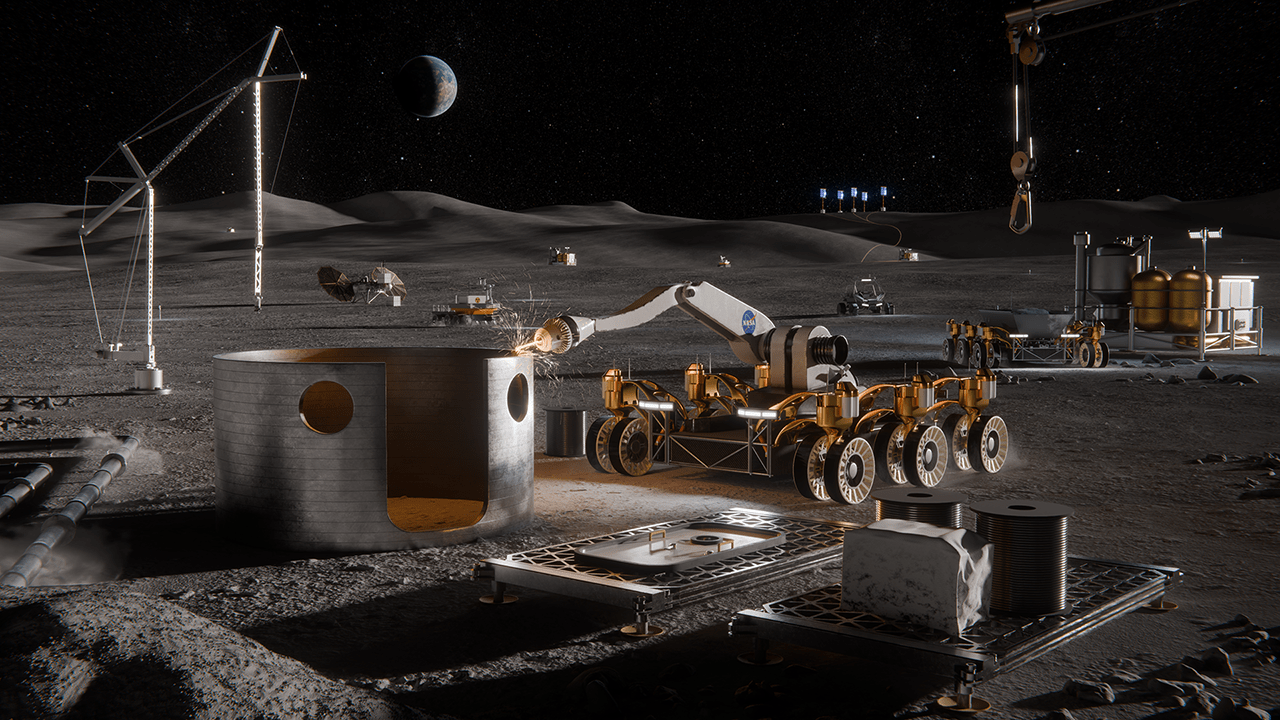
NASA Seeks Proposals for Radioisotope Power and Other Technologies for Lunar Missions
On September 8, 2026, the National Aeronautics and Space Administration (NASA) issued a solicitation seeking proposals for critical technologies and infrastructure for lunar exploration, with near-term focus on supporting the construction of a lunar base in the lunar south pole region. This solicitation is included under Appendix A of the NextSTEP-3 Broad Agency Announcement, the Lunar Enabling Infrastructure Accelerator framework, and covers five technology areas: vertical solar arrays, lunar regolith oxygen extraction, radioisotope power, advanced space manufacturing, and innovative nanomaterial production. NASA stated that these capabilities will be used to address the power generation, resource utilization, materials...
2026-09-13

Antares Wins U.S. Air Force Space Nuclear Energy Technology Contract
Antares recently announced that it has received a Strategic Breakthrough Award from the Office of the Assistant Secretary of the Air Force for Space Acquisition and Integration to advance space nuclear energy technology development. The company said this is currently the largest contract awarded by the U.S. War Department in the field of space nuclear energy. Antares CEO and co-founder Jordan Bramble said that space applications have been a core focus since the company's founding, and that cooperation with the Space Force has turned related concepts into formal space missions. He said nuclear fission technology is expected to provide space missions with strategic capabilities that are currently difficult to achieve. Under the project arrangement, Antares will carry out a ground nuclear power demonstration of the R1-S reactor...
2026-09-13

Europe Advances Space Nuclear Power Research, Targeting Lunar and Mars Missions
The European Space Agency (ESA) is accelerating its assessment of nuclear energy applications in deep-space missions, focusing on using small nuclear reactors to power spacecraft electric propulsion systems, as well as providing stable energy for future fixed lunar surface facilities and subsequent Mars missions. Existing space missions primarily rely on chemical fuels and solar panels. The former is limited by the amount of propellant that can be carried, while the latter suffers from declining power generation efficiency as spacecraft move farther from the Sun. ESA believes that nuclear power systems could compensate for the shortcomings of both approaches, particularly in long-duration lunar operations and deeper space exploration. ESA completed a nuclear thermal propulsion study last year. In March this year, the agency...
2026-08-27