
French Nuclear Safety and Radiation Protection Authority Approves Exemption of ITER Vacuum Vessel from Fission Pressurized Equipment Regulation
 Scan to share
The French Nuclear Safety and Radiation Protection Authority (ASNR) has formally issued a regulatory ruling, approving the application by the International Thermonuclear Experimental Reactor (ITER) Organization to exclude the Vacuum Vessel, a core component of the ITER tokamak device, from the scope of regulation under the French and European Nuclear Pressure Equipment Directive (ESPN). This breakthrough ruling marks the beginning of key fusion reactor components breaking free from the regulatory framework derived from traditional fission reactors.
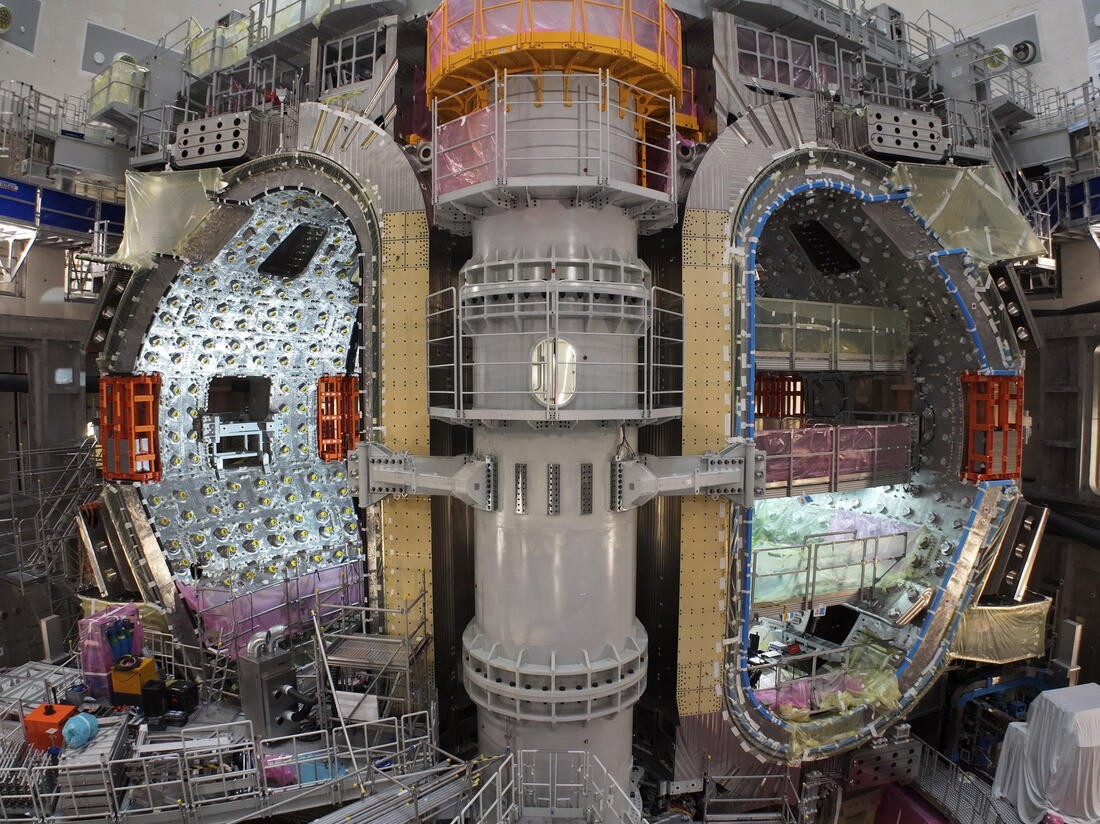
Prior to this decision, the ITER Vacuum Vessel had long been classified as “nuclear pressure equipment.” This classification originated from the management practices of traditional light-water fission reactors, whose underlying logic presumes internal pressure as the primary engineering load on the structure. However, under fusion reactor physics conditions, although the double-walled structure of the ITER Vacuum Vessel contains fluids at a certain weak pressure, this is negligible compared to the intense electromagnetic loads it bears. Electromagnetic stress is the absolutely dominant factor determining the structural dimensions, wall thickness, and engineering strength of the Vacuum Vessel.
ITER Organization Director-General Pietro Barabaschi stated that this regulatory adjustment is not only crucial for the ITER project to proceed on schedule, but will also accelerate the establishment of a dedicated technical standards system adapted to magnetic confinement tokamak fusion devices, including the scientific redefinition of key indicators such as maximum allowable defect sizes during manufacturing and welding processes, ensuring that regulatory requirements balance scientific proportionality with stringent nuclear safety quality objectives. Gilles Perrier, Head of the ITER Safety and Quality Department, noted that the team is comprehensively advancing the compliance transition away from the Pressure Equipment Directive, with priority given to submitting updated engineering technical guidelines and supervision and monitoring rules to ASNR.
The adjustment of the ITER Vacuum Vessel's regulatory classification reflects an industry trend in which major nuclear powers worldwide are accelerating the construction of a “fusion-fission decoupling” regulatory pathway. The U.S. Nuclear Regulatory Commission (NRC) has proposed draft rule amendments aimed at creating a technology-neutral, fusion-specific regulatory system to avoid mechanically applying fission regulations to fusion devices; in the United Kingdom, fusion facilities have been placed under a unified non-nuclear radioactive substances regulatory framework, independently regulated by bodies such as the Environment Agency in accordance with the principle of risk proportionality.
Disclaimer: Information republished from partner media, institutions or other websites is provided for reference and communication purposes only. It does not imply endorsement of its views or verification of its accuracy. Please contact us if any content infringes rights or requires correction.