
Search Results
Keyword:3

India's Nuclear Power Expansion Drives Mechanical Seal Demand; Sealmatic Positions Itself in Nuclear-Grade Supply Chain
August 29, 2026 - Sealmatic India Ltd. is leveraging its in-house mechanical seal technology and nuclear application quality certifications to expand into India's nuclear energy equipment supporting market. As India advances its nuclear power capacity expansion, demand for highly reliable mechanical seals in reactors and related pumping systems is expected to grow steadily. Although mechanical seals are not among major primary equipment such as reactors, pumps, or turbines, they play a critical role in the safe, reliable, and continuous operation of nuclear power plants. These products are primarily used in systems including main coolant, reactor coolant, auxiliary feedwater, and emergency core cooling pumps, where seal reliability, operational integrity...
2026-08-31

Hungary Plans Additional ~EUR 300 Million in Funding for Paks II Nuclear Power Plant
The Hungarian government plans to allocate an additional HUF 111.6 billion, equivalent to approximately EUR 305.5 million, to the Paks II nuclear power plant project. The funds have been included in the draft amendment to the 2026 budget, which is expected to be submitted to the Hungarian Parliament for review. According to the budget document, financial support for the Paks II project through the end of 2026 will increase from HUF 95 billion to HUF 206.6 billion, approximately EUR 565.5 million. Based on relevant calculations, over the past 12 years, the Hungarian government has directly allocated HUF 628.7 billion, exceeding EUR 1.7 billion, to the project; with the inclusion of this budget arrangement, cumulative financial support will exceed EUR 2.2 billion. The Paks II nuclear power plant involves the participation of Russia's State Atomic Energy Corporation (Rosatom)...
2026-08-31
Russia Advances Construction of Fourth-Generation Nuclear Power Projects
Rosatom reports that it is one of the global leaders in the implementation of fourth-generation nuclear energy systems. According to the report, fourth-generation nuclear technologies are designed to minimize the risk of nuclear power accidents and reduce radioactive waste generation through a closed nuclear fuel cycle. As part of the relevant deployment, an innovative power unit featuring the BREST-OD-300 lead-cooled fast neutron reactor is under construction in Seversk, Tomsk Oblast, Russia. The project is regarded as a key component of Russia's efforts to advance the engineering application of fourth-generation nuclear power technologies. The report indicates that in 2025, the installation of the metal cladding for the central cavity of the BREST-OD-300 reactor was completed at the Seversk site, and the cladding for the surrounding cavities has also been installed in the designed positions. Meanwhile, the analytical simulator for the power unit has been put into operation.
2026-08-29

Zhangzhou Nuclear Power Units 3 and 4 Trench Civil Engineering Completes Milestone Phase
On August 27, with the final cubic meter of concrete poured into place, the B1 and B6 sections of the GS and GB trench civil engineering works for Zhangzhou Nuclear Power Units 3 and 4, undertaken by CNNC Huachen, along with the No. 4 overflow well, successfully completed their milestone phase. This phase involved multi-disciplinary cross-operations spanning civil works, installation, electrical, and piping, characterized by complex construction conditions and significant coordination challenges. Among these, Section B1, as the project's main critical path, featured narrow working areas, difficult access for large equipment, and intensive vertical and horizontal cross-operations among multiple units. Seven days before commencement, the project department established a dedicated planning team to verify site conditions, material routes, and cross-operation scopes drawing by drawing, identifying key difficulties such as foundation pouring, equipment positioning, and material supply, and conducting multiple rounds of discussions to optimize the construction plan. The construction period coincided with the rainy season, and Section B1, situated in a low-lying area, faced a high risk of rainwater backflow. The project department implemented measures including full-coverage rain shelters over the base slab, water-retaining curbs at passage openings, and round-the-clock pumping in two shifts, securing dry working areas amid accumulated water; simultaneously, discarded waterproof membranes were collected and reused to cover rebar cages and scaffolding, preventing corrosion and slippery conditions. On-site daily meetings were held, management personnel maintained 24-hour duty, and verbal confirmation with signed handovers was practiced, ensuring issues were resolved the same day, with no plan failures, rain-related stoppages, or process disconnections throughout the period. Facing the immense scheduling pressure from multi-process cross-operations, the project department established a dynamic scheduling system. In terms of manpower loading, fixed posts and personnel quotas were implemented, with zonal responsibility and flexible reinforcement; during peak periods, core work crews were consolidated and work areas were precisely delineated. For machinery, a dynamic scheduling ledger was established, with tower cranes, excavators, and lifting equipment staggered and cross-utilized. Material coordination was also optimized through advance stocking, zoned storage, dedicated management, and emergency replenishment. During the campaign, when the transport of main materials was obstructed, the project department organized management staff and labor crews to manually carry rebar, pipes, and auxiliary materials point-to-point to the working areas, effectively safeguarding project progress. Currently, the main structure construction of the GS and GB trenches by the Zhangzhou Nuclear Power Project Department has achieved phased results, with the GB trench completing 74 sections cumulatively, an 82% completion rate, and the GS trench exceeding 1,160 meters, accounting for 72% of the total length. The company will further strengthen construction organization, optimize construction logic, and continue to advance the remaining sections of the Zhangzhou Nuclear Power Project Department, fully ensuring high-quality performance of the contracted projects.
2026-08-29

South Korea's Medical Radiation Examinations Exceed 430 Million Annually, with CT Scans Accounting for 67.1% of Radiation Dose
According to the "2025 National Medical Radiation Assessment Yearbook" released by the Korea Disease Control and Prevention Agency on August 28, South Koreans underwent a total of 431.59 million medical radiation examinations last year, averaging 8.4 examinations per person. Over the past five years, the number of medical radiation examinations in South Korea has continued to rise, with last year's figure increasing by 4.6% year-on-year and 29.6% compared to 2021. The report shows that the collective radiation dose from medical radiation examinations in South Korea increased from 136,804.73 person-sieverts in 2021 to 167,659.18 person-sieverts last year, an increase of 22.6%. On a per capita basis, the radiation dose rose from 2.64 millisieverts to 3.24 millisieverts. The Korea Disease Control and Prevention Agency stated that with advances in medical technology, an aging population, and growing demand for health checkups, the use of medical radiation examinations in public healthcare services continues to expand.
2026-08-28

U.S. Fusion Company Advances Deuterium-Helium-3 Fusion Testing
American Fusion Inc. on August 27 announced progress in ongoing testing of the Texatron Fusion Engine and released computational and experimental observations regarding the device's ability to achieve deuterium-helium-3 (D-³He) fusion conditions. The company stated that the test program is evaluating two Texatron configurations at approximately 500 kilowatts and 5 megawatts, with the core technical approach being proprietary pulsed magnetic compression. Texatron's R&D focus is on utilizing short-duration, high-intensity electromagnetic pulses to compress and heat plasma in extremely short timeframes, simultaneously creating the conditions required for fusion, including high temperature, high pressure, high density, and a certain confinement time. American Fusion Inc...
2026-08-28
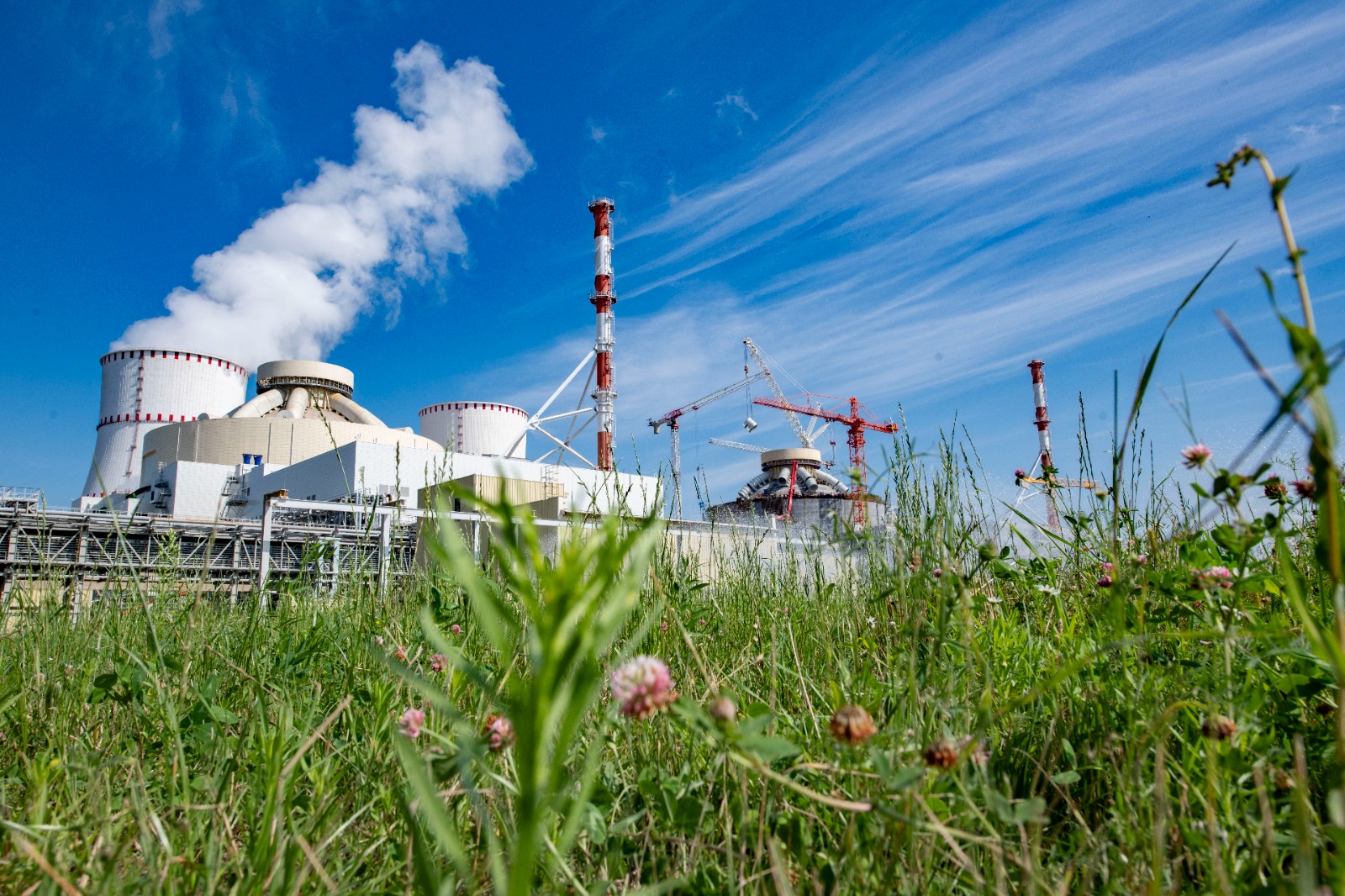
Unit 3 of Russia's Kursk Nuclear Power Plant resumes operation after short-term maintenance
Rosatom reported on August 27 that Unit 3 of the Kursk Nuclear Power Plant has resumed operation after completing short-term unscheduled maintenance. Rosatom stated that Unit 4 of the Kursk Nuclear Power Plant remains under planned preventive maintenance. The announcement did not disclose the specific reasons for or the duration of the maintenance on Unit 3. Meanwhile, construction of new units at the Kursk Nuclear Power Plant continues to progress. The new units employ modern VVER-TOI reactor technology, with the first unit already commissioned and generating electricity...
2026-08-28

France's ITER research program may start before 2034
Scientific preparation work for the International Thermonuclear Experimental Reactor (ITER) is currently about 7 months ahead of the original schedule, and the research program may start earlier than the previously set target of 2034. Anatoly Krasilnikov, Director of the ITER Project Center at Rosatom, revealed this progress during the Technoprom-2026 forum. Krasilnikov stated that the project team no longer uses the milestone term "first plasma," but has instead adjusted the objective to "start of the research program," with a target date of 2034. Based on the current progress, the work is 7 months ahead of schedule, and there is a possibility of achieving the goal ahead of time...
2026-08-28

Construction Advances for Holtec's SMR-300 Test Facility at Idaho National Laboratory
Holtec International recently announced that construction of its HI-TEST test facility, supporting the SMR-300 small modular reactor, is advancing at Idaho National Laboratory (INL), with manufacturing of key test components and preparation for facility installation already underway. The facility simulates the SMR-300 plant at approximately one-third scale and is designed to quantify reactor design and operational performance margins, providing a test basis for potential future power uprates. Supported by the U.S. Department of Energy (USDOE), the HI-TEST facility's primary mission is to validate SMR-300 design margins under steady-state and transient conditions, offering physical test data for the plant's power generation capacity, resilience, and operability...
2026-08-28

Bristol Myers Squibb to Invest $173 Million in New Radiopharmaceutical Plant in Indiana, USA
Bristol Myers Squibb's RayzeBio will build a new radiopharmaceutical production facility in Whitestown, Indiana, USA, with an investment of $173 million. The project will be located at the Anson Industrial Park in Boone County, with construction planned to begin this year, complementing RayzeBio's existing operational radiopharmaceutical plant in Indianapolis. According to information released by the state of Indiana, the new facility will cover approximately 225,000 square feet. Bristol Myers Squibb expects the two production sites to add 100 new positions by the end of 2029, with annual salaries for new positions expected to exceed $130,000. Bristol Myers Squibb acquired San Diego-based RayzeBio in 2023 for $4.1 billion...
2026-08-28

Hole of about 3 meters confirmed at bottom of reactor pressure vessel of Unit 3 at Fukushima Daiichi Nuclear Power Station
Tokyo Electric Power Company (TEPCO) announced on August 27 that a hole approximately 3 meters in diameter has been confirmed at the bottom of the reactor pressure vessel of Unit 3 at the Fukushima Daiichi Nuclear Power Station. The pressure vessel is a steel container that held nuclear fuel before the accident, with a cylindrical shape and a diameter of about 5.5 meters. This is the first time since the core meltdown accident at Units 1 to 3 of the Fukushima Daiichi Nuclear Power Station in 2011 that the specific size and shape of such a hole have been confirmed on the pressure vessel. The hole is believed to be related to the falling of melted nuclear fuel during the 2011 accident. After the accident, the containment vessel of Unit 3 has maintained a relatively high water level for an extended period, and access routes into the containment vessel are limited. TEPCO previously used a micro drone measuring approximately 12 centimeters per side...
2026-08-28

3D Systems Collaborates with Savannah River National Laboratory to Advance 3D Printing in Nuclear Energy Systems
3D Systems Corporation of the United States announced on August 27 that it has signed a Cooperative Research and Development Agreement (CRADA) with Savannah River National Laboratory (SRNL), under which the two parties will conduct joint research and development on additive manufacturing technology to advance its application in advanced energy production, nuclear energy systems, energy infrastructure resilience, and related mission scenarios. Under the agreement, the two parties will leverage SRNL's Advanced Manufacturing Collaborative (AMC) to advance work in advanced materials development, equipment upgrades, AI and machine learning-assisted process optimization, manufacturing systems, cybersecurity, and workforce development. Collaboration goals include developing next-generation additive manufacturing materials, real-time process optimization tools, and scalable production solutions...
2026-08-28

Bruce Power Aims to Generate Over CAD 13.3 Billion in Economic Impact in Canada Over Next 18 Months
Bruce Power recently stated that over the next 18 months, the company expects to generate more than CAD 13.3 billion in economic impact across Canada, with related investments primarily stemming from its nuclear plant operations and life extension programs, supporting businesses and jobs in Ontario and other regions of Canada. Bruce Power stated that since launching the "Canada First" program in 2025, the company has invested over CAD 6.6 billion in Canada between January 2025 and June 2026, and plans to invest an additional CAD 7.7 billion by the end of 2027. The company noted that its spending within Canada accounts for more than 95% of total expenditures. As a nuclear operator located in Bruce County, Ontario...
2026-08-28

Safety-level DCS Response Time Testing for Unit 3 of Xudabao Nuclear Power Plant Successfully Completed
Recently, with the final test data confirmed to be accurate, the safety-level DCS (Digital Control System) response time testing for Unit 3 of Xudabao Nuclear Power Plant was successfully completed. All test results met the requirements, with no abnormal equipment actions throughout the entire process, providing reliable instrumentation and control assurance for the subsequent fuel loading and stable operation of the unit. The test lasted 14 days and covered 182 test cases, encompassing more than 1,500 functional tests for reactor trip and engineered safety features systems. As a critical step before fuel loading, the safety-level DCS response time test holds significant reference value for verifying the response performance of the unit's safety systems. To ensure the successful completion of the test, the instrumentation and control team adhered to the work philosophy of "comprehensive preparation, strong collaboration, experience feedback, and pragmatic execution," advancing all tasks in an orderly manner.
2026-08-27
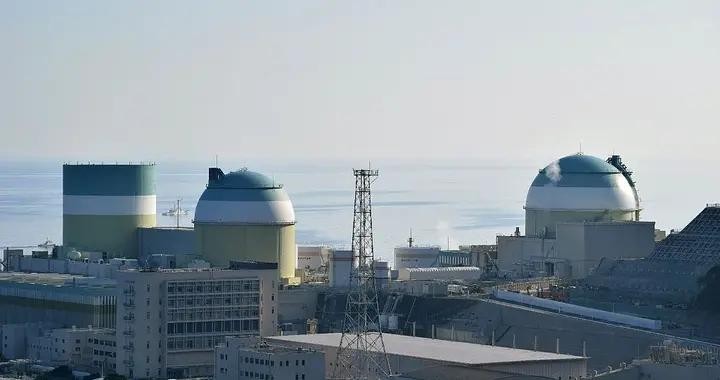
Ikata Nuclear Power Station Unit 3 in Japan briefly deviated from operational limits due to abnormal signals in protection system instrumentation
Shikoku Electric Power Co. reported on August 27 that abnormal signals from safety protection system instrumentation appeared in the central control room of Ikata Nuclear Power Station Unit 3, which was in normal operation, indicating that one channel of the overtemperature ΔT related instrumentation was unreliable. The operator determined at 22:10 on August 26 that the unit had deviated from the operational limits stipulated in the Reactor Facility Security Regulations. On-site confirmation showed that the unreliable signal originated from 1 of the 4 channels of the overtemperature ΔT protection function. Overtemperature ΔT is one of the reactor automatic trip elements, used to protect in-core fuel; its limit value is calculated based on parameters such as reactor power, pressurizer pressure, and...
2026-08-27