
Search Results
Keyword:3

Europe Advances Space Nuclear Power Research, Targeting Lunar and Mars Missions
The European Space Agency (ESA) is accelerating its assessment of nuclear energy applications in deep-space missions, focusing on using small nuclear reactors to power spacecraft electric propulsion systems, as well as providing stable energy for future fixed lunar surface facilities and subsequent Mars missions. Existing space missions primarily rely on chemical fuels and solar panels. The former is limited by the amount of propellant that can be carried, while the latter suffers from declining power generation efficiency as spacecraft move farther from the Sun. ESA believes that nuclear power systems could compensate for the shortcomings of both approaches, particularly in long-duration lunar operations and deeper space exploration. ESA completed a nuclear thermal propulsion study last year. In March this year, the agency...
2026-08-27

Canadian Light Source Synchrotron at University of Saskatchewan Receives $3 Million CAD in Upgrade Funding
On August 26, Innovation Saskatchewan announced that it will provide $3 million CAD in funding to the Canadian Light Source synchrotron at the University of Saskatchewan to support the installation of an advanced solid-state amplifier, advancing the facility's upgrade efforts. According to reports, this solid-state amplifier is a key component of the Canadian Light Source's core particle accelerator and will support the operation of its 22 synchrotron radiation beamlines. The upgrade is expected to enhance facility performance, operational reliability, and energy efficiency, further strengthening its capacity for cutting-edge scientific research. The Canadian Light Source is Canada's only synchrotron facility. Synchrotrons use electromagnetic fields and radiofrequency waves to accelerate electrons to near the speed of light, keeping them in a circular orbit; as electrons move, they generate high-brightness, highly focused synchrotron radiation beams, which are directed to different experimental beamlines to help researchers study material structures and properties at the atomic scale.
2026-08-27

NSF Funds $30 Million Turbulence Research Center Focused on Predictive Modeling for Fusion Energy
The U.S. National Science Foundation (NSF) has established a new Science and Technology Center with a total funding of $30 million, focusing on the understanding and prediction of turbulence. The project targets application scenarios such as fusion energy, astrophysics, and hypersonic flight, aiming to tackle the challenges of cross-scale turbulence modeling and prediction in complex physical systems. Researchers and students from San José State University (SJSU) will participate in the related research. This is a three-dimensional simulated turbulent velocity field at the core collapse point of a massive star before a supernova explosion. Image credit: S. Couch, based on research by Fields and Couch published in The Astrophysical Journal, Volume 921, Page 28.
2026-08-27

New Analytical Laboratory Completed at Oak Ridge to Support U-233 Cleanup and Medical Isotope Supply
The U.S. Department of Energy Oak Ridge Environmental Management Office (OREM) and its contractor Isotek Systems completed installation of a new analytical laboratory at Oak Ridge National Laboratory (ORNL) on August 25, 2026. The laboratory will support ORNL's highest-priority environmental cleanup project and accelerate delivery of critical medical isotope materials for cancer treatment research. Isotek Systems is responsible for removing the U.S. uranium-233 inventory stored at Oak Ridge National Laboratory. Uranium-233 was primarily developed in the 1950s and 1960s, initially intended for use as nuclear reactor fuel, but was later proven unsuitable as a commercial fuel source...
2026-08-26

U.S. Develops Hybrid Process Combining Electroforming and 3D Printing for Critical Component Manufacturing in Advanced Nuclear Reactors
On August 24, local time, the U.S. Department of Energy's Oak Ridge National Laboratory (ORNL) announced that its scientists are collaborating with AJ Tuck Company (AJ Tuck) to develop a hybrid manufacturing process that combines 3D printing and electroforming to produce complex, leak-tight hot isostatic pressing canisters for powder metallurgy hot isostatic pressing processes. The process targets the manufacturing of critical metal components for advanced nuclear reactors and other energy and defense applications, with the goal of shortening production workflows and reducing reliance on traditional large-scale forging and casting supply chains. A hot isostatic pressing canister is a type of sealed container used to compact metal powders into high-performance metal components under high temperature and high pressure. Traditional hot...
2026-08-26
U.S. NRIC Selects 13 Nuclear Energy Launch Pad Projects
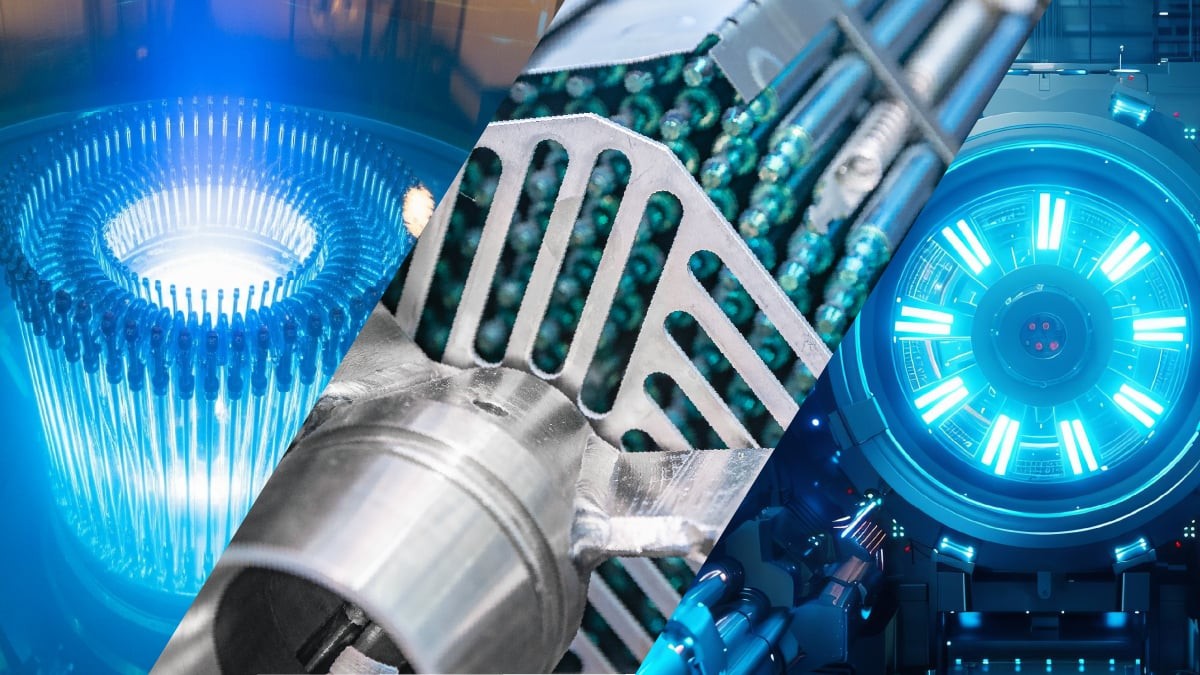
The U.S. Department of Energy (DOE)'s National Reactor Innovation Center (NRIC) announced on August 24 that 13 new projects have been selected for the Nuclear Energy Launch Pad program. NRIC is based at Idaho National Laboratory (INL). NRIC Director Brad Tomer stated that this round of selections reflects developers' growing commitment to advancing related technologies. The program will provide companies with a priority pathway to DOE authorization, as well as access to expert resources, facility conditions, and targeted regulatory support to adv...
2026-08-26

Two production lines at radiopharmaceutical plant in Russia's Kaluga Region enter trial production
Rosatom recently announced that two production lines at its modern radiopharmaceutical manufacturing facility in the Kaluga Region have entered trial production. The facility, built in accordance with the Eurasian Economic Union's international Good Manufacturing Practice (GMP) standards, is equipped with high-level production equipment and is designed to supply safe, quality-controlled radiopharmaceuticals to the market. According to reports, Rosatom's subsidiary enterprises currently produce more than ten registered diagnostic and therapeutic radiopharmaceuticals, involving isotopes such as iodine-123, iodine-131, technetium-99m, and samarium-153. The new plant's production plan is based on the demand for radioisotope products from Russian medical institutions through 2030. The company...
2026-08-26
U.S. Fusion Roadmap Targets Early Power Plant Deployment by Mid-2030s
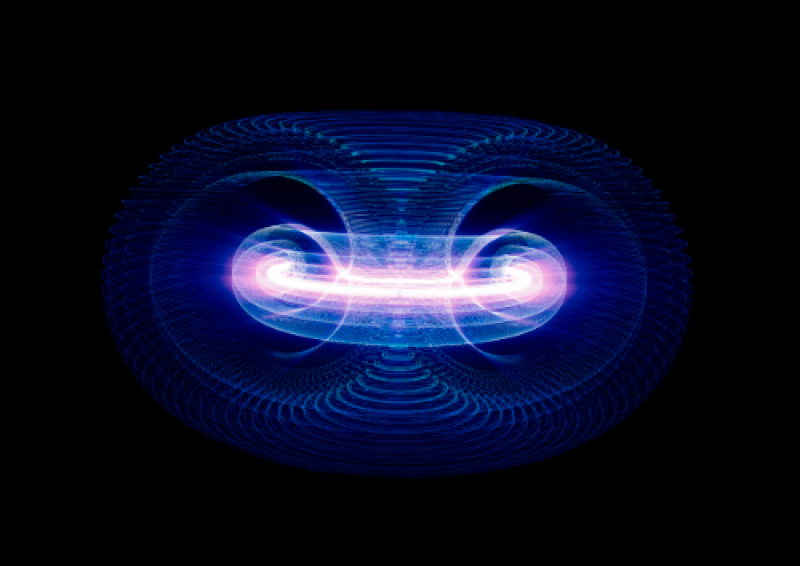
The U.S. Department of Energy (DOE) recently released the "Fusion Science and Technology Roadmap," proposing to accelerate the deployment of early fusion power plants by the mid-2030s. The roadmap represents a key federal-level arrangement to advance fusion technology from experimental research toward engineering and commercialization, coordinated by the Office of Fusion established in November 2025. Unlike existing nuclear power plants that release energy through fission reactions, fusion devices attempt to fuse light atomic nuclei together, with an energy source principle identical to that of the Sun. Fusion power is regarded as a potential low-carbon energy direction, but the industry remains in the experimental and demonstration stage, with private developers yet to achieve commercial-scale net energy gain, i.e...
2026-08-26
South Korean 3D-Printed Nuclear Power Plant Component Operates Continuously for 18 Months
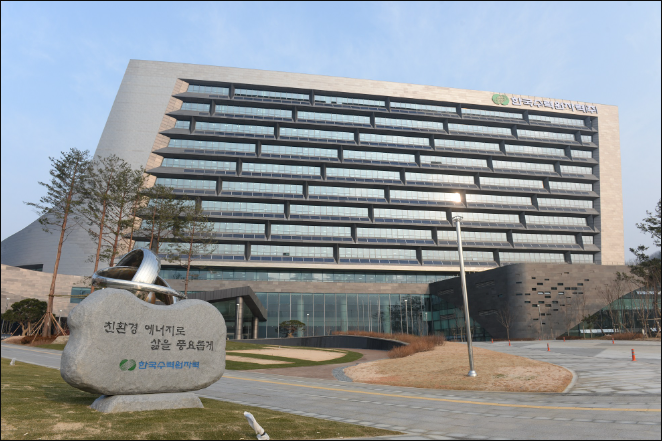
Korea Hydro & Nuclear Power (KHNP) announced on August 26 that a nuclear power plant component manufactured using 3D printing technology has been in continuous operation for 18 months on a reactor unit. This marks the first time South Korea has completed long-term operational validation of a 3D-printed nuclear power plant component in actual service. The component is a multi-blade impeller used to cool the generator circuit breaker of a nuclear power plant. Traditional impellers typically consist of multiple blades mounted on a fixed plate, and the connection points between the fixed plate and blades are at risk of damage during long-term operation. KHNP completed the development of this impeller in 2024, switching to 3D printing to manufacture an integrated one-piece structure, thereby reducing weak connection points and improving component durability. Before being put into service, this 3D-printed impeller underwent...
2026-08-26

Japan's Mihama Nuclear Power Plant Unit 3 Receives Preliminary Approval for Operation Plan Beyond 50 Years
On August 25, Japan's Nuclear Regulation Authority (NRA) gave preliminary approval to Kansai Electric Power Co. (KEPCO) for the long-term facility management plan for Unit 3 of the Mihama Nuclear Power Plant. Located in Mihama Town, Fukui Prefecture, the unit will mark its 50th anniversary of commercial operation on December 1. In May of this year, the metal top cover of the high-pressure turbine at Mihama Unit 3 suffered damage, resulting in steam leakage. At the NRA meeting held that day, KEPCO explained that the cause of the incident was believed to be thinning of the inner wall of the top cover due to steam flow. The company stated that this phenomenon falls under previously anticipated aging and degradation management for turbine equipment, and that the existing plan already includes corresponding management measures. Visual inspection and other examination methods were also deemed applicable, thus no revision to the long-term facility management plan was required.
2026-08-26

Molecular Partners Advances DLL3 Radiopharmaceutical MP0712 to Higher Dose Cohort
Swiss clinical-stage biotechnology company Molecular Partners AG recently announced its business progress and financial results for the first half of 2026. The company stated that its DLL3-targeting radioactive DARPin therapy MP0712 has advanced to the second therapeutic dose level in a U.S. multicenter Phase 1/2a clinical study, and patient enrollment for the new dose cohort is currently underway. MP0712 is a radiopharmaceutical targeting the tumor-associated antigen DLL3, carrying a therapeutic alpha-emitting radionuclide lead-212 (Pb-212) payload, co-developed by Molecular Partners and Orano Med, primarily for small cell lung cancer and other neuroendocrine tumors. According to the company's disclosure, the first dose cohort of MP0712...
2026-08-26
South Korean team develops biodegradable microgel for localized radiation therapy
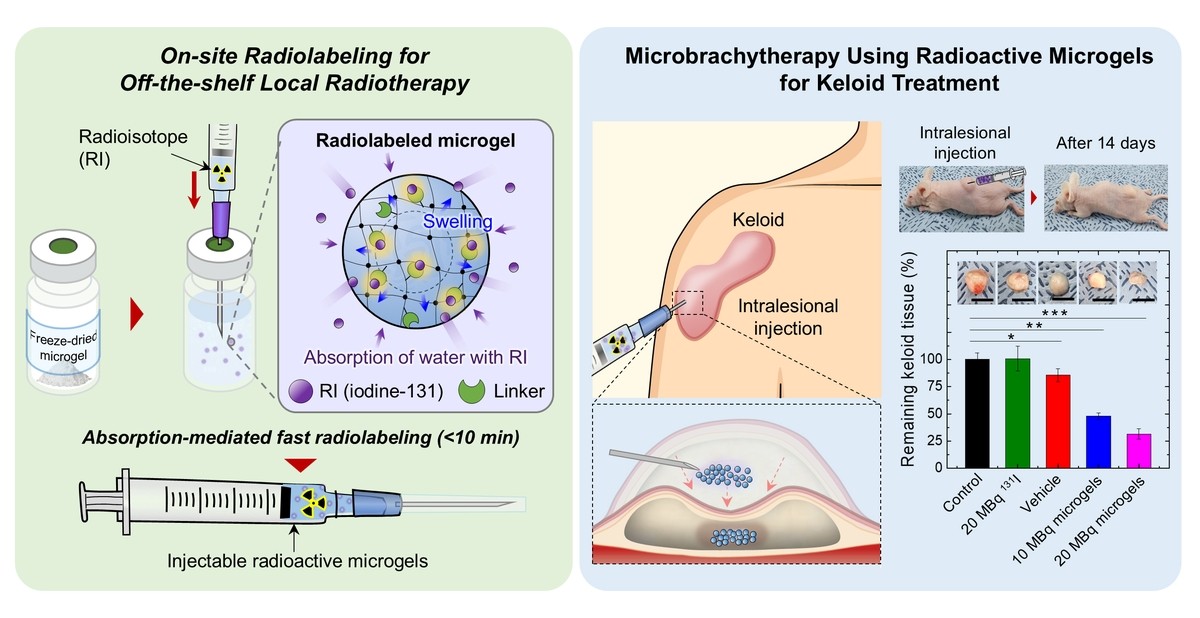
Pusan National University announced on August 25 that a research team led by Professor Yang Seung-yun from the Department of Biomaterials Science, in collaboration with Professor Kim Hoon-soo from the Department of Dermatology and Professor Kim Geun-young from the Department of Nuclear Medicine at Pusan National University Hospital, as well as SNBIA Co., Ltd., has developed a precision localized radiation therapy technology based on biodegradable radioactive isotope materials for the treatment of refractory keloids that tend to recur after surgery. Conceptual diagram of precision treatment technology for refractory keloids. Provided by Pusan National University. Keloids are caused by abnormal proliferation of fibroblasts and excessive accumulation of collagen after skin injury. Existing treatment methods include surgery, steroid injections, laser therapy, etc., but...
2026-08-25

Rock Fusion Completes Key Processes for Stellarator 3D Non-Planar Superconducting Prototype Coil
Recently, the stellarator high-strength stainless steel armored 3D non-planar superconducting prototype coil developed by Rock Fusion (Shanghai) Technology Co., Ltd. has completed two key processes: 3D precision winding and ground insulation wrapping. The overall 3D geometric error of the coil is consistently controlled at the millimeter level, indicating that the company has preliminarily established key manufacturing processes including material adaptation, 3D precision forming, and insulation wrapping for high-field steady-state stellarator superconducting magnets. The stellarator is an important device for steady-state controlled nuclear fusion research, and 3D superconducting coils are used to generate the complex magnetic fields required to confine plasma. Unlike conventional planar coils, stellarator coils typically feature non-planar spatial structures with continuously varying curvature...
2026-08-25
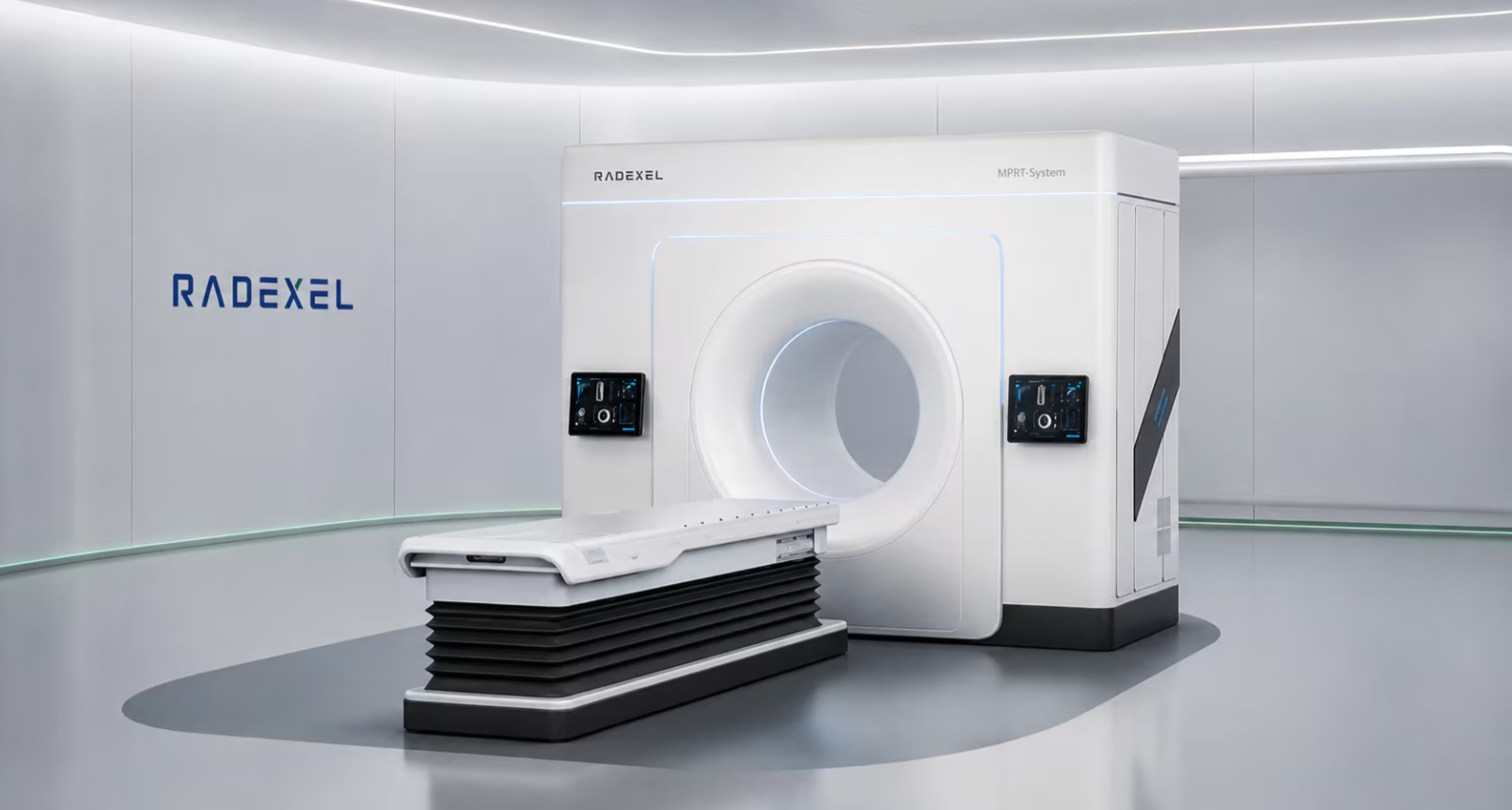
Radexel leads South Korea's KRW 35.2 billion project to develop magnetically controlled radiotherapy equipment
South Korean medical device company Radexel announced on August 24 that it has been selected as the lead institution for a global flagship project, partnering with Asan Medical Center, the Korea Atomic Energy Research Institute (KAERI), and other organizations to develop next-generation radiotherapy equipment based on magnetic field control. The project is a national strategic R&D initiative jointly promoted by the Ministry of Science and ICT, the Ministry of Trade, Industry and Energy, the Ministry of Health and Welfare, and the Ministry of Food and Drug Safety, with a total investment of KRW 35.2 billion, including KRW 27.95 billion in government funding, over a seven-year period. Under the plan, the Radexel consortium will develop a Magnetically Controlled Radiotherapy (MPRT) system. This technology controls secondary...
2026-08-24
Magnitude 3.1 Earthquake in South Korea Does Not Affect Safety of Nuclear Facilities
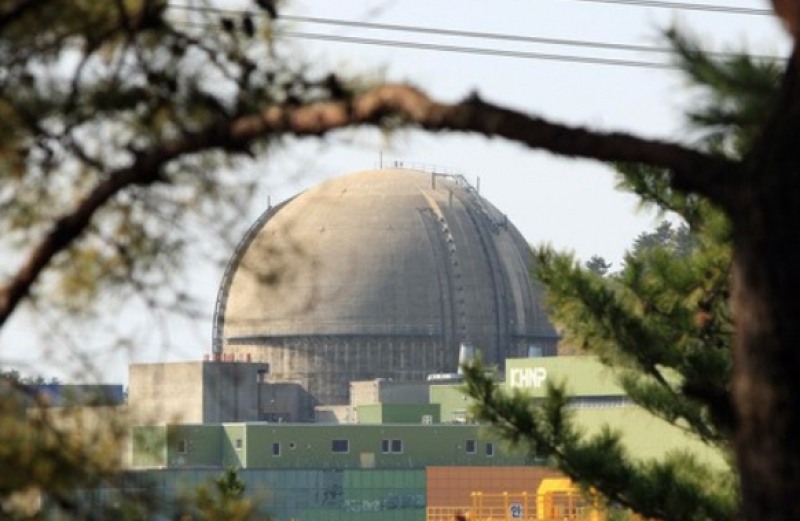
On August 23, the Nuclear Safety and Security Commission (NSSC) of South Korea reported that at 6:43 a.m. that day, a magnitude 3.1 earthquake occurred approximately 21 kilometers northwest of Haenam County, South Jeolla Province, South Korea. It was confirmed that all nuclear reactors and related nuclear facilities in South Korea were operating stably, with no abnormalities detected. The nuclear facility closest to the epicenter was the Hanbit Nuclear Power Plant, approximately 83.2 kilometers away. The peak ground acceleration recorded at this plant during the earthquake was 0.0032g, far below its seismic design basis of 0.2g, and it is expected that the safety of the facility will not be affected. The Hanbit Regional Office of the NSSC has conducted emergency safety inspections at the Hanbit Nuclear Power Plant site...
2026-08-24