
Search Results
Keyword:5

Russia Deepens Nuclear Power Plant Construction Cooperation in Asia and Africa in 2025
Rosatom recently released a report stating that in 2025, the company made progress in cooperation on the construction of large and small nuclear power plants in Asia and Africa, further consolidating its position as a global technology partner. The report noted that by the end of 2025, Rosatom's offerings to partner countries had expanded beyond the energy sector to encompass more comprehensive technological cooperation. Key achievements include advancing cooperation on large nuclear power plants and small modular reactor projects in Central Asia, Africa, and Southeast Asia, as well as expanding exports of non-energy products. In the non-energy sector, the report mentioned that Rosatom has opened an additive manufacturing center in Belarus and plans to...
2026-08-30
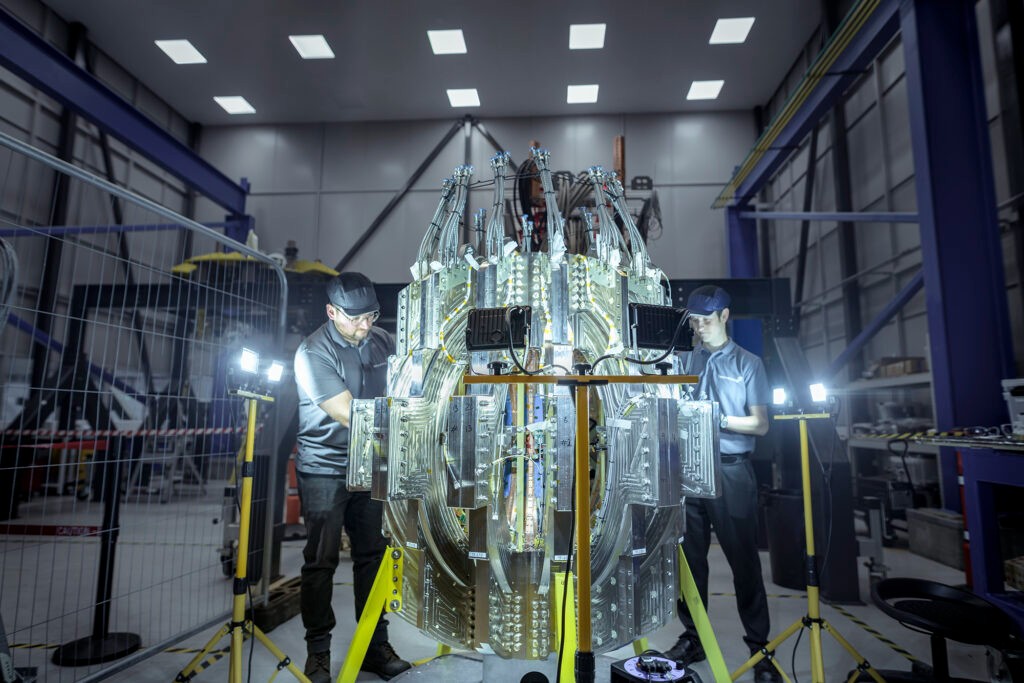
UK Fusion Energy Company Files 50th Patent Application
UK Fusion Energy (UKFE) filed its 50th patent application this week, marking new progress in the UK's efforts to advance fusion energy commercialization and related intellectual property development. UKFE is a government-backed organization responsible for developing and protecting intellectual property arising from the STEP fusion prototype plant project and driving the transfer of related innovations to industry. Since 2025, the organization has filed 52 patent applications and published 108 technical disclosures and 2 patent applications. These achievements cover key technologies required for the construction of the STEP prototype facility, as well as some innovations applicable beyond the fusion energy sector. UKFE stated that the intellectual property portfolio reflects the breadth and pace of the project's R&D activities.
2026-08-28

China Unicom Yantai Branch and CNNC Shandong Build 5G Dedicated Network for Nuclear Power
Recently, the 5G dedicated network project jointly built by China Unicom Shandong Yantai Branch and CNNC Shandong was officially deployed and put into operation. Targeting the requirements of nuclear power scenarios for communication network security, reliability, and low latency, the project introduces technologies such as 5G dedicated networks, edge computing, artificial intelligence, and big data to promote the implementation of digital capabilities in nuclear power park construction and production support scenarios. CNNC Shandong, affiliated with China National Nuclear Corporation, undertakes tasks related to nuclear power unit power generation and grid connection. During project construction, China Unicom Shandong Yantai Branch, in collaboration with Huawei, adopted end-to-end domestically produced equipment, achieving independent controllability in both hardware and software, filling the gap in domestic 5G dedicated network construction in the nuclear power sector...
2026-08-28

Bristol Myers Squibb to Invest $173 Million in New Radiopharmaceutical Plant in Indiana, USA
Bristol Myers Squibb's RayzeBio will build a new radiopharmaceutical production facility in Whitestown, Indiana, USA, with an investment of $173 million. The project will be located at the Anson Industrial Park in Boone County, with construction planned to begin this year, complementing RayzeBio's existing operational radiopharmaceutical plant in Indianapolis. According to information released by the state of Indiana, the new facility will cover approximately 225,000 square feet. Bristol Myers Squibb expects the two production sites to add 100 new positions by the end of 2029, with annual salaries for new positions expected to exceed $130,000. Bristol Myers Squibb acquired San Diego-based RayzeBio in 2023 for $4.1 billion...
2026-08-28

Thailand Plans to Include Small Modular Reactors in Power Development Plan, Targeting 9 GW by 2050
Thailand's new draft Power Development Plan (PDP) is expected to be released in September and enter the public consultation phase. All four power supply scenarios under discussion incorporate small modular reactors (SMRs) and large-scale energy storage systems, covering the planning period from 2026 to 2050. According to the draft's vision, Thailand plans to connect its first 300 MW-class small modular reactor to the national power grid by 2037, with nuclear power installed capacity reaching 9,000 MW by 2050. Based on a single-unit capacity of 300 MW, this target is roughly equivalent to approximately 30 reactors of similar scale, though the actual number may be adjusted depending on technology pathways and electricity demand. The main objectives of the new plan include reducing greenhouse...
2026-08-27

U.S. Interlune injects helium-4 into lunar soil simulant, simulating 15,000 years of solar wind exposure on the Moon in 4 hours
U.S. space infrastructure and resources company Interlune announced on August 26, 2026, that it has successfully injected helium-4 into and released it from simulated lunar soil material, with experimental results consistent with the behavior of real lunar samples collected by the Apollo program. The company stated that this capability can simulate nearly 15,000 years of solar wind exposure on the lunar surface in approximately 4 hours, providing a material basis closer to real conditions for testing lunar resource development equipment on Earth. The experiment focused primarily on ilmenite. According to studies of Apollo mission samples, ilmenite is the main helium-bearing mineral in lunar soil. Interlune formed a plasma by ionizing helium gas in a vacuum environment, then...
2026-08-27

MIIT: Promote Future Industries Including Nuclear Fusion Energy as New Growth Drivers
The State Council Information Office held a press conference on August 26, where the Ministry of Industry and Information Technology (MIIT) briefed on efforts to fully implement the 15th Five-Year Plan and accelerate new industrialization. The MIIT stated that over the next five years, it will focus on optimizing the industrial structure, coordinating the transformation and upgrading of traditional industries, nurturing and strengthening emerging industries, and making forward-looking arrangements for future industries, while maintaining and developing a complete industrial system. In terms of future industry layout, the MIIT proposed promoting quantum technology, biomanufacturing, hydrogen energy and nuclear fusion energy, brain-computer interfaces, embodied intelligence, and sixth-generation mobile communications as new economic growth drivers. The inclusion of nuclear fusion energy in future industry directions reflects its important position in new industrialization and the cultivation of strategic emerging industries.
2026-08-27

New Analytical Laboratory Completed at Oak Ridge to Support U-233 Cleanup and Medical Isotope Supply
The U.S. Department of Energy Oak Ridge Environmental Management Office (OREM) and its contractor Isotek Systems completed installation of a new analytical laboratory at Oak Ridge National Laboratory (ORNL) on August 25, 2026. The laboratory will support ORNL's highest-priority environmental cleanup project and accelerate delivery of critical medical isotope materials for cancer treatment research. Isotek Systems is responsible for removing the U.S. uranium-233 inventory stored at Oak Ridge National Laboratory. Uranium-233 was primarily developed in the 1950s and 1960s, initially intended for use as nuclear reactor fuel, but was later proven unsuitable as a commercial fuel source...
2026-08-26

Two production lines at radiopharmaceutical plant in Russia's Kaluga Region enter trial production
Rosatom recently announced that two production lines at its modern radiopharmaceutical manufacturing facility in the Kaluga Region have entered trial production. The facility, built in accordance with the Eurasian Economic Union's international Good Manufacturing Practice (GMP) standards, is equipped with high-level production equipment and is designed to supply safe, quality-controlled radiopharmaceuticals to the market. According to reports, Rosatom's subsidiary enterprises currently produce more than ten registered diagnostic and therapeutic radiopharmaceuticals, involving isotopes such as iodine-123, iodine-131, technetium-99m, and samarium-153. The new plant's production plan is based on the demand for radioisotope products from Russian medical institutions through 2030. The company...
2026-08-26

Japan's Mihama Nuclear Power Plant Unit 3 Receives Preliminary Approval for Operation Plan Beyond 50 Years
On August 25, Japan's Nuclear Regulation Authority (NRA) gave preliminary approval to Kansai Electric Power Co. (KEPCO) for the long-term facility management plan for Unit 3 of the Mihama Nuclear Power Plant. Located in Mihama Town, Fukui Prefecture, the unit will mark its 50th anniversary of commercial operation on December 1. In May of this year, the metal top cover of the high-pressure turbine at Mihama Unit 3 suffered damage, resulting in steam leakage. At the NRA meeting held that day, KEPCO explained that the cause of the incident was believed to be thinning of the inner wall of the top cover due to steam flow. The company stated that this phenomenon falls under previously anticipated aging and degradation management for turbine equipment, and that the existing plan already includes corresponding management measures. Visual inspection and other examination methods were also deemed applicable, thus no revision to the long-term facility management plan was required.
2026-08-26

China's Nuclear Power Installed Capacity Up 8.5% Year-on-Year by End of July
On August 25, the National Energy Administration released national electricity statistics for January-July. By the end of July, the country's cumulative installed power generation capacity reached 4.08 billion kilowatts, up 11.0% year-on-year. Among this, nuclear power installed capacity stood at 66.14 million kilowatts, up 8.5% year-on-year. During January-July, the country added 3.62 million kilowatts of new nuclear power installed capacity. In the same period, the cumulative average utilization hours of power generation equipment nationwide were 1,671 hours, down 135 hours from the same period last year. The data also showed that by the end of July, thermal power installed capacity was 1.58 billion kilowatts, up 6.3% year-on-year; hydropower installed capacity was 456 million kilowatts, up 3.4% year-on-year; wind power installed capacity was 687 million kilowatts, up 19.5% year-on-year; solar power installed capacity was 1.288 billion kilowatts, up year-on-year...
2026-08-25

Belarusian Nuclear Power Plant's cumulative electricity generation exceeds 65.5 billion kWh
Belarusian Energy Minister Denis Moroz stated before the start of the Minsk-Ostrovets electric vehicle rally that the cumulative electricity generation of the Belarusian Nuclear Power Plant has exceeded 65.5 billion kWh, currently accounting for approximately 40% of the country's total electricity output. Moroz said that since the plant's commissioning, it has effectively replaced a portion of natural gas consumption, reduced foreign exchange expenditure pressure caused by energy imports, and is of great significance to Belarus's economic operation. Located in Ostrovets, Grodno Region, the Belarusian Nuclear Power Plant is the country's first nuclear power plant, constructed under the Russian AES-2006 design. The project commenced in 2013 and is being built with the participation of Rosatom...
2026-08-25

Russia has manufactured 15 RITM-200 reactors
Alexey Likhachev, CEO of Rosatom, presented plans for constructing nuclear power plants of various capacities at a nuclear energy development meeting, with small-capacity nuclear power systems being one of the key topics. According to the presentation, Russia has manufactured 15 RITM-200 reactors to date, with another 13 under construction. The RITM-200 is Russia's new-generation marine reactor, primarily used in Project 22220 nuclear-powered icebreakers. The most recent reactor equipment has been delivered to the nuclear-powered icebreaker Leningrad. Rosatom is developing small nuclear power plant solutions based on the RITM-200, covering both land-based and marine applications...
2026-08-25

Kyoto Fusioneering Completes 25.72 Billion Yen Series D Funding Round
Japanese fusion startup Kyoto Fusioneering announced on August 24 that it has completed the first closing of its Series D funding round, with total financing of 25.72 billion yen. Of this amount, equity financing totaled 16.72 billion yen and debt financing totaled 9 billion yen, with the debt portion comprising credit lines and loan facilities. With this, the company's cumulative equity financing has reached 32.98 billion yen. Following this funding round, Kyoto Fusioneering is valued at approximately 120 billion yen, a significant increase from its pre-funding valuation, making it the first startup in Japan's fusion sector to exceed a valuation of 100 billion yen. The company has previously secured contracts exceeding 14 billion yen cumulatively in markets such as North America and Europe, and has set a short-term sales target of approximately 10 billion yen.
2026-08-24

Iran Says Its Atomic Energy Organization's Medical Products Serve Over 1.5 Million Patients Annually
Mohammad Eslami, head of the Atomic Energy Organization of Iran, recently stated that more than 1.5 million patients in Iran use diagnostic and therapeutic products developed by the organization each year, and related medical products have also been exported to multiple countries. Eslami made these remarks at a ceremony held by Iran's nuclear industry to celebrate Physicians' Day. He said that promoting the application of advanced treatment methods is one of the key directions of Iran's scientific and technological development. The progress made by Iranian researchers in cold plasma technology has opened up a "brand-new and promising path" for medical applications. He stated that plasma technology has not only achieved notable results in the research field but has also played a role in healthcare settings.
2026-08-24