
Search Results
Keyword:B

Argentina's nuclear power generates 4.45 million kWh in half a year, accounting for over 7% of national electricity and meeting the residential electricity needs of 6 million people
Operating data from Nucleoeléctrica Argentina for the first half of 2026 shows that the Atucha 2 and Embalse nuclear power plants generated a combined 4,450,355 kWh, accounting for over 7% of the country's total electricity generation during the period and covering 13% of national residential electricity demand. Notably, although Atucha 1 is temporarily out of service due to a life extension project, the nuclear plants are still able to supply electricity to approximately 6 million people. In addition to its operational breakthroughs, Nucleoeléctrica Argentina is also actively expanding its international business. The company has formally established a new business unit aimed at...
2026-08-06

Kazakh experts call for enhanced radioecological monitoring in border regions
As Central Asian countries accelerate the development of nuclear energy, Kazakh experts have recently proposed that the radioecological monitoring system in border regions should be improved as soon as possible to provide long-term environmental data support for the construction and operation of regional nuclear power projects. Relevant materials indicate that nuclear energy is becoming an important direction in the energy policies of several Central Asian countries. Kazakhstan has decided to build its own nuclear power plant, while neighboring countries such as Uzbekistan are also advancing or preparing similar projects. Growing electricity demand and the need to reduce greenhouse gas emissions are key factors driving the development of nuclear energy in the region. Experts believe that nuclear power development involves not only the construction of advanced units, but also the simultaneous establishment of an effective ecological and radiation safety assurance system. Modern nuclear power plants...
2026-08-06

Germany Establishes Three Fusion Centers, HZDR Contributes to Advancing Key Technologies for Fusion Power Plants
The German Federal Ministry for Research, Technology and Space (BMFTR) recently established three fusion centers under the German High-Tech Agenda (HTAD), aiming to pool the efforts of research institutions and industry to advance technology development for future fusion power plants. The German federal government will provide €125 million in initial funding for the related work, with a focus on laser fusion, magnetic confinement fusion, and cross-cutting areas such as fuel cycle and materials development. The Helmholtz-Zentrum Dresden-Rossendorf (HZDR) will participate in the construction of the relevant centers leveraging its research infrastructure, contributing capabilities in high-power lasers, materials research, simulation and data analysis. The SAXFUSION capability network, jointly coordinated by HZDR and the Fraunhofer Institute for Material and Beam Technology (Fraunhofer IWS), will also take on tasks of exchange, cooperation and knowledge transfer.
2026-08-06

"Academician Lomonosov" Floating Nuclear Power Plant Passes Two-Week Audit by International Experts, with Significantly Fewer Findings Compared to 2022
An international team of inspectors at the Arctic port of Pevek conducted a two-week safety assessment of the Akademik Lomonosov, the world's only operating floating nuclear power plant. The experts observed daily operations and studied documentation in key areas. The audit focused on management organization, engineering support, maintenance and repair, radiation protection, and preparedness for various emergency scenarios. The final report shows a significant reduction in the number of findings compared to inspections prior to 2022. This is attributed to the professionalism of management and staff, who followed domestic and international best practices, thereby achieving a high level of safety and operational culture. The plant's nuclear...
2026-08-06

Rosatom selects SNIIP as chief design organization for radiation control systems, overseeing standardization of radiological instrumentation and import substitution assurance at nuclear facilities
Rosatom has selected the Research Institute of Scientific Instruments (SNIIP) as the chief design organization for radiation control systems. The institute, which is part of Rosatom's automation control and electrical equipment division, has been granted this status for a range of similar products in radiation control equipment and systems, including automated radiation control systems and radiation environment monitoring. SNIIP's status as chief design organization means it will be responsible for ensuring Russia's technological autonomy in this field and for developing radiation control instruments and systems. SNIIP General Director Alexey Nikitin stated that this recognition is a testament to the years of work, experience, and professional expertise of the institute's employees...
2026-08-06

Belarus Plans Construction of New Nuclear Power Plant
Belarus plans to build a third unit at its existing nuclear power plant and is planning a second nuclear power plant. The Belarusian nuclear power plant has become a flagship project of the Union State and a symbol of cooperation between Belarus and Russia. However, the country does not intend to stop there. The President of Belarus has made an important decision: to build a third unit at the existing nuclear power plant, while studying the possibility of constructing a second nuclear power plant in the Mogilev region. Energy Minister Denis Moroz discussed the significance of this initiative, its timeline, and the direction of energy development over the next 15 years in the "Economic Environment" program. In 2008, the President of Belarus made the strategic decision to build a nuclear power plant, at a time when other countries were shutting down...
2026-08-06

South Korean Scholar Patents Fusion Reactor Optimization Design Method
Professor Bonggeun Hong (transliteration) of the Department of Quantum System Engineering at the College of Engineering, Jeonbuk National University, South Korea, has recently registered a patent for a fusion reactor optimization design method, aimed at supporting the engineering design and commercialization of next-generation fusion technology. [Image source: Jeonbuk National University] The design method proposed in the patent can evaluate the performance of fusion reactors in various application scenarios—including power generation, thermal energy utilization, and use as a neutron source for nuclear transmutation—while optimizing device dimensions and key component structures. Its core approach is to simultaneously consider fusion system performance and economic feasibility during the initial design phase, thereby deriving more optimal design solutions.
2026-08-06

University of Kansas Receives DOE Funding to Build New-Generation Detectors for CERN's Large Hadron Collider
A particle detector development project led by the University of Kansas has recently received funding from the U.S. Department of Energy's Established Program to Stimulate Competitive Research (DOE EPSCoR). The project, funded at $1 million, will be used to design and build two High-Luminosity Zero Degree Calorimeters (HL-ZDC) for the Compact Muon Solenoid experiment (CMS) at CERN's Large Hadron Collider (LHC). The four-year project is co-led by Michael Murray, professor in the Department of Physics and Astronomy at the University of Kansas, and Christophe Royon, distinguished professor at the University of Kansas. Murray also serves as the project lead for the CMS High-Luminosity Zero Degree Calorimeter upgrade...
2026-08-06

World Nuclear Association: Global Nuclear Power Investment Must Reach $250 Billion Annually to Support Tripling of Installed Capacity by 2050
Global nuclear power investment is expected to see significant growth, with annual investment needs potentially exceeding $250 billion by 2050 to meet rising world energy demand. According to a report by the World Nuclear Association (WNA), this investment scale aims to at least triple global nuclear power installed capacity and is supported by 38 countries. This represents a potential investment opportunity of up to $6 trillion for the nuclear power industry, attracting widespread attention. In addition to government funding, private sector capital participation is crucial to the comprehensive development of nuclear power. The report emphasizes that investment should not only focus on new nuclear power plant construction but also expand the nuclear fuel cycle to support large-scale operations, ensure energy supply...
2026-08-06

BESIII Experiment First Confirms the Existence of Glueballs
On August 6, Beijing time, the international collaboration of the Beijing Spectrometer III experiment (BESIII) at the Beijing Electron-Positron Collider announced at the International Conference on High Energy Physics (ICHEP 2026) held in Brazil, in the form of a special plenary report: after 15 years of sustained research, the BESIII experiment has established a complete chain of evidence proving the existence of glueballs, unraveling the mystery that has puzzled the academic community for nearly half a century. This discovery not only provides a decisive validation of the theory of quantum chromodynamics, but also demonstrates the existence of a completely new form of matter—matter composed purely of force. Atomic nuclei are composed of protons and neutrons, which in turn are composed of quarks. Gluons mediate the strong interaction between quarks...
2026-08-06

UK Energy - Nuclear joins World Association of Nuclear Operators
Great British Energy - Nuclear (GBE-N) has joined the World Association of Nuclear Operators (WANO) as a new member of its fifth membership category. This membership category is open to organizations worldwide that are planning, constructing, or preparing to operate new nuclear facilities. By joining WANO, GBE-N will gain access to the association's global professional network, operational experience feedback, and tailored support for new nuclear projects. WANO can provide assistance in the construction, commissioning, operational readiness, startup, and long-term safe and reliable operation of new nuclear plants. GBE-N, a UK government-owned entity, is advancing plans to deploy Rolls-Royce Small Modular Reactors in Gwynedd, North Wales (formerly known as Wylfa).
2026-08-06

Bahamas to Strengthen Cancer Control System Based on imPACT Review Findings
August 5, 2026, an international review led by the International Atomic Energy Agency showed that the Bahamas has room for further improvement in strengthening cancer treatment services. The review provided a roadmap for the country to improve coordination of cancer services, reduce diagnostic and treatment waiting times, and enhance patient outcomes. Princess Margaret Hospital in Nassau, Bahamas (Image: Pelow Media/Adobe Stock) The imPACT review was conducted jointly by the International Atomic Energy Agency, the World Health Organization/Pan American Health Organization, and the International Agency for Research on Cancer, at the request of the Bahamas Ministry of Health and Wellness, focusing on assessing the country's cancer control capacities and needs. From June 9 to 11, the expert team visited...
2026-08-06

Japanese PET Study Suggests Late-Onset Psychosis May Be Linked to Neurodegenerative Pathology
A nuclear medicine imaging study conducted by a Japanese research team has shown that many adults who experience psychotic symptoms such as hallucinations and delusions for the first time after age 40 have abnormal protein deposits in the brain associated with Alzheimer's disease and other neurodegenerative disorders. The study included 37 patients with late-onset psychosis and 47 age-matched healthy controls. The researchers used the amyloid PET tracer ^11C-PiB and the tau protein PET tracer ^18F-florzolotau to assess the accumulation of β-amyloid and tau proteins in the participants' brains. The results showed that among patients with late-onset psychosis, β-amyloid positivity...
2026-08-06
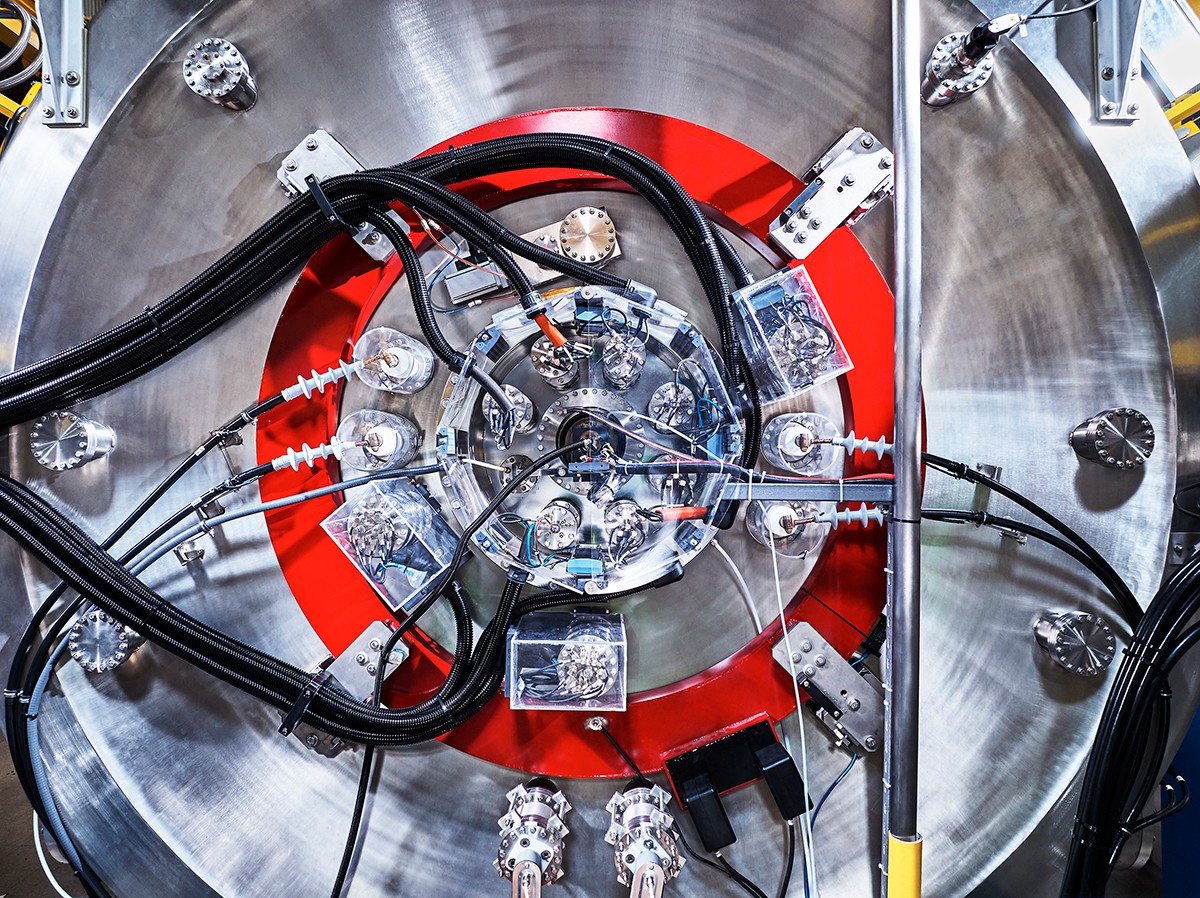
TAE Technologies and Black Moon Energy Sign Helium-3 Supply Cooperation Agreement
On August 5, local time, fusion energy company TAE Technologies announced a cooperation agreement with Black Moon Energy Corporation (BMEC). The two parties will collaborate on helium-3 (He-3) fuel supply solutions and commercial development needed for the future commercialization of fusion energy. Under the agreement, Black Moon Energy will supply helium-3 fuel to TAE Technologies. TAE Technologies CEO Michl Binderbauer stated that the agreement helps accelerate the company's energy goals through alternative fuel supply solutions. The company noted that its fusion technology pathway offers high flexibility in fuel cycle selection, allowing it to choose more cost-competitive fuel cycles based on long-term fuel market changes.
2026-08-06

Bulgaria's Kozloduy Units 5 and 6 VVER-1000 Continue Stable Power Generation
Bulgaria's Ministry of Energy confirmed on August 4 that Units 5 and 6 (both VVER-1000) at the Kozloduy Nuclear Power Plant remain stably connected to the grid despite record-low Danube River water levels and an ongoing heatwave. Professional assessments indicate that even if the river level continues to decline at the current rate, no power reduction will be required for the next three weeks. Bulgarian authorities have confirmed that they maintain continuous contact with relevant institutions in Serbia and Romania to coordinate and monitor the situation on the Danube waterway. The stable operation of the Kozloduy Nuclear Power Plant comes at a time when neighboring operators along the Danube have been forced to reduce output or cease operations. Due to the sharp drop in water levels and rising river water temperatures, Hungary has had to significantly reduce power output and shut down the Paks Nuclear Power Plant, which supplies more than 40% of the country's electricity.
2026-08-06