
Search Results
Keyword:El

South Korean civic groups oppose construction of spent fuel storage facility at Hanbit Nuclear Power Plant site
On September 4, the Joint Action Organization Against Hanbit Nuclear Power Plant in the Honam region of South Korea held a press conference in front of the high-level radioactive waste forum venue in Gochang County, North Jeolla Province, demanding the cancellation of plans to build a storage facility at the Hanbit Nuclear Power Plant site and proposing fundamental measures to address nuclear waste issues. The organization stated that Korea Hydro & Nuclear Power (KHNP) is pushing forward with the construction of temporary storage facilities at the plant site on the grounds that the spent fuel pools at Hanbit Nuclear Power Plant may reach saturation by 2030. The organization argued that this move fails to adequately respond to the opinions of residents near the plant and amounts to unilaterally shifting the burden of nuclear waste onto the local community. The organization stated that the current plan involves building storage facilities at the existing nuclear power plant site...
2026-09-06

Release of the Main Piping Welding Control Point for Unit 2 of Xudabao Nuclear Power Plant
Recently, the Northeast Regional Office of Nuclear and Radiation Safety Supervision under the Ministry of Ecology and Environment (hereinafter referred to as the Northeast Office) organized an inspection team to conduct an inspection at the main piping welding control point for Unit 2 of Xudabao Nuclear Power Plant. Experts from the East China Regional Office of Nuclear and Radiation Safety Supervision, the South China Regional Office of Nuclear and Radiation Safety Supervision, the Nuclear and Radiation Safety Center, the China Machinery Productivity Promotion Center, the Shanghai Nuclear Safety Review Center, the Suzhou Nuclear Safety Center, and other organizations participated in the inspection. As a critical component of the reactor coolant pressure boundary, the welding quality of the main piping is directly related to the construction quality and operational safety of the nuclear power unit. In strict accordance with relevant procedural requirements, the inspection team conducted a comprehensive inspection covering the implementation of the operating organization's quality assurance program, quality control of important items and activities, and preparation for main piping welding through on-site inspections, document reviews, and personnel interviews...
2026-09-05
China-Russia Energy Cooperation Committee Meeting Discusses Cooperation in Nuclear Energy and Other Fields
Ding Xuexiang, Member of the Standing Committee of the Political Bureau of the CPC Central Committee and Vice Premier of the State Council, co-chaired the 23rd meeting of the China-Russia Energy Cooperation Committee with Russian Deputy Prime Minister Novak in Vladivostok on the 4th. Ding Xuexiang stated that President Xi Jinping and President Putin have held multiple meetings this year, conducting in-depth strategic communication and making top-level arrangements, drawing a clear blueprint for upgrading and enhancing China-Russia energy cooperation. Since the 22nd meeting of the China-Russia Energy Cooperation Committee, bilateral energy trade has steadily expanded, landmark major cooperation projects have progressed smoothly, and new progress has been made in clean energy cooperation. China is willing to work with Russia to implement the important consensus of the two heads of state, fully leverage the role of the committee mechanism, and promote...
2026-09-05

First Application and Verification of Intelligent Monitoring and Adjustment System for Nuclear Power Plant Personnel Status at "Hualong One" Nuclear Power Plant
On September 4, CGN Engineering, in collaboration with Cangnan Nuclear Power, successfully completed the testing, verification, and on-site data collection of the Intelligent Monitoring and Adjustment System for Nuclear Power Plant Personnel Status at the San'ao Nuclear Power Base. The CGN Engineering departments participating in this testing and verification included CGN Design Institute, the National Key Laboratory of Nuclear Power Safety Technology and Equipment (hereinafter referred to as the National Key Laboratory), CGN Engineering Cangnan Project Department, and Huasheng Technology. This joint test marks an important milestone in the project's transition from technology research and development to engineering application, providing key technical support for the quantitative analysis transformation of human factors safety management in China's nuclear power industry. The system, built upon the personnel fatigue status monitoring principle prototype developed under the Intelligent Nuclear Power strategic special project, has been iteratively improved with continuous support from the Yangjiang Chuangbao High-tech Research Project and the National Key Laboratory research projects, and has now evolved into a mature product suitable for engineering and large-scale application. Previously, relevant functional modules of the system had been deployed and data collected in applications such as human factors verification in the main control room of Yangjiang Nuclear Power Base and simulator training at Taishan Nuclear Power Base. The on-site testing and data collection at the San'ao Nuclear Power Base further verified the system's environmental adaptability and reliability across multiple nuclear power base scenarios, laying a solid foundation for subsequent industry-wide promotion and application.
2026-09-05

State Nuclear Uranium Industry Achieves 100% Localization of Electron Linear Accelerator Development
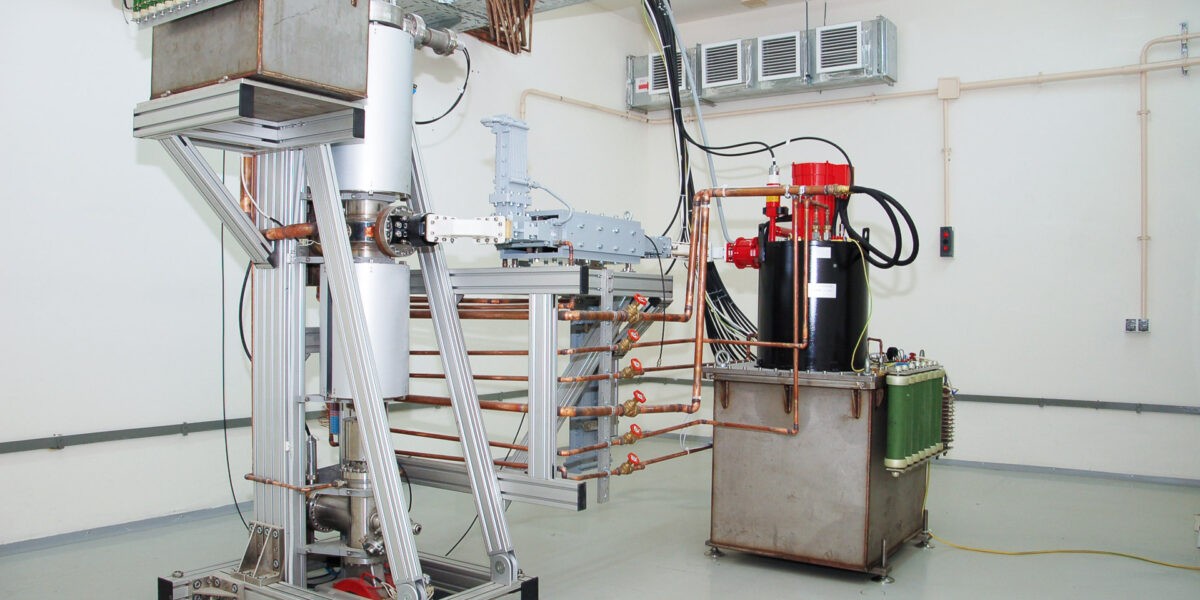
Recently, the first fully domestically produced 10 MeV/20 kW electron linear accelerator developed by the Technology Center of State Nuclear Uranium Industry (Nuclear Power Tongchuang) completed its 20 kW beam extraction test, with performance meeting design specifications. This marks a significant breakthrough for State Nuclear Uranium Industry in the field of electron accelerator development and elevates its capability in developing nuclear technology application equipment to a new level. Main unit of the 10MeV/20kW electron irradiation accelerator As a versatile high-energy electron linear accelerator, the 10MeV/20kW electron linear accelerator is widely used in multiple sectors of the national economy, including medical device sterilization, traditional Chinese medicine pest control, food preservation, and polymer material modification. During the current process of engineering application and industrial promotion, its core components such as klystrons, waveguide windows, and water loads have a relatively low localization rate, with some models still relying on imports, facing challenges such as long procurement cycles, high costs, and difficulties in spare parts support. The R&D team of State Nuclear Uranium Industry has focused on industry pain points, adhered to a problem-oriented approach, overcome difficulties, efficiently resolved various technical challenges, and successfully achieved 100% localization of this model of electron linear accelerator with significantly reduced overall machine costs, breaking the reliance on imported core components. As a key R&D project for differentiated layout in the nuclear technology industry, State Nuclear Uranium Industry will continue to improve its processes and standards systems, accelerate the application of research achievements in typical scenarios, bridge the chain from R&D to industrial application, and promote the steady development of the nuclear technology industry.
2026-09-05
Russian Research Team Synthesizes Novel Metal-Organic Framework Material Capable of Immobilizing Radioactive Cesium
The Frumkin Institute of Physical Chemistry and Electrochemistry of the Russian Academy of Sciences has synthesized a novel metal-organic framework material containing neptunium and cesium atoms. Research shows that this material is insoluble in water, resistant to high temperatures and intense radiation, and can stably "lock" radioactive cesium within its own structure, offering new insights for research on radionuclide immobilization and radioactive waste treatment materials. Metal-organic framework materials are a class of materials with high porosity and controllable crystal structures, whose lattices are typically composed of metal atoms connected by organic molecules. Since their pore sizes and structures can be tuned at the molecular level, these materials can be used to adsorb gases or specific nuclides. However, compared with traditional adsorbents such as activated carbon...
2026-09-04

Takahama Nuclear Power Plant in Japan to Transport 1,600 Drums of Low-Level Radioactive Waste
Kansai Electric Power announced on September 4 that it will transport low-level radioactive waste generated at the Takahama Nuclear Power Plant to the Low-Level Radioactive Waste Disposal Center of Japan Nuclear Fuel Limited (JNFL) in Rokkasho Village, Aomori Prefecture. According to the plan, the dedicated low-level radioactive waste transport vessel Seiei Maru will berth at the Takahama Nuclear Power Plant on September 5 and depart on September 12 after loading is completed. If the transport schedule is adjusted due to factors such as weather conditions, Kansai Electric Power will announce the actual situation separately. This shipment consists of 200 dedicated containers holding 1,600 waste drums, all of which are cement-solidified waste, excluding homogeneously solidified waste.
2026-09-04

U.S. Completes Mechanical Property Measurements of Irradiated HALEU TRISO Fuel Particles
Researchers at the U.S. Department of Energy's Oak Ridge National Laboratory (ORNL) have completed mechanical property measurements of irradiated high-assay low-enriched uranium (HALEU) TRISO fuel particles, providing new experimental data for the development and qualification of next-generation nuclear fuels. This is an optical cross-sectional image of an irradiated AGR-2 TRISO fuel particle in the Irradiated Fuels Examination Laboratory at Oak Ridge National Laboratory. Image credit: Oak Ridge National Laboratory, U.S. Department of Energy. TRISO fuel, or tri-structural isotropic fuel, features particles coated with multiple protective layers, typically including pyrolytic carbon layers and a silicon carbide layer. This structure provides strong fission product retention capability and is considered one of the key fuel options for advanced reactors, particularly high-temperature gas-cooled reactors. Understanding the property changes of these coatings after irradiation is a critical step in predicting fuel performance under reactor operating conditions.
2026-09-04

Danzhou in Hainan Advances "Nuclear Power to Yangpu" and "Nuclear Steam to Yangpu" to Support Zero-Carbon Industrial Park Development
On September 2, the series of themed press conferences for the "15th Five-Year Plan" kickoff (fifth session at the city and county level) — the Danzhou special session was held. A relevant official from Danzhou stated that during the "15th Five-Year Plan" period, Danzhou will focus on building a new-type power system, a new-type energy system, and zero-carbon industrial parks and low-carbon city development, promoting deep integration of clean energy with port-adjacent industries, and striving to become a national demonstration area for new-type power systems. According to the released content, during the "15th Five-Year Plan" period, Hainan Power Grid plans to invest 5 billion yuan in Danzhou to build a coordinated "transmission-distribution-microgrid" three-tier power grid. By 2030, Danzhou will fully establish a layered, zoned, and independently operated grid framework, promote "nuclear power to Yangpu" to achieve local consumption of green electricity with full-chain traceability and verifiability, reducing the regional power carbon emission factor across the entire area to below 0.05 kgCO₂/kWh.
2026-09-04

Fudan team extracts CKM matrix element |Vus| via quantum entanglement in collider experiment for the first time
On the evening of September 2, 2026, Beijing time, the team led by Luo Tao from the Institute of Modern Physics at Fudan University, together with collaborators, published a research achievement titled "Exploring baryon semileptonic decays through polarization and entanglement" in Nature. This study, for the first time in a collider experiment, utilized quantum entanglement and polarization information to extract the Cabibbo-Kobayashi-Maskawa (CKM) matrix element |Vus|, providing a new experimental pathway for precisely testing the Standard Model of particle physics. The CKM matrix describes the strength of transitions between different quarks under the weak interaction. Among them, |Vus| corresponds to the transition from the strange quark to the up quark, and its numerical precision is related to the test of the three-generation quark mixing mechanism in the Standard Model. Currently, results for |Vus| obtained from different decay processes still show discrepancies, and the unitarity test of the first row of the CKM matrix also exhibits some tension, necessitating more independent measurement methods for verification.
2026-09-04

Iowa Releases Final Report of Nuclear Energy Task Force
Iowa Governor Kim Reynolds announced on September 3 that the Iowa Nuclear Energy Task Force has completed its final report. The task force was established in January of this year under Executive Order No. 17, with the mission of assessing opportunities for advancing nuclear energy technology and related infrastructure development in Iowa. The task force is composed of representatives from utility companies, power generators, local governments, academia, the Iowa Utilities Commission, industry associations, national laboratories, and the state legislature, and is supported by the Iowa Economic Develop...
2026-09-04
Rosatom Fuel Division Completes Assembly of 30th Industrial Metal 3D Printer
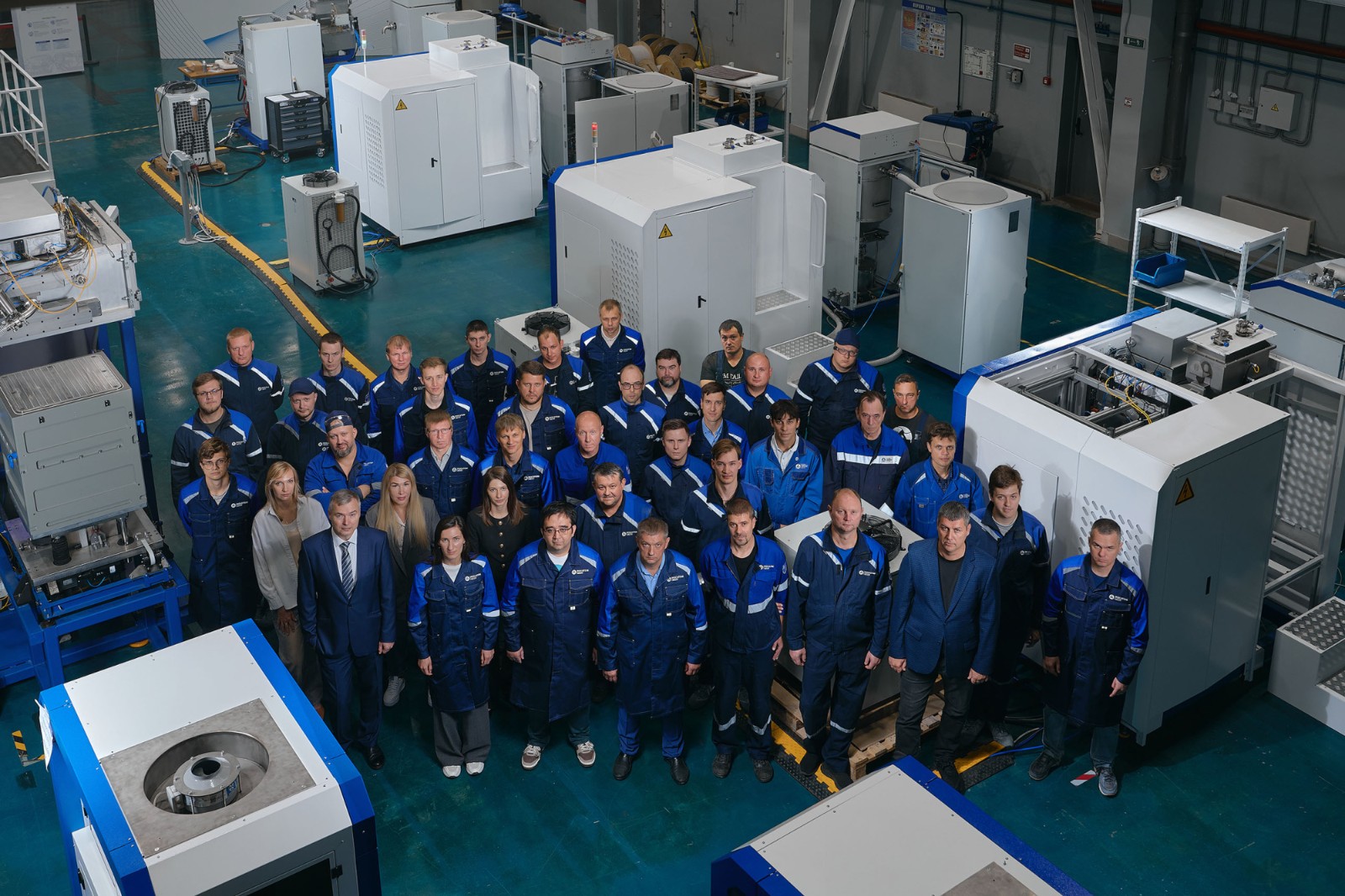
On September 3, 2026, the Moscow Additive Manufacturing Technology Center of Rosatom's Fuel Division completed the assembly of its 30th industrial metal 3D printer. The equipment is the medium-sized RusMelt 300M, a flagship model in Rosatom's metal 3D printer product line. The rollout of the 30th unit coincides with the 30th anniversary of TVEL JSC, the management company of Rosatom's Fuel Division. According to reports, the additive manufacturing technology business unit of Rosatom's Fuel Division currently produces industrial-grade 3D printers capable of meeting manufacturing needs for components of various sizes, utilizing mainstream metal additive manufacturing technologies such as selective laser melting (SLM), direct metal deposition (DMD), and electron beam additive manufacturing (EBAM)...
2026-09-04
South Korea Exports Molten Salt Reactor R&D Technology to Denmark
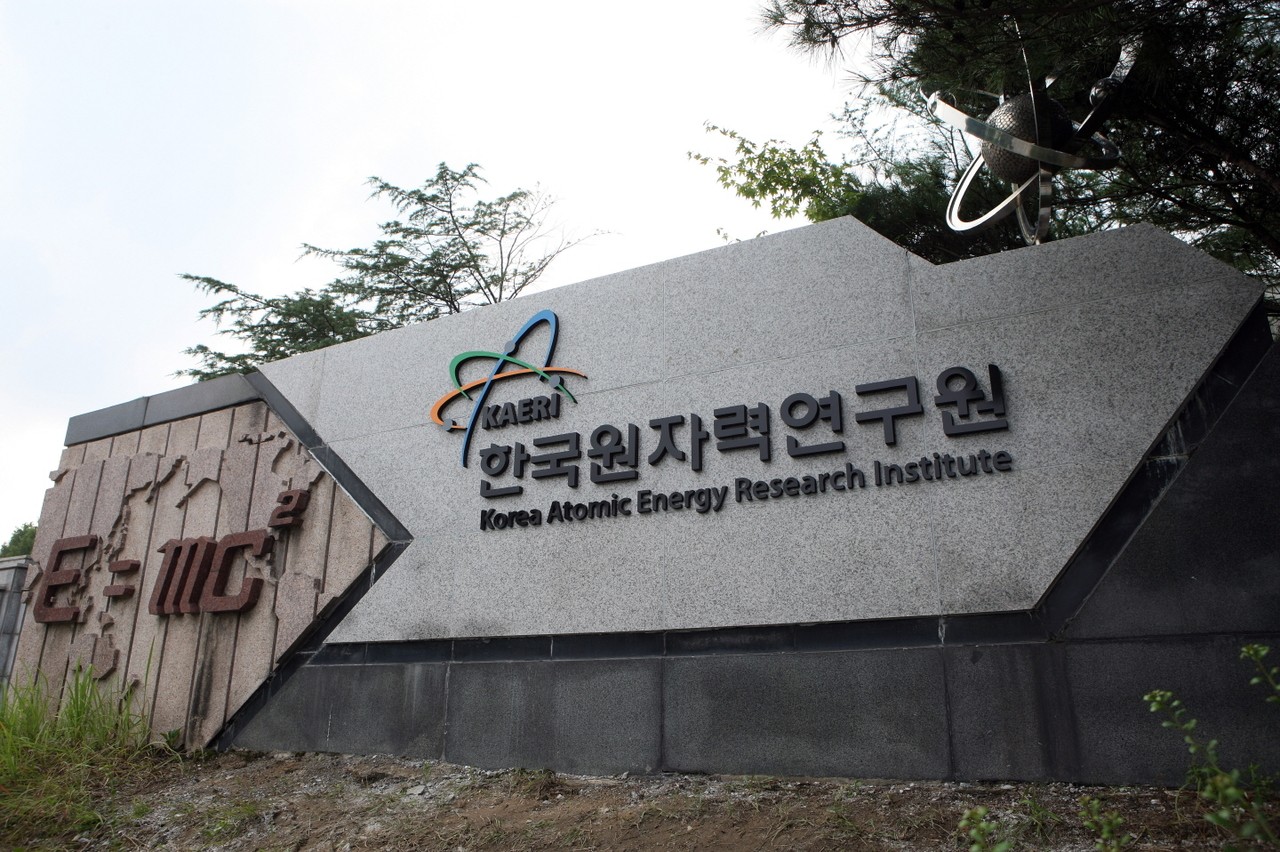
The Korea Atomic Energy Research Institute (KAERI) announced on September 4 that it has signed a two-year contract worth USD 2.26 million (approximately KRW 3 billion) with Danish nuclear energy company Saltforce to provide molten salt reactor-related R&D services, covering areas such as nuclear fuel manufacturing, molten salt testing, and material corrosion assessment. Molten salt reactors are a class of next-generation reactors that typically use high-temperature molten salt as a fuel carrier or coolant medium. Based on the molten salt chemical system, this type of technology is mainly divided into fluoride-based and chloride-based systems. Under the contract arrangement, KAERI will provide support for the fluoride-based...
2026-09-04
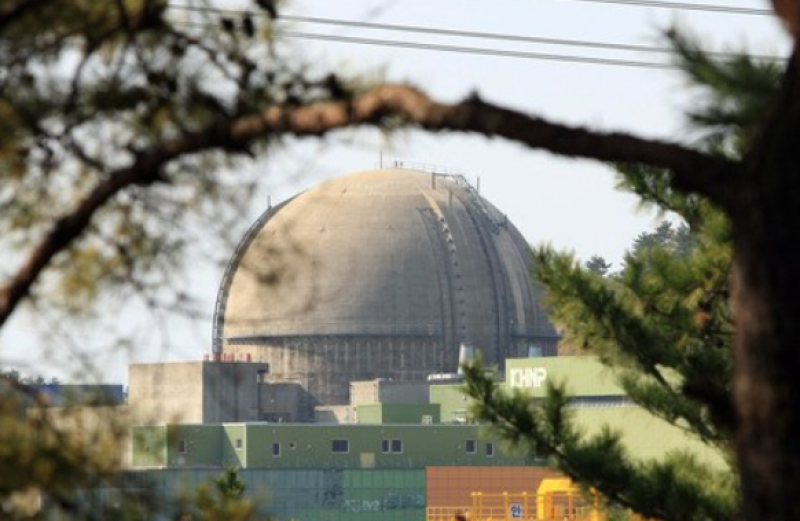
Non-compliant Welding Procedures at Two Units of South Korea's Hanbit Nuclear Power Plant
The Hanbit Nuclear Power Plant headquarters of Korea Hydro & Nuclear Power Co., Ltd. (KHNP) recently confirmed that Units 1 and 2 of the plant had used welding procedure specifications (WPS) that had not undergone impact testing during maintenance of the component cooling water heat exchangers. A retrospective inspection found that among 14 repair activities conducted since the relevant heat exchangers were replaced in 2007, 6 cases involved similar non-compliance. The issue was identified during the 28th planned preventive maintenance outage of Hanbit Unit 1. Inspections revealed that some welding procedure specifications used for repairs to the water chambers of the component cooling water heat exchangers did not meet requirements, involving repair work on worn areas inside the heat exchanger water chambers in the cooling systems of Units 1 and 2. Hanbit Nuclear...
2026-09-04

US NANO Nuclear KRONOS MMR Main Helium Circulator Enters Detailed Design Phase
NANO Nuclear Energy Inc. announced on September 3 that new progress has been made in the development of the main helium circulator for its KRONOS MMR energy system. The engineering collaboration with Howden, a Baker Hughes company, has advanced from preliminary engineering design to the detailed design phase. The main helium circulator is a critical mechanical subsystem of the KRONOS MMR energy system, primarily responsible for driving the helium coolant circulation within the reactor to efficiently transfer heat generated in the core to downstream systems. The performance of this equipment directly affects the reactor's thermal-hydraulic performance, overall efficiency, and long-term operational reliability. According to NANO Nuclear...
2026-09-04