
Search Results
Keyword:TUM

Amentum Establishes Global Nuclear Headquarters in Oak Ridge, Simultaneously Launches Nuclear Scholars Program
Recently, Amentum, a leading U.S. provider of engineering, project management, and innovative technology solutions, opened its global nuclear headquarters in Oak Ridge, Tennessee, and established a Nuclear Center of Excellence, making it the centralized hub for the company's international nuclear business operations. The center is located at 151 Lafayette Drive in Oak Ridge and houses more than 150 experts across various fields, dedicated to delivering innovative engineering, technology solutions, and advanced energy capabilities. Amentum is already a major partner of the Oak Ridge Unified Cleanup Organization (UCOR), the primary environmental management contractor for the U.S. Department of Energy (DOE) at the Oak Ridge Reservation....
2026-10-09

China Becomes First to Achieve Operation of a Thorium-229 Nuclear Optical Clock, Bringing Quantum Precision Measurement into the Atomic Nucleus Scale
Recently, the team of Ding Shiqian, associate professor in the Department of Physics at Tsinghua University, published important results online in the international academic journal Nature, announcing the successful development of a thorium-229 nuclear optical clock and the achievement of its stable operation. This work was completed independently in the same period as that of a European team, making China the first internationally to achieve operation of a thorium-229 nuclear optical clock, marking the successful extension of the time measurement standard from electronic transitions to nuclear transitions. It is understood that a nuclear optical clock uses the internal transition of the thorium-229 atomic nucleus as a time-frequency reference. Ding Shiqian, one of the corresponding authors of the paper, introduced that the pendulum of an old-fashioned wall clock swings about once per second, whereas a nuclear optical clock uses the beat of the atomic nucleus as its "pendulum," with a beat frequency of up to about 2 quadrillion times per second. Because the size of the atomic nucleus is only a few tens of thousandths of the electron cloud outside the nucleus...
2026-10-08
FDA Approves Lantheus' Bravnetsa for the Treatment of Gastroenteropancreatic Neuroendocrine Tumors
The U.S. Food and Drug Administration (FDA) has formally approved Lantheus Holdings' radioligand therapy drug Bravnetsa (lutetium Lu 177 dotatate injection) for the treatment of somatostatin receptor-positive adult gastroenteropancreatic neuroendocrine tumors (GEP-NETs). The approved indication covers neuroendocrine tumors originating from the foregut, midgut, and hindgut. Following FDA review, Bravnetsa has been determined to be bioequivalent and therapeutically equivalent to Novartis'...
2026-09-27

Curium's Lutetium-177 Injection Approved by FDA for Treatment of Gastroenteropancreatic Neuroendocrine Tumors
Radiopharmaceutical company Curium recently announced that its developed lutetium-177 (Lu-177) dotatate injection (trade name: Bexlutry) has received formal approval from the U.S. Food and Drug Administration (FDA). The drug is indicated for the treatment of somatostatin receptor-positive adult gastroenteropancreatic neuroendocrine tumors (GEP-NETs). The specific indication scope includes various neuroendocrine tumors occurring in the adult foregut, midgut, and hindgut. Bexlutry is an advanced radioligand therapy whose mechanism of action lies in its ability to specifically bind to somatostatin receptors highly expressed on the surface of such tumors. Through this precise binding, the drug can deliver...
2026-09-16

FDA Approves Telix's New Brain Tumor Imaging Agent Pixclara
The U.S. Food and Drug Administration (FDA) has approved a new brain tumor imaging agent developed by Australian pharmaceutical company Telix, the company announced on Monday. The product, called Pixclara, is a radioactive diagnostic drug used in combination with positron emission tomography (PET) imaging. Its primary use is to help doctors distinguish between recurrent brain tumors and harmless changes caused by prior treatment. The FDA approval comes after Telix faced an FDA rejection last year due to insufficient evidence. Kevin Richardson, CEO of Telix Precision Medicine, said in a statement: "As the first FDA-approved PET imaging drug for glioma (a type of brain tumor), Pixclara will provide physicians in the United States with more definitive diagnoses and greater confidence in patient treatment planning."
2026-09-15

Finland's Loviisa Nuclear Power Plant Signs 22-Year Power Purchase Agreement with Google
On September 9, 2026, Google announced that it will invest at least 13 billion euros in Finland over the next two years for artificial intelligence infrastructure construction. The investment includes building and expanding data centers in Finland, along with supporting energy projects. Among them, Google signed a 22-year power purchase agreement with Finnish energy company Fortum to purchase up to 50% of the electricity generated by the Loviisa Nuclear Power Plant. Google President and Chief Investment Officer Ruth Porat stated that this arrangement is Google's first nuclear energy deal outside the United States. Google said this investment is its largest single investment in Europe, and the related infrastructure will support services including Gemini, Search, Maps, and YouTube. Lovi...
2026-09-10

Fudan team extracts CKM matrix element |Vus| via quantum entanglement in collider experiment for the first time
On the evening of September 2, 2026, Beijing time, the team led by Luo Tao from the Institute of Modern Physics at Fudan University, together with collaborators, published a research achievement titled "Exploring baryon semileptonic decays through polarization and entanglement" in Nature. This study, for the first time in a collider experiment, utilized quantum entanglement and polarization information to extract the Cabibbo-Kobayashi-Maskawa (CKM) matrix element |Vus|, providing a new experimental pathway for precisely testing the Standard Model of particle physics. The CKM matrix describes the strength of transitions between different quarks under the weak interaction. Among them, |Vus| corresponds to the transition from the strange quark to the up quark, and its numerical precision is related to the test of the three-generation quark mixing mechanism in the Standard Model. Currently, results for |Vus| obtained from different decay processes still show discrepancies, and the unitarity test of the first row of the CKM matrix also exhibits some tension, necessitating more independent measurement methods for verification.
2026-09-04

Israel's Quantum X Labs Claims Efficient Geometric Encoding for Complex Nuclear Environments
Quantum X Labs Inc. of Israel announced on September 3 that it has achieved a key milestone in its nuclear quantum business: the company has developed a new method to more efficiently encode complex spatial geometries into quantum transport frameworks. The company stated that the new method can be used to simulate the trajectories of particles moving through complex material boundaries and heterogeneous structures, providing a new technical pathway for representing more complex physical systems within quantum computing frameworks. Such capabilities are closely related to simulation needs in practical nuclear-related scenarios such as nuclear power plants, medical devices, and space exploration. In photon and particle transport simulations, real-world systems often contain complex boundaries,...
2026-09-04

Amentum Selected for UK Grid Upgrade and Protection Projects
Amentum has announced that it has been selected by SSEN Transmission to undertake strategic roles under two UK energy framework agreements, providing digital and cybersecurity engineering services for UK grid upgrades. Under the arrangements, Amentum will serve as the sole supplier of high-end cybersecurity engineering services, contributing to the digitalization and security capability enhancement of the UK power grid. The services will focus on critical asset protection, digital capability expansion, operational data application, and security architecture development for grid operations. SSEN Transmission is the owner of the high-voltage transmission system in northern Scotland...
2026-09-02

Beijing Jiluntai's ¹⁷⁷Lu-JLT003 Injection Receives IND Approval for Treatment of Integrin αvβ3-Positive Malignant Tumors
Beijing Jiluntai Pharmaceutical Co., Ltd. has recently achieved progress in radiopharmaceutical R&D. Its self-developed Class 1 innovative therapeutic radiopharmaceutical ¹⁷⁷Lu-JLT003 Injection (generic name: ¹⁷⁷Lu-AB-3PRGD2) has obtained the Clinical Trial Approval (IND) from the Center for Drug Evaluation (CDE) of the National Medical Products Administration (NMPA), intended for the treatment of integrin αvβ3-positive malignant tumors. ¹⁷⁷Lu-AB-3PRGD2 is a therapeutic radiopharmaceutical targeting integrin αvβ3. Integrin αvβ3 is highly expressed on various solid tumor cells and tumor neovascular endothelial cells, while showing low expression in normal tissues, a characteristic that...
2026-09-01
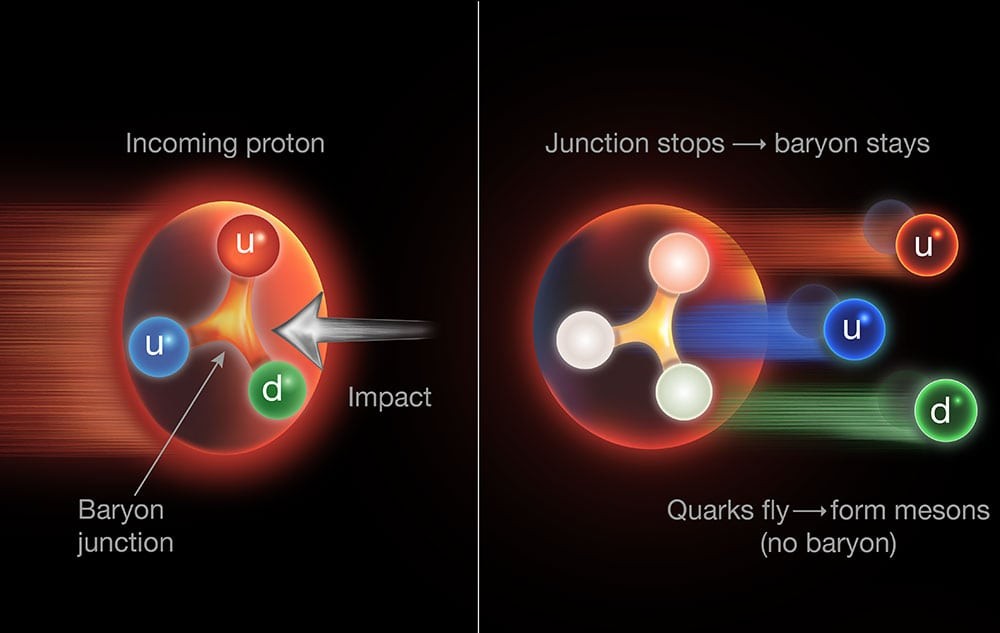
U.S. Heavy-Ion Collision Research Suggests Protons and Neutrons May Not Be Just "Three Quarks"
The STAR Collaboration at the Relativistic Heavy Ion Collider (RHIC) at the U.S. Department of Energy's Brookhaven National Laboratory recently proposed, based on heavy-ion collision data studies, that baryons such as protons and neutrons may not be simply composed of three valence quarks, and that their baryon number may be more closely related to "baryon junctions" in the gluon field. The findings were published in the journal *Science*. In the traditional valence quark model, each quark is assigned a baryon number of 1/3, so baryons such as protons and neutrons, composed of three quarks, carry a baryon number of +1. However, this model is not a fundamental requirement of quantum chromodynamics (QCD). As early as the 1970s, alternative explanations had been proposed in the theoretical community; in 1996, Dmitri Kharzeev proposed a model suggesting that the baryon number is not necessarily carried by the quarks themselves, but may instead be concentrated at the Y-shaped junction formed by the gluon field—the "baryon junction."
2026-08-31

Japan's PF Launches Quantum Multi-Beam Experiments, Achieving Simultaneous Hard and Soft X-ray Measurements
The Photon Factory, a synchrotron radiation facility at the Institute of Materials Structure Science, High Energy Accelerator Research Organization (KEK) in Japan, has recently launched collaborative experiments on the development and research multi-purpose beamlines BL-11A and BL-11B, achieving simultaneous irradiation of the same sample with hard and soft X-rays at the same position. The research results will be published in the international academic journal *Review of Scientific Instruments*. The Photon Factory uses electrons moving at near-light speed to generate high-brightness X-rays, known as synchrotron radiation, for studying material structures and properties. Among these, hard X-rays are better suited for observing the internal structure of materials, while soft X-rays are ideal for analyzing material surfaces and electronic states. Previously, at synchrotron radiation facilities, the two types of X-rays typically had to...
2026-08-31

Sweden's Oskarshamn New Nuclear Project Applies for State Aid
NuCore Energi AB, a project company under Fortum, has submitted a state aid application to the Swedish government to initiate consultations on the framework and conditions for a new nuclear power project in Oskarshamn municipality. The project is planned to proceed near the existing Oskarshamn Nuclear Power Plant, with options covering small modular reactors (SMRs) and large reactors, with a total installed capacity expected to range between 1,200 MW and 3,400 MW. NuCore Energi submitted the state aid application on August 27, 2026. In the photo, from left to right: NuCore Energi CEO Laurent Leveugle and Minister Niklas Wykman. Fortum...
2026-08-28
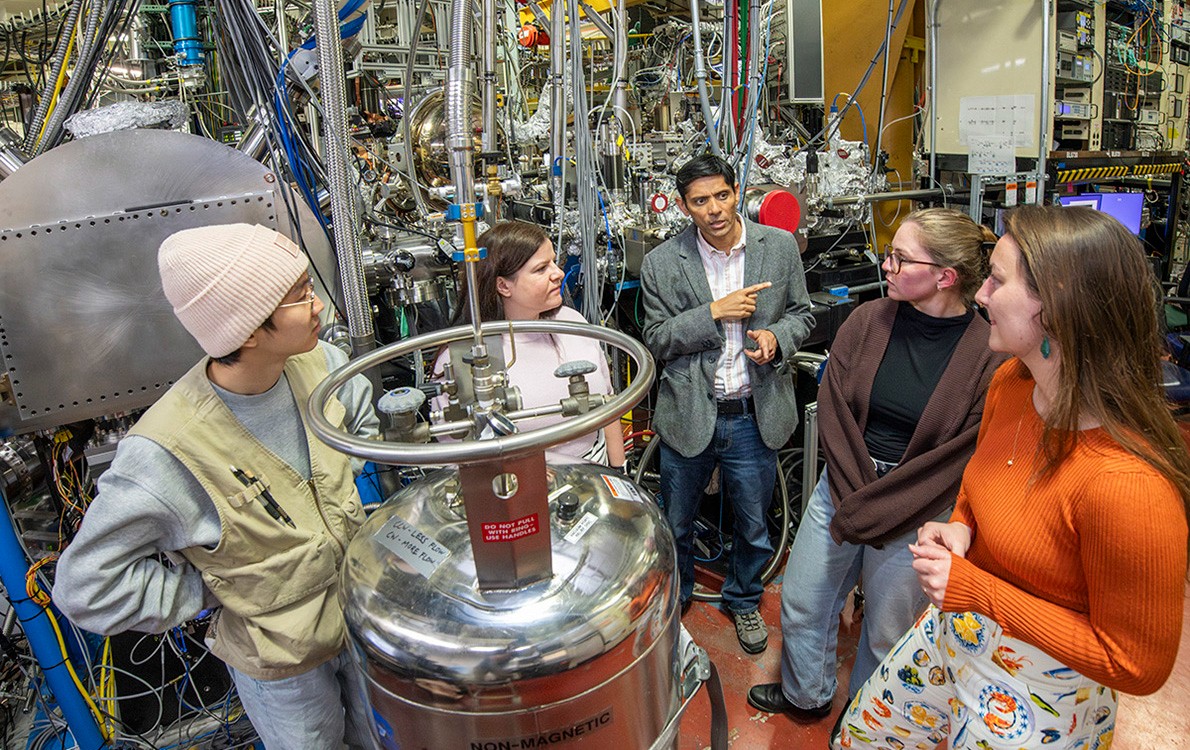
U.S. Advanced Light Source Upgrade to Enhance Nanoscale Research Capabilities for Quantum Materials
The Advanced Light Source (ALS) at Lawrence Berkeley National Laboratory in the United States is enhancing its quantum materials research capabilities through an upgrade project. As a U.S. Department of Energy Office of Science user facility, ALS has supported researchers worldwide over the past 30+ years in studying quantum materials such as superconductors, topological insulators, and correlated electron materials, leveraging its synchrotron soft X-ray, ultraviolet, and full-spectrum X-ray experimental capabilities. Doctoral students Wei Francis He (left), Kate Matthews (second from right), and Robin Greifke (right) from the University of California, San Diego, are from the Alex Frañó research group at the ALS COSMIC beamline (7.0.1)...
2026-08-27

U.S. STREAMLINE Project Advances Nuclear Quantum Many-Body Research with Artificial Intelligence
On August 25, 2026, a new project named STREAMLINE is combining artificial intelligence, machine learning, and supercomputing to address the nuclear quantum many-body problem in nuclear physics research, aiming to more accurately simulate the interactions between protons and neutrons within atomic nuclei and provide theoretical support for frontier topics such as neutron stars and fundamental interactions. The difficulty of the nuclear quantum many-body problem lies in the fact that as the number of particles increases, the possible interactions among them grow rapidly, and traditional computational methods quickly hit the ceiling of computing power. Even with high-performance supercomputers, only quantum systems of relatively limited scale can typically be handled. The STREAMLINE project hopes to...
2026-08-26