
Search Results
Keyword:UK
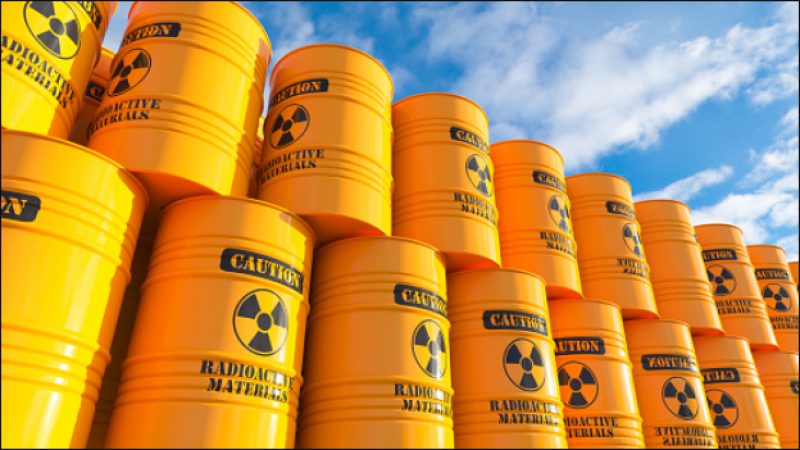
Fukui Prefecture in Japan Likely to Approve KEPCO's Dry Storage Facility for Spent Nuclear Fuel
According to multiple officials of Fukui Prefecture, Japan, Governor Takato Ishida of Fukui Prefecture is expected to approve Kansai Electric Power Company's (KEPCO) construction of a dry storage facility for spent nuclear fuel at its nuclear power plants within the prefecture. If completed, this would mark the first adoption of such an on-site interim storage facility at KEPCO's nuclear power plants. A dry storage facility is used to store spent nuclear fuel discharged from reactors. The basic approach involves placing spent fuel into dedicated metal containers and cooling them naturally through air circulation, without relying on electrical systems. Since the containers themselves can be transported by ship or trailer, subsequent off-site transfer is relatively convenient; even in the event of a power outage, the associated accident risk is considered low. Japan Atomic Power Company (JAPC) and Shikoku Electric Power Company operate nuclear power plants that have already adopted this storage method.
2026-08-25

Australia Plans Nuclear Submarine Maintenance Dockyard in Western Australia
Australian Defence Minister Richard Marles said Australia plans to build a dockyard in Western Australia by the early 2030s to maintain U.S. Virginia-class nuclear-powered submarines. Marles said at a joint press conference with Australian Prime Minister Anthony Albanese that Australia needs to complete a backup dockyard by the early 2030s to commence maintenance work on Virginia-class submarines. The Australian government confirmed on August 24 that the new defence complex will be located in Henderson, Western Australia. Under the trilateral security partnership between Australia, the United Kingdom, and the United States...
2026-08-25

US to Partner with UK Firm to Advance Nuclear-Powered Commercial Ships
Stephen Carmel, Administrator of the U.S. Maritime Administration (MARAD), stated that the United States will sign an agreement with Core Power, a UK-based marine nuclear energy company, to jointly advance the development of a fleet of nuclear-powered commercial ships. Under the arrangement, Washington plans to sign a public-private cooperation agreement with Core Power. The company will participate in promoting the research and development of nuclear propulsion systems in the shipping sector, accelerating the exploration of applications for this technology in commercial vessels. In June of this year, the American Bureau of Shipping (ABS) approved a nuclear-powered ship design proposed by the Massachusetts Institute of Technology (MIT). The design is regarded as a significant step forward in the U.S. technological pathway for nuclear-powered commercial ships...
2026-08-25

Japan's TEPCO Receives 4.8 Billion Yen in Nuclear Damage Compensation Funds
Tokyo Electric Power Company Holdings (TEPCO Holdings) announced on August 24 that it received a fund disbursement of 4.8 billion yen from the Nuclear Damage Compensation and Decommissioning Facilitation Corporation (NDF) on the same day. The disbursement was made in accordance with the revised Special Business Plan approved on March 31, 2026. TEPCO stated that, to date, it has received 188.9 billion yen in compensation under the Act on Compensation for Nuclear Damage, and a cumulative total of 11.5524 trillion yen in fund disbursements from the NDF. As the total compensation payments expected by the end of September 2026 are projected to exceed the combined amount of the above funds, the company applied for the 172nd fund disbursement. TEPCO said that while receiving institutional financial support, it will continue to advance compensation efforts for nuclear accident victims and meet related compensation demands. Information on claims and payment status, changes in cumulative total payments, and agreement amounts by category is available through the company's public channels.
2026-08-24
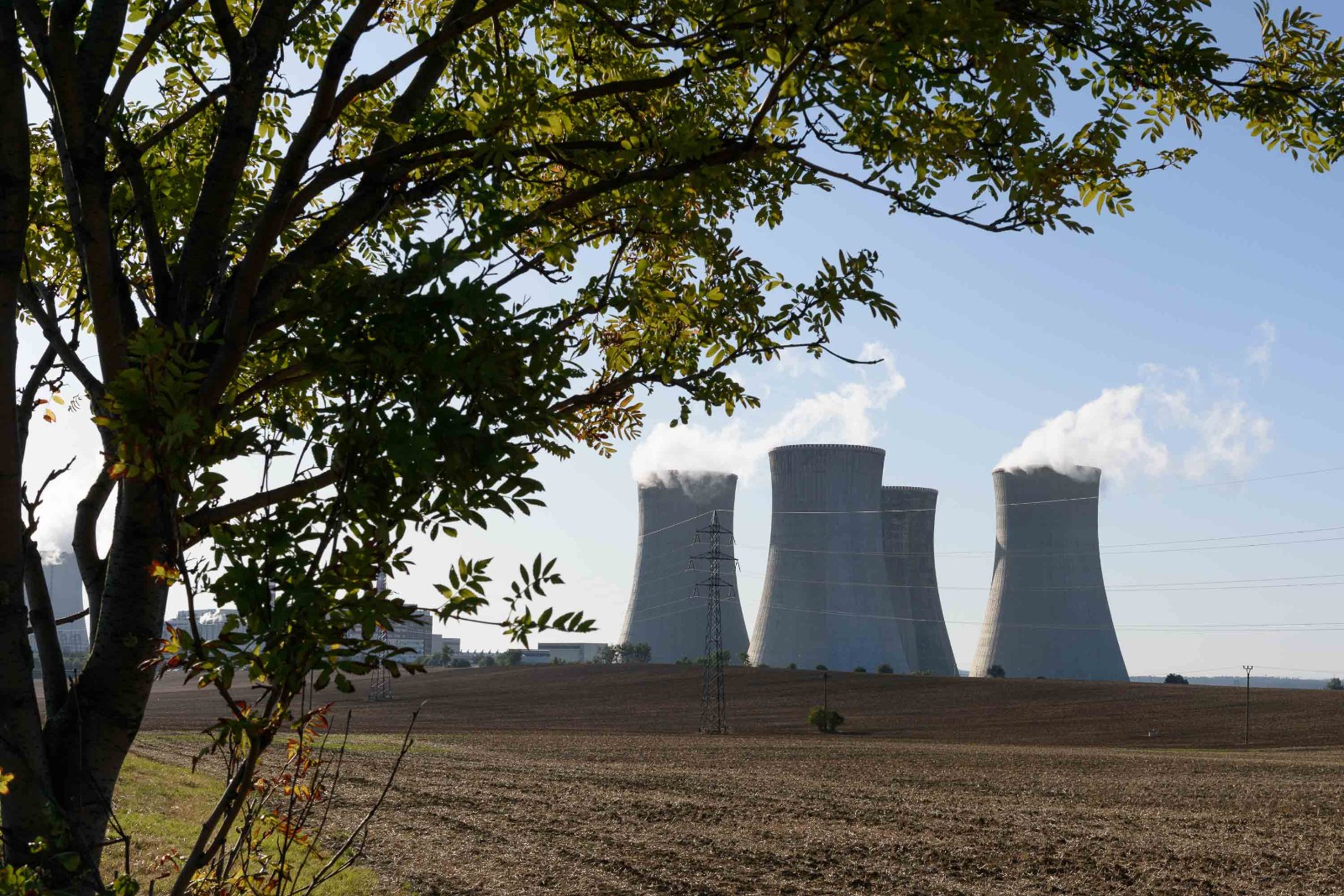
Czech Dukovany New Nuclear Project Scheduled to Break Ground in 2029
Preliminary work on the new nuclear power plant project at Dukovany, Czech Republic, continues to advance. According to information released by the Confederation of Industry and Transport of the Czech Republic (SP ČR), geological surveys at the project site have been completed, and the permitting process is underway with no major obstacles identified so far. Under the current schedule, main construction of the new nuclear power plant is set to begin in 2029. Development of the local supply chain is also progressing in parallel. To date, Czech domestic companies have secured 17 tendered supply packages, though the total contract value has not yet been disclosed. Doosan Škoda Power has joined the project, along with ČEZ Energetické projekty and Energoprojekt Praha, which have entered the relevant design, engineering, and supply chain segments.
2026-08-24

Three Years Since Japan Began Discharging Nuclear-Contaminated Water: Over 170,000 Tons Released Across 22 Rounds
Since August 24, 2023, Japan has been discharging nuclear-contaminated water from the Fukushima Daiichi Nuclear Power Station into the Pacific Ocean. As of August 24, 2026, Japan has completed a total of 22 rounds of discharge, with a cumulative volume of approximately 173,000 tons. It is understood that the volume of water stored in on-site tanks has decreased by about 7% compared to before the discharge began. Tokyo Electric Power Company plans to increase the discharge volume of nuclear-contaminated water starting from the current fiscal year and has set a target to complete the decommissioning of the nuclear power plant by 2051. ...
2026-08-24

Ukrainian Foreign Minister and IAEA Director General Discuss Zaporizhzhia Nuclear Power Plant Safety in Phone Call
Ukrainian Foreign Minister Andrii Sybiha said on August 22 that he had a phone call with International Atomic Energy Agency (IAEA) Director General Rafael Grossi, during which the two sides focused on the current nuclear safety situation in Ukraine, particularly the safety status of the Zaporizhzhia Nuclear Power Plant. Sybiha stated that the Zaporizhzhia Nuclear Power Plant is currently under Russian control, and the related military presence remains a major source of nuclear safety risk. The two sides exchanged views on issues related to the plant and emphasized the need for close coordination based on respect for Ukraine's sovereignty and international law. Sybiha also noted that he values Grossi's personal engagement in relevant matters, as well as...
2026-08-24

UK Wylfa SMR project early works package valued at up to £1.1 billion
Great British Energy–Nuclear (GBE-N) has launched market engagement for an early works package, with the proposed scope covering civil engineering, infrastructure, building and mechanical & electrical engineering, and earthworks. According to the prior information notice published on 20 August, the contract is estimated to be worth between £730 million and £1.1 billion. The notice states that the package falls within GBE-N's owner's scope of work, primarily intended to prepare the site for subsequent main construction and support technology partners in installing and commissioning small modular reactor (SMR) technology. Related preparatory activities include planning, permitting, design, and construction. ...
2026-08-24

Busan, South Korea Reports No Abnormal Radiation Detected in Seawater and Seafood Three Years After Fukushima Discharge
Busan Metropolitan City stated on August 24 that since the discharge of contaminated water from the Fukushima nuclear power plant began in 2023, the city has continuously conducted radiation monitoring and analysis of coastal seawater and seafood. The results show that the safety conditions of Busan's waters and seafood remain stable with no abnormal changes detected. According to Busan Metropolitan City, seawater radioactivity testing is currently conducted at 26 coastal points. Among them, samples from 14 coastal locations including Haeundae, Gwangalli, Dadaepo, Songdo, and Songjeong are analyzed by the Busan Metropolitan City Institute of Health and Environment and local university research institutions. Test results show that the concentrations of relevant radionuclides are far below the World Health Organization drinking water standards, with cesium-134,...
2026-08-24

Collective Radiation Dose of Workers at Japan's Fukushima Daiichi Nuclear Power Station Ranks Highest Nationwide
Japanese nuclear power plant operators are required to submit radiation management reports to the Nuclear Regulation Authority (NRA) annually, detailing the exposure status of plant workers. According to the relevant 2025 reports, the collective radiation dose of workers at Tokyo Electric Power Company (TEPCO)'s Fukushima Daiichi Nuclear Power Station remains significantly higher than at other Japanese nuclear plants, indicating that the radiological impact from post-accident on-site decommissioning and management work is still ongoing. By collective dose per plant, Fukushima Daiichi recorded 20.97 person-sieverts, the highest in Japan. This figure is nine times the 2.22 person-sieverts reported at Kansai Electric Power's Takahama Nuclear Power Station...
2026-08-24

No abnormalities detected at multiple nuclear power plants after earthquake in Ibaraki Prefecture, Japan
At around 2 a.m. on August 23, an earthquake struck the southern part of Ibaraki Prefecture, Japan, with a maximum seismic intensity of 5-lower observed in parts of Ibaraki Prefecture, Tokyo Metropolis, Saitama Prefecture, and Chiba Prefecture. The Japanese government subsequently established a liaison office at the Crisis Management Center of the Prime Minister's Official Residence. Japanese Prime Minister Sanae Takaichi stated that relevant departments have been instructed to verify the damage situation and promptly release accurate information to the public. The earthquake posed no risk of tsunami. Japan Atomic Power Company (JAPC) stated that a seismic intensity of 3 was observed in the area where the Tokai Daini Nuclear Power Plant is located in Tokai Village, Ibaraki Prefecture. The unit is currently shut down, and as of now...
2026-08-24

Italy's Eni Plans to Build Commercial Nuclear Fusion Power Plant in Europe by Early 2040s
Italian energy company Eni plans to build a commercial nuclear fusion power plant in Europe by the early 2040s or sooner. Francesca Ferrazza, head of Eni's magnetic confinement fusion project, stated that nuclear fusion technology has seen significant progress in recent years, and competition in the field is accelerating. Ferrazza said that nuclear fusion, which was previously confined mainly to the research stage, has now begun to meet the conditions for industrial application. She noted that Eni's goal is to promote the deployment of a commercial nuclear fusion power plant in Europe by the early 2040s, or even earlier. Eni has also shown interest in the extraction, purification, and recycling of spent fusion fuel back into reactors. Recently, Eni has...
2026-08-24

US Boston Dynamics and UK Roke Expand Spot Robot Reconnaissance Applications for Nuclear Facilities
US-based Boston Dynamics is expanding its collaboration with overseas specialized defense solutions companies to promote the application of its quadruped robot Spot in industrial, defense, and high-risk operational scenarios. Leveraging Spot's mature mobile platform capabilities, the company aims to further enter industry sectors with high demand for unmanned operations by integrating software systems designed for reconnaissance in hazardous environments. Boston Dynamics' quadruped robot Spot is equipped with autonomous reconnaissance software SPROCKET developed by UK-based Roke. (Image courtesy of Roke) UK defense security R&D company Roke announced on the 22nd that it has deployed Spot quadruped...
2026-08-23

UK report calls for rebuilding nuclear power construction capability on time and on budget
The UK think tank Onward recently released a report stating that if the UK hopes to achieve affordable electricity supply and drive deep decarbonization of its energy system, it must rebuild its capability to deliver nuclear power projects on time and on budget. The report, titled "Solid Foundations: The Case for Cheap, Reliable Power," proposes that the UK should adjust its renewable-dominated power system planning and build a diversified electricity mix comprising nuclear power, renewables, and gas generation, enabling consumers to access affordable electricity when needed. The UK Nuclear Industry Association (NIA) welcomed the report, noting that the issues it raises are of practical relevance. The report recognizes...
2026-08-23

Six nuclear power units in operation in Ukraine, three under planned maintenance
Ukraine's First Deputy Prime Minister and Minister of Energy Denys Shmyhal stated on August 21 during the government question time at the Verkhovna Rada that Ukraine's power system is currently operating stably, with no planned power cuts implemented for the time being. However, he also pointed out that the future power supply situation will still depend on the intensity of attacks on energy facilities and the progress of repairs. Shmyhal noted that Ukraine's current available power supply capacity is approximately 15 GW, including combined heat and power units and imported electricity. Among this, nuclear power contributes over 40%, thermal power accounts for about 25%, and hydropower about 15%. Of the 9 nuclear power units under Ukrainian control, 6 are currently generating electricity, and 3 are under planned...
2026-08-23