
Search Results
Keyword:drought

When the Water Runs Dry, the Reactors Stop: Behind Romania Losing One-Fifth of Its Electricity, Heavy-Industry Reactor Designs Are Suffering a Fatal "Cold Source Asphyxiation" — Examining the Physical Interrogation of High-Water-Consumption Baseload Plants by Extreme Drought Through the Prolonged Paralysis of the Cernavodă Nuclear Power Plant
For a long time, nuclear power has been regarded as the unwavering backbone of round-the-clock baseload electricity, immune to weather conditions, cloud cover, or lulls in wind. However, the nearly two-month total shutdown of Romania's Cernavodă Nuclear Power Plant is breaking this industry paradigm in an extreme and brutal manner. Because the Danube River has experienced a historically rare drought exceeding warning thresholds and a cliff-edge collapse in water levels, the country's only nuclear power plant—which safeguards one-fifth of its electricity supply—has been paralyzed by the loss of cooling water assurance, with no prospect of near-term restart. This extreme case not only tears open a massive gap in winter energy security for Romania and even Southeastern Europe, but also sounds an alarm for the global energy community: in the face of increasingly...
2026-10-08

U.S. Think Tank Recommends European Nuclear Power Adjust Cooling Configurations to Address High Temperatures and Drought
The U.S. Boston-based think tank Clean Air Task Force (CATF) recently stated that extreme heat and drought are placing new pressure on Europe's energy infrastructure, with nuclear power plant operations also affected. The organization believes the nuclear industry needs to place greater emphasis on climate resilience in energy planning and assess the impact of different cooling configurations on long-term plant operations. CATF noted that for nuclear power plants, temperature changes, water resource availability, environmental conditions, and related regulatory requirements over the coming decades could all affect unit operations. The selection of cooling schemes for nuclear power plants should be determined based on site-specific conditions, including local water resource availability, environmental regulations, geographical conditions...
2026-09-03

Czech nuclear power plants largely unaffected by summer heat and drought
The Czech State Office for Nuclear Safety (SÚJB) stated on August 26 that this summer's heat waves and drought only caused a slight decline in electricity generation at the Temelín and Dukovany nuclear power plants, without leading to reactor power reduction or raising nuclear safety concerns. Currently, both plants meet the conditions for safe operation, including adequate cooling and water supply guarantees. SÚJB noted that some European nuclear power plants reduced output or temporarily shut down during high-temperature periods, mainly due to their cooling methods. Some plants use once-through cooling, making their operation directly affected by river water temperature and flow rate. When water temperatures rise and river flows are low, plants may reduce output due to environmental discharge limits...
2026-08-27
Bulgaria's Kozloduy Nuclear Power Plant Faces Shutdown Risk Due to Low Danube Water Levels
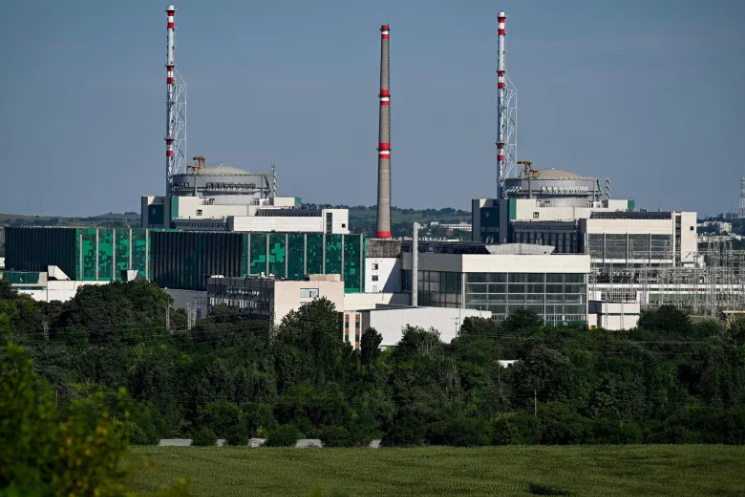
On August 11, Bulgaria's Ministry of Energy warned that the Kozloduy Nuclear Power Plant is facing the risk of reduced output or even shutdown due to the continuously declining water level of the Danube River. The plant relies on the Danube to provide cooling water for its two 1,000 MW reactors. If the water intake capacity continues to be constrained, it will directly affect the safe operation of the reactors and the stability of power supply. Bulgaria's Ministry of Energy stated that measures have been taken to ensure water supply to the cooling system, including dredging the channels connecting the Danube to coastal pumping stations to maintain the necessary flow. This summer, the Danube's water level has dropped to historic lows due to prolonged drought. Near Ruse, Bulgaria, the river's flow is already more than one meter below the safe navigation level, and it has continued to decline over the past 24 hours...
2026-08-12

Europe's High Temperatures and Droughts Impact Nuclear Power Operations, Ukrainian Expert Says Climate Adaptation Tied to Energy Independence
Recent prolonged high temperatures, droughts, and falling river levels across Europe have put pressure on the operation of some nuclear power plants that rely on river water for cooling. Nuclear facilities in France, Hungary, Romania, and Slovenia have successively experienced power reductions or shutdowns, forcing some countries to ease supply pressure through electricity imports and adjusted consumption arrangements. Katie Huff, a professor of nuclear engineering at the University of Wisconsin-Madison, stated that the impact of climate change on nuclear power operations is mainly reflected in two aspects: first, droughts lower river levels, making it difficult for plants to obtain sufficient cooling water; second, when air and water temperatures are high, nuclear plants face stricter restrictions on discharging warm water into rivers to avoid further affecting the aquatic environment.
2026-08-11

French nuclear power sets record unavailability rate due to high temperatures and drought, one-sixth of capacity constrained
France's nuclear power system is under exceptional strain. Affected by persistent high temperatures and low river water levels, nuclear reactors operated by French utility EDF have recorded unprecedented unavailability. According to an AFP tally based on data published by EDF since 2015, on the afternoon of Sunday, August 9, 2026, the nuclear capacity shortfall caused by drought and extreme heat reached 15.6% of installed capacity, equivalent to roughly one-sixth of France's nuclear power capacity being temporarily unable to supply electricity normally. The cause of this disruption is not simply equipment failure, but is closely linked to the natural environment on which nuclear plant operations depend. Many nuclear plants draw water from rivers for cooling; when river levels are too low or water temperatures too high, the...
2026-08-11

Drought Lowers Danube Water Levels, Romania Plans to Restrict Industrial Power Use if Necessary
Romania's Acting Prime Minister Ilie Bolojan said after a cabinet meeting on August 6 that the government has developed a comprehensive risk prevention plan covering multiple risk scenarios, including earthquakes, public health events, and the current drought, with corresponding response measures clearly defined. Under the plan, Romania will establish a national operations center in the energy sector. Bolojan stated that the government will approve on August 7 measures by Transelectrica to take action when necessary: with 24 hours' prior notice, certain industrial users may be disconnected from the national grid. He also emphasized that power supply to ordinary citizens, apartments, and residential users will not be...
2026-08-07
Czech nuclear safety officials say domestic nuclear power plants have sufficient cooling water for both existing and new units
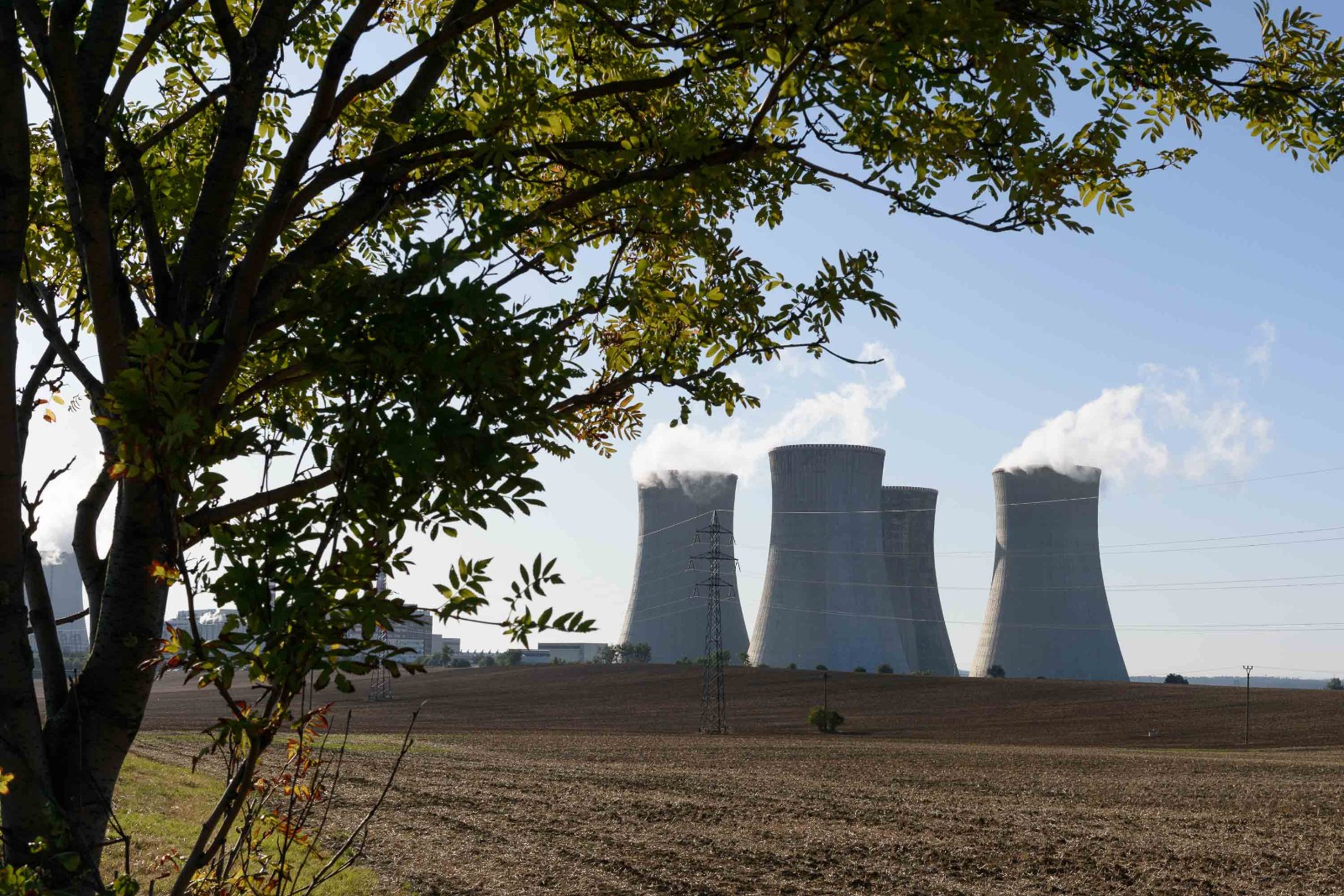
Droughts across parts of Europe are affecting the operation of some nuclear power plants. Due to low water levels and flow rates in the Danube River, two reactors at Romania's Cernavodă Nuclear Power Plant have been shut down, and Hungary's Paks Nuclear Power Plant also faces the risk of a complete shutdown. Štěpán Kochánek, Chairman of the Czech State Office for Nuclear Safety (SÚJB), stated that plant operators should not be allowed to continue operating units at full power when cooling water is insufficient, and that related shutdown measures are conservative actions predefined in operating procedures. Kochánek explained that reactor shutdowns are not an unusually rare operation. Unit shutdown typically involves gradually reducing reactor power, inserting control rods, and bringing fission reactions to a minimal level or complete cessation. After shutdown, the reactor still requires cooling, but the demand for cooling water volume and capacity is significantly lower than during full-power operation. He noted that this process shares similarities with planned outages such as refueling overhauls and is a standardized procedure that operators should master.
2026-08-05

France's drought lowers river water levels, EDF shuts down three nuclear reactors
Affected by drought weather, water flows in France's Meuse and Moselle rivers have declined, and Électricité de France (EDF) has shut down three nuclear reactors in northeastern France. As of the afternoon of August 3, Units 1 and 2 at the Chooz Nuclear Power Plant in the Ardennes department, as well as one unit at the Cattenom Nuclear Power Plant in the Moselle department, remained offline. EDF shut down Unit 1 at the Chooz plant on Saturday evening to comply with the Meuse River management agreement signed between France and Belgium in 1998. Under the same agreement, Unit 2 at the Chooz plant has been offline since July 11. EDF stated that the agreement allows for adjustments to power generation arrangements based on hydrological conditions to safeguard water usage for users along the Meuse River in both France and Belgium.
2026-08-05

Hungary's Paks Nuclear Power Plant Faces Full Shutdown Due to Record Low Danube Water Level
Affected by persistent drought and high temperatures, the water level of the Danube River at the Budapest section dropped to 23 cm (fixed datum reading, a record low), restricting cooling water intake at the Paks Nuclear Power Plant. Starting Wednesday, July 29, Unit 3 was the first to be shut down; the operator, MVM Paks Nuclear Power Plant Ltd, subsequently stated on its official website that all four units would inevitably be disconnected within the next 24 to 72 hours, with power generation coming to a complete halt. MVM explained that the existing water volume of the Danube is still sufficient to cool the reactors, but the intake pumps can no longer draw water because the riverbed is exposed and the pump inlets are too far from the water surface—an equipment failure rather than an absolute shortfall in cooling water volume. To this end, the Hungarian side deployed 4 pumping barges and 2 floating cranes near the plant as an emergency measure, but with water levels expected to continue falling, a preventive full shutdown remains unavoidable.
2026-07-31