

Multiple Units at Tianwan Nuclear Power Plant Go Live with Self-Developed EPM System
On August 31, the EPM system, a production management platform independently developed by China National Nuclear Power (CNNP), was officially launched at Units 3, 4, 7, and 8 of Tianwan Nuclear Power Plant. This launch marks a new stage of standardized management and control for Jiangsu Nuclear Power's production management, and also provides a practical example from Tianwan Nuclear Power Plant for CNNP's digital transformation. The EPM system is a new-generation nuclear power plant production management system independently developed by CNNP with fully independent intellectual property rights. Designed to meet the operational needs of nuclear power plant field operations, the system integrates business processes such as planning, operations, maintenance, equipment, and safety permits, unifies plant-wide work execution standards, and achieves closed-loop control across the entire production management chain. The system covers...
2026-09-01

Harbin Engineering University Establishes Research Institute for Spent Fuel Reprocessing and Advanced Materials
On August 31, the inauguration ceremony of the Research Institute for Spent Fuel Reprocessing and Advanced Materials at Harbin Engineering University was held at the university's Qihang Activity Center. More than 150 participants attended the meeting, including academicians and experts in the field of nuclear science and technology, representatives from industry and enterprises, peer institutions, and alumni. The newly established institute will address the needs of nuclear energy safety assurance and sustainable development by integrating the university's advantageous disciplinary resources in nuclear science, materials, and chemical engineering, focusing on breakthroughs in spent fuel reprocessing processes, advanced materials development, and related key core technologies, while promoting the coordinated development of basic research, technological breakthroughs, and commercialization of research outcomes. At the meeting, several attending experts noted that spent fuel reprocessing is a critical part of the nuclear f...
2026-09-01
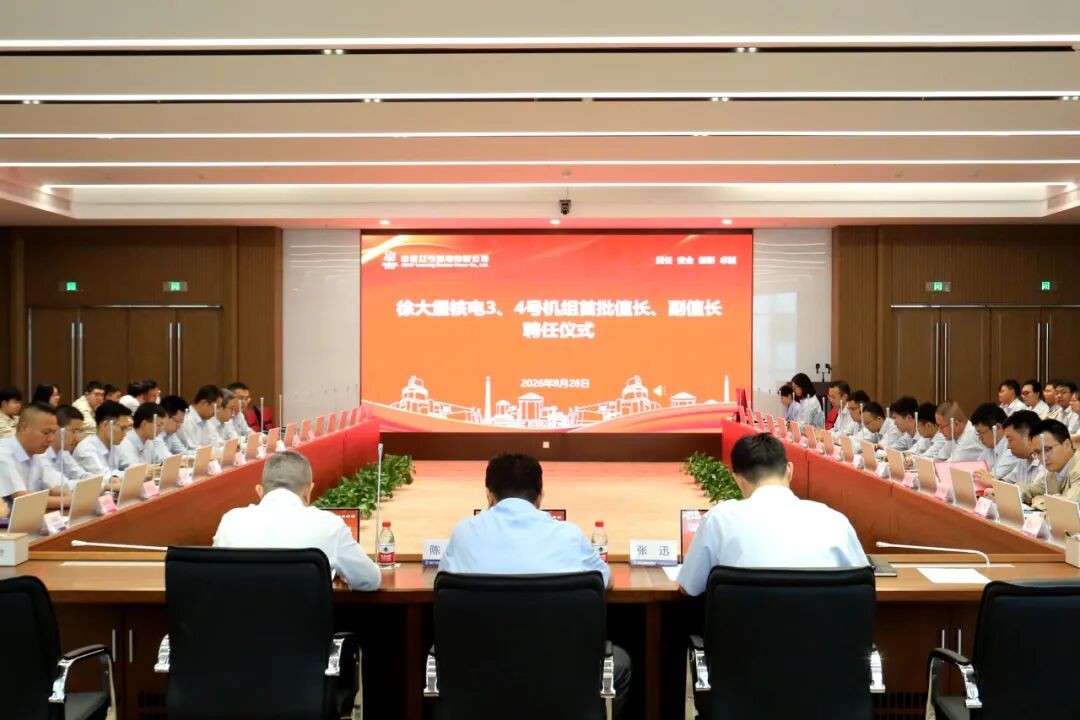
First Batch of Shift Supervisors and Deputy Shift Supervisors Assume Duties at Xudabao Nuclear Power Plant Units 3 & 4
On August 28, Liaoning Nuclear Power held the appointment ceremony for the first batch of shift supervisors and deputy shift supervisors for Units 3 & 4 of the Xudabao Nuclear Power Plant, with relevant company leaders in attendance. At the ceremony, Liaoning Nuclear Power announced the appointment decisions, officially marking the assumption of duties by the first batch of shift supervisors and deputy shift supervisors for Units 3 & 4. A documentary short film played at the event reviewed the growth journey of the operations team, from theoretical study and systematic training to on-site practical operations and on-the-job experience. Having undergone training, practice, selection, and assessment, the personnel have now entered key positions in plant operations. On the same day, the head of the Operations Department signed annual business performance responsibility agreements with representatives of the first batch of shift supervisors, clarifying their accountabilities for safe performance of duties. Subsequently, the first batch of shift supervisors and deputy shift supervisors collectively...
2026-09-01
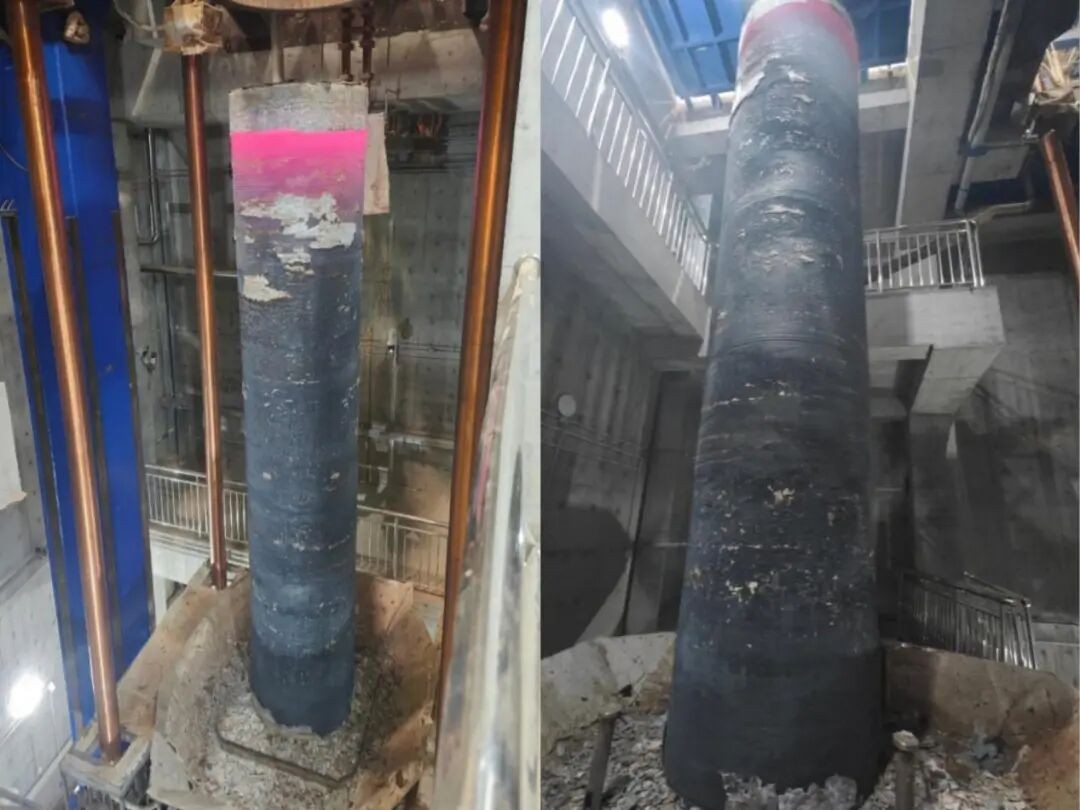
Manur Nuclear Power Produces Domestically Heaviest Slender Withdrawal-Type ESR Ingot
On August 30, 2026, the 60t withdrawal station of the 150-ton-class atmosphere-protected electroslag remelting (ESR) furnace at Yantai Taihai Manur Nuclear Power Equipment Co., Ltd. successfully produced a slender ESR ingot with a diameter of approximately 1270 mm and a weight of 61.2 tons, setting a new record for domestically manufactured special metallurgy equipment and consolidating the equipment foundation for the supply of high-end nuclear power forgings. The 61.2-ton slender withdrawal-type ESR ingot produced this time features a regular appearance and excellent surface quality. During the smelting process, equipment and operations including atmosphere protection, melt rate control, precise molten metal level control, fully automatic electrode exchange, and the complete withdrawal process remained stable and controllable. This ingot is currently the heaviest slender withdrawal-type ESR ingot produced in China, representing another critical leap in domestically manufactured large-tonnage withdrawal-type ESR equipment...
2026-08-31

CGN and CSSC Deepen Cooperation in Nuclear Power and New Energy Sectors
On August 28, Pang Songtao, Deputy Secretary of the Party Committee and General Manager of China General Nuclear Power Group Co., Ltd. (CGN), met with Xu Peng and his delegation, Secretary of the Party Leadership Group and Chairman of China State Shipbuilding Corporation Limited (CSSC), at the CGN Tower. The two sides conducted in-depth exchanges on cooperation in areas such as nuclear power, new energy, industrial software, and technological innovation. Peng Yuanpu, Member of the Party Leadership Group and Deputy General Manager of CSSC, Ma Yunxiang, Assistant to the General Manager, Cai Zhen, Member of the Standing Committee of the Party Committee and Deputy General Manager of CGN, and Zhou Jianping, Member of the Party Committee of CGN, Vice President and General Counsel of CGN Power, attended the meeting. Pang Songtao extended a warm welcome to Xu Peng and his delegation. He noted that the cooperation between CGN and CSSC began with the Daya Bay Nuclear Power Plant and has spanned over four decades, with cooperation areas gradually expanding from nuclear power to environmental governance, new energy development, industrial software, and other fields, achieving fruitful results in areas such as nuclear emergency diesel generators and wind power equipment. Looking toward the “15th Five-Year Plan” period, he expressed the hope that both sides would further expand cooperation in new areas such as equipment manufacturing and technological innovation while consolidating the existing cooperation foundation, so as to better serve the national strategic agenda.
2026-08-31
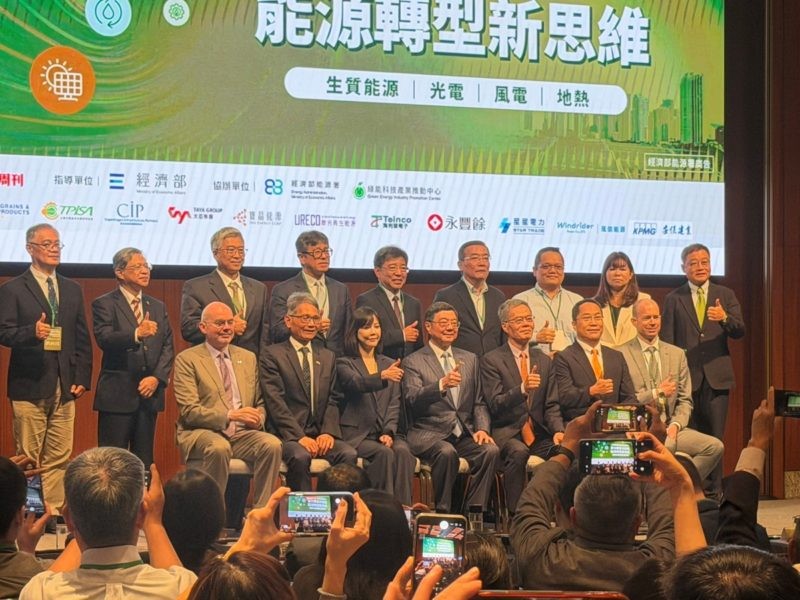
Taiwan plans to include small modular reactors and nuclear fusion in new energy exploration
Taiwan's administrative agency head Cho Jung-tai stated on August 26 that, in response to the rapid global development of energy technologies, Taiwan maintains an open attitude toward new nuclear energy technologies and has gradually invested in research and evaluation of directions such as small modular reactors (SMRs) and nuclear fusion. Relevant budgets have been included in discussions, and the central government's general budget for the next fiscal year also plans to allocate funds for engaging with and tracking global nuclear fusion technology progress. Cho Jung-tai stated at a new energy forum that day that, for Taiwan, energy types that have not yet entered large-scale commercial application or whose research and development technologies are still immature can all be regarded as targets for new energy exploration. In addition to technologies such as geothermal, small hydropower, and hydrogen energy, new nuclear energy has also been listed as a direction for future sustained observation and research...
2026-08-31

Nova Fusion Completes RMB 1.2 Billion Pre-A Series Financing
Nova Fusion Energy Technology (Shanghai) Co., Ltd. recently announced the completion of its Pre-A series financing totaling RMB 1.2 billion, comprising both the Pre-A round and Pre-A+ round. The company stated that within 16 months since its establishment, it has completed a RMB 500 million angel round, a RMB 700 million angel+ round, and this round of financing, bringing cumulative fundraising to RMB 2.4 billion with a post-investment valuation exceeding RMB 10 billion. In this round, Meituan Longzhu and Hillhouse Ventures continued their participation, while Lenovo Capital and Guozhong Capital joined as new strategic investors. The company stated that the funds from this round will primarily be used for new device construction, key technology iteration, industrial base preparation, and subsequent fusion energy output verification efforts. Nova Fusion focuses on field-reversed configuration (FRC) small...
2026-08-31

CA01 Module of Unit 1 at Guangxi Bailong Nuclear Power Plant Successfully Hoisted into Position in the Nuclear Island
On August 29, the CA01 module of Unit 1 at the Bailong Nuclear Power Plant of SPIC Guangxi Nuclear Power was precisely positioned, marking a new phase of parallel civil construction and installation in the nuclear island. ▲On August 29, the hoisting operation of the CA01 module of Unit 1 at the Guangxi Bailong Nuclear Power Plant of SPIC was proceeding in an orderly manner. The CA01 module is located in the reactor building of the nuclear island and serves as the installation room for main equipment such as the reactor pressure vessel, steam generators, and pressurizer. The module is T-shaped in overall form, with external dimensions of 28 meters in length, 29 meters in width, and 24 meters in height. It consists of 47 sub-modules, with a total lifting weight of approximately 1,167 tons, making it the largest and heaviest structural module in the nuclear island. The hoisting operation commenced at 8:07 a.m. and, after a series of maneuvers including lifting, hovering, slewing, lowering, and adjustment, was successfully positioned at 12:58 p.m., with the entire process being safe, controllable, stable, and orderly.
2026-08-31
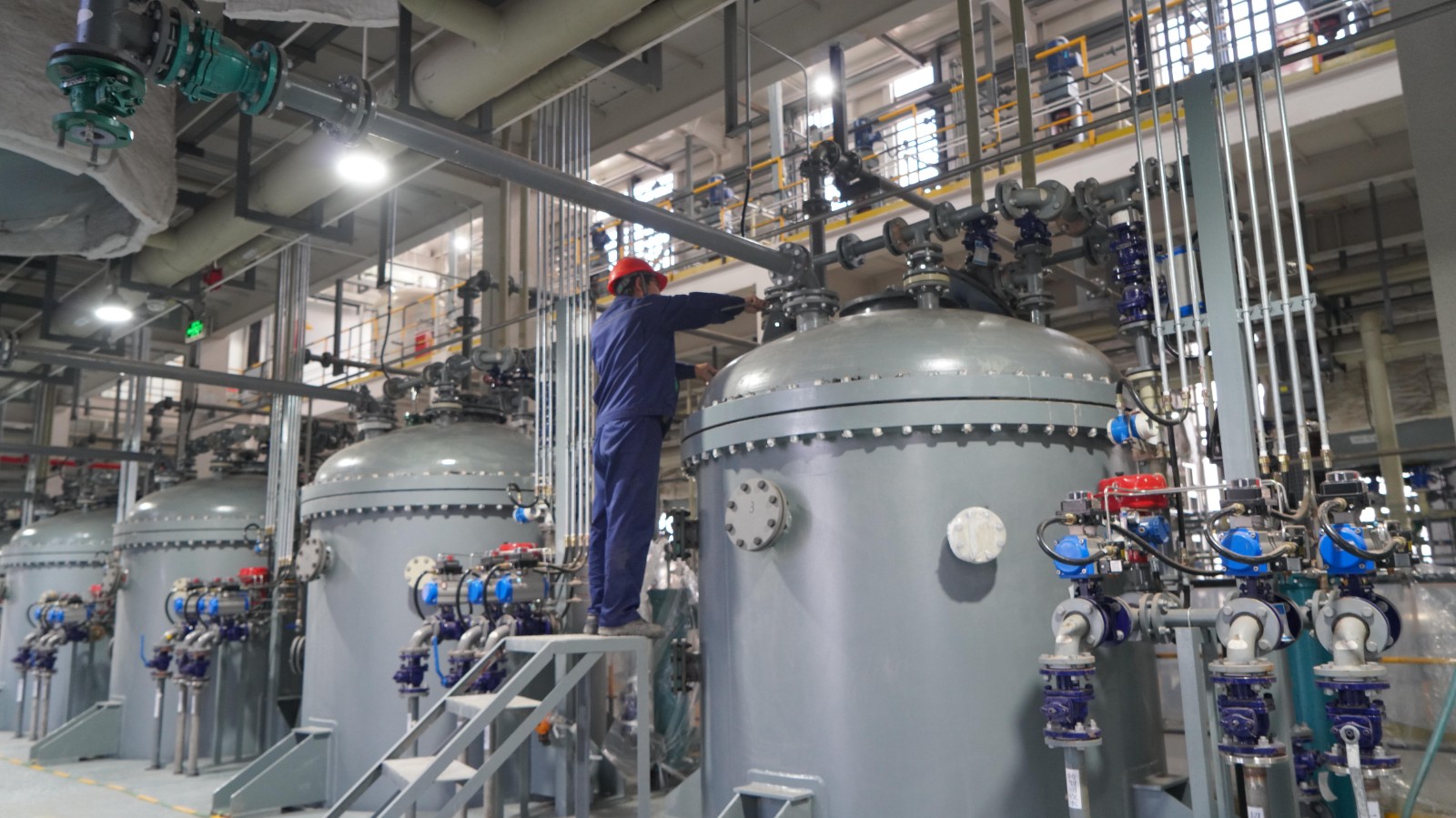
Domestically Produced Nuclear-Grade Resins Fully Verified and Ready for Use
On August 28, China General Nuclear Power Group (hereinafter referred to as CGN) announced that five nuclear-grade resin products developed under its leadership have all been put into engineering application, with a cumulative total of 12 batches used at nuclear power plants including Daya Bay, Ningde, Yangjiang, Taishan, and Hongyanhe. Among them, the first product has been operating stably for over three years in the steam generator blowdown system (APG system) of nuclear power plants, with key performance indicators comprehensively outperforming imported counterparts of the same category, and the domestic nuclear-grade resin production line. Nuclear-grade resins are known as the "kidneys" of nuclear power water treatment systems, serving as core materials that ensure stable water chemistry indicators of nuclear power units and prevent equipment corrosion. For a long time, these materials have been highly dependent on imports, posing supply security risks such as long delivery cycles, unstable batch quality, and rising prices year by year.
2026-08-29
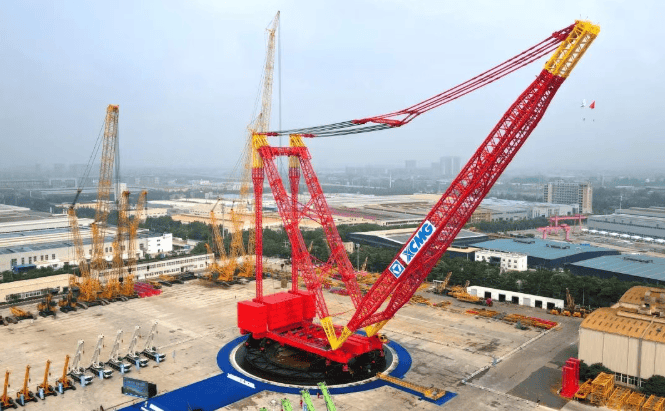
World's First 14,000-Ton-Class Ring Crane Rolls Off Production Line, Capable of Supporting Full-Module Lifting for HPR1000 2.0
Recently, XCMG's world's first 14,000-ton-class ring crane officially rolled off the production line. Su Zimeng, President of China Construction Machinery Association; Wang Guohua, Member of the Party Committee and Vice President of Sinopec Engineering (Group) Co., Ltd., as well as Party Secretary and General Manager of its Lifting and Transportation Company; and Yang Dongsheng, Chairman of XCMG Group and XCMG Machinery and Party Secretary, attended the launch ceremony. Xia Dechang, General Manager and Party Secretary of XCMG Crane Machinery Division, announced the successful rollout of the equipment. According to reports, the 14,000-ton-class ring crane was developed to meet the lifting needs of ultra-large and ultra-heavy equipment in major projects such as nuclear power, petrochemical, and marine engineering, with a focus on serving integrated lifting scenarios for large modules. The equipment achieves full-industry-chain...
2026-08-29

Zhangzhou Nuclear Power Units 3 and 4 Trench Civil Engineering Completes Milestone Phase
On August 27, with the final cubic meter of concrete poured into place, the B1 and B6 sections of the GS and GB trench civil engineering works for Zhangzhou Nuclear Power Units 3 and 4, undertaken by CNNC Huachen, along with the No. 4 overflow well, successfully completed their milestone phase. This phase involved multi-disciplinary cross-operations spanning civil works, installation, electrical, and piping, characterized by complex construction conditions and significant coordination challenges. Among these, Section B1, as the project's main critical path, featured narrow working areas, difficult access for large equipment, and intensive vertical and horizontal cross-operations among multiple units. Seven days before commencement, the project department established a dedicated planning team to verify site conditions, material routes, and cross-operation scopes drawing by drawing, identifying key difficulties such as foundation pouring, equipment positioning, and material supply, and conducting multiple rounds of discussions to optimize the construction plan. The construction period coincided with the rainy season, and Section B1, situated in a low-lying area, faced a high risk of rainwater backflow. The project department implemented measures including full-coverage rain shelters over the base slab, water-retaining curbs at passage openings, and round-the-clock pumping in two shifts, securing dry working areas amid accumulated water; simultaneously, discarded waterproof membranes were collected and reused to cover rebar cages and scaffolding, preventing corrosion and slippery conditions. On-site daily meetings were held, management personnel maintained 24-hour duty, and verbal confirmation with signed handovers was practiced, ensuring issues were resolved the same day, with no plan failures, rain-related stoppages, or process disconnections throughout the period. Facing the immense scheduling pressure from multi-process cross-operations, the project department established a dynamic scheduling system. In terms of manpower loading, fixed posts and personnel quotas were implemented, with zonal responsibility and flexible reinforcement; during peak periods, core work crews were consolidated and work areas were precisely delineated. For machinery, a dynamic scheduling ledger was established, with tower cranes, excavators, and lifting equipment staggered and cross-utilized. Material coordination was also optimized through advance stocking, zoned storage, dedicated management, and emergency replenishment. During the campaign, when the transport of main materials was obstructed, the project department organized management staff and labor crews to manually carry rebar, pipes, and auxiliary materials point-to-point to the working areas, effectively safeguarding project progress. Currently, the main structure construction of the GS and GB trenches by the Zhangzhou Nuclear Power Project Department has achieved phased results, with the GB trench completing 74 sections cumulatively, an 82% completion rate, and the GS trench exceeding 1,160 meters, accounting for 72% of the total length. The company will further strengthen construction organization, optimize construction logic, and continue to advance the remaining sections of the Zhangzhou Nuclear Power Project Department, fully ensuring high-quality performance of the contracted projects.
2026-08-29

China Unicom Yantai Branch and CNNC Shandong Build 5G Dedicated Network for Nuclear Power
Recently, the 5G dedicated network project jointly built by China Unicom Shandong Yantai Branch and CNNC Shandong was officially deployed and put into operation. Targeting the requirements of nuclear power scenarios for communication network security, reliability, and low latency, the project introduces technologies such as 5G dedicated networks, edge computing, artificial intelligence, and big data to promote the implementation of digital capabilities in nuclear power park construction and production support scenarios. CNNC Shandong, affiliated with China National Nuclear Corporation, undertakes tasks related to nuclear power unit power generation and grid connection. During project construction, China Unicom Shandong Yantai Branch, in collaboration with Huawei, adopted end-to-end domestically produced equipment, achieving independent controllability in both hardware and software, filling the gap in domestic 5G dedicated network construction in the nuclear power sector...
2026-08-28

Steel Dome of Unit 1 at Liaoning Xudabao Nuclear Power Plant Hoisted into Place
On August 28, the steel dome of the nuclear island of Unit 1 at Liaoning Xudabao Nuclear Power Plant, invested and controlled by China National Nuclear Corporation (CNNC)'s China National Nuclear Power, was hoisted into place, marking that the large steel structure module construction of the unit has entered its final stage and laying a solid foundation for achieving the milestone of structural completion of the nuclear island buildings. As the core load-bearing structure of the nuclear island, the steel dome sits atop the steel-plate concrete structure, bearing all loads from the passive containment cooling water storage tank and the structures above. It serves as a critical barrier safeguarding the structural integrity and sealing reliability of the reactor building. The dome is conical in shape, composed of radial main beams, ring beams, steel cladding panels, and a bottom steel platform, with a diameter of approximately 41 meters, a height of 11 meters, and a total hoisting weight of nearly 1,000 tons...
2026-08-28
Leadership Adjustment of Chairman and Party Secretary of China Huaneng Group Co., Ltd.
On August 28, 2026, China Huaneng Group Co., Ltd. held a meeting for management personnel at the middle level and above. A relevant official from the Organization Department of the CPC Central Committee announced the Party Central Committee's decision on the adjustment of the Chairman and Party Secretary of China Huaneng Group Co., Ltd.: Comrade Bai Yong was appointed as Chairman and Party Secretary of China Huaneng Group Co., Ltd., and was relieved of his duties as Director, President, and Deputy Party Secretary of COFCO Corporation; Comrade Wen Shugang was relieved of his duties as Chairman and Party Secretary of China Huaneng Group Co., Ltd. The relevant appointments and removals shall be handled in accordance with applicable laws and the company's articles of association...
2026-08-28

Tianwan Nuclear Power Advances AI-Empowered Intelligent Upgrade of Maintenance Operations
In recent years, the maintenance domain of Tianwan Nuclear Power has relied on platforms such as Hezhi·Longling to address pain points in efficiency, quality, and management across the entire maintenance business chain, promoting the integration of artificial intelligence with nuclear power maintenance scenarios. To date, applications including personnel profiling, work order generation, compliance inspection, and auxiliary generation of electric actuator maintenance plans have achieved phased results, while projects such as the intelligent lifting command platform and marine tunnel cleaning robot are also under development. In personnel management, Tianwan Nuclear Power has established a seven-dimensional personnel capability scoring model, setting differentiated evaluation indicators for different maintenance positions to form position-based, data-driven personnel capability profiles. The system can integrate historical data, support multi-period data retention and trend comparison, and display personnel capability distribution through radar charts, bar charts, and trend graphs. After batch data import, the backend automatically completes normalization calculation, multi-dimensional scoring, and ranking, generating materials that include overall overview, position comparison, special analysis of responsibility performance, and improvement suggestions, providing a basis for training resource allocation, position matching, and differentiated management. To address the issues of time-consuming maintenance work order preparation and reliance on manual experience, the relevant team has developed an intelligent work order preparation assistant based on the Longhuitong intelligent agent platform, forming an application solution of "1 intelligent agent, 1 Skill capability, and 7 categories of professional knowledge bases." The system integrates the historical work order library, maintenance procedure library, equipment ledger library, risk and safety measure library, spare parts and tools library, personnel qualification library, and management procedure library. It can dynamically generate work package catalogs based on historical operation data and procedural requirements, automatically fill in work order business content, and output downloadable Excel work package drafts that can interface with the EPM system. In terms of maintenance quality control, Tianwan Nuclear Power has developed an AI intelligent agent for maintenance compliance inspection. Based on large language models and RAG retrieval-augmented generation technology, this agent can batch receive maintenance procedures, preventive maintenance program lists, and maintenance completion reports, automatically parse document content, and conduct semantic comparison. The system can check item by item the coverage of maintenance procedure implementation steps by the program, while also identifying issues in completion reports such as missing items, omissions, data anomalies, missing signatures, and logical contradictions. The structured inspection reports it outputs can be traced back to specific procedure steps or report entries, and provide rectification suggestions. Intelligent assistance is also being introduced into maintenance of key equipment. Given the large number of electric actuators in nuclear power plants, their complex models, and high maintenance requirements, Tianwan Nuclear Power has developed an auxiliary generation system for electric actuator maintenance plans. After engineering personnel input equipment information and fault descriptions, the system can call upon the electric actuator maintenance knowledge base, historical plans, and equipment data to automatically generate a draft maintenance plan, covering cause analysis, maintenance steps, technical key points, spare parts and tool preparation, and safety precautions. Verified by maintenance engineers, the relevant plans have basically met the conditions for on-site application and can save preparation time for emergency repairs. In addition to applications already deployed, Tianwan Nuclear Power is also advancing the construction of an intelligent lifting command platform. Given the high professionalism and numerous control links involved in crane lifting operations at nuclear power plants, the platform is planned to support both web and API interface usage, and to manage processes such as development, training, and online monitoring through AI models. According to the design, the platform can assist in lifting planning after inputting lifting object parameters and site conditions, recommending equipment and lifting point positions, and alerting to risks such as overload and collision. It can also generate lifting plans based on cargo information, provide handling steps, required materials, and contact person information for emergency situations, and be used for training question bank generation, operation record analysis, and rectification report output. Tianwan Nuclear Power stated that it will continue to expand AI application scenarios in the maintenance domain based on actual production needs, promote the digitalization and intelligent upgrade of maintenance operations, and strengthen network security management while advancing intelligent applications, providing support for the safe and stable operation of the units.
2026-08-28

Qinshan Nuclear Power Membrane Deoxygenation Retrofit Project Put into Operation
Recently, the membrane deoxygenation retrofit project at Qinshan Nuclear Power completed commissioning and was put into operation. The project applies membrane deoxygenation technology to the auxiliary feedwater system (ASG) and reactor boron and water makeup system (REA) of Units 1 and 2 at Qinshan Nuclear Power Plant Phase II, optimizing and upgrading the original deoxygenation process. Units 1 and 2 of Qinshan Phase II originally adopted thermal deoxygenation. During long-term operation, this method presented issues such as insufficient redundancy in single-train equipment operation, high temperature and humidity on site, and potential exceedance of auxiliary feedwater tank temperature limits during summer peak temperature periods. To enhance system operational reliability, Qinshan Nuclear Power initiated relevant technical retrofits, introducing membrane separation packaged units to form a parallel standby configuration with the original thermal deoxygenation system, allowing flexible switching...
2026-08-28

Zhangzhou Nuclear Power Unit 4 Completes Hoisting of Four Internal Structure Modules
From August 18 to 27, CNNC 24 completed the hoisting of four concrete modules for the internal structure of Zhangzhou Nuclear Power Unit 4 within 10 consecutive days, covering the evaporator compartments of Loops 3, 2, and 1 as well as the pressurizer compartment, creating conditions for subsequent loop installation and commissioning work. The evaporator and pressurizer are key equipment in the nuclear island loops. The corresponding compartment concrete modules serve both load-bearing fixation and protection functions, representing an important embodiment of the "Hualong One" defense-in-depth safety philosophy at the civil construction stage. The four modules hoisted this time are all irregularly shaped structures, all adopting the "off-site prefabrication + integral modular hoisting" process, with a total hoisting weight of approximately 2,400 tons. Compared with Unit 3, Unit 4 achieved 3...
2026-08-28

Lufeng Nuclear Power Unit 1 Nuclear Island Installation and High-Quality Cold Test Sand Table Exercise Successfully Concluded
From August 18 to August 21, 2026, the China Nuclear Energy Association (hereinafter referred to as the Association) organized relevant experts to successfully carry out the sand table exercise for the nuclear island installation and high-quality cold test of Lufeng Nuclear Power Unit 1. The sand table exercise was led by Hu Guofeng, former Director of Shanghai Nuclear Engineering Research and Design Institute Co., Ltd. and Deputy Director of the Science, Technology and Development Expert Committee, with Li Jingxi, former Director of the South China Nuclear and Radiation Safety Supervision Station of the Ministry of Ecology and Environment, Li Qibin, former Chairman of China Nuclear Industry 23 Construction Co., Ltd., Zeng Hao, former Chairman of CNNC Maintenance Co., Ltd., and Wang Mingliang, former Deputy General Manager of China Nuclear Industry Fifth Construction Co., Ltd., serving as advisors. A total of 24 external experts participated...
2026-08-28
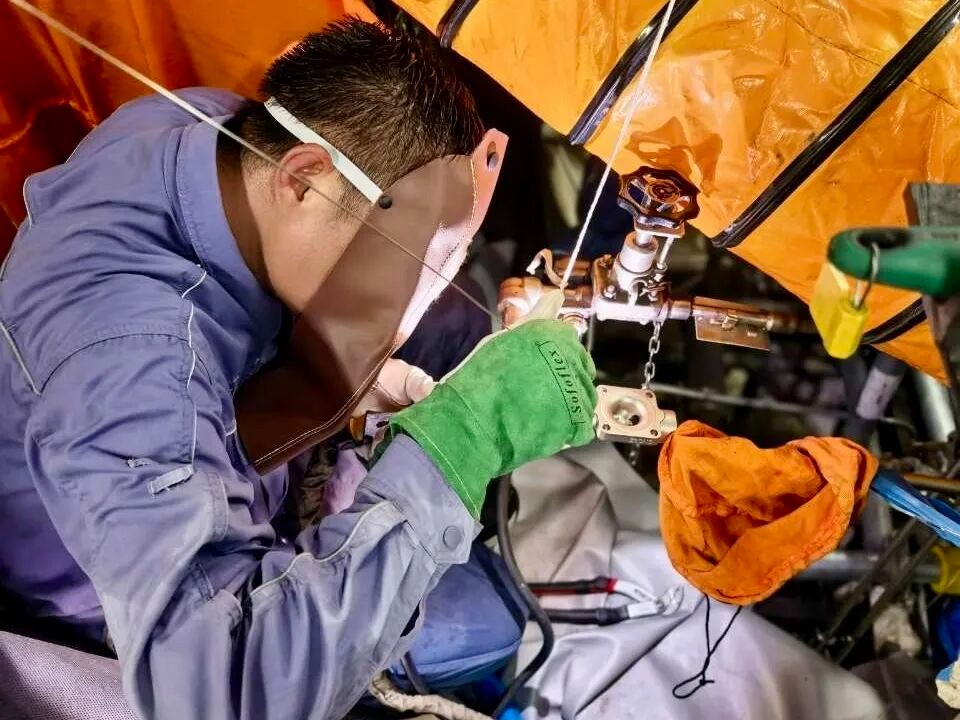
Fangchenggang Nuclear Power Station Unit 2 Completes First Ten-Year Overhaul
On the morning of August 25, Unit 2 of CGNPC Fangchenggang Nuclear Power Station successfully synchronized to the grid on its first attempt following the 7th overhaul, marking the completion of the F207 overhaul undertaken by CGNPC Service Maintenance Company. This overhaul was the first ten-year overhaul since Unit 2 was put into commercial operation. The maintenance process achieved the goal of "no indicator events in safety, quality, and schedule," and made breakthroughs in charging pump maintenance and nuclear-grade socket welding operations. During this overhaul, the nuclear-grade socket welding project was implemented on-site for the first time. To ensure work quality, the maintenance team completed preparatory work in advance, including welding procedure qualification certification, skill qualification process card review and submission, test piece welding, and non-destructive testing, all of which passed acceptance.
2026-08-28

Safety-level DCS Response Time Testing for Unit 3 of Xudabao Nuclear Power Plant Successfully Completed
Recently, with the final test data confirmed to be accurate, the safety-level DCS (Digital Control System) response time testing for Unit 3 of Xudabao Nuclear Power Plant was successfully completed. All test results met the requirements, with no abnormal equipment actions throughout the entire process, providing reliable instrumentation and control assurance for the subsequent fuel loading and stable operation of the unit. The test lasted 14 days and covered 182 test cases, encompassing more than 1,500 functional tests for reactor trip and engineered safety features systems. As a critical step before fuel loading, the safety-level DCS response time test holds significant reference value for verifying the response performance of the unit's safety systems. To ensure the successful completion of the test, the instrumentation and control team adhered to the work philosophy of "comprehensive preparation, strong collaboration, experience feedback, and pragmatic execution," advancing all tasks in an orderly manner.
2026-08-27

Sichuan Huadu Nuclear Energy Wins Control Rod Drive Mechanism Orders for 4 Nuclear Power Units
On August 24, news came from Sichuan Huadu Nuclear Equipment Manufacturing Co., Ltd., located in Dujiangyan, Chengdu, Sichuan, that the company has won the orders for control rod drive mechanisms for 4 units among the first batch of nuclear power units approved for construction during the 15th Five-Year Plan period in China, with a total new contract value of 504 million yuan. The winning projects include Units 3 and 4 of Zhejiang Jinqimen Nuclear Power Plant, as well as Units 1 and 2 of Phase I of Liaoning Zhuanghe Nuclear Power. According to the previous approval arrangement by the State Council Executive Meeting, the new batch of nuclear power projects involves a total of 4 projects and 8 units, including Phase II of Zhejiang Jinqimen Nuclear Power, Phase III of Guangdong Taipingling Nuclear Power, Phase I of Liaoning Zhuanghe Nuclear Power, and Phase I of Shandong Laiyang Nuclear Power, all adopting China's self-developed third-generation nuclear power technology...
2026-08-27
Reading Ranking
- 1 Zhuanghe Nuclear Power convenes the fourth meeting of the Safety Committee in 2026 and the work safety situation analysis meeting
- 2 Tianwan Nuclear Power Unit 7 Successfully Connected to Grid for the First Time
- 3 Opinions of the Central Committee of the Communist Party of China and the State Council on Developing New Quality Productive Forces
- 4 Declaration of the Council of Heads of State of the Shanghai Cooperation Organization Member States on Strengthening Multilateral Partnership for Nuclear Safety and Nuclear Security
- 5 Fangchenggang Nuclear Power Phase I Marks 10th Anniversary of Commercial Operation: Two Units Have Cumulatively Supplied Over 160 Billion kWh, with WANO Indicators Achieving Full Marks for Seven Consecutive Years
- 6 Guangxi Nuclear Power Smart Fire Protection Pilot Project Officially Applied
- 7 Preparations Underway for First Nuclear Fuel Loading at San'ao Nuclear Power Project Unit 2
- 8 Harbin Electric Power Equipment Company Nuclear Power MES System Has Been Fully Switched into Operation
- 9 Weilan Stellar Completes China's First Stellarator Magnet Cryogenic Comprehensive Test Platform in Three Months, First Round of Magnet Testing Launched
- 10 Standard Technical Specifications for Passive Nuclear Power Plants, Chiefly Compiled Under the Leadership of Shanghai Nuclear Engineering Research and Design Institute, Officially Released
- 11 The First Inspection Team of the Party Leadership Group of CNNC Feedback Inspection Situation to the Party Committee of China Baoyuan
- 12 Strengthen Regulation of Fusion Devices, Empower the Development of New Technologies
- 13 Adjustment of External Directors at SPIC and Dongfang Electric
- 14 "1455" System Officially Goes Live at SPIC Zhanjiang Nuclear Power
- 15 Typhoon "White Dolphin" Approaches Fujian-Zhejiang Coast, Ningde Nuclear Power Initiates Typhoon Emergency Deployment