

Tianwan Nuclear Power Advances AI-Empowered Intelligent Upgrade of Maintenance Operations
In recent years, the maintenance domain of Tianwan Nuclear Power has relied on platforms such as Hezhi·Longling to address pain points in efficiency, quality, and management across the entire maintenance business chain, promoting the integration of artificial intelligence with nuclear power maintenance scenarios. To date, applications including personnel profiling, work order generation, compliance inspection, and auxiliary generation of electric actuator maintenance plans have achieved phased results, while projects such as the intelligent lifting command platform and marine tunnel cleaning robot are also under development. In personnel management, Tianwan Nuclear Power has established a seven-dimensional personnel capability scoring model, setting differentiated evaluation indicators for different maintenance positions to form position-based, data-driven personnel capability profiles. The system can integrate historical data, support multi-period data retention and trend comparison, and display personnel capability distribution through radar charts, bar charts, and trend graphs. After batch data import, the backend automatically completes normalization calculation, multi-dimensional scoring, and ranking, generating materials that include overall overview, position comparison, special analysis of responsibility performance, and improvement suggestions, providing a basis for training resource allocation, position matching, and differentiated management. To address the issues of time-consuming maintenance work order preparation and reliance on manual experience, the relevant team has developed an intelligent work order preparation assistant based on the Longhuitong intelligent agent platform, forming an application solution of "1 intelligent agent, 1 Skill capability, and 7 categories of professional knowledge bases." The system integrates the historical work order library, maintenance procedure library, equipment ledger library, risk and safety measure library, spare parts and tools library, personnel qualification library, and management procedure library. It can dynamically generate work package catalogs based on historical operation data and procedural requirements, automatically fill in work order business content, and output downloadable Excel work package drafts that can interface with the EPM system. In terms of maintenance quality control, Tianwan Nuclear Power has developed an AI intelligent agent for maintenance compliance inspection. Based on large language models and RAG retrieval-augmented generation technology, this agent can batch receive maintenance procedures, preventive maintenance program lists, and maintenance completion reports, automatically parse document content, and conduct semantic comparison. The system can check item by item the coverage of maintenance procedure implementation steps by the program, while also identifying issues in completion reports such as missing items, omissions, data anomalies, missing signatures, and logical contradictions. The structured inspection reports it outputs can be traced back to specific procedure steps or report entries, and provide rectification suggestions. Intelligent assistance is also being introduced into maintenance of key equipment. Given the large number of electric actuators in nuclear power plants, their complex models, and high maintenance requirements, Tianwan Nuclear Power has developed an auxiliary generation system for electric actuator maintenance plans. After engineering personnel input equipment information and fault descriptions, the system can call upon the electric actuator maintenance knowledge base, historical plans, and equipment data to automatically generate a draft maintenance plan, covering cause analysis, maintenance steps, technical key points, spare parts and tool preparation, and safety precautions. Verified by maintenance engineers, the relevant plans have basically met the conditions for on-site application and can save preparation time for emergency repairs. In addition to applications already deployed, Tianwan Nuclear Power is also advancing the construction of an intelligent lifting command platform. Given the high professionalism and numerous control links involved in crane lifting operations at nuclear power plants, the platform is planned to support both web and API interface usage, and to manage processes such as development, training, and online monitoring through AI models. According to the design, the platform can assist in lifting planning after inputting lifting object parameters and site conditions, recommending equipment and lifting point positions, and alerting to risks such as overload and collision. It can also generate lifting plans based on cargo information, provide handling steps, required materials, and contact person information for emergency situations, and be used for training question bank generation, operation record analysis, and rectification report output. Tianwan Nuclear Power stated that it will continue to expand AI application scenarios in the maintenance domain based on actual production needs, promote the digitalization and intelligent upgrade of maintenance operations, and strengthen network security management while advancing intelligent applications, providing support for the safe and stable operation of the units.
2026-08-28

Qinshan Nuclear Power Membrane Deoxygenation Retrofit Project Put into Operation
Recently, the membrane deoxygenation retrofit project at Qinshan Nuclear Power completed commissioning and was put into operation. The project applies membrane deoxygenation technology to the auxiliary feedwater system (ASG) and reactor boron and water makeup system (REA) of Units 1 and 2 at Qinshan Nuclear Power Plant Phase II, optimizing and upgrading the original deoxygenation process. Units 1 and 2 of Qinshan Phase II originally adopted thermal deoxygenation. During long-term operation, this method presented issues such as insufficient redundancy in single-train equipment operation, high temperature and humidity on site, and potential exceedance of auxiliary feedwater tank temperature limits during summer peak temperature periods. To enhance system operational reliability, Qinshan Nuclear Power initiated relevant technical retrofits, introducing membrane separation packaged units to form a parallel standby configuration with the original thermal deoxygenation system, allowing flexible switching...
2026-08-28

Zhangzhou Nuclear Power Unit 4 Completes Hoisting of Four Internal Structure Modules
From August 18 to 27, CNNC 24 completed the hoisting of four concrete modules for the internal structure of Zhangzhou Nuclear Power Unit 4 within 10 consecutive days, covering the evaporator compartments of Loops 3, 2, and 1 as well as the pressurizer compartment, creating conditions for subsequent loop installation and commissioning work. The evaporator and pressurizer are key equipment in the nuclear island loops. The corresponding compartment concrete modules serve both load-bearing fixation and protection functions, representing an important embodiment of the "Hualong One" defense-in-depth safety philosophy at the civil construction stage. The four modules hoisted this time are all irregularly shaped structures, all adopting the "off-site prefabrication + integral modular hoisting" process, with a total hoisting weight of approximately 2,400 tons. Compared with Unit 3, Unit 4 achieved 3...
2026-08-28

Lufeng Nuclear Power Unit 1 Nuclear Island Installation and High-Quality Cold Test Sand Table Exercise Successfully Concluded
From August 18 to August 21, 2026, the China Nuclear Energy Association (hereinafter referred to as the Association) organized relevant experts to successfully carry out the sand table exercise for the nuclear island installation and high-quality cold test of Lufeng Nuclear Power Unit 1. The sand table exercise was led by Hu Guofeng, former Director of Shanghai Nuclear Engineering Research and Design Institute Co., Ltd. and Deputy Director of the Science, Technology and Development Expert Committee, with Li Jingxi, former Director of the South China Nuclear and Radiation Safety Supervision Station of the Ministry of Ecology and Environment, Li Qibin, former Chairman of China Nuclear Industry 23 Construction Co., Ltd., Zeng Hao, former Chairman of CNNC Maintenance Co., Ltd., and Wang Mingliang, former Deputy General Manager of China Nuclear Industry Fifth Construction Co., Ltd., serving as advisors. A total of 24 external experts participated...
2026-08-28
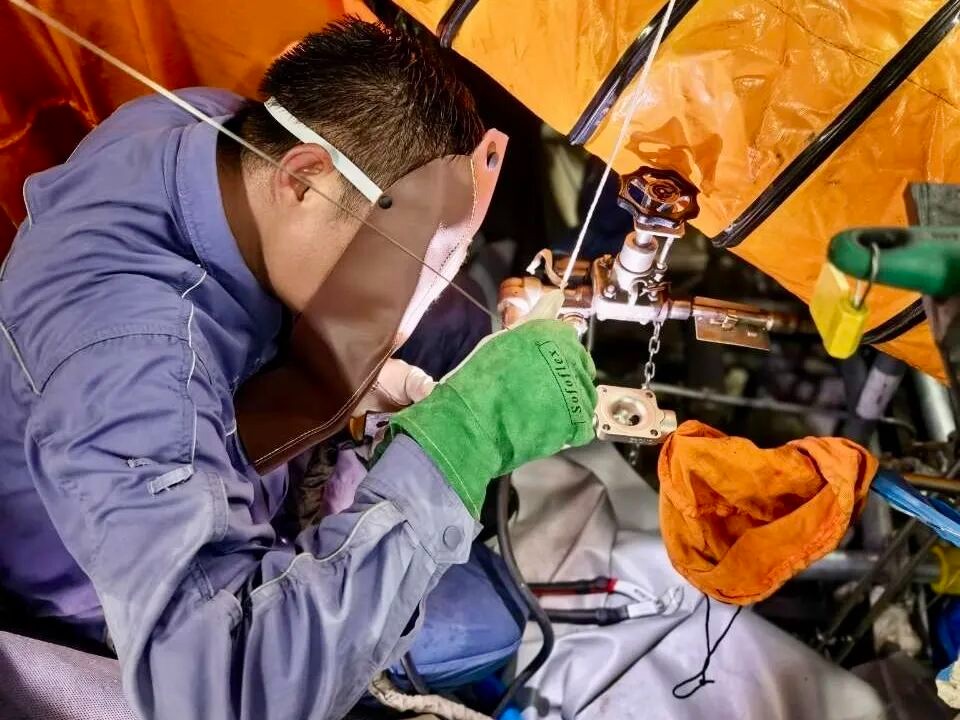
Fangchenggang Nuclear Power Station Unit 2 Completes First Ten-Year Overhaul
On the morning of August 25, Unit 2 of CGNPC Fangchenggang Nuclear Power Station successfully synchronized to the grid on its first attempt following the 7th overhaul, marking the completion of the F207 overhaul undertaken by CGNPC Service Maintenance Company. This overhaul was the first ten-year overhaul since Unit 2 was put into commercial operation. The maintenance process achieved the goal of "no indicator events in safety, quality, and schedule," and made breakthroughs in charging pump maintenance and nuclear-grade socket welding operations. During this overhaul, the nuclear-grade socket welding project was implemented on-site for the first time. To ensure work quality, the maintenance team completed preparatory work in advance, including welding procedure qualification certification, skill qualification process card review and submission, test piece welding, and non-destructive testing, all of which passed acceptance.
2026-08-28

Safety-level DCS Response Time Testing for Unit 3 of Xudabao Nuclear Power Plant Successfully Completed
Recently, with the final test data confirmed to be accurate, the safety-level DCS (Digital Control System) response time testing for Unit 3 of Xudabao Nuclear Power Plant was successfully completed. All test results met the requirements, with no abnormal equipment actions throughout the entire process, providing reliable instrumentation and control assurance for the subsequent fuel loading and stable operation of the unit. The test lasted 14 days and covered 182 test cases, encompassing more than 1,500 functional tests for reactor trip and engineered safety features systems. As a critical step before fuel loading, the safety-level DCS response time test holds significant reference value for verifying the response performance of the unit's safety systems. To ensure the successful completion of the test, the instrumentation and control team adhered to the work philosophy of "comprehensive preparation, strong collaboration, experience feedback, and pragmatic execution," advancing all tasks in an orderly manner.
2026-08-27

Sichuan Huadu Nuclear Energy Wins Control Rod Drive Mechanism Orders for 4 Nuclear Power Units
On August 24, news came from Sichuan Huadu Nuclear Equipment Manufacturing Co., Ltd., located in Dujiangyan, Chengdu, Sichuan, that the company has won the orders for control rod drive mechanisms for 4 units among the first batch of nuclear power units approved for construction during the 15th Five-Year Plan period in China, with a total new contract value of 504 million yuan. The winning projects include Units 3 and 4 of Zhejiang Jinqimen Nuclear Power Plant, as well as Units 1 and 2 of Phase I of Liaoning Zhuanghe Nuclear Power. According to the previous approval arrangement by the State Council Executive Meeting, the new batch of nuclear power projects involves a total of 4 projects and 8 units, including Phase II of Zhejiang Jinqimen Nuclear Power, Phase III of Guangdong Taipingling Nuclear Power, Phase I of Liaoning Zhuanghe Nuclear Power, and Phase I of Shandong Laiyang Nuclear Power, all adopting China's self-developed third-generation nuclear power technology...
2026-08-27

MIIT: Promote Future Industries Including Nuclear Fusion Energy as New Growth Drivers
The State Council Information Office held a press conference on August 26, where the Ministry of Industry and Information Technology (MIIT) briefed on efforts to fully implement the 15th Five-Year Plan and accelerate new industrialization. The MIIT stated that over the next five years, it will focus on optimizing the industrial structure, coordinating the transformation and upgrading of traditional industries, nurturing and strengthening emerging industries, and making forward-looking arrangements for future industries, while maintaining and developing a complete industrial system. In terms of future industry layout, the MIIT proposed promoting quantum technology, biomanufacturing, hydrogen energy and nuclear fusion energy, brain-computer interfaces, embodied intelligence, and sixth-generation mobile communications as new economic growth drivers. The inclusion of nuclear fusion energy in future industry directions reflects its important position in new industrialization and the cultivation of strategic emerging industries.
2026-08-27

Training Launch for First Batch of Operators for Units 1 and 2 of Xudabao Nuclear Power Plant on Full-Scope Simulator
Recently, the first batch of operator training on the full-scope simulator for Units 1 and 2 of Xudabao Nuclear Power Plant was officially launched. The training program lasts 6 months, with 48 candidate Reactor Operators (ROs) and 24 candidate Senior Reactor Operators (SROs) participating. Centering on the five fundamental operator skills, the training conducts systematic hands-on exercises on the simulator platform, building a reserve of operations personnel for subsequent project construction and safe unit operation. The simulator for Units 1 and 2 can highly replicate the real working environment of the main control room and covers various operating conditions, making it an important platform for operations personnel to enhance their practical capabilities. The training is structured around five fundamental skills—close monitoring, precise control, conservative decision-making, teamwork, and knowledge mastery—integrating job conduct standards and team...
2026-08-27

Construction of Access Tunnels Commences for Phase III of Taipingling Nuclear Power Project
On August 26, 2026, CGN's Guangdong Taipingling Nuclear Power Plant held a mobilization meeting for the construction of its Phase III project. At the meeting, the "Safety and Quality Responsibility Agreement for the Construction and Operation of CGN Guangdong Taipingling Nuclear Power Plant Phase III Project" was unveiled, aiming to further consolidate safety and quality responsibilities in nuclear power engineering construction, strengthen project quality management, and ensure the safe and orderly progress of project construction. At the mobilization meeting, Zhang Guoqiang, Secretary of the Party Committee and Chairman of CGN Huizhou Nuclear Power Co., Ltd., announced the official commencement of access tunnel construction for the Phase III project. Upon completion of the access tunnel construction, it will help improve the organizational efficiency of project construction in areas such as material transportation and module hoisting, and create conditions for the subsequent pouring of the first batch of nuclear island concrete.
2026-08-27

Target Image of "Artificial Sun" China Huanliu-4 Released
The 2026 Fusion Energy Conference and Fusion Energy Week opened in Shanghai on the 25th. The target image of the "Artificial Sun" China Huanliu-4 was released at the opening ceremony. China Huanliu-4 is a fourth-generation magnetic confinement fusion large-scale scientific experimental device and the world's first high-temperature superconducting strong-field steady-state burning experimental platform. It will systematically verify the reliability of high-temperature superconducting strong-field magnets in complex fusion environments, demonstrate full-domain intelligent control of fusion reactors, and achieve long-duration steady-state operation of the device. Fusion energy is an important direction for the future development of human energy, and major countries around the world are competing to position themselves in the new track of fusion energy. Zhang Guangjun, Vice Minister of Science and Technology, pointed out on the same day that the 15th Five-Year Plan will incorporate controlled nuclear fusion as a future energy technology into key directions for energy innovation development, and list controlled nuclear fusion as a major national frontier science and technology project.
2026-08-26
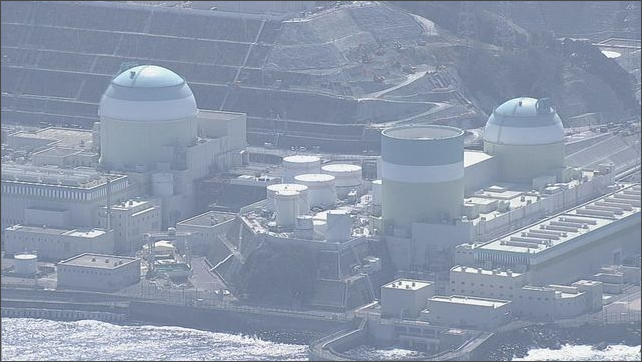
Bitumen Solidification Facility at Unit 2 of Japan's Ikata Nuclear Power Plant Returns to Normal
Shikoku Electric Power Co. reported on August 25, 2026, that the bitumen solidification facility at Unit 2 of Japan's Ikata Nuclear Power Plant, currently in a decommissioned state, had returned to normal operation at 10:45 a.m. that day. The gasket at the joint of the mixer top cover, where the earlier abnormality had been detected, had been replaced, and trial operation results showed no abnormalities. The incident occurred on April 28. On that day, when operators started the bitumen solidification facility in the controlled area of the reactor auxiliary building, they observed a steam-like phenomenon near the mixer thermometer, which subsequently disappeared on its own. Maintenance personnel later inspected and confirmed at 3:05 p.m. that the steam-like gas originated from inside the mixer and had escaped through the joint of the mixer top cover; at 5:06 p.m., the bitumen solidification facility was shut down.
2026-08-26

China's Huanliu-4 High-Temperature Superconducting Magnet Development Roadmap Clarified
On August 25, during the 2026 Fusion Energy Conference and Fusion Energy Activity Week, the Yangtze River Delta Innovation Consortium, led by China Fusion Energy Co., Ltd., has clarified its development targets for high-temperature superconducting high-field tokamak magnets: to build the first 25T high-temperature superconducting high-field magnet development and testing line by 2028, and to complete prototype magnet development by 2030. The consortium is led by China Fusion Energy Co., Ltd., with members including Shanghai Superconductor, Eastern Superconductor, Shanghai Jiao Tong University, Shanghai Electric Nuclear Power Group, Chaoci Xinneng, Energy Singularity, Hangyang Group, and Yixi Technology. The consortium will focus on building high-temperature superconducting high-field tokamak magnet development capabilities and engineering technology systems to provide key technical support for the subsequent construction of China's Huanliu-4.
2026-08-26

Ministry of Ecology and Environment North China Regional Office of Nuclear and Radiation Safety Supervision Conducts Supervision of First Fuel Loading at Tianwan Nuclear Power Plant Unit 7
Recently, the first fuel loading of Unit 7 at Tianwan Nuclear Power Plant was officially initiated, with the first fuel assembly successfully loaded into the reactor core, marking the unit's formal transition into the commissioning phase with nuclear operation. This unit is a key cooperative project witnessed by the heads of state of China and Russia via video link at its groundbreaking ceremony. This fuel loading marks a significant milestone achievement in the largest strategic cooperation project in China-Russia nuclear energy cooperation. As a core and critical procedure in nuclear power engineering, the first fuel loading serves as a comprehensive and holistic verification of the unit's engineering construction quality, system commissioning effectiveness, and safety control capabilities, and is of decisive significance to the subsequent safe and stable operation of the unit. The Ministry of Ecology and Environment North China Regional Office of Nuclear and Radiation Safety Supervision (hereinafter referred to as the North China Regional Office) has consistently upheld the nuclear safety regulatory work style of "rigorous, prudent, meticulous, and practical," closely focusing on the core and critical aspects of the first fuel loading, and implementing full-coverage, full-chain, and whole-process supervision and control over this fuel loading operation, effectively safeguarding the safety and quality defense line of the loading operation.
2026-08-26

Liaoning Zhuanghe Nuclear Power Enters Construction Preparation Phase, Expected to Complete 2 Billion Yuan in Project Investment by Year-End
On August 22, 85 heavy and light engineering machinery units entered the site simultaneously to carry out topsoil clearing work on 179,000 square meters of land, marking the official entry of the Liaoning Zhuanghe nuclear power project into the construction preparation phase. Rendering of the Liaoning Zhuanghe nuclear power project. The Liaoning Zhuanghe nuclear power project is the first nuclear power project in Northeast China to adopt the Hualong One, China's self-developed third-generation nuclear power technology. The project plans to build six million-kilowatt-class nuclear power units in three phases, with a total investment of approximately 125 billion yuan. The first phase will construct two units with a total investment of approximately 44.56 billion yuan. It was approved at the executive meeting of the State Council on July 31, received formal approval from the National Development and Reform Commission on August 13, and obtained the advance land use approval from the Liaoning Provincial Department of Natural Resources on August 20, meeting the legal conditions for land construction.
2026-08-25

China's Nuclear Power Installed Capacity Up 8.5% Year-on-Year by End of July
On August 25, the National Energy Administration released national electricity statistics for January-July. By the end of July, the country's cumulative installed power generation capacity reached 4.08 billion kilowatts, up 11.0% year-on-year. Among this, nuclear power installed capacity stood at 66.14 million kilowatts, up 8.5% year-on-year. During January-July, the country added 3.62 million kilowatts of new nuclear power installed capacity. In the same period, the cumulative average utilization hours of power generation equipment nationwide were 1,671 hours, down 135 hours from the same period last year. The data also showed that by the end of July, thermal power installed capacity was 1.58 billion kilowatts, up 6.3% year-on-year; hydropower installed capacity was 456 million kilowatts, up 3.4% year-on-year; wind power installed capacity was 687 million kilowatts, up 19.5% year-on-year; solar power installed capacity was 1.288 billion kilowatts, up year-on-year...
2026-08-25

Rock Fusion Completes Key Processes for Stellarator 3D Non-Planar Superconducting Prototype Coil
Recently, the stellarator high-strength stainless steel armored 3D non-planar superconducting prototype coil developed by Rock Fusion (Shanghai) Technology Co., Ltd. has completed two key processes: 3D precision winding and ground insulation wrapping. The overall 3D geometric error of the coil is consistently controlled at the millimeter level, indicating that the company has preliminarily established key manufacturing processes including material adaptation, 3D precision forming, and insulation wrapping for high-field steady-state stellarator superconducting magnets. The stellarator is an important device for steady-state controlled nuclear fusion research, and 3D superconducting coils are used to generate the complex magnetic fields required to confine plasma. Unlike conventional planar coils, stellarator coils typically feature non-planar spatial structures with continuously varying curvature...
2026-08-25

The Workshop on Engineering Application of Domesticated Safety-Class DCS in Nuclear Power Projects Successfully Held
From August 20 to 21, the Workshop on Engineering Application of Domesticated Safety-Class DCS in Nuclear Power Projects, led by SNPAS, was successfully held in Shanghai. Relevant leaders and experts from Beijing Guangli Nuclear System Engineering Co., Ltd., China Nuclear Control System Engineering Co., Ltd., and Nuclear Power Institute of China attended the meeting, with a representative from the Ministry of Ecology and Environment's North China Regional Office of Nuclear and Radiation Safety Supervision dispatched to provide guidance. The meeting focused on discussions regarding the engineering qualification of domesticated safety-class DCS and the verification of their application in nuclear power engineering. Based on their practical experience, each participating organization presented their current implementation status, challenges encountered, and proposed measures. During the discussions, all parties exchanged views on quality consistency assurance measures, engineering qualification prototype representativeness, equipment qualification test items, and platform application verification, reaching multiple consensuses.
2026-08-25
SASAC: Accelerating the Cultivation of Talent for Controlled Nuclear Fusion
The website of the State-owned Assets Supervision and Administration Commission of the State Council (SASAC) released a notice on August 24, stating that on August 19, the Special Training Program for Talent in the Future Energy Sector of Central Enterprises, hosted by SASAC, commenced in a combined online and offline format. Tan Zuojun, Member of the Party Committee and Deputy Director of SASAC, attended the opening ceremony and delivered a speech. The training program focuses on the direction of controlled nuclear fusion within the future energy sector, leveraging the Controlled Nuclear Fusion Innovation Consortium to promote collaborative research among industry chain-related units and accelerate the cultivation of urgently needed talent in the field of controlled nuclear fusion. The opening ceremony emphasized the need to strengthen research and understanding of the development patterns of controlled nuclear fusion, clarify the main technical roadmap directions, drive original innovation and breakthroughs in foundational technologies,...
2026-08-24

Hainan Danzhou Plans to Integrate Nuclear Power into Yangpu 220kV Power Grid
On August 21, the "New Advantages of the Free Trade Port 'Showcase' — Danzhou New Energy System Industrial Chain Cooperation Matchmaking Conference" was held in Shanghai. Representatives from nearly a hundred enterprises, investment and financing institutions, industry associations, and professional service organizations attended the event to exchange views on topics such as new energy system development and green, low-carbon industrial transformation, and signed a batch of cooperation agreements on site. Regarding nuclear power-related planning, Hainan Power Grid Co., Ltd. stated that it is accelerating the construction of a new-type power system featuring zoned power supply and tiered operation in Danzhou. According to the plan, by 2030, a relatively independent new-type power grid will take shape across Danzhou, with nuclear power directly connected to the 220kV power grid in the Danzhou-Yangpu area. By then...
2026-08-24

Beijing's First Second-Generation High-Temperature Superconducting Tape Mass Production Line Project Approved
Recently, the second-generation high-temperature superconducting tape R&D and production project invested in by Energy Singularity Superconducting Technology (Beijing) Co., Ltd., a wholly-owned subsidiary of Energy Singularity, was officially approved for project initiation in the Daxing section of the Airport Economic Zone. Once completed and put into operation, the project will establish Beijing's first mass production line for second-generation high-temperature superconducting tape. According to reports, the project plans to build three production lines for rare-earth barium copper oxide (ReBCO) high-temperature superconducting tape based on the pulsed laser deposition (PLD) process route, achieving an annual output of 1,200 kilometers of high-temperature superconducting tape in the 12 mm width specification. High-temperature superconducting tape is a key raw material for manufacturing high-temperature superconducting magnets. In tokamak devices, high-temperature superconducting tape accounts for approximately...
2026-08-24
Reading Ranking
- 1 Opinions of the Central Committee of the Communist Party of China and the State Council on Developing New Quality Productive Forces
- 2 Innovating the Safety Review Pathway to Strengthen the Safety Foundation of High-Temperature Gas-Cooled Reactors — National Nuclear Safety Administration Approves Safety Design Criteria for High-Temperature Gas-Cooled Reactors
- 3 Startorus Fusion Completes 20 K Cryogenic Rapid Discharge Test of Central Solenoid Model Magnet (CSMC) for Spherical Tokamak Device
- 4 China Launches Global Network for Small Modular Reactor Innovation
- 5 Concrete pouring for the turbine pedestal of the conventional island of Guangdong Taipingling Unit 3 completed successfully
- 6 Cumulative safe power generation of China's Sanmen Nuclear Power Phase I exceeds 150 billion kWh
- 7 StarRing Fusion Completes RMB 880 Million Series A++ Financing to Advance Fusion Device and Key Technology Engineering
- 8 Dongfang Electric's Nuclear Generator Sealing Patent Wins China Patent Excellence Award
- 9 CAS Ion Completes RMB 600 Million First-Round Financing, Fusion-Derived Technology Industrialization Enters a New Stage
- 10 First Application and Verification of Intelligent Monitoring and Adjustment System for Nuclear Power Plant Personnel Status at "Hualong One" Nuclear Power Plant
- 11 The main control room large screen of Unit 1 of SPIC Lianjiang Nuclear Power Project was successfully lit up
- 12 Single-Channel Pulse Source of Electromagnetic-Driven Fusion Large Scientific Facility Passes Acceptance
- 13 China Calls for Advancing SMR Innovation and Strengthening Global Nuclear Energy Cooperation
- 14 Unit 2 of State Power Investment Corporation (SPIC) Guangxi Bailong Nuclear Power Project starts construction
- 15 South China Regional Office organizes nuclear safety culture self-assessment