

ORNL Neutron Imaging Technology Reveals Healed Rib Fracture in Tyrannosaurus Rex Fossil
Neutron imaging technology at the U.S. Department of Energy's Oak Ridge National Laboratory (ORNL) has helped researchers from the University of Regina in Canada and other institutions observe rare healing signs inside the fossilized bones of a Tyrannosaurus rex, providing new insights into ancient life from approximately 66 million years ago. The subject of this study is a fractured rib from "Scotty," the largest Tyrannosaurus rex skeleton ever discovered. Researchers found that this rib preserved a wound-healing process rarely seen in the fossil record: after the fracture occurred, iron-rich blood entered the injured area and formed a network of blood vessels to promote healing; however, before the rib had fully healed, Scotty died and was preserved in a salt marsh environment, which slowed the decomposition of the remains...
2026-09-07

"Wukong" Detects "Super-Iron" Elements in Cosmic Rays, Achieving First High-Precision Cosmic Ray Nickel Energy Spectrum in the TeV Range
Recently, the DAMPE scientific team led by Academician Chang Jin of the University of Science and Technology of China made significant progress in direct observations of high-energy cosmic rays. Based on DAMPE on-orbit observation data, the scientific team obtained the differential flux spectrum of nickel nuclei from 10 GeV/n to 2 TeV/n. The results were published in the international academic journal *Physical Review Letters* under the title "Measurement of the Cosmic Ray Nickel Energy Spectrum from 10 GeV/n to 2 TeV/n with the DAMPE Space Mission." The origin of super-iron elements in cosmic rays has long been a challenge for the scientific community. It is generally believed that cosmic ray elements are primarily produced in nuclear fusion processes within stars, but since iron nuclei have the highest binding energy per nucleon, stellar fusion reactions typically struggle to proceed beyond elements near iron. Heavier elements than iron are generally attributed to different nucleosynthesis processes such as neutron capture. Because the abundance of super-iron elements is typically at least an order of magnitude lower than that of iron, measurements of super-iron elements in cosmic rays remain extremely scarce. Most experiments have only provided relative abundances of different elements; a few experiments have measured the differential flux spectrum of cosmic ray nickel, but with energy upper limits of only a few hundred GeV/n.
2026-09-07

South Korean research team reveals that water storage capacity of cold subducting slabs has been underestimated using synchrotron radiation sources
A research team led by Professor Yongjae Lee of the Department of Earth System Sciences at Yonsei University in South Korea has recently found that in cold, rapidly descending tectonic subduction zones, crustal rocks may transport up to 1 trillion kilograms of water to the mantle each year—approximately twice the previous estimate. The findings have been published in Nature Communications. Subduction zones are regions where Earth's tectonic plates converge and one plate descends beneath another, often accompanied by volcanic and seismic activity. For a long time, the academic community has generally believed that serpentinite, a water-bearing rock, gradually dehydrates as it descends with the plate due to increasing pressure and temperature, and the released water further promotes melting of the overlying plate and is associated with the formation of volcanic arc chains.
2026-09-07

XENONnT Observes First Low-Energy Solar Neutrino-Electron Scattering Signals
Scientists of the XENON collaboration recently announced the first observation of low-energy solar neutrino scattering off electrons in the XENONnT particle detector. The results were presented at a workshop held on August 31, 2026, at the Gran Sasso National Laboratory of the Italian National Institute for Nuclear Physics. The team of Prof. Teresa Marrodán Undagoitia and Dr. Hardy Simgen from the Max Planck Institute for Nuclear Physics played a key role in the experiment. Nuclear fusion in the Sun continuously produces vast numbers of neutrinos, with hundreds of billions passing through every square centimeter of Earth each second. Because neutrinos interact with matter extremely weakly, detecting these particles...
2026-09-07

No Evidence of Mirror Neutrons Found in Swiss PSI Ultracold Neutron Experiment
The Ultracold Neutron Physics Group at the Paul Scherrer Institute (PSI) in Switzerland recently stated that its research team found no evidence of spontaneous transformation of ordinary neutrons into mirror neutrons in a high-precision experiment. The researchers said the result essentially rules out the main parameter space previously suggested for anomalous neutron-mirror neutron oscillation signals, and also weakens the possibility that mirror neutrons could be a component of dark matter. Bernhard Lauss (left) and Géza Zsigmond examined approximately 2.5 billion neutrons at the ultracold neutron source at the Paul Scherrer Institute (PSI). They essentially ruled out the hypothesis of spontaneous transformation of neutrons into mirror neutrons. (Image courtesy of Paul Scherrer Institute PSI/Ma...
2026-09-07

Japanese research team accelerates muons to 0.3 MeV, taking a step toward the world's only muon accelerator
A research team comprising the J-PARC Center, High Energy Accelerator Research Organization (KEK), the University of Tokyo, Tokai National Higher Education and Research System, Nagoya University, and RIKEN recently completed muon cooling and radio-frequency acceleration experiments in the newly constructed muon acceleration experimental area at the J-PARC Materials and Life Science Experimental Facility, successfully accelerating muons to a kinetic energy of 0.3 MeV, corresponding to approximately 8% of the speed of light. Conceptual diagram of cooling and accelerating positive muon beams. By cooling positive muons with non-uniform direction and velocity, efficient high-frequency acceleration can be achieved. Muons are elementary particles similar to electrons that can be artificially produced by accelerators and are widely used in materials science, particle physics research...
2026-09-07

Russia masters production technology of ultra-pure germanium for gamma detectors
The Giredmet Research Institute, part of Rosatom, recently announced that its researchers have developed technology for producing high-purity germanium (HPGe) for gamma-ray detectors. This breakthrough is expected to replace imported crystals and promote the formation of a complete production cycle for detector equipment within Russia. According to reports, experts at Giredmet have designed and manufactured experimental equipment, and based on this, developed a process for preparing ultra-high-purity germanium single crystals. The purity of the germanium material reaches at least 7N, i.e., 99.99999%, equivalent to only one impurity atom per 10 million atoms of the primary material. The institute stated that the first batch of experimental samples has been obtained, verifying the effectiveness of the adopted deep germanium purification method in achieving the purity level required for detector applications.
2026-09-07
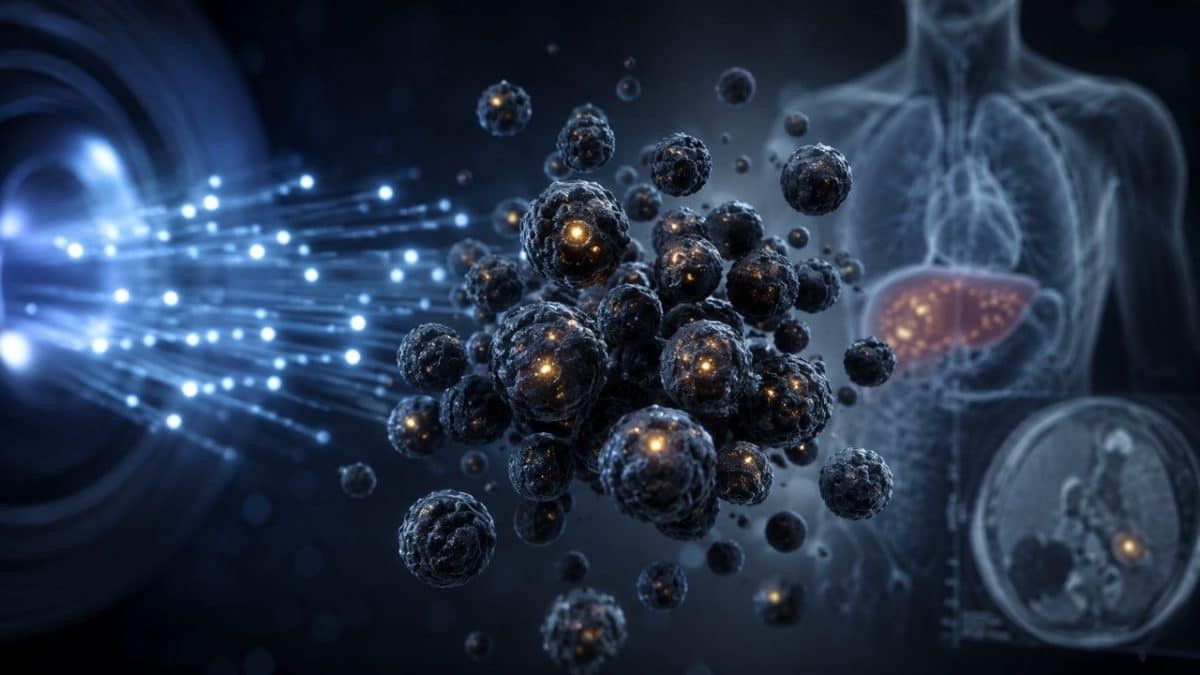
Russian Researchers Propose New Method for Preparing Iron-59 Magnetite Nanoparticles, Potentially Advancing Nuclear Medicine Diagnostics and Therapy
Russian researchers have developed a new method for preparing iron-59-labeled magnetite nanoparticles, which is expected to provide a new material preparation pathway for medical applications such as magnetic resonance imaging, single-photon emission computed tomography, and radionuclide therapy. According to reports, researchers from the Vernadsky Institute of Geochemistry and Analytical Chemistry and the Karpov Institute of Physical Chemistry, both under the Russian Academy of Sciences, have proposed synthesizing iron-59 magnetite nanoparticles using the sol-gel method. The relevant findings have been published in the journal Applied Radiation and Isotopes. The sol-gel method is a chemical approach for preparing nanomaterials, with the core process involving the conversion of a liquid colloidal solution into a gel-like network...
2026-09-07

IAEA Meeting Focuses on Data Needs for Ion Beam Analysis, JINR Presents Progress in Nuclear Track Emulsion Research
From August 24 to 28, 2026, the International Atomic Energy Agency held a Technical Meeting on Data Requirements for Ion Beam Analysis in Vienna, Austria, attended by scientists and experts from multiple nuclear physics research institutions. Andrey Zaitsev, Senior Researcher at the High Energy Physics Laboratory of the Joint Institute for Nuclear Research, delivered a report at the meeting, presenting the current performance of nuclear track emulsions and research progress related to the BECQUEREL project. The meeting focused on assessing whether existing nuclear data can meet current and future application needs of ion beam analysis, and discussed new experimental methods, as well as the application of artificial intelligence and machine learning in experiments and data processing. Topics included elastic backscattering cross sections, nuclear re...
2026-09-05

State Nuclear Uranium Industry Achieves 100% Localization of Electron Linear Accelerator Development
Recently, the first fully domestically produced 10 MeV/20 kW electron linear accelerator developed by the Technology Center of State Nuclear Uranium Industry (Nuclear Power Tongchuang) completed its 20 kW beam extraction test, with performance meeting design specifications. This marks a significant breakthrough for State Nuclear Uranium Industry in the field of electron accelerator development and elevates its capability in developing nuclear technology application equipment to a new level. Main unit of the 10MeV/20kW electron irradiation accelerator As a versatile high-energy electron linear accelerator, the 10MeV/20kW electron linear accelerator is widely used in multiple sectors of the national economy, including medical device sterilization, traditional Chinese medicine pest control, food preservation, and polymer material modification. During the current process of engineering application and industrial promotion, its core components such as klystrons, waveguide windows, and water loads have a relatively low localization rate, with some models still relying on imports, facing challenges such as long procurement cycles, high costs, and difficulties in spare parts support. The R&D team of State Nuclear Uranium Industry has focused on industry pain points, adhered to a problem-oriented approach, overcome difficulties, efficiently resolved various technical challenges, and successfully achieved 100% localization of this model of electron linear accelerator with significantly reduced overall machine costs, breaking the reliance on imported core components. As a key R&D project for differentiated layout in the nuclear technology industry, State Nuclear Uranium Industry will continue to improve its processes and standards systems, accelerate the application of research achievements in typical scenarios, bridge the chain from R&D to industrial application, and promote the steady development of the nuclear technology industry.
2026-09-05

Fudan team extracts CKM matrix element |Vus| via quantum entanglement in collider experiment for the first time
On the evening of September 2, 2026, Beijing time, the team led by Luo Tao from the Institute of Modern Physics at Fudan University, together with collaborators, published a research achievement titled "Exploring baryon semileptonic decays through polarization and entanglement" in Nature. This study, for the first time in a collider experiment, utilized quantum entanglement and polarization information to extract the Cabibbo-Kobayashi-Maskawa (CKM) matrix element |Vus|, providing a new experimental pathway for precisely testing the Standard Model of particle physics. The CKM matrix describes the strength of transitions between different quarks under the weak interaction. Among them, |Vus| corresponds to the transition from the strange quark to the up quark, and its numerical precision is related to the test of the three-generation quark mixing mechanism in the Standard Model. Currently, results for |Vus| obtained from different decay processes still show discrepancies, and the unitarity test of the first row of the CKM matrix also exhibits some tension, necessitating more independent measurement methods for verification.
2026-09-04

Domestically Developed "Palm-Sized CT" Debuts: 6 kg Micro X-ray CT Enables 3D Non-Destructive Testing
The XTOMO-CUBE series micro-CT, independently developed by Ruiying Detection Technology (Jinan) Co., Ltd., recently made its debut. With dimensions of 140×132×220 mm and a total weight of approximately 6 kg, the device can be held in one hand and is dubbed the "palm-sized CT." It can scan small-sized samples such as chicken bones, snail shells, and capsule tablets, revealing their internal three-dimensional structures. According to reports, CT stands for computed tomography technology. Compared with traditional CT equipment, the XTOMO-CUBE integrates key modules such as a miniaturized X-ray source, rotation stage, and detector into a compact body, paired with fully self-developed software capable of completing processes including projection data acquisition, CT image reconstruction, and 3D rendering. The...
2026-09-04

Beijing Synchrotron Radiation Facility to Resume Operations in Mid-September
The Beijing Synchrotron Radiation Facility (BSRF) User Office issued a notice on September 2 stating that the facility will conclude its summer maintenance and resume operations in mid-September 2026. The notice reminds users with experimental needs to promptly log in to the Chinese Academy of Sciences' Major Scientific and Technological Infrastructure Sharing Service Platform, or submit project proposals and beamtime reservation requests through the BSRF User Service System. The BSRF accepts project proposals and beamtime reservation requests year-round, and the specific application procedures can be found in the relevant attachments. Users encountering issues during the application or reservation process may contact the BSRF User Office or the corresponding beamline station contacts. Contact information for each beamline station has been provided along with the notice...
2026-09-03

CERN removes first giant beam absorbers from LHC, making room for High-Luminosity Large Hadron Collider upgrade
CERN recently completed a complex transport operation, moving the first two giant components from the Large Hadron Collider (LHC) tunnel to the surface, making room for the operation and upgrade of the future High-Luminosity Large Hadron Collider (HiLumi LHC). The equipment removed this time consists of two beam absorbers, also known as TAN absorbers. Each absorber is about 5 meters long and weighs about 30 tons, made of iron, copper, and marble, primarily used to protect accelerator magnets from damage caused by neutral particles generated along the beam direction during collisions. A relevant official stated that this type of equipment is among the heaviest and largest devices that need to be removed from the LHC during this shutdown period...
2026-09-03

Study Says Neutrino Laser Physically Impossible Due to Mechanism Constraints
On September 2, physicists at the Massachusetts Institute of Technology published two papers in Physical Review Letters analyzing a previously proposed neutrino laser concept. The research concludes that, due to atomic recoil effects and the fermionic nature of neutrinos, the scheme of using radioactive atomic clouds to produce laser-like neutrino beams is physically impractical. Neutrinos are elementary particles with extremely small mass and very weak interactions with ordinary matter. Earlier research had envisioned cooling radioactive atomic clouds to nanokelvin temperatures to form a Bose-Einstein condensate. According to this concept, atoms in a quantum coherent state might decay synchronously, producing neutrino beams with strong directionality through a quantum amplification effect similar to superradiance...
2026-09-03

Chinese Research Team Develops Novel Adsorbent Material for Uranium Extraction from Seawater
On September 2, it was learned from the Qingdao Institute of Bioenergy and Bioprocess Technology, Chinese Academy of Sciences (hereinafter referred to as "QIBEBT") that the research team has recently made a series of advances in the field of uranium extraction materials from seawater. The team introduced discrete molecular topological design into porous organic cage systems for the first time, synthesizing the phosphate-functionalized material PhosCage, and further compounded it with aramid nanofibers to prepare composite aerogel microspheres AC-POC possessing high selectivity, high capacity, and anti-biofouling capability. The relevant results were published in the international academic journals Journal of Hazardous Materials and Separation and Purification Technology. The deep ocean harbors a vast uranium reservoir, but how to economically and efficiently extract uranium from it remains...
2026-09-03

LUX-ZEPLIN Experiment Reports Anomalous Event in Dark Matter Search, More Data Needed for Verification
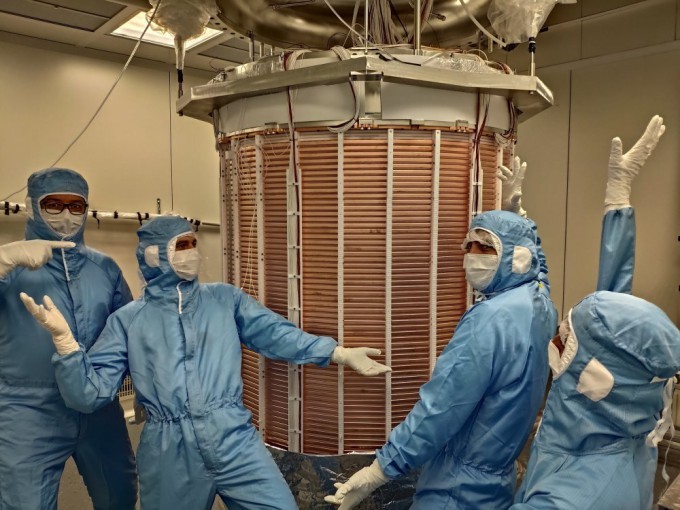
On September 1, the LUX-ZEPLIN (LZ) dark matter direct detection experiment released a new analysis result: researchers recorded a single-particle interaction event in the data whose characteristics could be interpreted as a Weakly Interacting Massive Particle (WIMP) signal, but the current evidence is insufficient to confirm a dark matter discovery. The LUX-ZEPLIN main detector is shown in a surface laboratory before being installed underground. (Matthew Kapust/Sanford Underground Research Facility) The LZ experiment involves approximately 250 scientists and engineers from 39 institutions, with the detector located nearly one mile underground at the Sanford Underground Research Facility in South Dakota, USA, and managed by the U.S. Department of Energy's Lawrence Berkeley National...
2026-09-02

U.S. to Conduct Underwater Neutrino Detection Tests in Lake Superior and Vermilion Lake
From October 2026 to approximately April 2027, a team of researchers from U.S. universities and government agencies will conduct underwater neutrino tests in Lake Superior and Vermilion Lake. The project, named the Experimental Neutrino Detector (END), aims to validate a baseline detection system in natural water bodies to identify the NuMI neutrino beam produced by Fermi National Accelerator Laboratory and distinguish it from cosmic-ray backgrounds and other noise in shallow-water environments. END will place underwater neutrino detectors on the lakebed of Lake Superior where the Fermilab neutrino beamline passes through—near Two Harbors, Minnesota. The beamline will continue toward...
2026-09-02

Russia's SKIF and China's HEPS Explore Building Joint Synchrotron Radiation Experimental Station
The Siberian Circular Photon Source (SKIF) synchrotron radiation facility in Russia is considering closer cooperation with China's High Energy Photon Source (HEPS), including exploring the construction of a joint experimental station. Yevgeny Levichev, Director of the SKIF Collective Use Center, stated that the Russian side plans to sign cooperation agreements with three synchrotron radiation facilities in China by the end of this year, including the Shanghai Synchrotron Radiation Facility, the Beijing High Energy Photon Source (HEPS), and a synchrotron radiation facility in Hefei. Among these, Russia is particularly interested in advancing joint projects with HEPS, potentially even establishing a joint experimental station. Levichev noted that the Russian and Chinese synchrotron radiation facilities are complementary in terms of energy range, which will facilitate joint experiments by researchers and improve the utilization efficiency of large-scale scientific facilities.
2026-09-02

CERN Finds Statistical Hints of Higgs Boson Pair Production
Physics teams at CERN have recently found statistical hints of Higgs boson pair production in data analysis from the Large Hadron Collider. Researchers analyzed millions of collision results over eight years at the collider, with the findings presented at the ICHEP conference and published as two preprints. The figure shows schematic diagrams of events involving the production of two Higgs bosons as observed by ATLAS (left) and CMS (right) CERN The Higgs boson was discovered in 2012, and since then physicists have continuously measured its interactions with other elementary particles to test the Standard Model's explanation of the origin of mass. However, the self-interaction of the Higgs boson has not yet been directly observed.
2026-09-02
XENONnT Dark Matter Detector Captures Faintest Solar Neutrino Signal Ever Observed
September 1 news - The XENONnT dark matter detection experiment at the Gran Sasso National Laboratory in Italy has achieved new progress. The XENON collaboration research team announced that the detector has captured low-energy solar neutrino collision signals never observed before, lowering the neutrino detection energy threshold to approximately 17 kiloelectron-volts (keV). The research team's analysis indicates that the probability of the signal being merely a statistical fluctuation is less than one in a million. Neutrinos are elementary particles with no electric charge and extremely small mass, which can be produced in processes such as nuclear fusion reactions in the solar core, supernova explosions, and nuclear fission in reactors. Due to the extremely weak interaction between neutrinos and matter, vast numbers of neutrinos can pass through the Earth, which also makes detection...
2026-09-02
Reading Ranking
- 1 IIT Develops Novel Nanomaterial for Efficient Recovery of Rare Earth and Uranium Resources
- 2 Russian Academician Says SKIF Synchrotron Light Source Will Not Produce Radionuclides, Safe and Controllable in Operation
- 3 Breakthrough in High-Energy Nuclear Physics Research: Chinese Research Team Leverages CERN's Large Hadron Collider to Reveal How Nuclear Geometry Influences Matter Flow
- 4 U.S. Electron-Ion Collider ePIC Detector Completes First Batch of Lead Tungstate Crystal Procurement and Acceptance
- 5 German Research Team Completes First Phase Analysis of Chernobyl "Hot Particles": Nuclear Fuel Crystal Structure Still Exhibits Unexpectedly High Chemical Stability After 40 Years
- 6 Major Scientific Facility Enables Breakthrough in New Energy Materials: IHEP Leverages Beijing Synchrotron Radiation Facility to Reveal High-Efficiency Crystallization Mechanism of Perovskite, Sub-module Photoelectric Conversion Efficiency Reaches 22.9%
- 7 The Chinese Academy of Sciences launches the "Scientific Frontier Extreme Breakthrough Program": the first batch deploys major tasks such as "new element synthesis," relying on large scientific facility clusters to push the limits of nuclear physics and materials science
- 8 NASA's Chandra Telescope Discovers 84 Mysterious Supersoft X-ray Sources
- 9 Japanese Team Achieves Femtosecond Soft X-ray Hyperspectral Microscopy, Simultaneously Acquiring Spatial and Energy Information with Single Pulse
- 10 Australia's OPAL Multipurpose Reactor Marks 20 Years of Operation: Supporting Nuclear Medicine, Industrial Silicon Irradiation, and Neutron Science
- 11 U.S. Heavy-Ion Collision Research Suggests Protons and Neutrons May Not Be Just "Three Quarks"
- 12 Kyoto University and NEDO to Build Dedicated Beamline for Hydrogen Energy Research at SPring-8-II
- 13 KAERI and IAEA Jointly Hold Research Reactor Ageing Management Training Workshop
- 14 Large Hadron Collider experiments reveal neon nucleus may be bowling-pin shaped
- 15 "Beita Tianyuan Industry-Academia-Research Innovation Demonstration Base" Inaugurated at the College of Nuclear Science and Technology, Harbin Engineering University