

Carbon Nanotubes Can "Remember" Their Initial Structure, Isotope Labeling Reveals Dynamic Growth Process
A study released on September 1 shows that carbon nanotubes can maintain their initial atomic structure in dynamically changing growth environments. The research team used digital isotope labeling technology to encode the elongation process of individual carbon nanotubes as sequences of different carbon isotope compositions, and read their growth history through Raman spectroscopy, thereby tracking the structural stability of nanotubes under conditions of temperature variation and catalyst evolution. The properties of carbon nanotubes are highly dependent on their atomic arrangement. The same material may exhibit metallic or semiconducting characteristics due to structural differences, so structural uniformity has always been a key issue for the large-scale application of carbon nanotubes. In floating catalyst chemical vapor deposition and other industrial production routes, catalyst particles experience constantly changing temperatures and gas compositions within the reactor and may undergo irreversible enlargement. Previously, direct evidence was lacking on whether individual carbon nanotubes could maintain their initial structure under such complex conditions.
2026-09-02
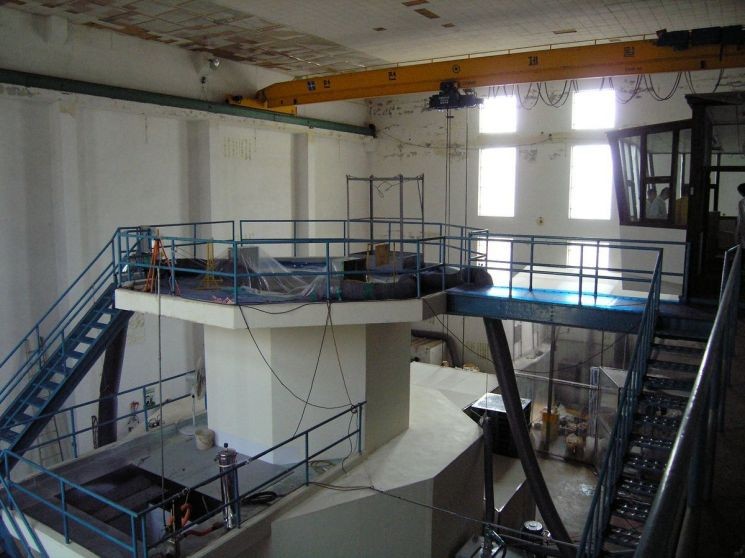
Fourteen academic societies in South Korea call for protection of KRR-1 research reactor auxiliary buildings
On September 1, fourteen academic societies and associations, including the Korean Nuclear Society, issued a statement welcoming the temporary registration of the reactor hall and auxiliary buildings of Research Reactor Unit 1 (KRR-1, TRIGA Mark-II) in Gongneung-dong, Nowon-gu, Seoul, as nationally registered cultural heritage, and urged Korea Electric Power Corporation (KEPCO), the owner of the site and buildings, to promptly submit a formal registration application. Panoramic view of KRR-1, South Korea's first research reactor. Korea National Heritage Administration The Korea National Heritage Administration had placed the KRR-1 reactor hall and auxiliary buildings on the temporary list of nationally registered cultural heritage on July 1 through the emergency measures system, suspending related demolition work. However, if a formal registration application is not submitted by the end of December this year, the temporary listing will lapse and demolition work may resume.
2026-09-01

Kazakhstan Plans to Expand Researcher Participation in CERN High-Energy Physics Projects
Sayasat Nurbek, Acting Minister of Science and Higher Education of Kazakhstan, recently held talks with Mark Thomson, Director-General of the European Organization for Nuclear Research (CERN), during which the two sides exchanged views on deepening scientific and technological cooperation between Kazakhstan and CERN, with a focus on expanding cooperation in the field of high-energy physics and promoting researcher participation in CERN projects. According to the Ministry of Science and Higher Education of Kazakhstan, the Kazakh government and CERN signed an international cooperation agreement in 2018, laying the foundation for a long-term scientific research partnership between the two sides. At present, the two sides have drafted a supplementary protocol to the agreement, which plans to further specify the participation of Kazakh researchers in CERN...
2026-09-01

Russia's SKIF Synchrotron Announces Criteria for Selecting Future Research Teams
On August 31, Andrei Bukhtiyarov, Deputy Director of the Shared Use Center of the Siberian Circular Photon Source (SKIF) synchrotron, stated that the scientific innovation of research proposals will be one of the key criteria when selecting research teams for future experiments at SKIF. According to reports, the selection process will also focus on the clarity of research ideas and the feasibility of experimental plans. Since some experiments may not be feasible under existing or planned experimental station conditions, applications will first undergo technical review to confirm whether the experiments can be conducted within the facility's capabilities. The SKIF Shared Use Center has established a Scientific Committee to review applications submitted by research teams. The Center plans to...
2026-09-01

Russian Academician Says SKIF Synchrotron Light Source Will Not Produce Radionuclides, Safe and Controllable in Operation
Yevgeny Levichev, an academician of the Russian Academy of Sciences and director of the Collective Use Center of the Siberian Circular Photon Source (SKIF), recently stated that synchrotron light sources, including SKIF located near Novosibirsk, are electrophysical equipment with safe and controllable operation that poses no threat to personnel even in the event of a malfunction. Levichev said that unlike facilities such as nuclear power plants, synchrotron light sources do not generate isotopes or radionuclides in their systems. In the event of an anomaly, the beam is reset, and the facility's risk level is close to that of ordinary electrical equipment. According to reports, construction of the SKIF synchrotron was completed in June 2026, with an inauguration ceremony held in August. Once the facility is operational...
2026-09-01

CERN Accelerator Complex Enters Full LS3 Shutdown for Upgrades, Paving the Way for the High-Luminosity LHC Era
On the morning of August 31 local time, the injector complex and the Antimatter Factory at the European Organization for Nuclear Research (CERN) ceased operation after completing their final beam deliveries, officially entering the third Long Shutdown (LS3) phase. Earlier, the Large Hadron Collider (LHC) had been closed in June, marking the flagship accelerator as the first to kick off LS3 upgrade work at the center. Bettina Mikulec (left), head of the Operations Group at CERN, handed a symbolic baton—a miniature superconducting magnet from the LHC—to Jean-Philippe Tock (right), head of the LS3 Coordination Group, with CERN Director-General Mark Thomson (second from left) and Oliver Brüning (third from left), head of Accelerators and Technology, in attendance.
2026-09-01

China-led International Standard for Estimating RBE-Weighted Absorbed Dose from Acute Exposure Approved for Initiation
According to the International Organization for Standardization (ISO), the international standard ISO25600 "Estimation Method for RBE (Relative Biological Effectiveness)-Weighted Absorbed Dose from Acute Exposure," led by the China Institute of Atomic Energy, has been officially approved for initiation. This is a general methodology international standard led by China in the global field of nuclear and radiation emergency dose assessment. It can provide important support for the rapid estimation and evaluation of acute doses, decision-making on emergency protective actions, international notification and communication, as well as emergency training, exercises, and scientific research, helping to strengthen the scientific rigor and timeliness of global nuclear emergency response, and enhance response capability and standardization. Nuclear and radiation emergency response is a vital guarantee for the sustained and healthy development of the nuclear energy industry...
2026-08-31
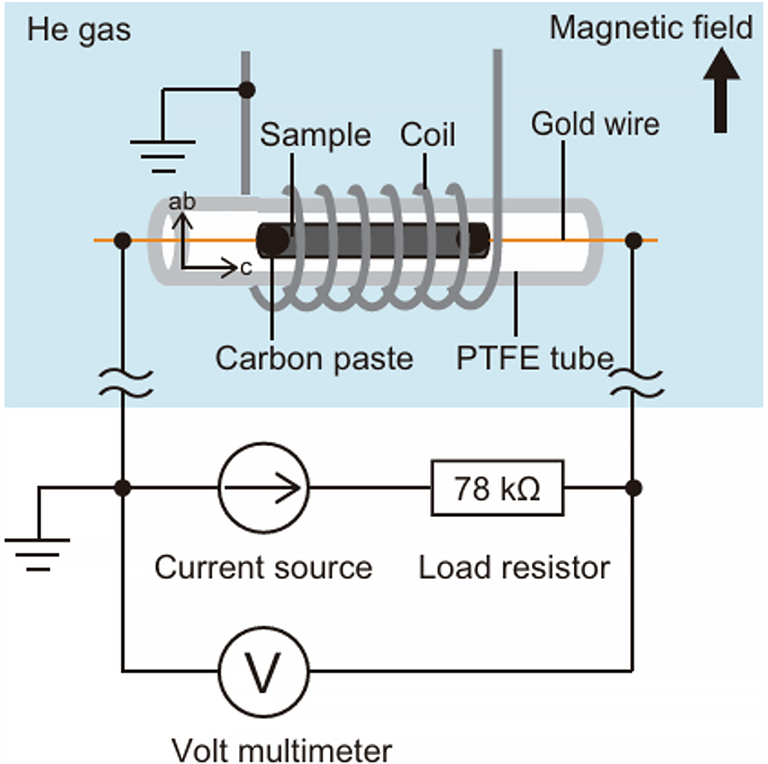
NMR Reveals Thermal Self-Organization in Resistive Switching of Organic Conductor by Japanese Team
A joint research team from Tokyo University of Science, the National Institute for Materials Science, and RIKEN in Japan recently used bulk-sensitive ¹H-NMR measurements to reveal the internal electronic state of the organic conductor (d7-DMe-DCNQI)2Cu during resistive switching. The study found that, in the switching state, the material does not form a uniform new electronic phase, but rather a coexistence of metallic and insulating phases within the material. Schematic of bulk-crystal ¹H-NMR measurements Resistive switching refers to the phenomenon in which a material's resistance changes significantly under an applied current or voltage, and has attracted attention in research on correlated electron systems, memory devices, and neuromorphic devices. Previous studies have mostly...
2026-08-31
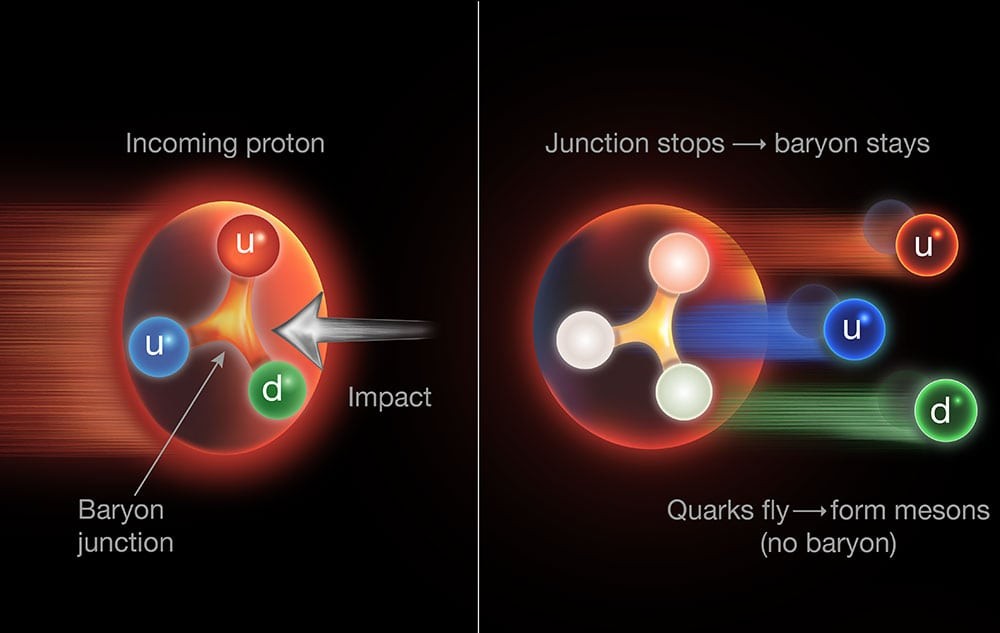
U.S. Heavy-Ion Collision Research Suggests Protons and Neutrons May Not Be Just "Three Quarks"
The STAR Collaboration at the Relativistic Heavy Ion Collider (RHIC) at the U.S. Department of Energy's Brookhaven National Laboratory recently proposed, based on heavy-ion collision data studies, that baryons such as protons and neutrons may not be simply composed of three valence quarks, and that their baryon number may be more closely related to "baryon junctions" in the gluon field. The findings were published in the journal *Science*. In the traditional valence quark model, each quark is assigned a baryon number of 1/3, so baryons such as protons and neutrons, composed of three quarks, carry a baryon number of +1. However, this model is not a fundamental requirement of quantum chromodynamics (QCD). As early as the 1970s, alternative explanations had been proposed in the theoretical community; in 1996, Dmitri Kharzeev proposed a model suggesting that the baryon number is not necessarily carried by the quarks themselves, but may instead be concentrated at the Y-shaped junction formed by the gluon field—the "baryon junction."
2026-08-31

Two Projects of the National Natural Science Foundation of China Approved for the National Institute for Radiological Protection, China CDC
On August 26, the National Natural Science Foundation of China (NSFC) announced the review results of the centralized application projects for the fiscal year 2026. The National Institute for Radiological Protection, China CDC, was approved for two NSFC projects, with research directions covering radon exposure monitoring, radiological health, and screening of lung cancer-related biomarkers. Among the approved projects, the proposal titled "New Strategy for Radon Exposure Monitoring: Visualization and Mechanism Study of Adsorption-Detection Integrated Gold Nanoparticle Materials" submitted by Associate Researcher Song Yanchao received support from the Department of Mathematical and Physical Sciences; the proposal titled "Preliminary Study and Validation of Screening Lung Cancer-Related Biomarkers in Radon-Exposed Miners Based on Methylation Chips and RNA-seq" submitted by Assistant Researcher Zhang Pinhua received support from the Department of Health Sciences.
2026-08-31
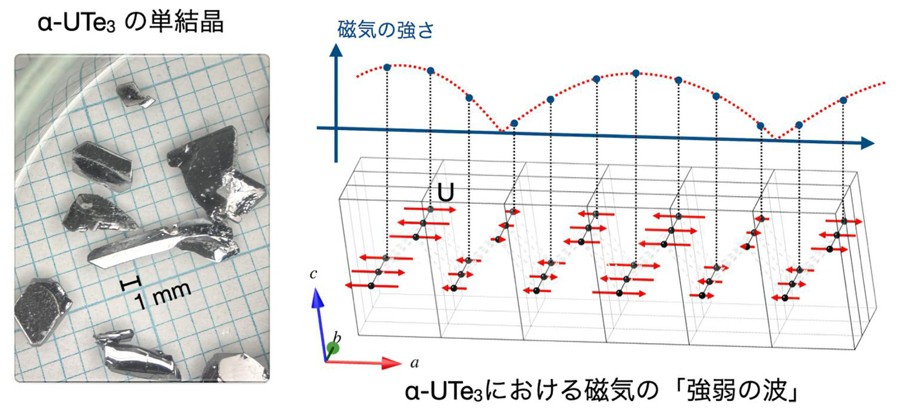
Japan Atomic Energy Agency discovers magnetic "strong-weak waves" in uranium semiconductor
The Japan Atomic Energy Agency announced on August 21 that its research team has discovered a special magnetic structure in the layered uranium semiconductor α-UTe3 (α-uranium tritelluride): the magnetism of uranium atoms not only alternates in opposite directions, but its magnetization intensity also periodically strengthens and weakens depending on the crystal position, forming a state resembling “strong-weak waves.” α-UTe3 is composed of uranium and tellurium atoms and belongs to van der Waals layered materials, where atomic layers are stacked through weak interlayer forces. Using high-quality α-UTe3 single crystals, the research team analyzed its low-temperature magnetic structure through resistivity, specific heat, and magnetization measurements, as well as nuclear magnetic resonance and single-crystal neutron diffraction techniques...
2026-08-31
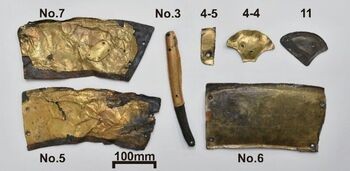
Japan's J-PARC Uses Negative Muon Non-Destructive Analysis to Reveal Gold-Rich Surface Structure of Nagoya Castle's Golden Shachi Scales
A joint research team comprising the High Energy Accelerator Research Organization (KEK), the J-PARC Center, the Nagoya Castle Research Center, and the National Museum of Nature and Science, among others, used the negative muon beam at the J-PARC Materials and Life Science Experimental Facility (MLF) to conduct non-destructive depth analysis on seven surviving scales of the golden shachi (ornamental dolphin-tiger fish) on Nagoya Castle's keep, confirming that five of the scales have a layered structure with high gold content within approximately 10 micrometers of the surface. The golden shachi on Nagoya Castle's keep was largely destroyed in the air raids of 1945, with some scales rescued and preserved to this day. Previously, researchers had examined these scales using X-ray fluorescence analysis, but the results showed that some scales with a bright golden appearance did not necessarily have a high average gold content.
2026-08-31

Russian Research Team Proposes New Method for Measuring Proton and Deuteron Electric Dipole Moments in a Single Storage Ring
Physicists from several Russian research institutions have proposed a new method for searching for the electric dipole moments of protons and deuterons, potentially enabling the study of both particle types in a single storage ring. The participating institutions include the Moscow Institute of Physics and Technology, the Institute for Nuclear Research of the Russian Academy of Sciences, the National Research Nuclear University MEPhI, and the Landau Institute for Theoretical Physics of the Russian Academy of Sciences. The research was published in the journal *Nuclear Science and Technology* and was supported by a grant from the Russian Science Foundation. The electric dipole moment reflects whether there is a tiny asymmetry between the internal charge distribution of a particle and its spin direction. According to Standard Model predictions, the electric dipole moments of the proton and deuteron are nonzero but extremely small, on the order of 10...
2026-08-31
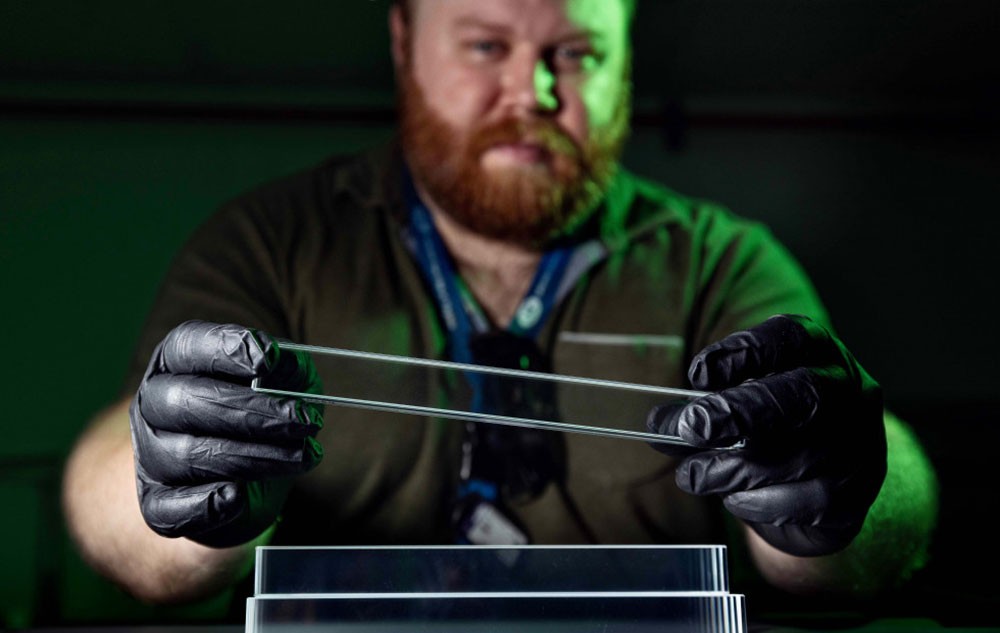
U.S. Electron-Ion Collider ePIC Detector Completes First Batch of Lead Tungstate Crystal Procurement and Acceptance
The U.S. Electron-Ion Collider (EIC) project recently achieved its first long-lead procurement milestone: 1,069 custom lead tungstate crystals for the new ePIC detector have been delivered, tested, and accepted. These crystals will be used in the Electron Endcap Electromagnetic Calorimeter (EEEMCAL) to help precisely measure the energy of scattered electrons during collisions. The EIC is being built by the U.S. Department of Energy's Brookhaven National Laboratory, in collaboration with the Thomas Jefferson National Accelerator Facility. The facility will circulate electron and ion beams in opposite directions, colliding them inside the ePIC detector. The ePIC detector records information about particles produced in the collisions, providing data for studying the fundamental constituents of visible matter...
2026-08-31

German Team Achieves Ultrafast Shaping of Extreme Ultraviolet Pulses Using High-Density Helium Gas
August 20, 2026, the international team led by researchers from the Max Planck Institute for Nuclear Physics (MPIK) in Heidelberg announced that they have utilized atomic gas as a rapidly switchable time-varying lens to control the beam shape and spectrum of intense high-frequency laser pulses. This achievement is expected to provide a new pathway for the fine control of extreme ultraviolet (XUV) and X-ray pulses, and may serve research directions such as improved spectroscopic methods, control of chemical reactions, and quantum computing. Extreme ultraviolet light can provide important tools for studying atomic-scale processes. With the development of free-electron lasers, researchers have been able to generate ultrashort, high-intensity XUV light pulses, but how to manipulate them like...
2026-08-31
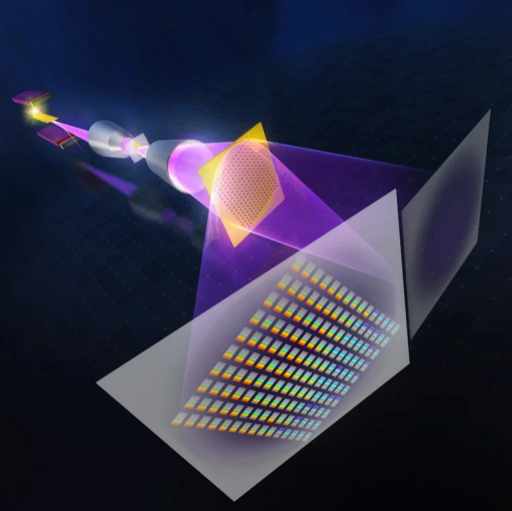
Japanese Team Achieves Femtosecond Soft X-ray Hyperspectral Microscopy, Simultaneously Acquiring Spatial and Energy Information with Single Pulse
On August 21, the Japan Science and Technology Agency, RIKEN, and the University of Tokyo announced that a research team comprising Assistant Professor Yoko Takeo and Associate Professor Takashi Kimura from the Institute for Solid State Physics at the University of Tokyo, Assistant Professor Satoru Egawa from the Research Center for Advanced Science and Technology at the University of Tokyo, and Team Leader Makina Yabashi from the RIKEN SPring-8 Center, among others, successfully developed and implemented a femtosecond soft X-ray hyperspectral microscope. The findings were published on August 20 in the U.S. scientific journal *Optica*. This technology utilizes a single soft X-ray pulse from an X-ray free-electron laser (XFEL) to simultaneously acquire soft X-ray spectra transmitted through different positions of a sample, enabling...
2026-08-31

Japan's PF Launches Quantum Multi-Beam Experiments, Achieving Simultaneous Hard and Soft X-ray Measurements
The Photon Factory, a synchrotron radiation facility at the Institute of Materials Structure Science, High Energy Accelerator Research Organization (KEK) in Japan, has recently launched collaborative experiments on the development and research multi-purpose beamlines BL-11A and BL-11B, achieving simultaneous irradiation of the same sample with hard and soft X-rays at the same position. The research results will be published in the international academic journal *Review of Scientific Instruments*. The Photon Factory uses electrons moving at near-light speed to generate high-brightness X-rays, known as synchrotron radiation, for studying material structures and properties. Among these, hard X-rays are better suited for observing the internal structure of materials, while soft X-rays are ideal for analyzing material surfaces and electronic states. Previously, at synchrotron radiation facilities, the two types of X-rays typically had to...
2026-08-31

Gallium ion FIB-SEM sample preparation has a damage limit; low-energy argon ion beam cleaning is used to improve TEM sample quality
Gallium ion focused ion beam-scanning electron microscopy (Ga⁺ FIB-SEM) has become an important method for site-specific thin lamella sample preparation for transmission electron microscopy/scanning transmission electron microscopy (TEM/STEM), enabling cutting, extraction, and thinning of target regions at the nanometer scale. However, the literature indicates that while gallium ions provide high-precision machining capability, they also cause amorphization, ion implantation, and localized chemical modification on the sample surface, which can subsequently affect high-resolution imaging and energy dispersive spectroscopy analysis results. According to the literature, Ga⁺ FIB-SEM typically enables high-resolution site-specific machining at 30 keV, but high-energy gallium ions form a damage layer on the sample sidewalls. Taking silicon as an example...
2026-08-31
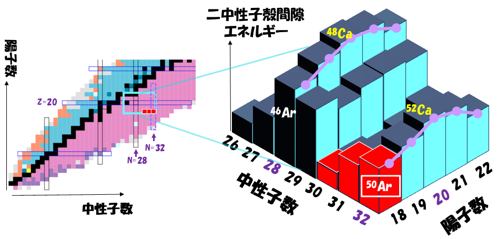
Japanese team achieves high-precision mass measurements of argon isotopes, revealing variations in the strength of the new magic number N=32
An international collaborative research team comprising RIKEN and the High Energy Accelerator Research Organization (KEK), among others, conducted high-precision mass measurements of short-lived argon isotopes far from the line of nuclear stability, using the superconducting RI beam generation and separation device BigRIPS at the RI Beam Factory (RIBF) of RIKEN Nishina Center for Accelerator-Based Science, as well as the CRISMASS system, a stationary slow radioactive isotope precision mass spectrometer jointly developed by the two institutions. The research team directly measured the mass of argon-50 (^50Ar, 18 protons, 32 neutrons) for the first time, and improved the mass measurement precision of argon-49 (^49Ar) by approximately 250-fold compared to previous measurements, providing insights into the energy of the two-neutron shell gap near the new magic number N=32. The results have been...
2026-08-31

German Photon and Neutron Research Data Alliance Receives €8.3 Million in Second-Phase Funding
The German National Research Data Infrastructure consortium for photon and neutron experimental data (DAPHNE4NFDI) will enter its second funding phase, receiving initial funding of €8.3 million, with the funding period running until the end of 2028. Since 2021, the consortium has been working to improve the management of research data from photon and neutron experiments, making the data easier to find, access, and reuse over the long term. DAPHNE4NFDI is one of the disciplinary consortia under the German National Research Data Infrastructure (NFDI), with members including the German Electron Synchrotron (DESY), Kiel University (CAU), and other universities and research institutions. The funding decision is based on a recommendation from the German Research Foundation (DFG). Since January 2026...
2026-08-31

Auburn University Installs 200 MeV Superconducting Proton Accelerator to Build First University-Led Space Electronics Radiation Testing Facility in the U.S.
Auburn University's Applied Research Institute has announced the installation of a new 200 MeV superconducting proton accelerator, advancing the construction of the nation's first university-led proton testing facility dedicated to space electronics qualification. The system, a RAD-FX-200 superconducting synchrocyclotron manufactured and installed by Mevion Medical Systems, serves as the core component of Auburn University's new radiation-hardening facility. According to reports, the facility will help address gaps in U.S. space qualification testing capacity, providing radiation testing services for microelectronics to government agencies, aerospace, and defense-related industries. Systems such as satellites, missile defense interceptors, spacecraft, and launch vehicles rely on microelectronics, which may be affected by proton radiation in orbital environments. A single radiation-induced failure can cause system loss, and such failures are typically difficult to repair once in orbit...
2026-08-28
Reading Ranking
- 1 Shanghai Institute of Applied Physics Makes Important Progress in Electrolyzer Design and Electrocatalytic Materials Research
- 2 Major Scientific Facility Enables Breakthrough in New Energy Materials: IHEP Leverages Beijing Synchrotron Radiation Facility to Reveal High-Efficiency Crystallization Mechanism of Perovskite, Sub-module Photoelectric Conversion Efficiency Reaches 22.9%
- 3 Russia's SKIF Synchrotron Radiation Facility Hailed as a Milestone for Russian Science
- 4 The Chinese Academy of Sciences launches the "Scientific Frontier Extreme Breakthrough Program": the first batch deploys major tasks such as "new element synthesis," relying on large scientific facility clusters to push the limits of nuclear physics and materials science
- 5 U.S. Company Proposes Americium-241 Radioisotope Heating Solution for Spacesuits, Receives Early NASA Research Support
- 6 CERN Accelerator Complex Enters Full LS3 Shutdown for Upgrades, Paving the Way for the High-Luminosity LHC Era
- 7 Lancaster University in the UK receives EPSRC funding to study antimatter production in intense laser pulses
- 8 25 experimental stations of the PIK high-flux nuclear reactor at the Kurchatov Institute to be commissioned in December 2026
- 9 Australia's OPAL Multipurpose Reactor Marks 20 Years of Operation: Supporting Nuclear Medicine, Industrial Silicon Irradiation, and Neutron Science
- 10 Kazakhstan's National Nuclear Center Advances Material Testing Research for Future Reactors
- 11 U.S. Electron-Ion Collider ePIC Detector Completes First Batch of Lead Tungstate Crystal Procurement and Acceptance
- 12 EU Releases 2026–2027 Nuclear Research and Training Work Programme: Focusing on Safety, Innovation, and Capacity Building
- 13 Thermo Fisher Scientific Launches First Orbitrap Mass Spectrometers for Isotope Ratio Analysis
- 14 "Smashing Out" More New Particles Unknown to Humanity — Exploring the Upgraded Beijing Electron-Positron Collider After Its Second Renovation
- 15 Cathode High-Voltage Power Supply for CFQS Device ECRH System Manufactured by CNNC Tongchuang Successfully Shipped