
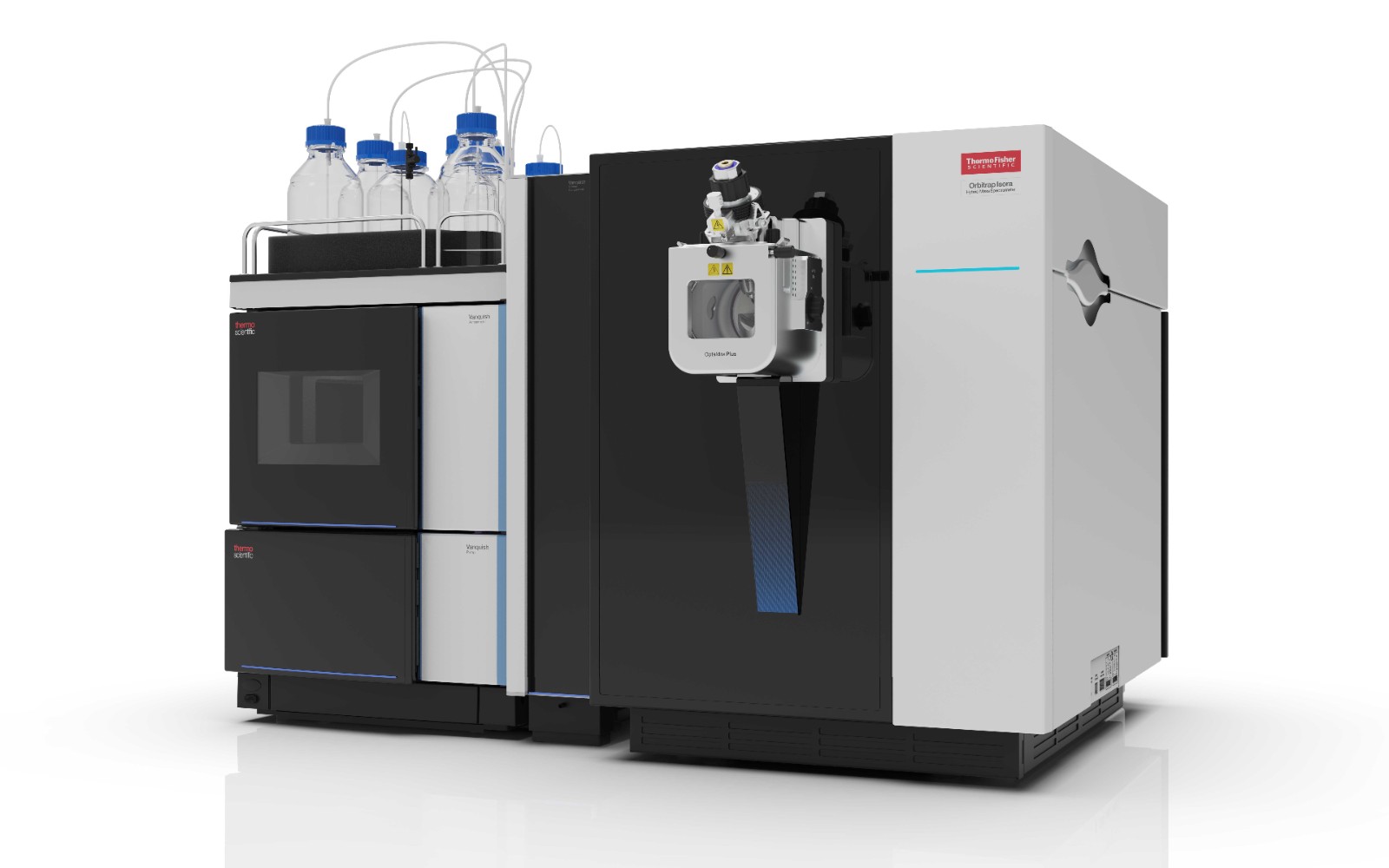
Thermo Fisher Scientific Launches First Orbitrap Mass Spectrometers for Isotope Ratio Analysis
Thermo Fisher Scientific recently launched the Thermo Scientific Orbitrap Isora mass spectrometer and Orbitrap Isora Pro mass spectrometer in Waltham, Massachusetts, USA. The company stated that these are its first Orbitrap instruments equipped with a dedicated isotope ratio analysis mode. The two mass spectrometers launched this time will form an integrated workflow together with the Thermo Scientific Vanquish Duo ultra-high performance liquid chromatography system and the new Isotope Discoverer software, providing molecular-level isotope ratio analysis capabilities to laboratories and researchers worldwide. Isotope ratio analysis can help researchers determine the source of compounds and their formation processes by measuring natural variations in isotopes within samples, helping...
2026-08-26

FSG to Provide Electrical and Control Systems Support for Oklo's Groves Isotope Test Reactor Project
American Facility Solutions Group, LLC (FSG) announced on August 25 that it will support Oklo's Groves Isotope Test Reactor project, providing electrical, instrumentation, control, testing, and verification-related work. According to reports, the Groves Isotope Test Reactor achieved first criticality on August 5, 2026, reaching a controlled, self-sustaining nuclear chain reaction. The reactor is the fifth reactor to achieve this milestone among projects authorized under the U.S. Department of Energy's Reactor Pilot Program, and the first to reach criticality on private land under the program. The low-power test reactor is designed to lay the foundation for domestic commercial isotope production...
2026-08-26

US Advanced Light Source Upgrade Advances, Soft X-ray Brightness to Increase at Least 100-Fold
Lawrence Berkeley National Laboratory in the US is advancing the Advanced Light Source (ALS) synchrotron upgrade project, planning to enhance soft X-ray experimental capabilities through next-generation light source technology, providing higher-precision data support for quantum materials, microelectronics, energy technologies, biological structure research, and AI-assisted scientific research. The project team is working toward the 2029 target. Since the Advanced Light Source began operation in 1993, it has long served research across soft X-ray, ultraviolet, infrared, and hard X-ray wavelength ranges. Researchers worldwide have used the facility's focused beams to observe molecular and material structures at the atomic scale, with results cited in over 18,000 papers...
2026-08-25

Russian team develops machine learning model to predict stability of rare earth and actinide complexes
Researchers from the Interdisciplinary Laboratory for Intelligent Chemical Design at the Department of Chemistry of Lomonosov Moscow State University, in collaboration with colleagues from the Department of Mechanics and Mathematics, have developed a new machine learning model for evaluating the stability of complexes of rare earth elements and trivalent actinides. The results have been published in the Journal of Chemical Physics. The research team stated that machine learning can reduce time and material costs in chemical research, which is particularly important for rare, expensive, or hazardous lanthanides and actinides. Lanthanides, along with scandium and yttrium, are commonly classified as rare earth elements and are widely used in permanent magnets, batteries, electronic components, lasers, and other applications. Since rare earth elements in nature...
2026-08-25

Russia's SKIF "Microfocus" experimental station to conduct elemental and structural studies of ores
The Microfocus station, the first experimental station of the Siberian Circular Photon Source (SKIF) Phase 1, will be used to study the elemental composition and structural characteristics of samples in fields such as geology, geophysics, microelectronics, and materials science. The station is being created and integrated by Tomsk Polytechnic University and will in the future serve the exploration and development of hard-to-recover gold, platinum, rare earth elements, and oil reserves. According to reports, the first experiments at the Microfocus station will focus on ore sample studies. Such research is an important step in the development of new deposits, helping researchers more accurately assess deposit reserves, select more suitable extraction methods, and identify promising areas for subsequent exploration. The station employs...
2026-08-25

Ketterle Team: "Neutrino Laser" Based on Quantum-Entangled Atomic Clouds Theoretically Infeasible
Nobel laureate Wolfgang Ketterle and his team have conducted a theoretical examination of a neutrino laser concept and concluded that the scheme is fundamentally difficult to realize. The research findings have been published in *Physical Review Letters*. The concept was previously proposed by American physicists, with the core idea being the use of rubidium-87 atomic clouds or other unstable isotopes, placing them into specific quantum states to generate highly directional neutrino beams. According to the concept, if a neutrino source analogous to a laser could be constructed, it would help accelerate neutrino mass measurements and advance observational studies of the interconversion phenomena among different types of neutrinos. The Ketterle team's key focus this time was whether a large number of atoms could cooperatively emit neutrinos and other fermions, similar to the synchronized release of photons in a conventional laser.
2026-08-25

France Authorizes CEA to Dismantle the Pégase Research Reactor Facility at Cadarache
The French Official Journal published a decree on August 23 authorizing the French Alternative Energies and Atomic Energy Commission (CEA) to carry out dismantling operations on the Pégase (Pégase) nuclear facility located at the Cadarache site in Saint-Paul-lès-Durance, Bouches-du-Rhône department. The facility is classified as Basic Nuclear Installation No. 22 (INB 22). The decree specifies the implementation phases for the partial dismantling of the Pégase research reactor and authorizes the CEA to build the equipment required for the dismantling operations. Under the decree, the boundaries of the Pégase facility will be adjusted to provide the necessary space for the layout of dismantling equipment and the temporary storage of waste generated during the dismantling process. The dismantling scope covers the Pégase facility itself, including the main building housing the storage and treatment...
2026-08-25

"Beita Tianyuan Industry-Academia-Research Innovation Demonstration Base" Inaugurated at the College of Nuclear Science and Technology, Harbin Engineering University
On August 19, Professor Li Ruo, Deputy Dean of the School of Mathematical Sciences at Peking University and Chief Scientist of Beita Zhenhuan, Liao Hanqing, General Manager of Beita Zhenhuan, and Yao Ling, Deputy General Manager of Kylin Software Co., Ltd., visited the College. Dean Tan Sichao, Cong Jianwei, Director of the University's Informatization Office, and Professor Shen Jihong from the School of Mathematical Sciences attended the meeting, which was chaired by Deputy Dean Li Lei. All parties held discussions on the in-depth application of domestic scientific computing software in the nuclear energy field, adaptation of domestic operating systems, interdisciplinary integration of mathematics and nuclear science, and collaborative talent cultivation, and jointly inaugurated the Beita Tianyuan Industry-Academia-Research Innovation Demonstration Base. During the discussion, the participants conducted in-depth exchanges on the coupling of complex multi-physics fields in nuclear energy systems...
2026-08-25

Large-area pixel detector independently developed by the Institute of High Energy Physics, Chinese Academy of Sciences completes long-term online operation validation
Recently, the 6-megapixel large-area two-dimensional pixel array detector independently developed by the detector R&D team of the High Energy Photon Source (HEPS) at the Institute of High Energy Physics, Chinese Academy of Sciences, completed long-term online operation validation. Since its deployment for trial operation at the HEPS Biological Macromolecular Microcrystal Diffraction Beamline in October 2025, it has supported nearly 90 research projects from over 50 research groups as of June 30, 2026. During the trial operation period, the detector accumulated more than 2,000 hours of operation with stable, uninterrupted performance. The beamline and detector teams conducted joint commissioning and optimization, verifying its operational stability and data reliability under complex working conditions. Leveraging the high-quality data collected by this detector, some...
2026-08-24

Russian Scientists Propose New Scheme for Measuring Proton and Deuteron Electric Dipole Moments in a Single Storage Ring
August 21 news, researchers from the Moscow Institute of Physics and Technology, the Institute for Nuclear Research of the Russian Academy of Sciences, the National Research Nuclear University MEPhI, and the Landau Institute for Theoretical Physics of the Russian Academy of Sciences have proposed a new experimental scheme to study the electric dipole moments of protons and deuterons in a single storage ring. The scheme can be implemented both in specially constructed new facilities and, potentially, in upgraded existing accelerator complexes. The electric dipole moments of protons and deuterons reflect the asymmetry of the internal charge distribution relative to the spin direction. According to Standard Model predictions, their values are non-zero but extremely small, on the order of 10⁻³¹ e·cm, far below current experimental sensitivity...
2026-08-24

CERN Large Hadron Collider Data Challenge Models of Oxygen and Neon Nucleus Structure
Physicists at the European Organization for Nuclear Research (CERN), analyzing a new batch of collision data from the CMS detector at the Large Hadron Collider, have found that oxygen and neon nuclei do not behave entirely as predicted by existing models in high-energy collisions. This result indicates that the scientific community's understanding of the shapes and internal structures of certain light nuclei still requires further refinement. In high-energy nuclear collisions, a quark-gluon plasma is briefly formed in the collision region. This state of matter decays rapidly, but the collective flow characteristics of its particles can be used to infer the collision geometry and indirectly provide information about nuclear structure. Researchers believe that symmetric collisions of light ions help better control the initial collision conditions, making them suitable for studying collective responses in small systems.
2026-08-24

Research reactors provide critical support for global medical, scientific, and industrial innovation
The International Atomic Energy Agency recently reported that research reactors continue to play a vital role in medical, scientific, industrial innovation, and nuclear workforce development, serving as key infrastructure for many countries to build their nuclear science and technology capabilities. Currently, 228 research reactors are in operation across 54 countries worldwide, with another 23 under construction or in the planning stage. Unlike nuclear power reactors used for electricity generation, research reactors primarily produce neutrons for applications in medicine, industry, agriculture, geological sciences, forensics, and other fields. With capabilities such as neutron irradiation, neutron imaging, elemental analysis, and radioisotope production, research reactors have become important platforms for advancing peaceful nuclear technology applications. In the medical field, research...
2026-08-23

Kyoto University and NEDO to Build Dedicated Beamline for Hydrogen Energy Research at SPring-8-II
Kyoto University announced on August 20 that it will collaborate with the New Energy and Industrial Technology Development Organization (NEDO) to construct dedicated research equipment for the hydrogen energy field at the large synchrotron radiation facility SPring-8-II, located in Sayo Town, Hyogo Prefecture, Japan. SPring-8-II is scheduled to begin operation in fiscal year 2029. On the 20th, Hajime Kitagawa, Executive Director of Kyoto University (2nd from right), attended a press conference held by Kyoto City government officials. According to the plan, the two parties will install a dedicated beamline at the facility, focusing on hydrogen energy-related research such as fuel cells and hydrogen production via water electrolysis. The beamline will be used to analyze key materials including catalysts and electrolyte membranes in fuel cells and water electrolyzers, leveraging synchrotron radiation to observe material reaction processes and help researchers identify the main factors affecting performance and cost.
2026-08-21

U.S. Department of Energy Selects Fermilab to Lead AI Project to Enhance Superconducting Radio-Frequency Cavity Control in Particle Accelerators
The U.S. Department of Energy's Genesis Program recently selected an artificial intelligence project led by Fermi National Accelerator Laboratory, supporting its collaboration with national laboratories, universities, and industry to use AI and machine learning technologies to improve resonance control in particle accelerators. The project aims to enhance accelerator operational performance and beam stability while reducing energy consumption and operating costs. Superconducting radio-frequency cavities are being assembled and tested, ready for installation on the Proton Improvement Plan-II at the Fermilab Accelerator Complex. By finely tuning the resonant frequency of the cavities, scientists can optimize acc...
2026-08-21

Large Hadron Collider experiments reveal neon nucleus may be bowling-pin shaped
A recent experimental result from the Large Hadron Collider at CERN suggests that the internal structure of the neon-20 nucleus may not be approximately spherical as commonly depicted in traditional textbooks, but rather closer to a "bowling pin" shape. This finding provides new experimental clues for studying deformation of light atomic nuclei and collective behavior in high-energy nuclear collisions. Atomic nuclei are composed of protons and neutrons, determining the elemental identity of atoms and carrying most of their mass. Although nuclei are often simplistically depicted as spherical, nuclear physics research has shown that some nuclei exhibit pronounced non-spherical deformation, such as the pear-shaped nuclei mentioned in previous studies. Accurately understanding these shapes helps physicists...
2026-08-21

CERN Injector Complex Enters Final Beam Run Phase Before LS3
The CERN accelerator complex is entering its final operational phase before the third Long Shutdown (LS3). With the Large Hadron Collider (LHC) having already entered LS3, the injector complex and associated facilities will continue high-intensity beam operations until 6:00 a.m. on Monday, August 31, after which the operations team will hand over control to the LS3 coordination team, marking the formal transition of the entire accelerator complex into the shutdown maintenance phase. August 19, 2026, page one of the SPS. The third run of the injector complex is drawing to a close. (Image: CERN) During the final week-plus of operations, CERN will continue delivering proton and ion beams to physics experiments.
2026-08-21

US FRIB Experiment Reveals Magnetic Origin of Anomalous Low-Energy Gamma-Ray Enhancement
According to an August 21 announcement from Lawrence Livermore National Laboratory, a new study led by the U.S. Facility for Rare Isotope Beams (FRIB) with participation from researchers at Lawrence Livermore National Laboratory and other institutions has provided a new experimental explanation for the long-standing low-energy enhancement phenomenon in nuclear physics. The findings were published in the journal Nature. An experiment at the Facility for Rare Isotope Beams (FRIB) has yielded new results, answering a fundamental question about nuclear structure. (Image: FRIB) Gamma rays are a form of electromagnetic radiation. When an excited nucleus loses energy during radioactive decay and transitions to a lower, more stable energy level, it emits gamma rays. Over the past few decades, scientists have discovered that certain nuclei emit anomalously large numbers of low-energy gamma rays, but this phenomenon does not occur in all nuclei, and its occurrence conditions have been difficult to predict reliably in theory.
2026-08-21

IAEA Launches New Project to Enhance Nuclear Fuel and Materials Testing Capabilities in Research Reactors
The International Atomic Energy Agency (IAEA) recently launched a four-year coordinated research project aimed at optimizing the experimental design of nuclear fuel and structural materials testing in research reactors, enhancing the safety, effectiveness, and efficiency of irradiation experiments. Top view showing a materials testing reactor core loaded with two in-core materials testing devices. (Photo: Y. Ostrovsky/MIT) With the continued advancement of new nuclear reactor technologies, growing interest in small modular reactors, and existing nuclear power plants seeking long-term operation, the demand for reliable testing of new nuclear fuels and structural materials is increasing. Before being put into use in nuclear reactors, these fuels and materials must be tested and qualified under harsh conditions such as radiation and high temperatures...
2026-08-21

Korean Research Team Reveals Mechanism Behind Neutron Irradiation-Induced Reliability Degradation in Ferroelectric AI Semiconductors
Jeonbuk National University announced on the 20th that a research team led by Professor Bae Hak-yeol from the Department of Electronic Engineering at its College of Engineering, in collaboration with Professor Kim Tae-wan's team at Seoul National University and Q-Beam Solution, a startup affiliated with the Korea Atomic Energy Research Institute, conducted a joint study analyzing the causes of performance degradation in next-generation ferroelectric memory and neuromorphic semiconductor devices under neutron irradiation. The findings have been published in the latest issue of ACS Applied Electronic Materials. Ferroelectric semiconductors, which can maintain their polarization state even after power is disconnected, are considered a key candidate for next-generation non-volatile memory and neuromorphic computing devices. Neuromorphic computing aims to simultaneously implement both memory and computation within a single device...
2026-08-20

CERN measures niobium-94 neutron capture for the first time, shedding new light on the mystery of molybdenum abundance in ancient stardust
The n_TOF collaboration at CERN recently reported that researchers have for the first time measured the probability of neutron capture by niobium-94. The results, published in Physical Review Letters, provide new experimental evidence for explaining the anomalous abundance of molybdenum-94 in presolar grains. The EAR2 facility in the n_TOF experiment at CERN produces intense neutron beams, opening new possibilities for nuclear research. Credit: CERN Niobium-94 is a niobium isotope containing 41 protons and 53 neutrons, occupying a critical juncture in the nuclear reaction chain that produces heavy elements in dying stars. Researchers are interested in it because niobium-94 is very close to molybdenum-94, differing by just one fewer proton and one more neutron. Under the high-temperature, high-pressure conditions inside stars, niobium-94 may either transform into molybdenum-94 through beta decay or form niobium-95 through neutron capture. The competition between these two reaction pathways directly affects scientists' understanding of the origin of molybdenum-94.
2026-08-20

Wiley Launches Spectroscopy Analysis API Portfolio in the U.S., Enabling Rapid Identification of Unknown Compounds
HOBOKEN, N.J. — Wiley recently announced the launch of its spectroscopy analysis Application Programming Interface (API) portfolio, opening its spectral data, analytical algorithms, and predictive models to laboratories, instrument vendors, and software platforms to help users identify and verify unknown compounds faster within their own workflows. According to the company, Wiley has long been building scientific reference databases, with its spectral data applied across pharmaceuticals, forensics, environmental science, chemistry, food, and materials. The newly launched API portfolio aims to integrate these databases and analytical tools into more modern software environments, enabling laboratories to incorporate high-quality spectral information directly into existing...
2026-08-20
Reading Ranking
- 1 Oklo's Groves Isotope Test Reactor Achieves First Criticality, Fifth Reactor in U.S. Department of Energy Test Reactor Program Successfully Started
- 2 Rosenergoatom and Ural Federal University Jointly Establish a Fast Reactor Talent Training Center
- 3 China Becomes First to Achieve Operation of a Thorium-229 Nuclear Optical Clock, Bringing Quantum Precision Measurement into the Atomic Nucleus Scale
- 4 Fourteen academic societies in South Korea call for protection of KRR-1 research reactor auxiliary buildings
- 5 Jiangmen Neutrino Experiment Targets Mass Ordering Challenge; Wang Yifang Says Expected to Be Resolved Within 3 to 5 Years
- 6 German Research Team Completes First Phase Analysis of Chernobyl "Hot Particles": Nuclear Fuel Crystal Structure Still Exhibits Unexpectedly High Chemical Stability After 40 Years
- 7 Russia's SKIF Synchrotron Radiation Facility Hailed as a Milestone for Russian Science
- 8 EIC and CERN Strengthen Cooperation to Advance International Scientific Exchange for the Electron-Ion Collider
- 9 International Researchers Successfully Develop the First Autonomous Thorium-229 "Nuclear Clock": Featuring Ultra-Strong Interference Resistance and a Fully Autonomous Closed-Loop Stable Operation Mechanism
- 10 German Photon and Neutron Research Data Alliance Receives €8.3 Million in Second-Phase Funding
- 11 "Smashing Out" More New Particles Unknown to Humanity — Exploring the Upgraded Beijing Electron-Positron Collider After Its Second Renovation
- 12 Kyoto University and NEDO to Build Dedicated Beamline for Hydrogen Energy Research at SPring-8-II
- 13 EU Releases 2026–2027 Nuclear Research and Training Work Programme: Focusing on Safety, Innovation, and Capacity Building
- 14 BESIII Experiment Achieves High-Precision Measurement of Charm Meson Semileptonic Decays and First Constraint on "Scalar Current"
- 15 German BESSY II 3D Magnetic Field Experiments Reveal Mechanism of Weak Magnetic Field Control over Magnetic Textures