
Search Results
Keyword:Al

Tennessee's Top Officials Push Hard to Bind Nuclear Energy with Data Centers: Tennessee's Computing Blueprint and the Clash with Reality
Against the backdrop of an increasingly white-hot global artificial intelligence arms race, competition in computing infrastructure has substantively evolved into competition in energy supply capacity. Recently, at the ImagineIF tech futurism conference held in Nashville, multiple Tennessee political figures collectively spoke out, outlining a strategic blueprint centered on Oak Ridge and relying on nuclear energy and small modular reactors (SMRs) to power hyperscale data centers across the United States. However, beneath the grand framework of a multi-trillion-dollar investment vision and the historical narrative of the Manhattan Project, this industrial concept is facing regulatory approval bottlenecks, lagging power grid interconnection, rising community resistance, and environmental equity...
2026-10-07
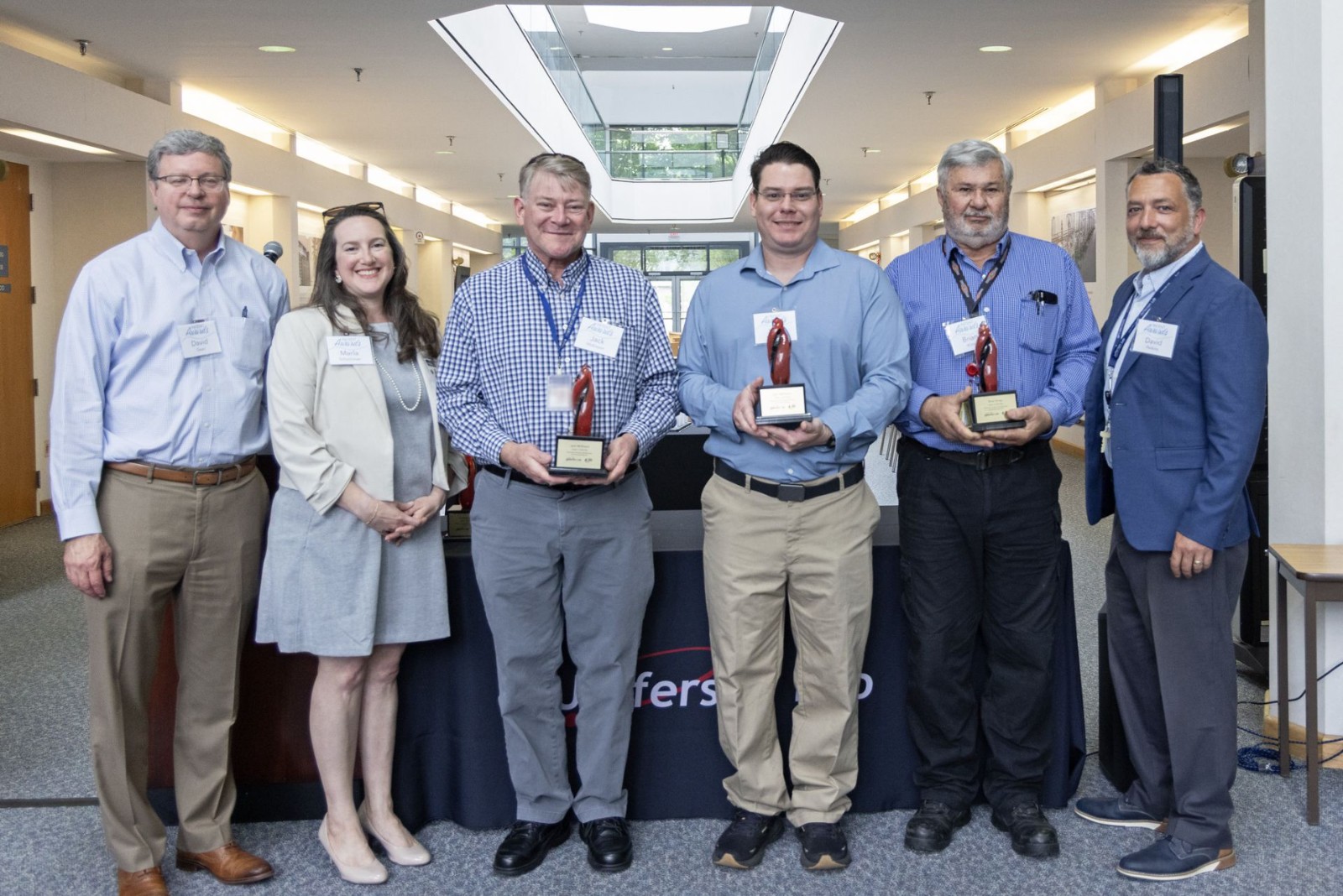
Jefferson Lab Signs CRADA to Advance Commercialization of Subsurface Tritium Continuous Monitor: Overcoming the Challenge of Online Monitoring of Low-Energy Beta Particles in Groundwater at Nuclear Power and Fusion Facilities
The U.S. Department of Energy (DOE) Thomas Jefferson National Accelerator Facility (Jefferson Lab) announced that it has formally signed a Cooperative Research and Development Agreement (CRADA) with startup company Canary Instruments to jointly advance the commercialization of its independently developed Subsurface Continuous Radioisotope Environmental Monitor (SCREM). This technology is specifically designed for nuclear power plants, nuclear fuel facilities, and future...
2026-10-07

Blue Energy becomes the first small nuclear power developer to apply for grid connection in Texas, aiming to provide baseload power for AI data centers
According to local U.S. media reports, nuclear energy startup Blue Energy Global Inc. has formally submitted a grid connection application to the Texas grid operator, becoming the first developer in the United States to apply to connect next-generation small modular reactor (SMR) power to the Texas main grid (ERCOT). The move is aimed at addressing the explosive growth in baseload electricity demand in Texas driven by the construction of artificial intelligence (AI) and supercomputing data centers. According to the relevant project plans submitted by Blue Energy, the company is advancing the development of a large energy complex in partnership with data center operator Crusoe Inc. The hybrid energy base is initially planned to first rely on natural gas units for rapid commissioning and power generation to address the urgent short-term power shortage of computing clusters; subsequently, small nuclear reactors will be gradually added and deployed to comprehensively build a long-term stable energy supply architecture featuring "gas-nuclear synergy and carbon-free transition."
2026-10-07
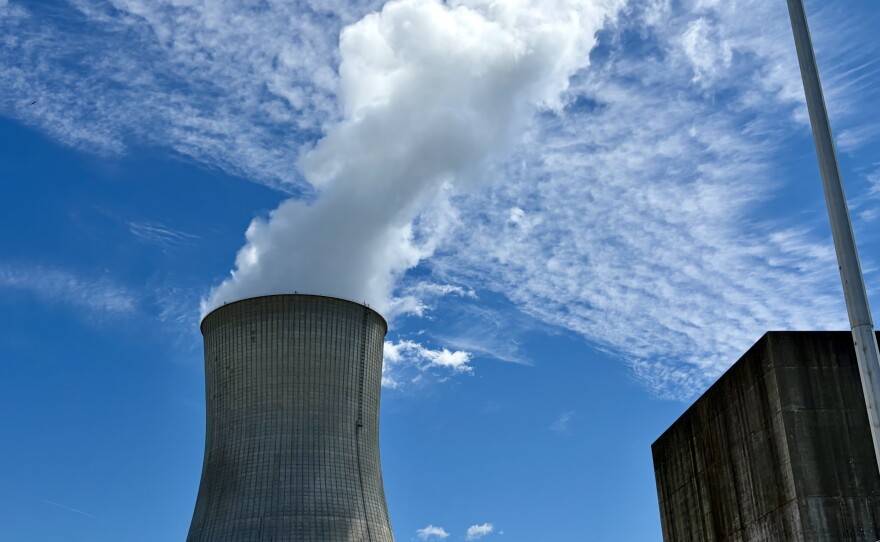
Missouri Releases New Energy Plan, Pushing Nuclear Power as Priority
According to local U.S. media reports, the Missouri Department of Natural Resources, in its latest statewide comprehensive energy plan, has formally placed the development of new nuclear power plants, enhancement of grid resilience, and advancement of energy autonomy at the strategic priority level. Official data show that Missouri currently consumes energy at a scale 8 times its in-state production, relying heavily on cross-regional transmission from external grids, and the plan aims to fundamentally reverse this trend of dependence on out-of-state power. Missouri Governor Mike Kehoe noted in the report that in recent years Missouri's exposure risk to interstate imported electricity has increased significantly, and the new energy plan...
2026-10-07

The Supply-Demand Fault Line Beneath the Boom: Can the Uranium Mining Industry Support the Global Nuclear Renaissance?
Driven by the explosive electricity demand of global AI data centers and the COP commitment to triple nuclear power capacity, nuclear energy is ushering in the most certain renaissance in half a century. However, behind the capital market's frenzied pursuit of nuclear power concept stocks and commodities, the core raw material upstream in the nuclear power industrial chain—uranium mining and nuclear fuel processing—is facing severe constraints from insufficient production capacity elasticity, lengthy development cycles, and geopolitical fragmentation. The optimistic signals recently released by renowned Wall Street asset management institution Sprott certainly reflect the momentum of capital return, but upon closer examination of its supply-demand fundamentals and technical barriers, whether the uranium mining industry can timely and smoothly support this wave of nuclear power infrastructure construction still requires a huge question mark.
2026-10-07

German Research Team Completes First Phase Analysis of Chernobyl "Hot Particles": Nuclear Fuel Crystal Structure Still Exhibits Unexpectedly High Chemical Stability After 40 Years
Nearly 40 years after the 1986 Chernobyl Nuclear Power Plant accident, a research team from Leibniz University Hannover and Helmholtz-Zentrum Dresden-Rossendorf (HZDR) in Germany has completed the world's first synchrotron radiation X-ray-based precision crystal phase analysis of 6 micron-sized highly radioactive fragments (commonly known in the industry as Hot Particles) ejected from the destroyed reactor. The related breakthrough research findings have been officially published in the top-tier journal in environmental and radioecology, the Journal of Hazardous Materials.
2026-10-07

U.S. Department of Energy Commits $4.2 Billion Loan to Support Vistra Nuclear Plant Expansion and Upgrade
On October 5, 2026, the Office of Energy Dominance Financing of the U.S. Department of Energy (DOE) announced a commitment to provide a conditional loan of up to $4.2 billion to fund the expansion and modernization of nuclear power plants owned by Vistra Corp. in Pennsylvania and Ohio. It is understood that this investment aims to implement U.S. President Donald Trump's executive order on revitalizing the nuclear industrial base. U.S. Secretary of Energy Chris Wright stated that by increasing the power generation of existing nuclear power plants, affordable...
2026-10-06

The Qualitative Leap from "Able to Build" to "Adept at Building": An In-Depth Analysis of the Technological Breakthrough and Industrial Restructuring of the "Hualong One Version 2.0"
In September 2026, with the convening of the high-quality commencement mobilization meeting for the first batch of demonstration projects—the Phase II project of Zhejiang Jinqimen Nuclear Power Plant—and the full-scale launch of site leveling and excavation work, Hualong One Version 2.0 officially sounded the clarion call for its march from technological R&D to engineering practice. As a third-generation pressurized water reactor nuclear power model with fully independent intellectual property rights, Hualong One has undergone a decade of tempering, with 12 units in commercial operation and 35 units approved for construction, bringing the total number of units to the top of the world's third-generation nuclear power rankings and making it a globally shining national calling card. However, as nuclear power powers in Europe and America find themselves mired in supply chain degradation, runaway construction schedules, and investment black holes, and as the global small modular reactor (SMR) concept remains stuck in the tug-of-war between PowerPoint presentations and early-stage demonstrations...
2026-09-27
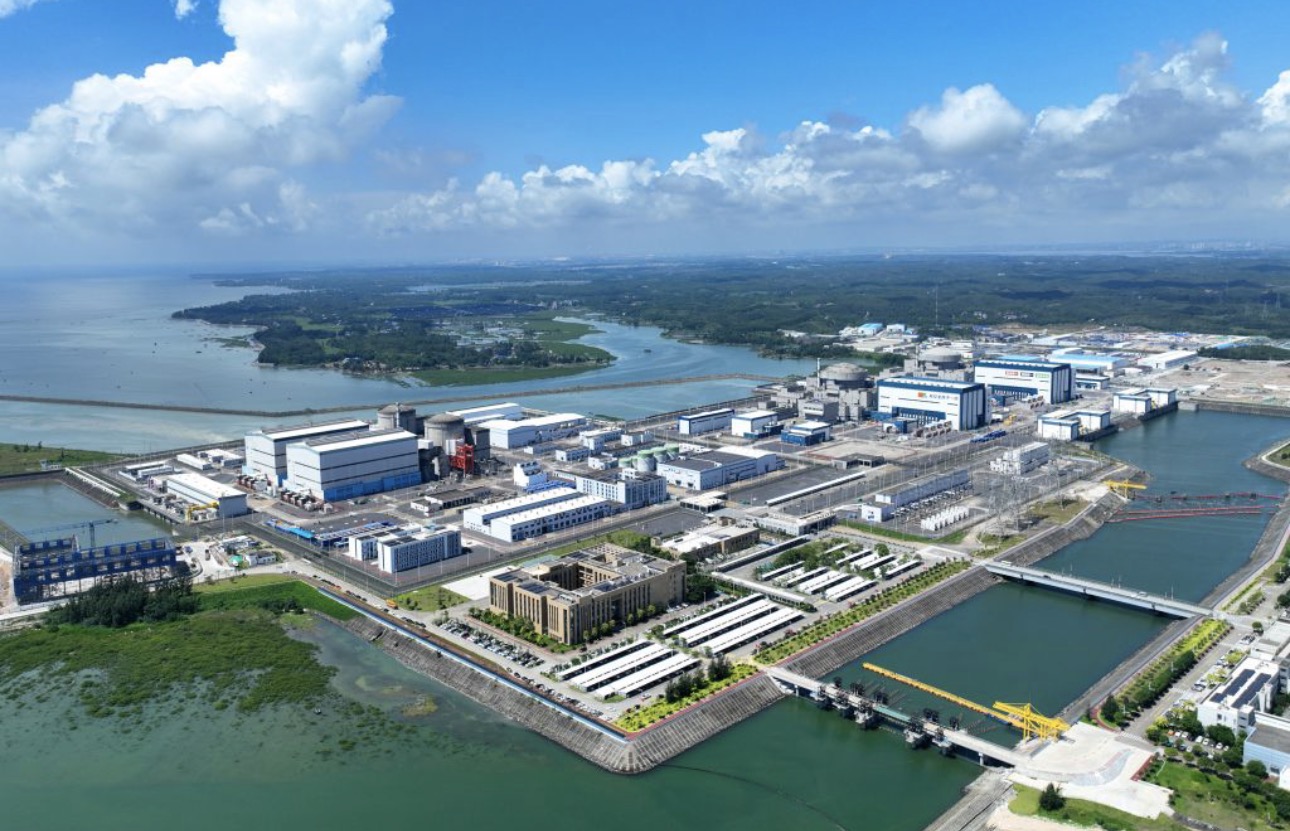
Fangchenggang Nuclear Power Phase I Marks 10th Anniversary of Commercial Operation: Two Units Have Cumulatively Supplied Over 160 Billion kWh, with WANO Indicators Achieving Full Marks for Seven Consecutive Years
Recently, Phase I of the Fangchenggang Nuclear Power Plant under China General Nuclear Power Group officially ushered in the 10th anniversary of its commercial operation. As the first nuclear power project in western China and in an ethnic minority region, the two million-kilowatt-class pressurized water reactor units at the site have maintained safe and stable operation for ten years since being put into operation. Their WANO composite index has achieved full marks for seven consecutive years, and they have cumulatively delivered over 160 billion kWh of clean electricity to the Beibu Gulf Economic Zone. It is understood that Phase I of the Fangchenggang Nuclear Power Project is located on Qisha Peninsula in Fangchenggang City, Guangxi Zhuang Autonomous Region, and is an important energy backbone project of the national Western Development Strategy. The project planned to build two self-developed CPR1000 pressurized water reactor nuclear power units with a single-unit capacity of 1.08 million kilowatts...
2026-10-04

"Major National Heavy Equipment · Industrial Answer Sheet" In-Depth Analysis of Independent Supporting of Core Parts of China's Hualong One
According to reports, on October 3, the News Center of the State-owned Assets Supervision and Administration Commission of the State Council of China and the Finance Channel of China Central Radio and Television Station jointly launched "Major National Heavy Equipment · Industrial Answer Sheet," with the first episode focusing on China's nuclear industry. Zhang Tao, General Manager of China National Nuclear Corporation, explained the key components of the Hualong One. The program disclosed that the steam generator support buffer block is the size of an eraser and weighs less than 80 grams, yet it can withstand an impact force of 45 tons, equivalent to the crushing weight of 10 adult elephants. This detail brings China's nuclear power independence from the narrative of complete units back to the component level. The following analyzes the significance of this breakthrough from several aspects. Why a small part is the key to the safety chain. This component needs to achieve large-deformation energy absorption under extreme conditions such as earthquakes and pipe rupture...
2026-10-04
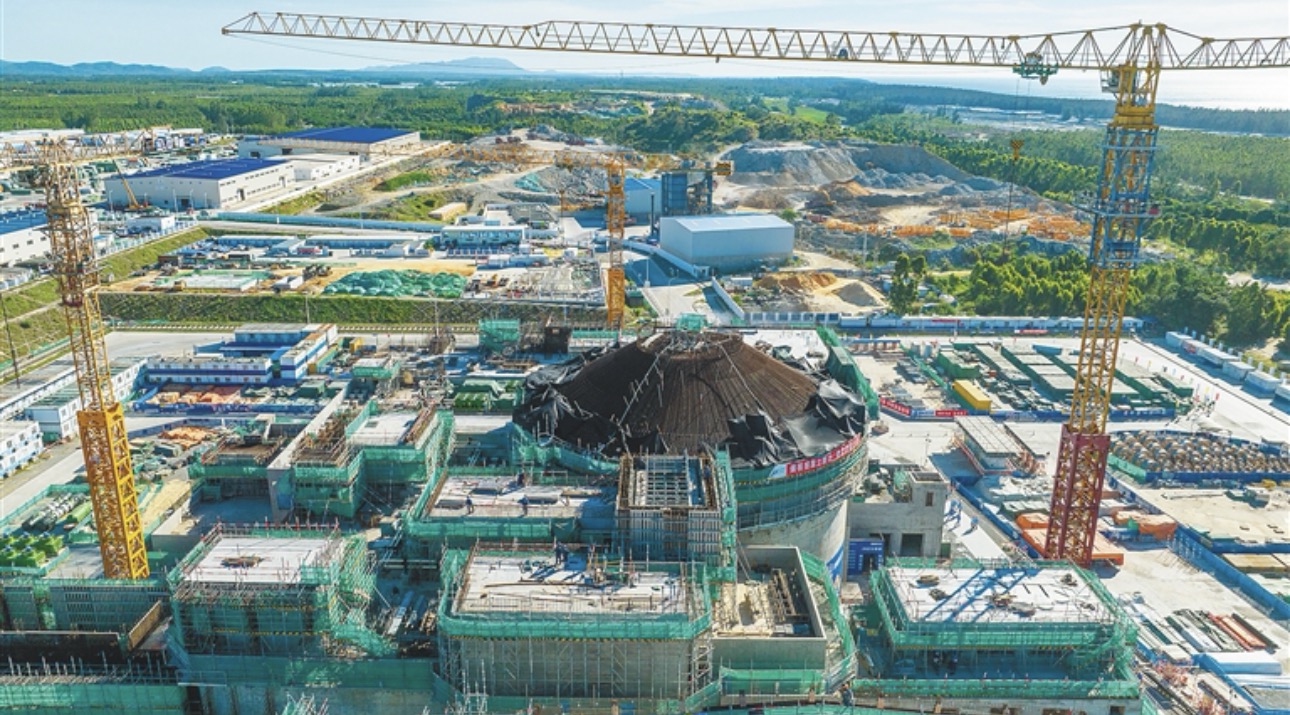
China's Linglong One global first-of-a-kind unit hot test steadily advances, moving toward the goal of fuel loading within the year
Recently, the Linglong One global first-of-a-kind unit at Changjiang, Hainan, China, is currently advancing hot functional testing in an orderly manner, steadily moving toward the goal of fuel loading within the year. It is understood that modular small reactors feature flexible deployment and outstanding inherent safety, and can be adapted to diverse application scenarios such as island power supply and industrial steam supply. Linglong One is the world's first onshore commercial modular small nuclear reactor to pass the safety review of the International Atomic Energy Agency (IAEA). At present, all civil construction of the project has been completed, and the installation of core equipment is basically complete. The hot functional test currently being carried out is a key comprehensive commissioning stage before unit fuel loading, used to verify the performance of the reactor primary loop and supporting systems under high-temperature conditions. If fuel loading is achieved within the year, it will mark the transition of the world's first onshore commercial modular small reactor from the construction stage to the operation preparation stage.
2026-10-05

Europe Completes Delivery of Final ITER Vacuum Vessel Sector, Marking Conclusion of 16 Years of Manufacturing
Recently, Fusion for Energy (F4E), in collaboration with Ansaldo Nucleare, Westinghouse, and Walter Tosto, has completed the manufacturing of Europe's final vacuum vessel sector for the International Thermonuclear Experimental Reactor (ITER) and delivered it to the ITER project site at Cadarache in southeastern France. It is understood that the ITER vacuum vessel has an internal volume of 1,400 cubic meters and is composed of nine wedge-shaped steel sectors, each over 14 meters tall and weighing up to 440 tonnes. Once assembled, the vacuum vessel will have an outer diameter of 19.4 meters, a height of 11.4 meters, and weigh approximately 520...
2026-10-06

California Signs Two Bills to Reshape Advanced Nuclear Fission and Fusion Energy Strategy
California Governor Gavin Newsom recently signed two bills aimed at comprehensively advancing the state's nuclear energy development by reassessing advanced nuclear fission technology and establishing a strategic plan for nuclear fusion. In the field of nuclear fission, Assembly Bill 2647 (A.B. 2647) requires the California Energy Resources Conservation and Development Commission (CEC) to conduct a formal assessment of advanced nuclear energy technologies by January 1, 2028. The bill, introduced by Assemblymember Lisa Calderon, directs the CEC to comprehensively consider factors such as cost, grid reliability, fuel cycle, and public health in determining whether new nuclear power plants can help California achieve its 2045 zero-carbon electricity goal. Calderon stated that given current grid demands, California needs to reassess the role of nuclear energy in ensuring a stable and clean electricity supply based on modern technology.
2026-10-04
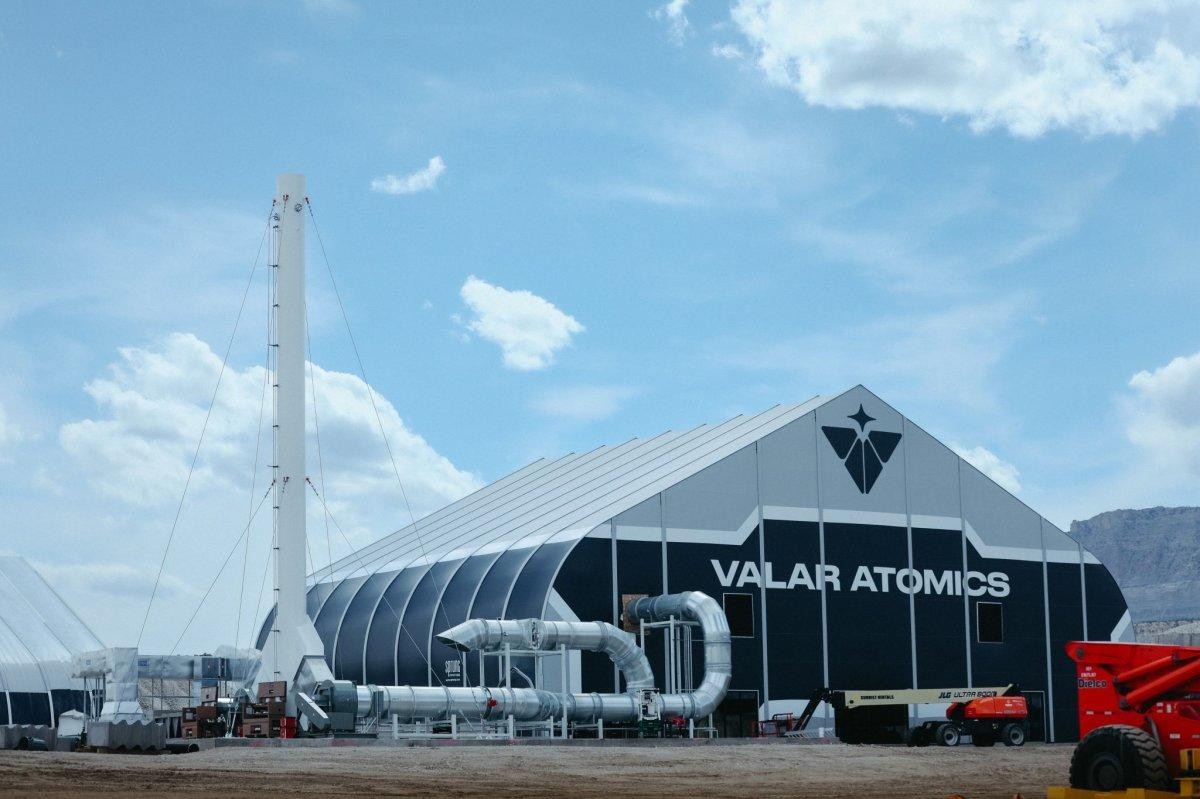
US-based Valar Atomics Plans to Deploy 456 Gas-Cooled Nuclear Reactors in Utah: Building a Dedicated 9.6 GW Power Supply System for a Supercomputing Data Center
US energy startup Valar Atomics has officially submitted a proposal for the construction of an ultra-large-scale industrial park named Project Beehive. The project is planned to be sited on federal and state land near Price, Utah, covering an area of approximately 9,000 acres. The entire project plans to deploy 456 small gas-cooled nuclear reactors in a clustered configuration, with an expected total installed generating capacity reaching an astonishing 9.6 gigawatts (GW). This scale is more than twice Utah's current average grid-wide generation load of 4 GW and approaches its summer peak demand of nearly 10 GW. This ultra-dense...
2026-10-03
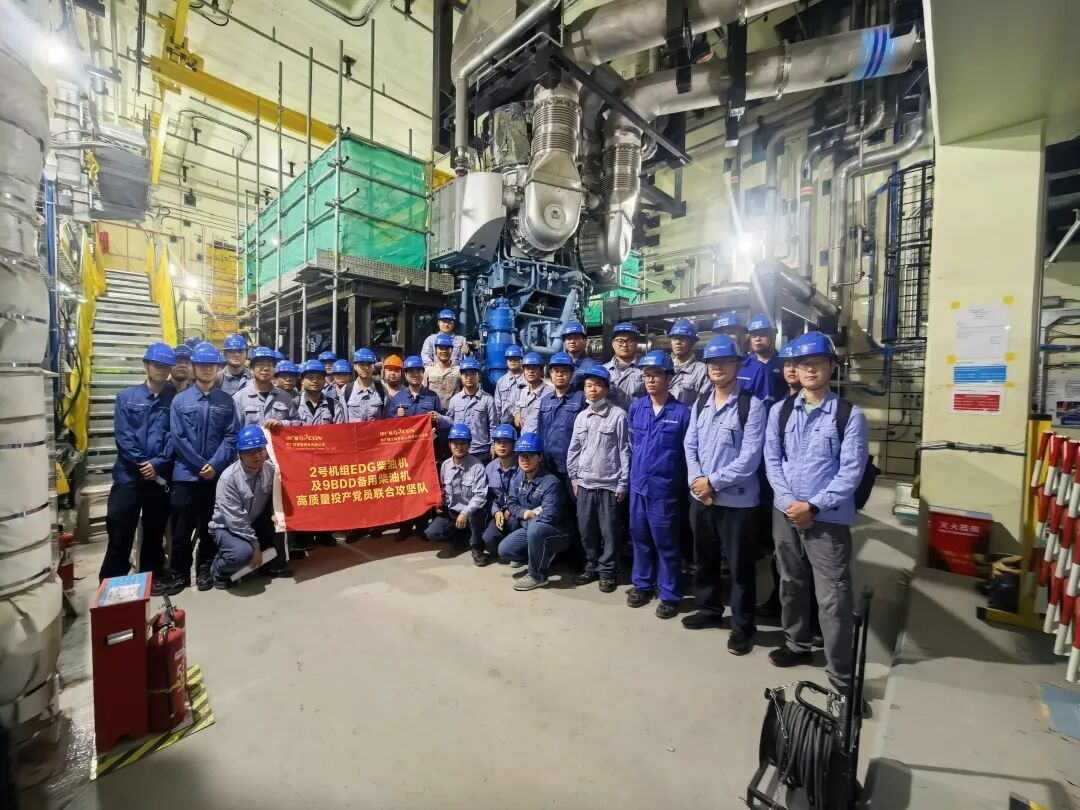
First Backup Emergency Diesel Generator of Hualong One Officially Available at Sanao Nuclear Power Unit 2
On October 2, the first backup emergency diesel generator (9LHW) of Hualong One completed the replacement grid connection test at Sanao Nuclear Power Unit 2 and was officially put into service. The equipment can replace any one of the original 12 emergency diesel generators (EDGs) in Phase I and Phase II projects, significantly improving the redundancy, reliability, and maintenance flexibility of the plant's emergency power supply. Sanao Nuclear Power Phase I and Phase II each have 3 emergency busbars, with one EDG configured for each busbar. However, due to the absence of cross-power supply for loads, the preventive maintenance windows of the original units were concentrated, affecting the overhaul schedule. Since 2021, Cangnan Nuclear Power has promoted the project of adding backup diesel generators, improving from the design source, building a new backup emergency diesel generator building (BDD), and constructing corridors and cables connected to each unit...
2026-10-03