
Search Results
Keyword:EAST

"Power-Hungry Beast" Reshapes the Logic of Power Asset Revaluation: Can Tech Giants' 20-Year Long-Term Agreements Fundamentally Resolve the Nuclear Power Economics Dilemma?
On October 6, 2026, Constellation Energy (Nasdaq ticker CEG, the largest commercial nuclear reactor operator in the United States) and Google announced the signing of a 20-year strategic clean energy cooperation agreement. Following the announcement, Constellation Energy's stock price rose approximately 12% that day. The capital market's excitement is understandable. But an easily overlooked detail is that the true structure of this deal differs considerably from the "1 billion dollars" in media headlines. Bloomberg's initial report of "at least 1 billion dollars" was the figure at the time the deal first came to light, while the officially announced agreement amount is 4.3 billion dollars. The essence of the 4.3 billion dollars is Constellation Energy's capital investment to upgrade its 11 nuclear power units, with Google providing revenue certainty for this investment through a 20-year power purchase agreement.
2026-10-09
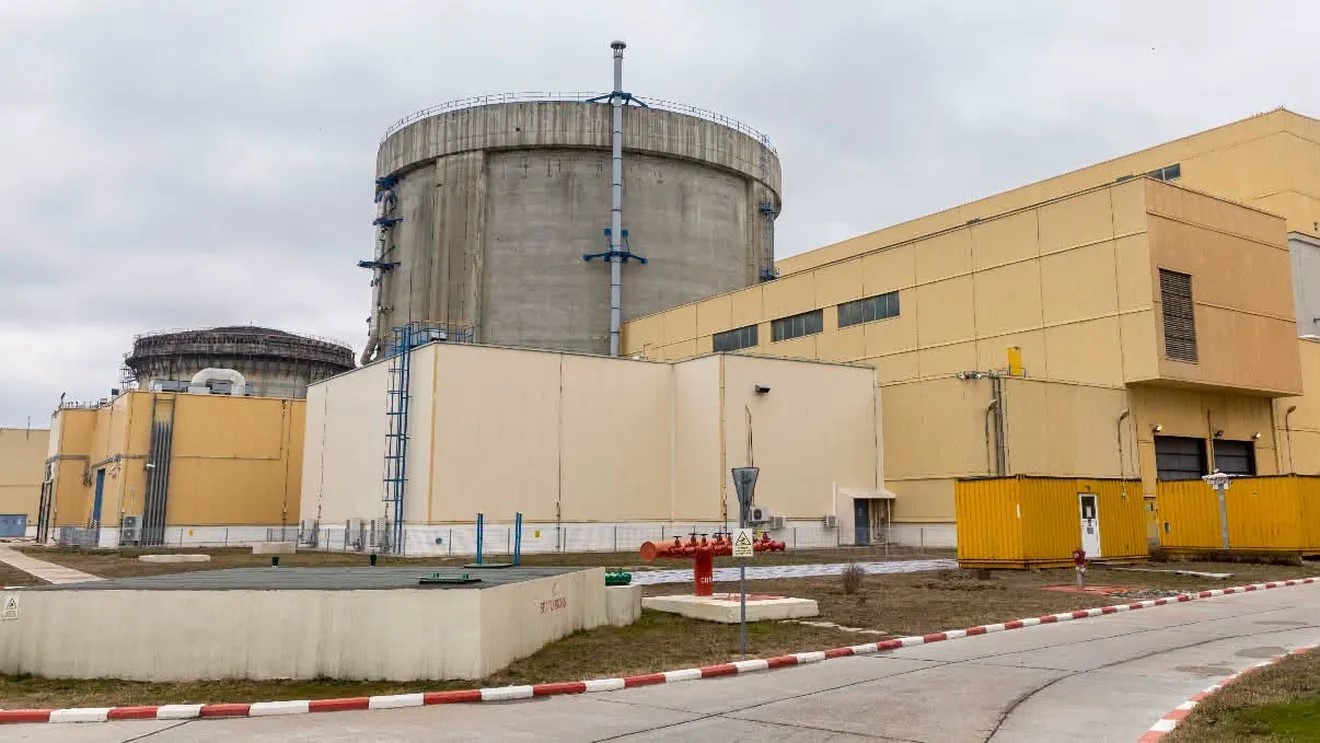
Romania's Cernavoda Nuclear Power Plant Reactors to Remain Shut Down Until at Least October 15
Cristian Bușoi, State Secretary of Romania's Ministry of Energy, stated to the media through public channels that Romania is experiencing its most difficult energy situation in recent decades. The low flow of the Danube River and low water levels near Cernavoda have severely affected the nuclear power plant. Currently, both reactors remain shut down, and the Danube's flow is expected to reach a historic low within the next ten days. At least until October 15, Units 1 and 2 of Cernavoda cannot be restarted. The extreme low water level of the Danube has not only caused an interruption in nuclear baseload power supply but has also simultaneously impacted the hydroelectric power output of the country's hydropower stations. Romani...
2026-10-08

The Fully Superconducting Tokamak EAST Marks 20 Years of Operation: From a 3-Second First Cry to Thousand-Second Steady State, China's "Artificial Sun" Opens a Leap Toward Fusion Engineering
On September 28, 2006, the Experimental Advanced Superconducting Tokamak (EAST), independently designed and developed by the Institute of Plasma Physics (ASIPP) under the Hefei Institutes of Physical Science of the Chinese Academy of Sciences, successfully achieved its first plasma discharge on Hefei Science Island, with a current of 200 kA and a duration of nearly 3 seconds. This historic moment marked the official completion and operation of the world's first fully superconducting non-circular cross-section nuclear fusion experimental device, propelling China into the club of fully superconducting tokamak technology ahead of others. Over the past two decades, this artificial sun has completed more than 160,000 physical discharge experiments...
2026-09-28

Jiluntai's independently developed HER2-targeted diagnostic new drug has been approved for clinical trials, expected to facilitate precision treatment of breast cancer
Jiluntai Company, a nuclear medicine innovation enterprise invested and incubated by Baiyang Pharmaceutical Group, has recently made important progress. Its independently developed Class 1 chemical radioactive diagnostic new drug —— Technetium [⁹⁹ᵐTc] hydrazinonicotinamide dual-chain Ark peptide injection (⁹⁹ᵐTc‑HP‑Ark2), has received supplementary clinical trial application approval from the National Medical Products Administration (NMPA), which means the product will continue to undergo clinical trials, bringing new hope for precision subtyping and treatment of breast cancer. This product is a radioactive diagnostic agent for SPECT/CT imaging, intended for the differential diagnosis of HER2-positive breast cancer. HER2 is an important prognostic indicator for malignant tumors such as breast cancer...
2026-09-21

Denmark's Region East Denmark to expand Sectra One imaging platform, unifying regional nuclear medicine and other medical imaging services
Swedish medical imaging IT and cybersecurity company Sectra has recently signed a contract to expand the application of its Sectra One enterprise imaging solution from hospitals in Denmark's Capital Region to the entire Region East Denmark. Region East Denmark was formed by merging the Capital Region and Region Zealand, and this expansion aims to promote unified operation of imaging services across hospitals in the entire region. Under the contract, Sectra One will be delivered as a fully managed cloud service, covering all hospitals in Region East Denmark for the review and storage of radiology medical images, including breast imaging, nuclear medicine, and clinical physiology. Hospitals in Region Zealand will migrate to the system currently in use in the Capital Region,...
2026-09-11

Romania's Cernavoda Nuclear Power Plant to Remain Offline Until at Least September 18 Due to Low Danube River Levels
On September 8, Romania's Cernavoda Nuclear Power Plant was expected to remain offline until at least September 18 due to low water levels in the Danube River. Emil Macovei, Technical Director of Nuclearelectrica, the operator of the Cernavoda plant, stated that over the next 10 days, the Danube's water volume would still be insufficient to support the restart of either of the plant's two units. Romania's Antena 3 television channel quoted him as saying that current hydrological conditions do not yet meet the requirements for unit operation. Cristian Busoi, Secretary of State at Romania's Ministry of Energy, said that predictions regarding the plant's restart timeline were "rather optimistic," and the ministry is currently unable to provide a definitive date for resuming operations. He confirmed that...
2026-09-09
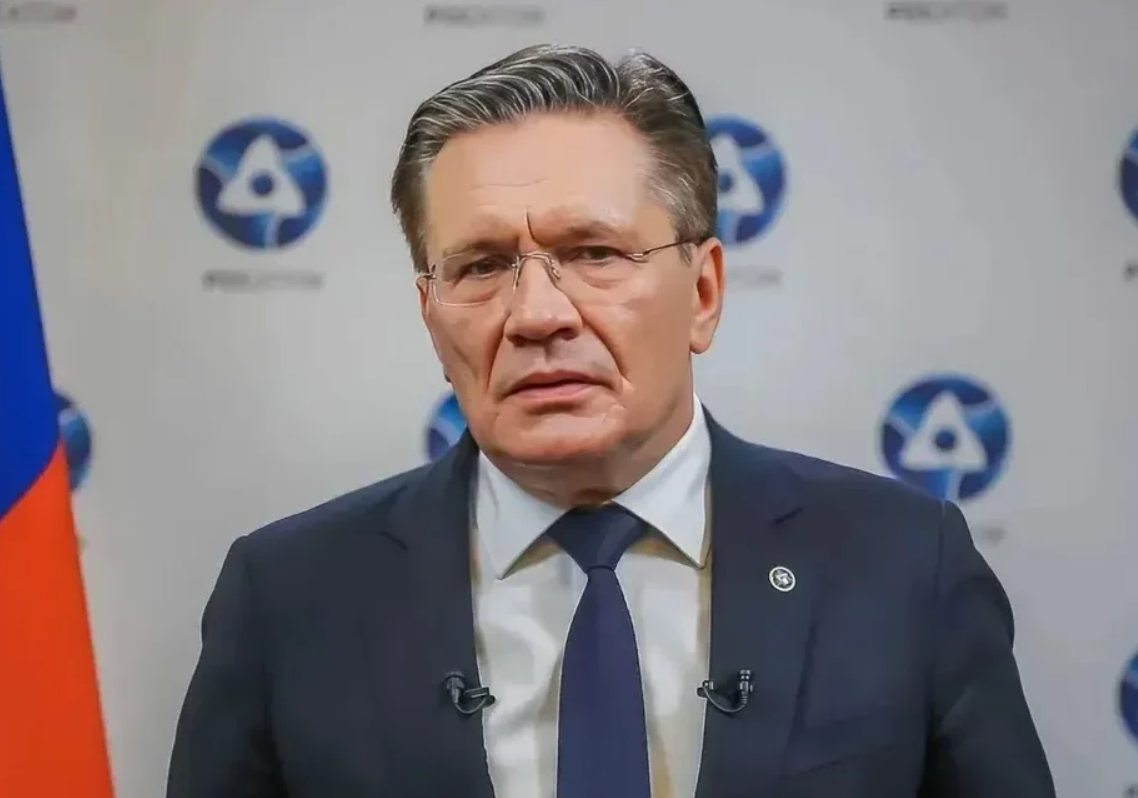
Rosatom Plans to Discuss Floating Nuclear Power Plant Project with Indonesia
Alexey Likhachev, CEO of Rosatom, said on September 2 that the company will continue talks with the Indonesian side on the construction of small-scale nuclear power plants during the Eastern Economic Forum, with a key focus on cooperation in floating nuclear power plants. Likhachev noted that Indonesia's economy is growing rapidly, its population continues to expand, and electricity demand is rising accordingly, while the country has shown strong interest in developing nuclear energy. He believes that Indonesia's geography, consisting of numerous islands with a long coastline, makes floating nuclear power plants practically applicable. According to him, floating nuclear power plants are a key area of international cooperation that Rosatom is advancing...
2026-09-03

Russia's Far East Plans to Build Two Nuclear Power Plants by 2042
Alexey Chekunkov, Minister for the Development of the Russian Far East and Arctic, said on September 1 during the Eastern Economic Forum that the Russian Far East plans to complete two nuclear power plants by 2042, with a total installed capacity of 3.2 GW. Chekunkov noted that during the same period, the Far East also plans to commission six hydroelectric power plants with a total installed capacity of 3.77 GW, and construct approximately 4,000 kilometers of new power grid. He stated that energy construction is not limited to new power generation projects but also includes supporting grid infrastructure to meet the region's long-term development needs. According to the relevant arrangements, the first phase of construction will last until 2030. During this period, the Far East plans to add 8.3 GW of thermal power installed capacity, including...
2026-09-01

Northeast Regional Office of the Ministry of Ecology and Environment Conducts Research on Radiation Risk Prevention and Control in the Scrap Metal Recycling and Smelting Industry
To strengthen radiation risk prevention and control across the entire chain of the scrap metal recycling and smelting industry and guide young cadres to conduct research and tackle challenges at the grassroots level, the Northeast Regional Office of Nuclear and Radiation Safety Supervision of the Ministry of Ecology and Environment (hereinafter referred to as the Northeast Regional Office) recently conducted special research at scrap metal resource recycling and steel smelting enterprises as well as customs ports. This research comprehensively mapped out the sources of scrap metal recycling, supply destinations, and the current status of radioactive monitoring management in the processing and sorting stages; focused on verifying the effectiveness of radiation monitoring requirements implementation at steel smelting enterprises, and meticulously examined the monitoring point deployment and control measures at key stages such as raw material entry, production process connection, and product shipment; further clarified the import and export radioactive monitoring management procedures, coordination and linkage working mechanisms, and the response and handling of abnormal events; and conducted in-depth exchanges and discussions with relevant units on some issues identified during the research.
2026-09-01

Blueprint for Proton Therapy Center in Southeastern Busan, South Korea Unveiled to Address Regional Gap in Cancer Treatment Resources
The blueprint for the proton therapy center at the Southeastern Regional Nuclear Medicine Center in Gijang-gun, Busan, South Korea, was recently unveiled. The project is expected to help bridge the gap in cancer treatment resources between the Seoul metropolitan area and non-capital regions, and to promote the application of proton accelerators in high-tech industries. According to information from Gijang-gun, Busan, and the Southeastern Regional Institute of Radiation Medicine on August 29, the Busan Institute of Science and Technology Higher Education recently published a service report titled "Establishment of Promotion Strategy and Implementation Plan for the Southeastern Proton Therapy Center," which includes the construction blueprint and feasibility analysis of the center. The Southeastern Regional Institute of Radiation Medicine is advancing related preparatory work in response to the research and development review by the Ministry of Science and ICT in the second half of this year...
2026-08-30

US Advanced Light Source Upgrade Advances, Soft X-ray Brightness to Increase at Least 100-Fold
Lawrence Berkeley National Laboratory in the US is advancing the Advanced Light Source (ALS) synchrotron upgrade project, planning to enhance soft X-ray experimental capabilities through next-generation light source technology, providing higher-precision data support for quantum materials, microelectronics, energy technologies, biological structure research, and AI-assisted scientific research. The project team is working toward the 2029 target. Since the Advanced Light Source began operation in 1993, it has long served research across soft X-ray, ultraviolet, infrared, and hard X-ray wavelength ranges. Researchers worldwide have used the facility's focused beams to observe molecular and material structures at the atomic scale, with results cited in over 18,000 papers...
2026-08-25

Russian Far Eastern Federal University Develops Ultrafast Ceramic Scintillators for Rapid Ionizing Radiation Detection
On August 21, 2026, scientists at the Russian Far Eastern Federal University, with support from the Russian Science Foundation, are developing ceramic materials for ultrafast detection of ionizing radiation. The results could be used in the future for medical diagnostics, baggage and cargo security screening, radiation monitoring, and scientific equipment requiring fast, precise radiation detection. The project, titled "Ultrafast Ceramic Scintillators for Ionizing Radiation Detection," is led by Anastasia Vonovskikh, a researcher at the Research and Education Center for Advanced Ceramic Materials, Department of Industrial Safety, Polytechnic Institute, Far Eastern Federal University. Scintillators are a class of materials that emit light when exposed to ionizing radiation. Detectors record these light signals to determine radiation intensity and energy. Currently, most related equipment uses single-crystal scintillators, but their production typically requires significant energy and resource inputs. The Far Eastern Federal University team proposes special ceramic materials as an alternative, aiming to improve detection speed and efficiency, making them more suitable for detecting trace amounts of radiation.
2026-08-25

Northeast Regional Office of the Ministry of Ecology and Environment Conducts Construction Quality Dialogue for Xudabao Nuclear Power Plant
Recently, the Northeast Regional Office of Nuclear and Radiation Safety Supervision of the Ministry of Ecology and Environment (hereinafter referred to as the Northeast Office) held a construction quality dialogue with CNNC Liaoning Nuclear Power Co., Ltd. (hereinafter referred to as the Operating Unit) for the Xudabao Nuclear Power Plant, aiming to promote the implementation of nuclear safety responsibilities and ensure the effective operation of the quality assurance system. China National Nuclear Power Co., Ltd. and relevant construction participating units attended the event. The dialogue reviewed the Operating Unit's presentation on quality issues related to nuclear safety-related structures, systems, equipment, and design, systematically identified management shortcomings, analyzed root causes, and developed improvement measures. The Northeast Office pointed out that construction quality issues reflect that various units still have inadequacies in fulfilling nuclear safety responsibilities and quality assurance responsibilities, with insufficiently effective transmission of responsibility pressure. All units must deeply recognize that the Xudabao Nuclear Power Plant is at a critical stage with two reactor types and four units under simultaneous construction, where civil construction, installation, and commissioning tasks overlap, marking a high-risk period for construction quality. The primary nuclear safety responsibility of the Operating Unit must be firmly consolidated, and the corresponding nuclear safety responsibilities of all units must be reinforced.
2026-08-24

South Korea's Gyeongbuk East Coast Nuclear Power Belt Proposed as National AI Training Center
On August 17, the Gyeongbuk Research Institute proposed developing the nuclear power-concentrated region on the east coast of North Gyeongsang Province into a national artificial intelligence (AI) training center to accommodate high-energy computing demands such as large-scale model training and retraining. The research suggests that if the South Korean government expands AI data centers to 18.4 gigawatts in the long term, power supply and grid connection capacity in the capital area and metropolitan regions could approach their limits. To alleviate power and network load pressures, real-time inference and user-facing services could be deployed in the capital area and major cities, while large-scale training and retraining facilities could be located in developing regions with access to power sources. The east coast of North Gyeongsang Province is home to Hanul...
2026-08-18

Safety measure costs after Japan's nuclear plant accident rise to at least 6.606 trillion yen
A survey of 11 Japanese electric power companies shows that the total cost of safety measures required for nuclear plants to meet new regulatory standards following the Fukushima Daiichi accident has reached at least 6.606 trillion yen. Affected by rising prices, this figure has increased slightly from the previous year. About half of the surveyed companies said that rising costs of materials, equipment, and construction have pushed up related expenses, and the total may continue to rise in the future. After the Fukushima Daiichi accident, Japan implemented new nuclear regulatory standards requiring plants to strengthen earthquake and tsunami protection and improve severe accident response measures. Related costs mainly include seawalls, emergency power supplies, filtered venting equipment, and...
2026-08-18