
Search Results
Keyword:El

National Major Science and Technology Infrastructure Project "High-Intensity Heavy-Ion Accelerator Facility" Passes Special Financial and Asset Acceptance
From September 6 to 7, the Bureau of Finance and Assets and the Bureau of Science and Technology Basic Capacity of the Chinese Academy of Sciences organized a financial expert group and an asset expert group to carry out special financial and asset acceptance work on the National Major Science and Technology Infrastructure—the High-Intensity Heavy-Ion Accelerator Facility (HIAF) project. The expert group consisted of 13 experts from the Chinese Academy of Sciences, research institutes, and universities. Figure: Acceptance meeting site. The expert group listened to reports on the project's construction, financial asset management, and investment completion. The financial acceptance expert group reviewed materials such as the financial summary report and the completion financial final accounts audit report, conducted on-site inspections of final account statements and account books, and spot-checked contracts and accounting vouchers, followed by on-site inquiries and discussions on the financial investment completion status. The asset acceptance expert group reviewed materials including the asset summary report and procurement ledgers, conducted on-site spot checks of process equipment for the High-Intensity Heavy-Ion Accelerator, experimental terminal systems, facility auxiliary equipment, and public supporting systems, and held on-site inquiries and discussions on asset delivery status.
2026-09-09
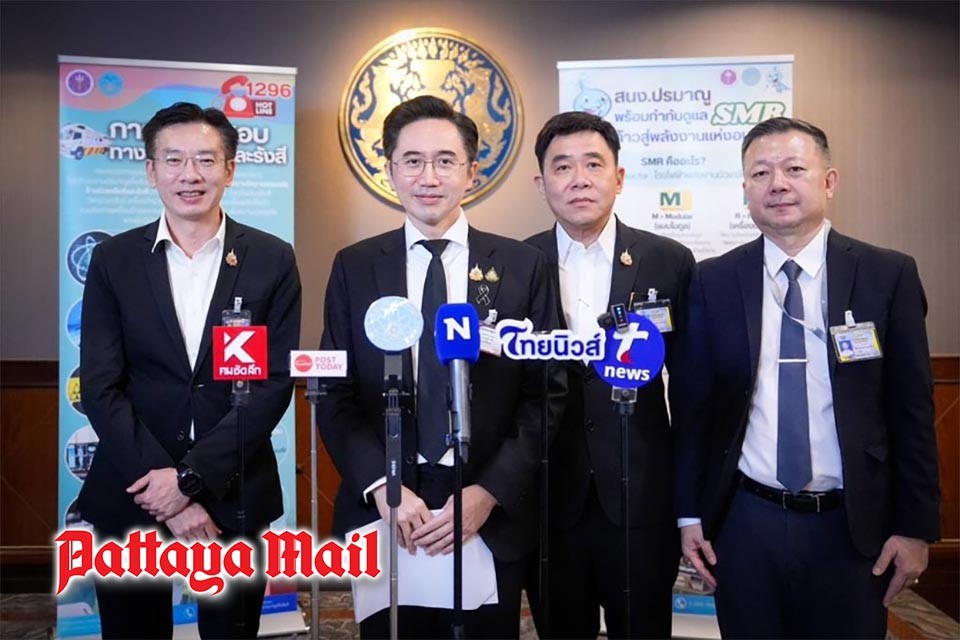
Thailand Advances SMR Regulatory Preparedness to Strengthen Energy Security
On September 8, 2026, Thailand's Deputy Prime Minister and Minister of Higher Education, Science, Research and Innovation, Yodchanan Wongsawat, chaired the second meeting of the Nuclear Energy for Peace Committee in 2026 at Government House. The meeting discussed Thailand's long-term nuclear energy strategy and preparatory work on the regulatory framework, talent development, and industrial supply chain for Small Modular Reactors (SMRs). The Thai government emphasized that these efforts constitute preliminary capacity building and do not imply a decision to construct nuclear power plants. The meeting approved an SMR regulatory policy framework, which draws on relevant standards of the International Atomic Energy Agency (IAEA)...
2026-09-09

UK Rolls-Royce SMR Signs Memorandum of Understanding with ABB on Small Modular Reactors
On September 8, 2026, ABB and Rolls-Royce Small Modular Reactors (Rolls-Royce SMR) signed a Memorandum of Understanding to explore collaboration on small modular reactor projects. Under the MoU, ABB will study how its automation, electrification, instrumentation, and communications solutions can be applied to the scaled deployment of related projects. Rolls-Royce SMR is developing standardized, factory-prefabricated small modular reactor technology aimed at reducing nuclear project risks, improving delivery certainty, and providing low-carbon electricity in global markets. The company plans to develop a fleet of units, each with an electrical output of 470 megawatts, capable of meeting the electricity needs of one million UK households...
2026-09-09

Ukraine's Zaporizhzhia Nuclear Power Plant says restoring second external power line is critical to nuclear safety
On September 7, the Zaporizhzhia Nuclear Power Plant stated that restoring and commissioning the second external power transmission line—the 750 kV Dniprovska line—is critical to improving the reliability of the plant's power supply and enhancing nuclear and radiation safety levels. The plant also proposed that a systematic supply of fuel for backup diesel generators needs to be ensured. The Zaporizhzhia Nuclear Power Plant stated that after the 330 kV Ferrospravnaya-1 transmission line restored external power supply, the radiation conditions at the plant and surrounding areas remained stable, within the range of natural background levels. The plant also stated that following the restoration of external power supply, the backup diesel generators have been switched to standby mode. In its statement, the plant said that the Ferrospravnaya-1...
2026-09-09

Romania's Cernavoda Nuclear Power Plant to Remain Offline Until at Least September 18 Due to Low Danube River Levels
On September 8, Romania's Cernavoda Nuclear Power Plant was expected to remain offline until at least September 18 due to low water levels in the Danube River. Emil Macovei, Technical Director of Nuclearelectrica, the operator of the Cernavoda plant, stated that over the next 10 days, the Danube's water volume would still be insufficient to support the restart of either of the plant's two units. Romania's Antena 3 television channel quoted him as saying that current hydrological conditions do not yet meet the requirements for unit operation. Cristian Busoi, Secretary of State at Romania's Ministry of Energy, said that predictions regarding the plant's restart timeline were "rather optimistic," and the ministry is currently unable to provide a definitive date for resuming operations. He confirmed that...
2026-09-09

South Korea and Westinghouse Electric Plan to Advance Cooperation on 8 Nuclear Power Plants in the U.S.
According to a September 9 report by South Korean media, South Korea and the United States are coordinating an investment cooperation plan to build up to 8 large-scale nuclear power plants in the U.S., with a total project scale of approximately $120 billion, equivalent to about 161 trillion Korean won. Korea Hydro & Nuclear Power (KHNP) and U.S.-based Westinghouse Electric Company (WEC) are expected to collaborate on the project. The report said the preliminary plans under discussion include: at least 2 of the 8 nuclear power plants using the Korean-designed APR1400 reactor, with the remaining units likely adopting Westinghouse AP1000 technology. Specific site selection, construction entities, operational arrangements, final reactor types...
2026-09-09

South Korea and France Agree to Deepen Nuclear Energy R&D and Nuclear Fuel Supply Cooperation
South Korean President Lee Jae-myung, on a state visit to France, held a summit with French President Emmanuel Macron at the Élysée Palace in Paris on September 8. The two sides stated after the meeting that they would further expand cooperation in the nuclear energy sector, with a focus on nuclear energy R&D, nuclear fuel supply, next-generation reactor development, and mid- to long-term supply chain diversification. Lee Jae-myung said at a joint press conference that the two countries had signed supplementary documents on cooperation in nuclear energy R&D and nuclear fuel supply to deepen the nuclear energy cooperation agreement reached between the two nations in April. Both sides confirmed that they would continue to advance cooperation in next-generation reactor development and mid- to long-term supply chain diversification. According to related reports, the two countries also decided to establish a new...
2026-09-09

KHNP and France's Orano Expand Nuclear Fuel Supply Chain Cooperation
On September 8, Korea Hydro & Nuclear Power (KHNP) and France's Orano SA (Orano) signed a letter of intent for long-term cooperation in uranium enrichment at the Élysée Palace in Paris. The signing ceremony was witnessed by the leaders of both South Korea and France. This letter of intent represents a further extension of the existing cooperation between the two parties. In April this year, during French President Emmanuel Macron's visit to South Korea, KHNP and Orano had signed a memorandum of understanding on global, mutually beneficial cooperation in the nuclear fuel cycle sector. Under the letter of intent, the two parties plan to deepen cooperation in the front-end of the nuclear fuel cycle. KHNP...
2026-09-09

US Lightbridge Aims to Accelerate Advanced Nuclear Fuel Commercialization via INL Project
Lightbridge Corporation, a US advanced nuclear fuel technology company, announced on September 8 that it has been selected for the "Launchpad" program advanced by the US Department of Energy (DOE) at Idaho National Laboratory (INL), and plans to leverage this opportunity to accelerate the deployment of Lightbridge Fuel™ in commercial reactors. According to a shareholder letter from Lightbridge Chairman and CEO Seth Grae, the company will pursue a two-track commercialization strategy: on one track, under DOE authorization, it will build the Specialized High-Assay Low-Enriched Uranium Extrusion Demonstration (SHED) facility to produce Lead Test Assemblies (LTAs); on the other...
2026-09-09

Ukraine's Energoatom purchases additional 41 VVER Spent Fuel Dry Storage Systems
Holtec Nuclear recently announced that Ukraine's national nuclear energy company Energoatom has awarded it a new contract to supply an additional 41 spent fuel safe transport and storage systems for VVER reactors at Ukraine's Khmelnytskyi, Rivne, and South Ukraine nuclear power plants. The contract was signed on August 26, 2026. Energoatom's acting CEO Pavlo Kovtonyuk signed the contract in Kyiv, while Holtec Nuclear's CEO and Board Chairman Kris Singh signed in Camden, New Jersey, USA...
2026-09-09
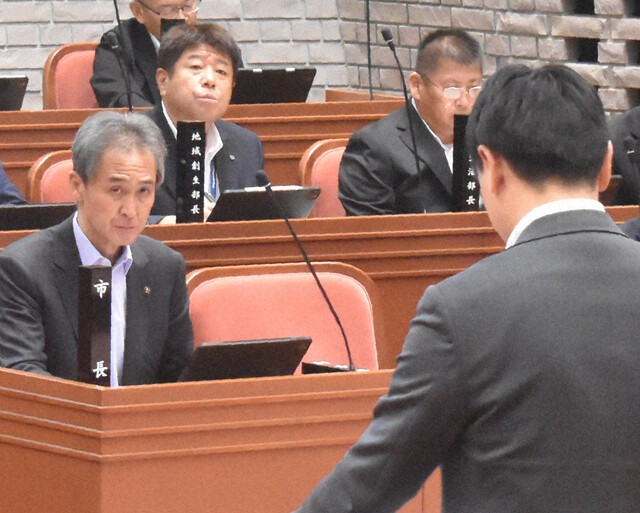
Hitachioomiya City Assembly in Ibaraki Prefecture, Japan, discusses literature survey request for nuclear waste disposal site
Hitachioomiya City in Ibaraki Prefecture, Japan, received a request from Japan's Ministry of Economy, Trade and Industry (METI) asking the city to accept a literature survey for the siting of a final disposal facility for high-level radioactive waste. On September 8, the Hitachioomiya City Assembly held a general question-and-answer session, during which multiple city assembly members expressed their views on whether to accept the survey. Of the five assembly members who filed questions that day, two expressed opposition to accepting the request and one expressed support. The assembly plans to hold a closed-door meeting on September 9, at which each assembly member will state their position, and the relevant content will subsequently be conveyed to Mayor Sadayuki Suzuki for his consideration in formulating the city government's response. Assembly member Toshiyuki Kurata stated that if the literature survey proceeds, it would impact the policies and projects currently being implemented by the city...
2026-09-09

German BESSY II 3D Magnetic Field Experiments Reveal Mechanism of Weak Magnetic Field Control over Magnetic Textures
A team at the Helmholtz-Zentrum Berlin (HZB) in Germany has made progress in controlling magnetic textures in the magnetic material (Fe0.63Ni0.3Pd0.07)3P (abbreviated as FNPP) through 3D magnetic field experiments conducted at the BESSY II synchrotron facility. The research shows that a very small external in-plane magnetic field is sufficient to alter the magnetic stripe structure in this material, providing new experimental evidence for the development of functional magnetic materials for spintronics. FNPP is a magnetic material that exhibits complex magnetic structures at room temperature, making it a focus of spintronics research. Spintronics is considered promising for lower-energy data processing and novel data storage applications. However, to achieve practical applications, the key lies in...
2026-09-08

U.S. Research Team Discovers Strong Ultrafast Optical Response Induced by Ionizing Radiation, Potentially Advancing Medical Imaging and Sensing Technologies
September 3 news, Stanford University and the U.S. Department of Energy's SLAC National Accelerator Laboratory research team used ultrafast electron and laser pulses to observe a strong ultrafast optical response triggered by ionization processes in semiconductor materials. The related research has been published in Nature Photonics. The researchers believe this discovery could provide new insights for radiography and sensing technologies, and also offer experimental evidence for understanding the fundamental behavior of materials under high-energy particle interactions. Radiation detection is a key technology in particle accelerators, scientific instruments, medical imaging, and security screening equipment. Existing detectors typically face a trade-off between signal strength and response speed: processes with stronger signals tend to be slower, while those with faster response may produce weaker signals...
2026-09-08

Shanghai Jiao Tong University and Sichuan Provincial Cultural Relics and Archaeology Research Institute to Jointly Build Neutron Cultural Heritage Protection Laboratory
On September 2, Shanghai Jiao Tong University and the Sichuan Provincial Cultural Relics and Archaeology Research Institute signed a strategic cooperation agreement to jointly advance the construction of the Neutron Cultural Heritage Protection Laboratory, promoting the deep integration of modern technology and cultural heritage conservation. Yang Zhenbin, Party Secretary of Shanghai Jiao Tong University, and Pu Xin, Deputy Director of the Sichuan Provincial Cultural Heritage Administration, delivered speeches respectively and jointly witnessed the signing. The collaboration focuses on the scientific research, conservation, and transmission of significant cultural heritage sites including Sanxingdui. The Sanxingdui site is a vital component of the Chinese Civilization Exploration Project. With the continuous advancement of archaeological excavations in recent years, a large number of precious artifacts have been unearthed, with increasingly complex structures and materials. How to accurately obtain their internal structure, material composition, manufacturing techniques, and preservation status without damaging the artifacts themselves has become a critical issue in cultural heritage conservation and archaeological research...
2026-09-08

CERN Accelerator Control Systems to Migrate to Debian 13
Representatives from the European Organization for Nuclear Research (CERN) stated at the MiniDebConf conference that they plan to migrate over 2,200 industrial and embedded computers used to control their accelerator complex from RHEL to Debian 13 by the end of 2026. The systems involved include control computers for the Large Hadron Collider as well as several independent experimental facilities. CERN also clarified that this migration applies only to accelerator control-related equipment and will not affect data centers or experimental systems. Those data centers and experimental systems will continue to use RHEL/AlmaLinux. According to reports, CERN engineers had previously considered migrating the relevant systems to CentOS Stream, but...
2026-09-08