
Search Results
Keyword:El

U.S. Marathon Fusion Demonstrates Hydrogen and Lithium Isotope Enrichment Technology
U.S.-based Marathon Fusion announced on August 27 that it has successfully demonstrated hydrogen and lithium isotope enrichment technology using its proprietary plasma centrifuge. The company stated that this advancement addresses the fuel cycle needs of fusion energy and related isotope supply requirements. In the deuterium-tritium fusion pathway, hydrogen isotope processing is critical to the continuous operation of fusion devices, while lithium isotope enrichment is closely tied to tritium production. The U.S. Department of Energy (DOE) released its "Fusion Science and Technology Roadmap" in June of this year, which identifies tritium processing as one of the core challenges, noting that related progress is essential for achieving sustained deuterium-tritium fusion operation and validating fusion as a large-scale energy form...
2026-08-28

Boric Acid Leakage During Spent Fuel Transfer Preparation at South Korea's Hanul Nuclear Power Plant
Hanul Nuclear Power Plant in Uljin County, North Gyeongsang Province, South Korea, recently disclosed that at 10:16 a.m. on the 3rd, a boric acid solution leakage incident occurred in the auxiliary building of Unit 2 at Shin Hanul Nuclear Power Plant. The incident happened while workers were preparing to transfer spent fuel from a transport container in the spent fuel loading pool to the spent fuel storage pool, and the preliminary cause has been attributed to improper on-site operations. Boric acid solution is used in spent fuel storage-related operations. As the solution is associated with the spent fuel storage environment, it carries radioactive management attributes. Hanul Nuclear Power Plant stated that leakage containment measures were immediately taken after the leak occurred, and the leaked material was collected in the decontamination area and recovered to the controlled area...
2026-08-28
CNNC Fuyuan (Beijing) Technology Co., Ltd. officially established, focusing on accelerator and radiation technology equipment
On August 26, 2026, CNNC Fuyuan (Beijing) Technology Co., Ltd. (abbreviated as: CNNC Fuyuan) was officially established. CNNC Fuyuan is a joint venture between China Isotope & Radiation Corporation (CIRC) and CNNC Atomic Energy Institute Technology Co., Ltd., with nuclear technology equipment as its core business and radiation technology empowering industrial upgrading. Leveraging the Atomic Energy Institute's profound accumulation in accelerator technology over more than 70 years, as well as CIRC's market-oriented industrialization capabilities, the company builds a deeply integrated industry closed loop encompassing research, education, application, and utilization, strengthening and complementing the nuclear technology equipment industry chain. Looking ahead, CNNC Fuyuan will adhere to the dual-drive approach of independent innovation and achievement transformation, starting with accelerators, breaking through the boundaries of single products, and extending toward full-spectrum radiation technology,...
2026-08-28
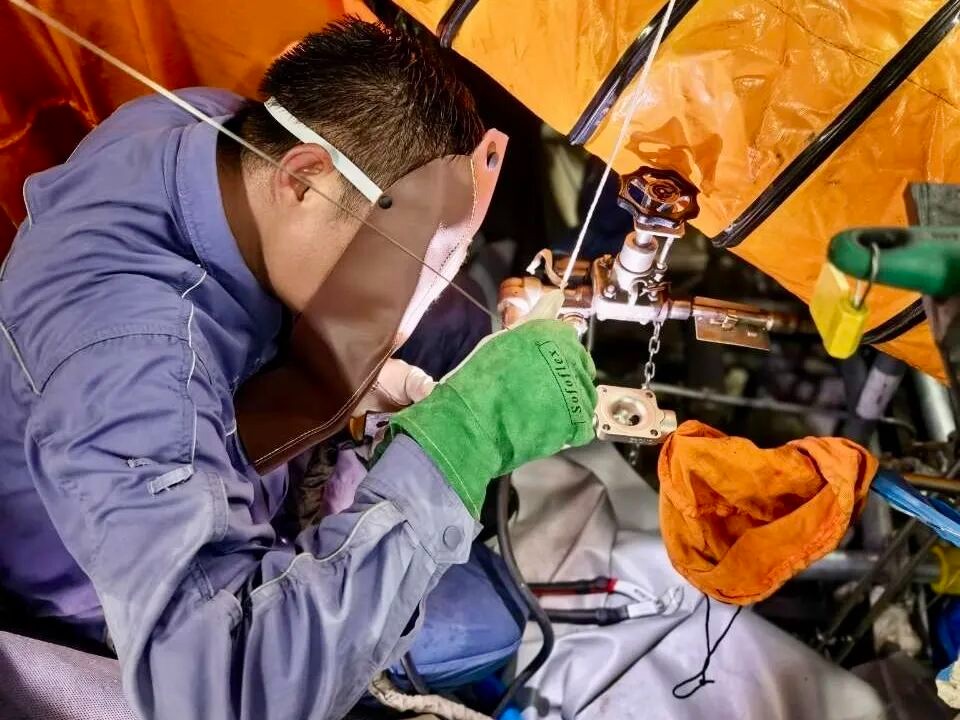
Fangchenggang Nuclear Power Station Unit 2 Completes First Ten-Year Overhaul
On the morning of August 25, Unit 2 of CGNPC Fangchenggang Nuclear Power Station successfully synchronized to the grid on its first attempt following the 7th overhaul, marking the completion of the F207 overhaul undertaken by CGNPC Service Maintenance Company. This overhaul was the first ten-year overhaul since Unit 2 was put into commercial operation. The maintenance process achieved the goal of "no indicator events in safety, quality, and schedule," and made breakthroughs in charging pump maintenance and nuclear-grade socket welding operations. During this overhaul, the nuclear-grade socket welding project was implemented on-site for the first time. To ensure work quality, the maintenance team completed preparatory work in advance, including welding procedure qualification certification, skill qualification process card review and submission, test piece welding, and non-destructive testing, all of which passed acceptance.
2026-08-28

Safety-level DCS Response Time Testing for Unit 3 of Xudabao Nuclear Power Plant Successfully Completed
Recently, with the final test data confirmed to be accurate, the safety-level DCS (Digital Control System) response time testing for Unit 3 of Xudabao Nuclear Power Plant was successfully completed. All test results met the requirements, with no abnormal equipment actions throughout the entire process, providing reliable instrumentation and control assurance for the subsequent fuel loading and stable operation of the unit. The test lasted 14 days and covered 182 test cases, encompassing more than 1,500 functional tests for reactor trip and engineered safety features systems. As a critical step before fuel loading, the safety-level DCS response time test holds significant reference value for verifying the response performance of the unit's safety systems. To ensure the successful completion of the test, the instrumentation and control team adhered to the work philosophy of "comprehensive preparation, strong collaboration, experience feedback, and pragmatic execution," advancing all tasks in an orderly manner.
2026-08-27

Argonne National Laboratory Measures Dust Resuspension Behavior in Radioactive Contamination Scenarios
Researchers at the U.S. Department of Energy's Argonne National Laboratory recently conducted field experiments to simulate the movement of dust particles on concrete surfaces under radioactive contamination scenarios, measuring the effects of pedestrian activity and vehicle traffic on dust dispersion. The study was published in the journal Health Physics and received support from the U.S. Department of Homeland Security Science and Technology Directorate and the Radiological/Nuclear Emergency Response and Recovery Research and Development Program. To control humidity and temperature and prevent dust generation, pedestrian tests were conducted inside a tent. In the image, researchers can be seen entering the tent on the left. Particle counters are placed on a white table, with their hoses extending into the tent to collect air samples. (Image courtesy of Ar...
2026-08-27

Czech nuclear power plants largely unaffected by summer heat and drought
The Czech State Office for Nuclear Safety (SÚJB) stated on August 26 that this summer's heat waves and drought only caused a slight decline in electricity generation at the Temelín and Dukovany nuclear power plants, without leading to reactor power reduction or raising nuclear safety concerns. Currently, both plants meet the conditions for safe operation, including adequate cooling and water supply guarantees. SÚJB noted that some European nuclear power plants reduced output or temporarily shut down during high-temperature periods, mainly due to their cooling methods. Some plants use once-through cooling, making their operation directly affected by river water temperature and flow rate. When water temperatures rise and river flows are low, plants may reduce output due to environmental discharge limits...
2026-08-27

Kansai Electric Power Revises Nuclear Emergency Disaster Prevention Business Plans for Three Nuclear Power Plants
Kansai Electric Power Co., Inc. announced on August 27 that it has revised the nuclear operator disaster prevention business plans for the Mihama, Takahama, and Oi nuclear power plants in accordance with Japan's Act on Special Measures Concerning Nuclear Emergency Preparedness, and filed them with the Prime Minister and the Nuclear Regulation Authority on the same day. The revisions pertain to nuclear emergency disaster prevention arrangements at the three nuclear power plants. Kansai Electric Power stated that it will continue to ensure the safety of the nuclear power plants and enhance nuclear emergency disaster prevention measures in accordance with the relevant plans. According to the documents, the consultation period prior to the revisions was from May 13 to July 30, 2026, totaling 79 days. The consultation parties included the local governments where the nuclear power plants are located and related neighboring local governments.
2026-08-27

France's Gravelines Nuclear Power Plant Reports Multiple INES Level 0 Events
France's Gravelines nuclear power plant recently disclosed significant events reported to the French Nuclear Safety and Radiation Protection Authority (ASNR). The events cover safety, operations, and radiation protection, and were all rated as Level 0 on the International Nuclear and Radiological Event Scale (INES), i.e., below the scale threshold, with no actual impact on facility safety, personnel health, or the environment. In a generic safety event involving EDF's 900 MWe-class nuclear reactor units, EDF discovered during inspections at the Cruas nuclear power plant that certain commercially supplied electric servomechanisms had been installed in functional positions requiring higher qualification levels, K3 or K3ad. K3 corresponds to seismic requirements, while K3ad involves both seismic and harsh environmental conditions, including radiation environments. Subsequently, EDF conducted checks on related equipment at the Blayais, Chinon, Cruas, Dampierre, Gravelines, Saint-Laurent, and Tricastin nuclear power plants and confirmed that a batch of equipment had model suitability issues.
2026-08-27

German BESSY II Research Reveals: Cesium Chloride Seed Layer Can Improve Quality of Perovskite-Silicon Tandem Solar Cells
A team from the Helmholtz-Zentrum Berlin (HZB) in Germany used the BESSY II synchrotron radiation facility to conduct nanoscale analysis of perovskite-silicon tandem solar cells fabricated by evaporation methods, and proposed a new approach to improve the quality of perovskite thin films. The study shows that introducing a thin cesium chloride (CsCl) seed layer between the two sub-cells promotes uniform growth of the perovskite layer while reducing undesirable lead iodide deposition at the interface. The research demonstrates that the cesium chloride seed layer improves the growth of the evaporated perovskite layer and reduces the formation of lead iodide. Scanning electron microscopy images show that the perovskite layer grown without a seed layer (left image) consists of extremely fine crystallites...
2026-08-27

Europe Advances Space Nuclear Power Research, Targeting Lunar and Mars Missions
The European Space Agency (ESA) is accelerating its assessment of nuclear energy applications in deep-space missions, focusing on using small nuclear reactors to power spacecraft electric propulsion systems, as well as providing stable energy for future fixed lunar surface facilities and subsequent Mars missions. Existing space missions primarily rely on chemical fuels and solar panels. The former is limited by the amount of propellant that can be carried, while the latter suffers from declining power generation efficiency as spacecraft move farther from the Sun. ESA believes that nuclear power systems could compensate for the shortcomings of both approaches, particularly in long-duration lunar operations and deeper space exploration. ESA completed a nuclear thermal propulsion study last year. In March this year, the agency...
2026-08-27
Japan's Helical Fusion and Tohoku University Launch Social Communication Research on Fusion Energy
Helical Fusion recently announced that it has launched a joint research project with the Takahashi-Kariwara Laboratory of the Graduate School of Engineering at Tohoku University in August 2026, focusing on ideal communication methods for the social implementation of fusion energy. The project is planned to last approximately one year, with a focus on exploring the communication methods, dialogue mechanisms, and decision-making pathways required for fusion energy to move toward social application. According to the project plan, both parties will examine cases of existing advanced technologies in areas such as social acceptance and risk perception to study communication strategies needed for the stable application of fusion energy in future society. The research also plans to introduce...
2026-08-27

Hyogo Medical University Hospital to Launch Japan's First Elekta Evo Linear Accelerator System Treatments
Elekta K.K. announced on August 27 that its high-precision radiation therapy device, the Elekta Evo linear accelerator system, will be installed for the first time in Japan at Hyogo Medical University Hospital, with the first treatment scheduled to commence on September 24, 2026. This marks the entry of this next-generation radiation therapy system into clinical application in Japan. As the number of cancer patients increases, the demand for personalized and precise treatment in the field of radiation therapy continues to rise. The Elekta Evo is positioned as a next-generation radiation therapy system capable of covering both routine and more complex cancer treatment scenarios. The system is equipped with Iris, an AI-driven high-definition imaging technology, which enables clearer visualization of the positional relationships between organs in the patient's body...
2026-08-27

NSF Funds $30 Million Turbulence Research Center Focused on Predictive Modeling for Fusion Energy
The U.S. National Science Foundation (NSF) has established a new Science and Technology Center with a total funding of $30 million, focusing on the understanding and prediction of turbulence. The project targets application scenarios such as fusion energy, astrophysics, and hypersonic flight, aiming to tackle the challenges of cross-scale turbulence modeling and prediction in complex physical systems. Researchers and students from San José State University (SJSU) will participate in the related research. This is a three-dimensional simulated turbulent velocity field at the core collapse point of a massive star before a supernova explosion. Image credit: S. Couch, based on research by Fields and Couch published in The Astrophysical Journal, Volume 921, Page 28.
2026-08-27
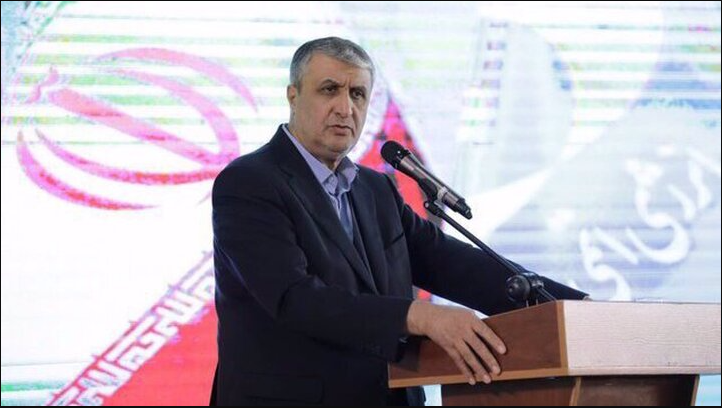
Iran Says Nuclear Fusion to Become Priority in Nuclear Industry Development
At a national Government Week celebration ceremony held in Tehran, Mohammad Eslami stated that developing nuclear fusion is a priority direction for the future of Iran's nuclear industry. Iran needs to rely on its domestic capabilities, knowledge-based enterprises, and universities to drive progress in related fields. Eslami said that the innovation network of the Atomic Energy Organization of Iran (AEOI) is providing support for nuclear fusion activities, shifting related work from the technology demonstration stage further toward system development and capacity building. He also stated that the establishment of the Non-Destructive Testing (NDT) training center is an initiative to enhance industrial quality, promote technological advancement, and cultivate domestic professional expertise...
2026-08-27